SINGAPORE, Aug. 1, 2025 /PRNewswire/ -- On 31st July 2025, a unified consensus document for improving lung cancer care in the Asia-Pacific (APAC) region was officially launched in Singapore, marking a pivotal moment in the regional fight against lung cancer. This represents the first comprehensive consensus for the region, an evidence-based agreement between stakeholders across the healthcare ecosystem that outlines shared priorities, strategies, and recommendations to elevate the standard of lung cancer care across diverse health systems.
Held on the eve of World Lung Cancer Day, the initiative involved over 43 contributors, including clinicians, academics, patient advocates, and health organisations across 14 APAC health systems.
Launch Highlights and Key Voices
The APAC Lung Cancer Policy Consensus was launched with keynote contributions from:
- Dr Mary Bussell (TriMar Strategies), who delivered an overview of the global lung cancer consensus and its relevance to regional efforts
- Mr Yannick Romero (Union for International Cancer Control – UICC), who contextualised the APAC consensus within the broader global lung health resolution, emphasising policy alignment and strategic integration
- Ms Helena Wilcox (The Lung Cancer Policy Network – LCPN), who highlighted how the APAC framework enables regional advancement in care and partnership building
- Mr Francis Goh (Lung Cancer Education and Advocacy for Patients – LEAP), Singapore) stressed the pivotal role of patient voices in shaping lung cancer policy and health system transformation
- A/Prof Herbert Loong (Asia Pacific Coalition against Lung Cancer – APCLC) and Asst Prof Yeon Wook Kim (SNU Bundang Hospital), who provided an in-depth presentation on the consensus development process, five key pillars, and concrete calls to action
Lung cancer remains the leading cause of cancer-related deaths in the APAC region, and accounts for nearly 60% of global cases. With regional incidence projected to exceed 1.8 million by 2040, the need for a cohesive, regional strategy to combat the disease has never been more urgent. Furthermore, survival rates in the APAC region often lag behind global benchmarks, with five-year survival rates frequently below 20%. This fragmented landscape highlights the critical need for a coordinated approach, one that addresses the unique epidemiological, environmental, and healthcare challenges within the region.
The APAC Lung Cancer Policy Consensus is the result of an extensive collaborative process involving two expert working sessions, one patient workshop and a final expert voting session, with input from patients, clinicians and academic leaders across the region. The consensus lays out a unified policy framework anchored in five core principles, all aimed at driving sustainable, equitable improvements in lung cancer prevention, detection, treatment, and stigma reduction across the region.
Importantly, the APAC Consensus aligns closely with the Global Lung Cancer Consensus, which was first ratified at the 9th International Lung Cancer Network in 2023. By endorsing this global statement, the APAC region reaffirms its commitment to improving lung cancer outcomes.
The Five Global Principles Anchoring the APAC Lung Cancer Policy Consensus:
- Strengthen tobacco control, public education, and environmental risk research to prevent lung cancer across all exposure types
- Expand screening and diagnostic access through inclusive guidelines and innovative technologies to enable timely lung cancer detection
- Promote timely, affordable access to modern and personalised lung cancer treatments across diverse healthcare settings
- Foster cross-sectoral collaboration and advocacy to drive investment and policy reform in lung cancer care
- Address stigma through education and empowerment to support early diagnosis, treatment adherence, and community acceptance
A Region-Specific Approach to Lung Cancer Care
The APAC Lung Cancer Policy Consensus is not just a regional adaptation of global recommendations; it is a comprehensive response to the distinct challenges faced by the APAC region. Unlike Western health systems that primarily focus on smoking-related lung cancer, the APAC region must contend with a higher prevalence of lung cancer in never-smokers due to factors such as environmental pollutants, and genetic predispositions. Moreover, the region's healthcare systems are highly heterogeneous, ranging from well-resourced settings with cutting-edge cancer care to lower-resource environments building on basic cancer services.
Given these disparities, a one-size-fits-all approach would be ineffective. The APAC Lung Cancer Policy Consensus presents a regionally tailored action plan that offers specific strategies and targets to improve lung cancer care and outcomes, ensuring that every health system in the region, regardless of its capacity, can make progress toward the shared goals.
"We call on policymakers, healthcare leaders, and stakeholders across the APAC region to urgently prioritise and implement policies that improve lung cancer outcomes. While the specific solutions will vary across health systems, this consensus provides a shared foundation to guide national efforts. By acting now and adapting these recommendations to local contexts, we can foster a future where healthcare systems of all sizes work together to overcome regional challenges." said Judy Li, Consortium Manager at ASPIRE for Lung Cancer.
Looking Ahead
The launch of the APAC Lung Cancer Policy Consensus marks the start of a sustained regional effort to transform lung cancer care in the Asia-Pacific region. Over the coming months, ASPIRE for Lung Cancer and its partners will continue to engage with policymakers, healthcare leaders, and patient advocacy groups to ensure that the consensus principles are translated into concrete action, with measurable outcomes.
Through this regional collaboration, APAC aims to drive meaningful change that will improve survival rates and quality of life for lung cancer patients across the region.
For more details about the APAC Lung Cancer Policy Consensus or to learn how you can get involved in advancing lung cancer care in your region, visit https://www.aspirelungcancer.com/
About ASPIRE for Lung Cancer
ASPIRE (Asia Pacific Policy Review and Engagement) for Lung Cancer is a collaborative multilateral effort focused on improving lung cancer outcomes in the Asia-Pacific region through policy reforms. We advocate for prioritising lung cancer in government action plans, aiming to drive transformative changes that enhance patient access and care.
We believe in the influence of collaboration and collective action to drive positive change. We therefore work with governments, agencies, NGOs and patient groups, bringing together multi-disciplinary experts to improve health outcomes for lung cancer patients in the APAC region.
CONTACT: ASPIRE for Lung Cancer, aspire.secretariat@eq-health.com
** The press release content is from PR Newswire. Bastille Post is not involved in its creation. **

ASPIRE for Lung Cancer launches the APAC Lung Cancer Policy Consensus as a regional call to action for improved lung cancer care
- Having secured the fully driverless commercial permit in mid-November 2025, the partners have launched fully autonomous ride-hailing service via the AutoGo app.
- Initial operations cover Yas Island, with phased expansion planned for Reem, Al Maryah, and Saadiyat Islands.
- The launch marks a critical step toward the partners' goal of deploying hundreds of vehicles by 2026 and building Abu Dhabi's largest fully driverless fleet.
ABU DHABI, UAE, Jan. 17, 2026 /PRNewswire/ -- Baidu, Inc. (NASDAQ: BIDU and HKEX: 9888) today announced that its autonomous ride-hailing service, Apollo Go, and AutoGo, a leading UAE-based autonomous mobility company, have officially launched the fully autonomous commercial ride-hailing service in the emirate. The launch of the service, now available via the AutoGo app, marks a major milestone in the commercialization of autonomous driving in the Middle East. The service has launched initially on Yas Island, where users in Abu Dhabi can now download the app to hail fully driverless rides.
The collaboration between Baidu's Apollo Go and K2's AutoGo began in March 2025, when they announced the partnership to build Abu Dhabi's largest fully driverless fleet. Building on that momentum, the companies secured one of the inaugural permits for fully driverless commercial operation in Abu Dhabi in mid-November 2025 and signed a next-phase agreement to scale the fleet to hundreds of vehicles by 2026. With the service now available to the general public through the AutoGo app, the partners are actively advancing their goal of establishing the emirate's largest fully driverless fleet.
"Moving from an initial partnership agreement to launching live, fully driverless operations for the public in a span of just a few months is a remarkable milestone," said Liang Zhang, Managing Director of EMEA at Baidu Apollo. "This speed of execution highlights the technical readiness of Apollo Go, the strong operational capabilities of our partnership, and the steadfast support of local regulatory bodies."
"AutoGo's transition to live robotaxi operations marks an important milestone in Abu Dhabi's autonomous mobility journey," said Sean Teo, Managing Director of K2. "Launching the service at the start of the year reflects our focus on execution and long-term value creation. By introducing robotaxi services in real urban environments and scaling across key districts, we are moving decisively from development to deployment—delivering autonomy that is practical, safe, and ready for everyday use."
The initial operation covers Yas Island, a premier leisure and entertainment hub in Abu Dhabi, now designated as a permitted zone for fully driverless operations. This service allows users to simply download the AutoGo app, request a ride, and experience a journey in a vehicle with no human driver behind the wheel.
Following the initial launch on Yas Island, the service will implement a phased geographic roll-out across Abu Dhabi. The expansion will begin with Reem Island, Al Maryah Island, and Saadiyat Island. Over time, the service will continue to expand across additional areas, with the long-term objective of operating across the wider Abu Dhabi emirate.
Apollo Go's rapid expansion into the UAE is backed by its industry-leading autonomous driving technology and proven real-world operational expertise. As a leading autonomous ride‑hailing service provider globally, Apollo Go has logged more than 240 million autonomous kilometers, of which over 140 million kilometers were completed in fully driverless mode. With a global footprint across 22 cities, Apollo Go's weekly ride count has recently surpassed 250,000, and the service has completed more than 17 million cumulative rides as of October 31, 2025. Looking ahead, Apollo Go and AutoGo will scale fully autonomous commercial ride-hailing services to reach more users and advance Abu Dhabi's smart city vision.
About Baidu
Founded in 2000, Baidu's mission is to make the complicated world simpler through technology. Baidu is a leading AI company with strong Internet foundation, trading on the NASDAQ under "BIDU" and HKEX under "9888." One Baidu ADS represents eight Class A ordinary shares.
Media Contact
intlcomm@baidu.com
ABU DHABI, UAE, Jan. 17, 2026 /PRNewswire/ -- Baidu, Inc. (NASDAQ: BIDU and HKEX: 9888) today announced that its autonomous ride-hailing service, Apollo Go, and AutoGo, a leading UAE-based autonomous mobility company, have officially launched the fully autonomous commercial ride-hailing service in the emirate. The launch of the service, now available via the AutoGo app, marks a major milestone in the commercialization of autonomous driving in the Middle East. The service has launched initially on Yas Island, where users in Abu Dhabi can now download the app to hail fully driverless rides.
The collaboration between Baidu's Apollo Go and K2's AutoGo began in March 2025, when they announced the partnership to build Abu Dhabi's largest fully driverless fleet. Building on that momentum, the companies secured one of the inaugural permits for fully driverless commercial operation in Abu Dhabi in mid-November 2025 and signed a next-phase agreement to scale the fleet to hundreds of vehicles by 2026. With the service now available to the general public through the AutoGo app, the partners are actively advancing their goal of establishing the emirate's largest fully driverless fleet.
"Moving from an initial partnership agreement to launching live, fully driverless operations for the public in a span of just a few months is a remarkable milestone," said Liang Zhang, Managing Director of EMEA at Baidu Apollo. "This speed of execution highlights the technical readiness of Apollo Go, the strong operational capabilities of our partnership, and the steadfast support of local regulatory bodies."
"AutoGo's transition to live robotaxi operations marks an important milestone in Abu Dhabi's autonomous mobility journey," said Sean Teo, Managing Director of K2. "Launching the service at the start of the year reflects our focus on execution and long-term value creation. By introducing robotaxi services in real urban environments and scaling across key districts, we are moving decisively from development to deployment—delivering autonomy that is practical, safe, and ready for everyday use."
The initial operation covers Yas Island, a premier leisure and entertainment hub in Abu Dhabi, now designated as a permitted zone for fully driverless operations. This service allows users to simply download the AutoGo app, request a ride, and experience a journey in a vehicle with no human driver behind the wheel.
Following the initial launch on Yas Island, the service will implement a phased geographic roll-out across Abu Dhabi. The expansion will begin with Reem Island, Al Maryah Island, and Saadiyat Island. Over time, the service will continue to expand across additional areas, with the long-term objective of operating across the wider Abu Dhabi emirate.
Apollo Go's rapid expansion into the UAE is backed by its industry-leading autonomous driving technology and proven real-world operational expertise. As a leading autonomous ride‑hailing service provider globally, Apollo Go has logged more than 240 million autonomous kilometers, of which over 140 million kilometers were completed in fully driverless mode. With a global footprint across 22 cities, Apollo Go's weekly ride count has recently surpassed 250,000, and the service has completed more than 17 million cumulative rides as of October 31, 2025. Looking ahead, Apollo Go and AutoGo will scale fully autonomous commercial ride-hailing services to reach more users and advance Abu Dhabi's smart city vision.
About Baidu
Founded in 2000, Baidu's mission is to make the complicated world simpler through technology. Baidu is a leading AI company with strong Internet foundation, trading on the NASDAQ under "BIDU" and HKEX under "9888." One Baidu ADS represents eight Class A ordinary shares.
Media Contact
intlcomm@baidu.com
** The press release content is from PR Newswire. Bastille Post is not involved in its creation. **
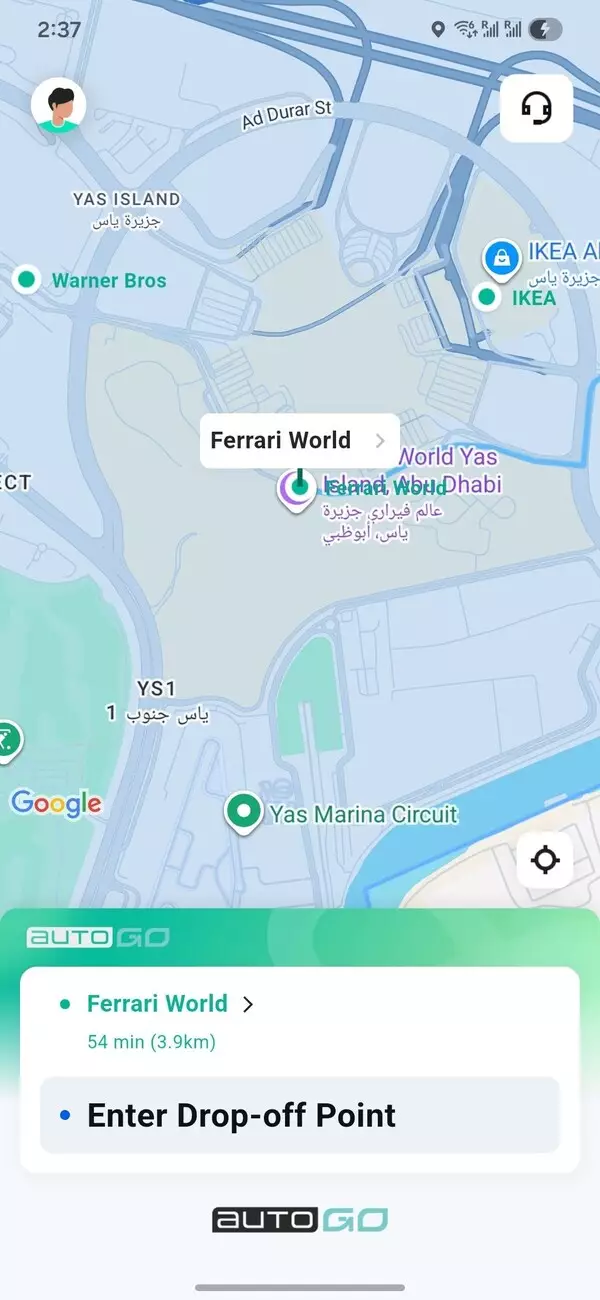
Baidu's Apollo Go and K2's AutoGo Commence Fully Autonomous Ride-Hailing Service on Yas Island, Announce Phased Expansion Across Abu Dhabi