Local authorities across China have intensified flood response efforts, restoring infrastructure and accelerating post-disaster reconstruction in flood-stricken regions in northern China while mitigating further risks from persistent downpours that continue to impact eastern provinces.
Persistent heavy rainfall recently has battered eastern, northern and northeastern China, triggering floods and geological disasters that have resulted in significant casualties and property damage.
From July 23 to 29, Beijing experienced persistent extreme rainstorms, with mountainous areas in northern suburban districts of Miyun, Huairou, Yanqing and Pinggu being among the hardest hit.
The latest flooding in Beijing has affected more than 300,000 residents and damaged about 24,000 houses.
Some residents began returning to their villages on Friday, while 13,300 people remain housed in 190 temporary shelters in the Chinese capital.
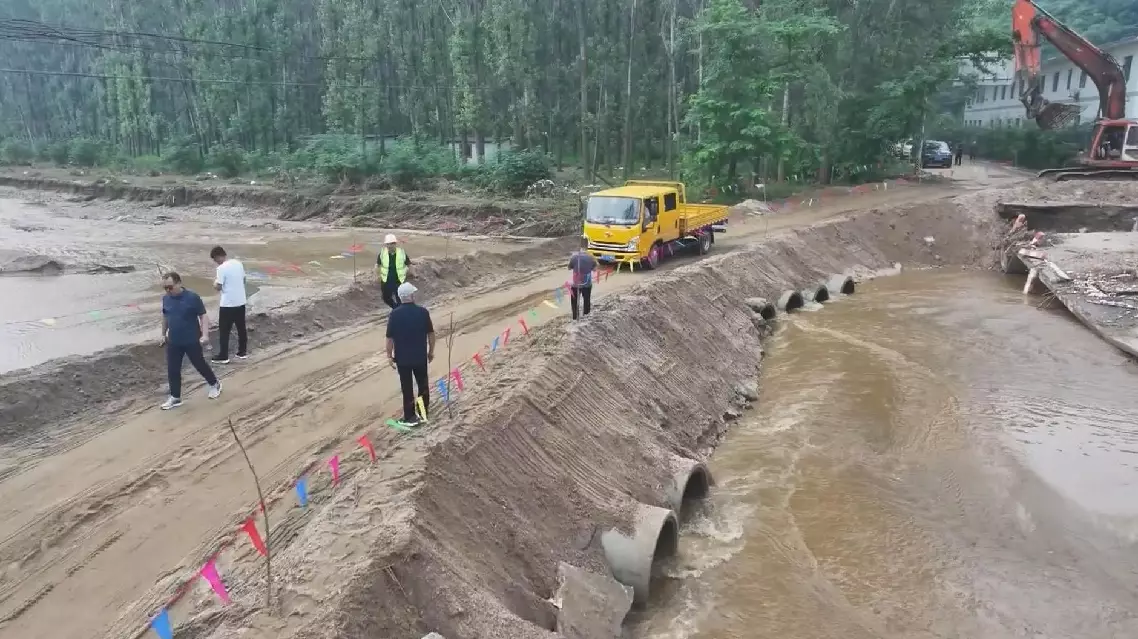
Recovery efforts have made progress, with a total of 312 kilometers of flood-damaged roads being reopened to traffic. Water supply has been restored to 31 of the 179 affected administrative villages, while electricity has been restored to 80 percent of the villages that experienced power outages due to the torrential rains.
Heavy rainfall also affected Tianjin Municipality and Hebei Province, which are adjacent to Beijing.
Days of downpours wreaked havoc on some villages in Liudaohe Town in Hebei's Chengdu City.
With rescue and relief operations going on, roads to previously isolated villages in the town had been fully reopened by Friday. Hebei provincial government has deployed excavators and bulldozers from Tangshan, Qinhuangdao, Shijiazhuang and other cities in the province to speed up repairs on bridges and roads destroyed by floods.
So far, 819 sections of highways in Chengde, Baoding, and Zhangjiakou cities have been restored.
The National Commission for Disaster Prevention, Reduction and Relief upgraded the emergency response for flood-hit Hebei to Level III on Thursday, dispatching a task force to assist in local relief efforts.
Tianjin has launched inspections and repairs on 15 rivers and dams in Jizhou District, while mobilizing volunteers to clear mud and disinfect heavily affected villages.
Co-May, the eighth typhoon of this year, made landfall for the second time in Shanghai on Wednesday afternoon after it made landfall in the eastern province of Zhejiang early on Wednesday morning, according to the Shanghai central meteorological observatory.
Zhejiang and Jiangsu provinces have taken actions to step up hazard inspection and disaster prevention efforts while evacuating residents from dangerous places.
Widespread rainfall swept areas across east China's Anhui Province on Friday.
Local maritime authorities have increased patrols to monitor key waterways. Cities such as Xuancheng and Tongling have prioritized inspections of flood-prone zones, reservoirs, and landslide risks, evacuating residents in advance.
"We will closely monitor rainfall and flood conditions, carry out inspections and remediation work on key areas such as reservoirs, rivers, and geological hazard sites, to safeguard people's lives and property," said Huang Daning, a staff member with the Yi'an District Emergency Management Bureau of Tongling City.
China intensifies flood relief, reconstruction efforts after rainstorms