As hunger grips the Gaza Strip, displaced Palestinians face deadly risks in their desperate search for food.
With two children to feed and another on the way, Asma Al-Jabari worries how she will survive Gaza's worsening hunger crisis when she gives birth.
"Our food situation is extremely difficult. I'm pregnant and there is absolutely no food. We haven't received any aid, it's been four months since we last got a food package. I have two children and often can't find them anything to eat for breakfast, and sometimes they go to bed without dinner," said Asma.
Asma is not the only one concerned. The majority of the population in the area is also highly concerned that the crisis is not coming to an end, even after Israel allowed dozens of truckloads and air dropping of aid into the territory.
"We haven't received any aid. My sons can't reach the airdropped supplies. One of them lost his leg at the American aid distribution point in Rafah, and the other was became paralyzed due to bombing. Only God can help us. We've heard about the aid, but we haven't received anything," said Um Mohamoud, a displaced Palestinian woman.
On Wednesday, the Israeli army was reportedly shot and killed more than 50 food seekers and injured 300 others near Zikimi flashpoint.
Local estimates indicate that over 1,000 Palestinians searching for food aid in Gaza have been killed in recent months since the establishment of the Gaza Humanitarian Foundation, an American aid initiative supported by the Israeli government.
"The World Food Programme (WFP) used to distribute aid properly - we would receive flour at least once every month or two. Now, we can't get flour either from airdrops or from the truck convoys in Zikim. Anyone who goes there risks being shot by the Israelis or run over by trucks desperate to grab aid boxes or bags of flour," said Mohammad Al-louh, a displaced Palestinian man.
The international community, including the United Nations, has accused Israel of deliberately targeting Palestinians during aid distribution. Both Israeli authorities and the Gaza Humanitarian Foundation have denied these allegations. However, conditions on the ground indicate a severe breakdown in security and order in these areas.
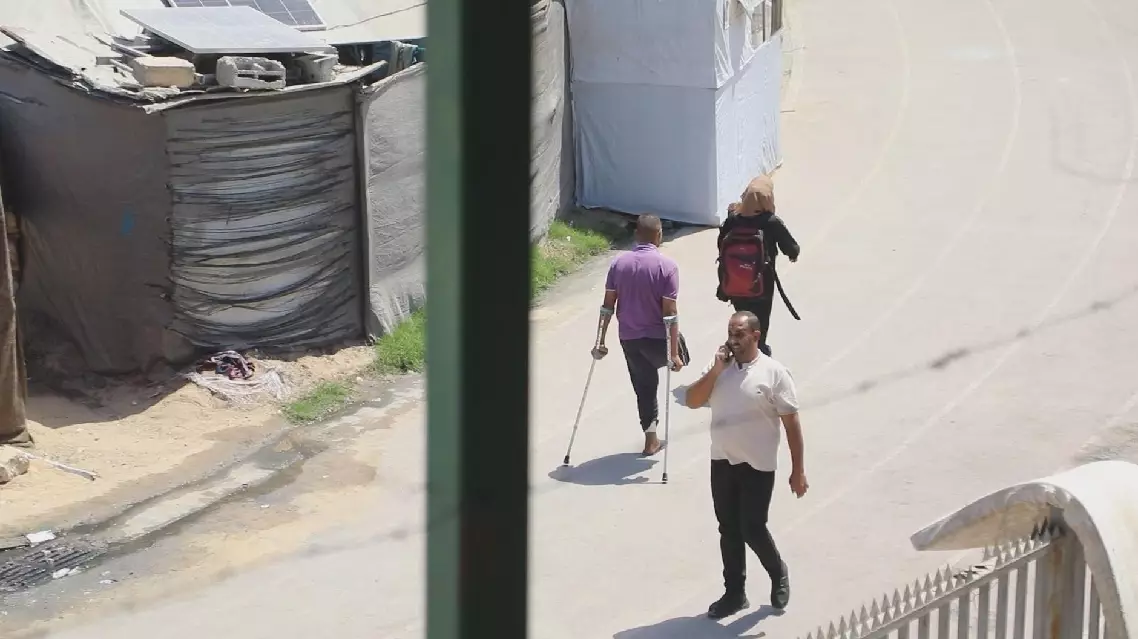
Displaced Palestinians risk lives in search of food aid
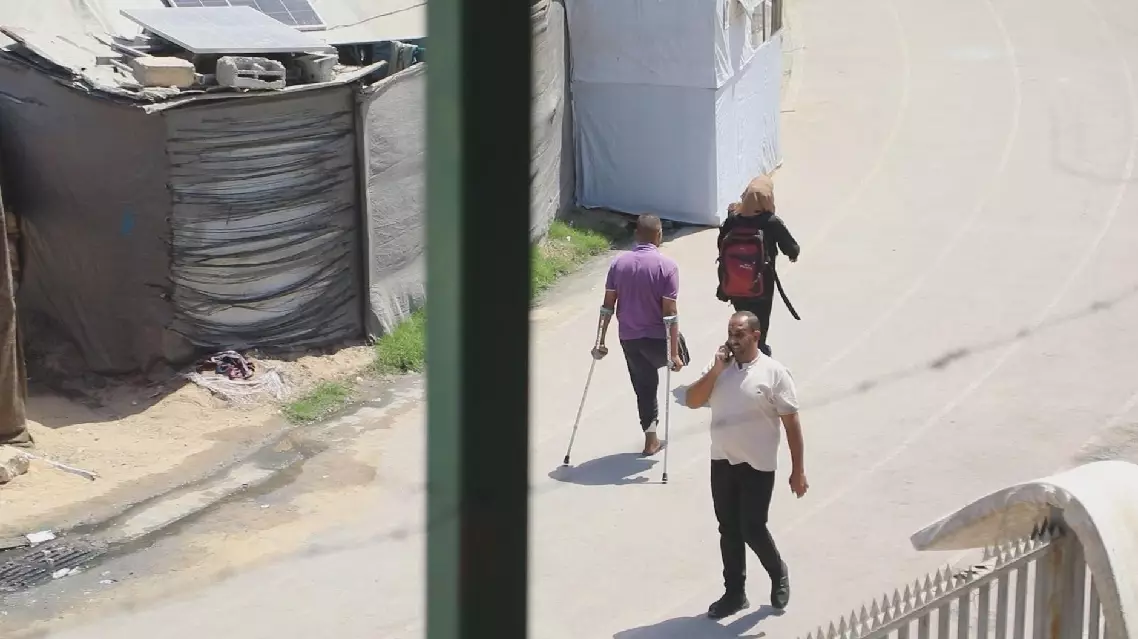
Displaced Palestinians risk lives in search of food aid
A former television host from Taiwan, Zhai Xuan, has made a pivotal decision to leave mainstream broadcasting in order to create content that provides a better understanding of the Chinese mainland and cross-strait relations.
Zhai, a seasoned television host with over a decade of experience in Taiwan's media landscape, recently addressed an audience at an event in Beijing, where she revealed her complete transition into independent online media.
In her remarks, she articulated her aspiration to bridge what she perceives as a significant information gap between audiences on both sides of the Strait, highlighting her commitment to fostering a deeper understanding and connection through her new endeavors.
"I was really surprised by all the fake news. There were stories saying people on the mainland can't afford tea eggs or that they live in mud houses and in Taiwan, this was the main information many people received," said Zhai.
Zhai said she initially began producing online videos to challenge such perceptions while continuing her work as a television host.
In April 2025, she travelled to the mainland with her father to fulfill her late grandfather's wish to return to his hometown. The trip, which reunited family members separated since 1949, was recorded in a video series titled "Journey to Find Our Roots", drawing attention from viewers in both Taiwan and the mainland.
"Many people in Taiwan told me that after watching, they wanted to apply for a mainland travel permit immediately and go looking for their relatives. Some had long forgotten these things, but after seeing my story, they began thinking about their hometowns and family members they had never met and decided to search for their roots," Zhai shared her story at the event.
By mid-2025, Zhai said she began to feel increasing pressure amid rising political tensions and a tightening atmosphere around cross-Strait exchanges in Taiwan.
After more than 12 years in the industry, Zhai resigned from her position, believing it was the right thing to do.
"At that moment, I felt this was a major issue,not just for me, but for Chinese people on both sides of the Strait. If I backed down then, I wouldn’t be standing on the right side," said Zhai.
Since leaving television, Zhai has broadened her online programming to encompass a range of daily-life topics, including practical guidance on applying for a mainland travel permit and using commonly employed mobile applications, in addition to content that delves into historical memory and cultural connections across the Strait.
As the debate over cross-Strait relations continues in Taiwan, Zhai said she remains committed to her current path.

Former Taiwan TV host bridges cross-Strait divide via online media