China's success in the Battle of Pingxingguan, marking China's first major victory in the War of Resistance Against Japanese, broke the illusion of Japan's invincibility and motivated people nationwide to stand up against the Japanese invadors.
After the July 7th Incident in 1937, Japan launched a full-scale invasion of China, igniting the country's War of Resistance Against Japanese Aggression.
With superior weapons and tactics, Japanese forces launched a sweeping offensive into North China.
The Japanese army pushed deeper into Shanxi, aiming to break through Pingxingguan, part of its arrogant plan to conquer China within three months.
Being a mountain pass along Shanxi's ancient Great Wall, Pingxingguan has long held strategic importance.
While scouting nearby, the 115th Division of China's Eighth Route Army identified Qiaogou, a narrow route the enemy had to take.
Though outgunned, they decided to use this spot to make their first bold move: a surprise ambush.
"[Qiaogou] is deep and narrow, with the deepest sections reaching 20 to 30 meters, while the narrowest parts could only accommodate a single vehicle. Once our commanders saw it, they knew this was the place to strike. They planned a pocket formation to trap the enemy," said Mao Chuntao, director of Historical Research Department at Pingxingguan Victory Memorial Hall.
On the morning of September 25, elite forces of the Japanese Army's 5th Division walked straight into the trap, unaware that the Eighth Route Army had been lying in wait overnight in the hills. They were hit with a sudden, devastating assault.
Zeng Fusheng, a local villager, still remembers the stories passed down from his grandfather, who helped guide the Eighth Route Army through the mountains.
"My grandfather led the troops here and hid them behind these rocks. From above, our soldiers were invisible, while the Japanese fired blindly upward," said Zeng.
Despite holding the terrain advantage, the Chinese fire power was limited, with each soldier having just five bullets and five grenades.
They weren't just facing Japanese troops with supplies, but also battle-hardened infantry and cavalry units, armed to the teeth. The fight was brutal. "In the end, nearly all of the over 140 members of the 9th Company, 3rd Battalion of the 686th Regiment sacrificed their lives, leaving just over ten survivors. This victory was achieved thanks to the spirit of Eighth Route Army soldiers, who were fearless in the face of a strong enemy and willing to make the ultimate sacrifice," said Mao.
After six hours of intense fighting, the Eighth Route Army killed over 1,000 Japanese soldiers, destroyed nearly 100 military trucks and captured large stockpiles of weapons.
Chinese and foreign media covered the Battle of Pingxingguan widely. For the first time, the Kuomintang Party's Central News Agency reported positively on the Eighth Route Army's resistance. Overseas outlets, including the Salvation Times in Paris and Britain's Daily Herald, published commentaries congratulating China.
"This victory shattered the myth of Japanese invincibility, bolstered the reputation of the Communist Party of China and the Eighth Route Army, and inspired people nationwide to resist the aggression," said Mao.
But the Battle of Pingxingguan was not China's the last major victory in the War of Resistance Against Japanese Aggression.
It sent a clear message to the world: the Chinese people could fight, and they could win. They stood firm, united in sacrifice, forming an unbreakable barrier on the main Eastern Battlefield of the Global War Against Fascism.
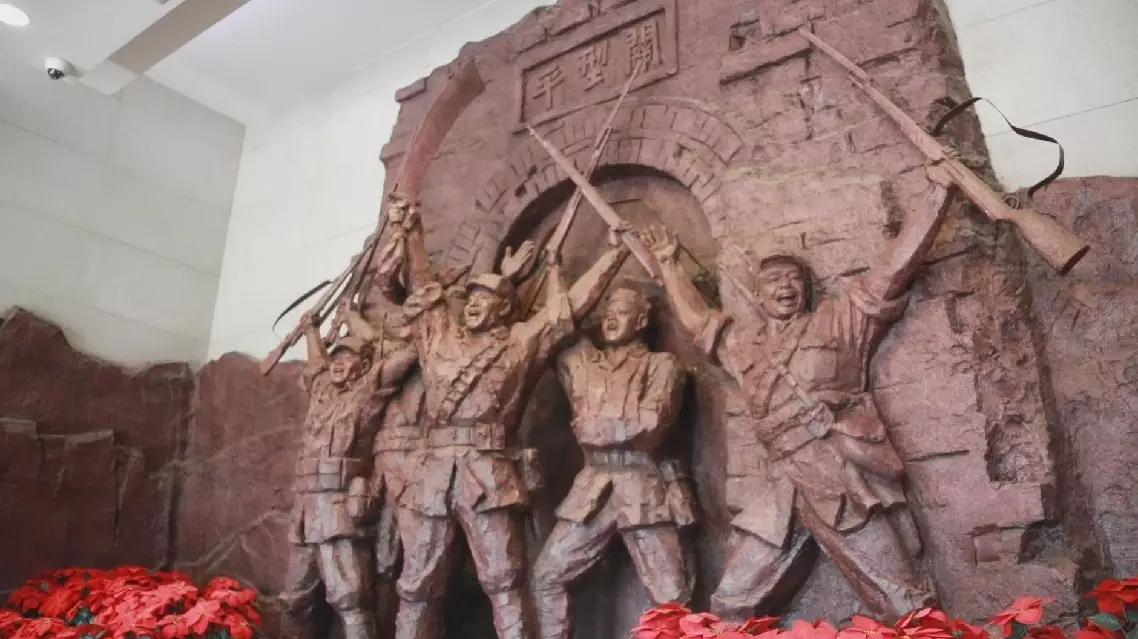
Fighting spirit of Pingxingguan victory remembered generation after generation