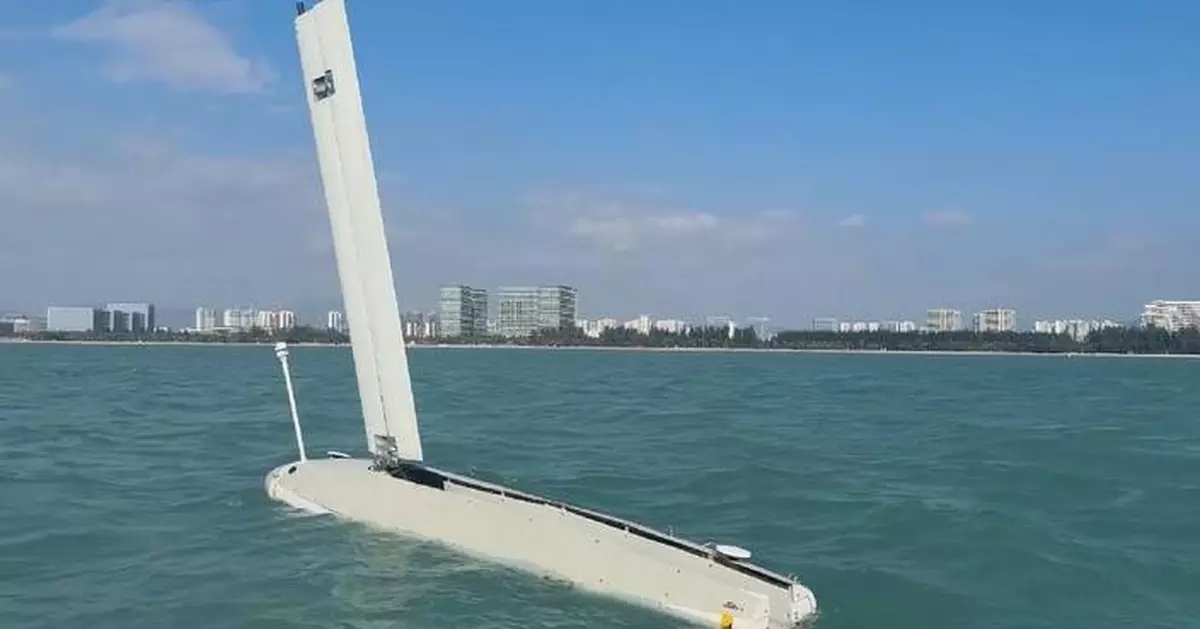
China's "Albatross" wind-powered unmanned surface vehicle (USV), developed by researchers at the prestigious Zhejiang University, demonstrates enhanced ocean observation capabilities for wider applications.
The USV has successfully reached the eye of typhoon twice this season, collecting critical first-hand data on typhoon formation mechanisms -- a technological breakthrough in extreme weather monitoring that promises to transform storm forecasting.
Professor Li Peiliang of Zhejiang University's College of Oceanography and team leader of the "Albatross" project, pointed out that although there are relatively mature monitoring methods and computational models globally, minor deviations in initial sea data may cause significant errors in typhoon forecasts, while data gaps in key areas compromise prediction accuracy.
"The development and trajectory of typhoons are driven by ocean interface dynamics. If we can accurately cross typhoons to provide first-hand data on their trajectory and intensity changes, we can decipher their transformation mechanisms and deliver accurate typhoon forecasts," said Li.
In the future, the team will upgrade the USV, outfitting it with additional environmental sensors to obtain more comprehensive meteorological and marine environmental data.
"It will have the ability to dive up to 1,000 meters under water, thus gaining enhanced capacity to monitor full air-sea exchange and upper ocean layers, essentially functioning as a mobile survey vessel," said Li.
The "Albatross" also plans to conduct global navigation trials along the westerly belt, progressively extending ocean observation boundaries and filling critical data gaps.
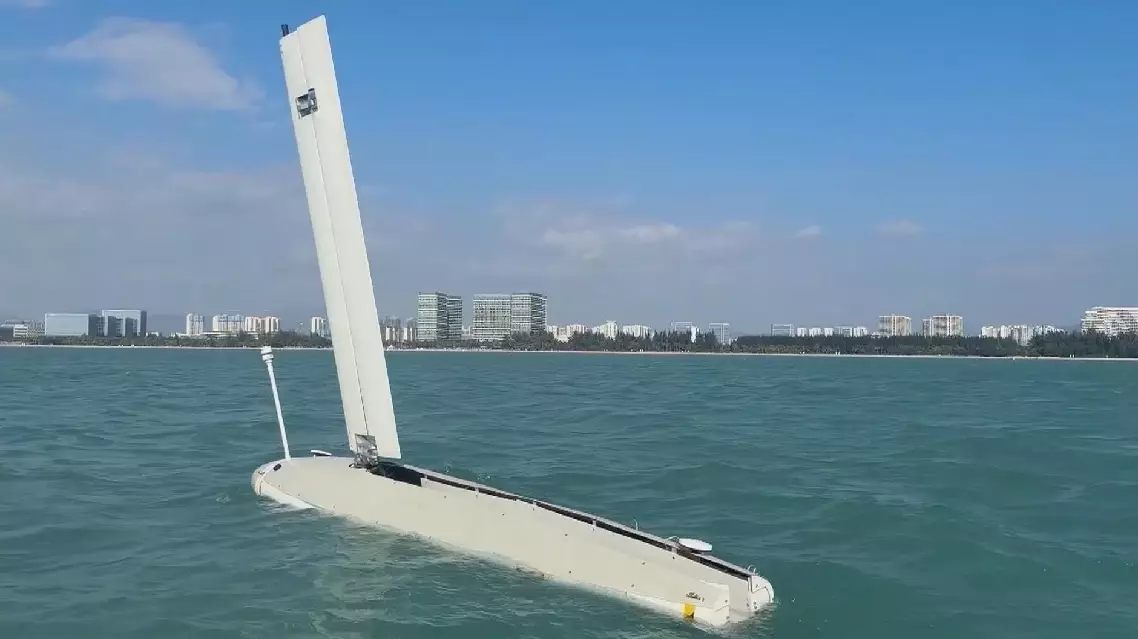
"Albatross" unmanned surface vehicle makes breakthrough in ocean observation capability