NEW YORK (AP) — A group of countries that are part of the OPEC+ alliance of oil-exporting countries has agreed to boost oil production, a move some believe could lower oil and gasoline prices, citing a steady global economic outlook and low oil inventories.
The group met virtually on Sunday and announced that eight of its member countries would increase oil production by 547,000 barrels per day in September.
The countries boosting output, including Saudi Arabia, Russia, Iraq, United Arab Emirates, Kuwait, Kazakhstan, Algeria and Oman, had been participating in voluntary production cuts, initially made in November 2023, which were scheduled to be phased out by September 2026. The announcement means the voluntary production cuts will end ahead of schedule.
The move follows an OPEC+ decision in July to boost production by 548,000 barrels per day in August. OPEC said the production adjustments may be paused or reversed as market conditions evolve.
When production increases, oil and gasoline prices may fall. But Brent crude oil, which is considered a global benchmark, has been trading near $70 per barrel, which could be due to a potential loss of Russian oil on the market and a large rise in crude inventories in China, according to research firm Clearview Energy Partners.
“President Trump has not obviously relented from his threat to sanction Russian energy if the Kremlin does not reach a peace deal with Ukraine as of August 7, potentially via “secondary tariffs” on buyers,” Clearview Energy Partners said in an analyst note Sunday.
The eight countries will meet again on Sept. 7, OPEC said in a news release.
FILE -The logo of the Organization of the Petroleum Exporting Countries (OPEC) is seen outside of OPEC's headquarters in Vienna, Austria, March 3, 2022. (AP Photo/Lisa Leutner, File)
LONDON (AP) — Britain's Conservative Party, which governed the country from 2010 until it suffered its worst-ever electoral defeat two years ago, was plunged into fresh turmoil Thursday after its leader sacked the man widely seen as her greatest rival for apparently plotting to defect from the party.
Conservative leader Kemi Badenoch said in a video and statement on X that she sacked the party's justice spokesperson Robert Jenrick due to “irrefutable evidence that he was plotting in secret to defect" in a way that was “designed to be as damaging as possible” to the party.
Badenoch also ejected Jenrick from the party's ranks in Parliament and suspended his party membership.
“The British public are tired of political psychodrama and so am I,” she said. “They saw too much of it in the last government, they’re seeing too much of it in this government. I will not repeat those mistakes.”
Though Badenoch did not specify which party Jenrick was planning to switch to, Nigel Farage, leader of the hard-right Reform UK party, said he had “of course” had conversations with him.
In the past 12 months, the Conservatives have suffered a string of defections to Reform UK, including some former Cabinet ministers.
Farage said in a press briefing in Edinburgh, the Scottish capital, that coincided with Badenoch's statement that, “hand on heart,” he wasn't about to present Jenrick as the latest Conservative to defect to Reform, an upstart, anti-immigration party.
“I’ll give him a ring this afternoon,” he said. “I might even buy him a pint, you never know.”
The Conservatives are fighting not just the Labour government to their left, but Reform UK to the right. Reform has topped opinion polls for months, trounced the Conservatives in last May’s local elections and has welcomed a stream of defecting Tory members and officials.
Jenrick, who has continued to attract speculation about leadership ambitions despite being beaten in 2024, has appeared more open than Badenoch to the prospect of some sort of deal between the Conservatives and Reform in the run-up to next general election, which has to take place by 2029.
Jenrick has yet to respond to the news of his sacking.
The Conservatives remain the official opposition to Prime Minister Keir Starmer's Labour.
Badenoch, a small-state, low-tax advocate, has shifted the Conservatives to the right, announcing policies similar to those of U.S. President Donald Trump, including a promise to deport 150,000 unauthorized immigrants a year.
Her poor poll ratings and lackluster performance in Parliament had stirred speculation that she could be ousted long before the next election.
However, she has been making a better impression in Parliament in recent weeks in a way that appears to have cemented her position as leader.
The party is no stranger to turmoil, having gone through six leaders in the space of 10 years, five of them serving as prime minister. Widespread anger at the way the Conservatives were governing Britain led to their defeat at the general election in July 2024, when they lost around two-thirds of their lawmakers, their worst performance since the party was created nearly 200 years ago.
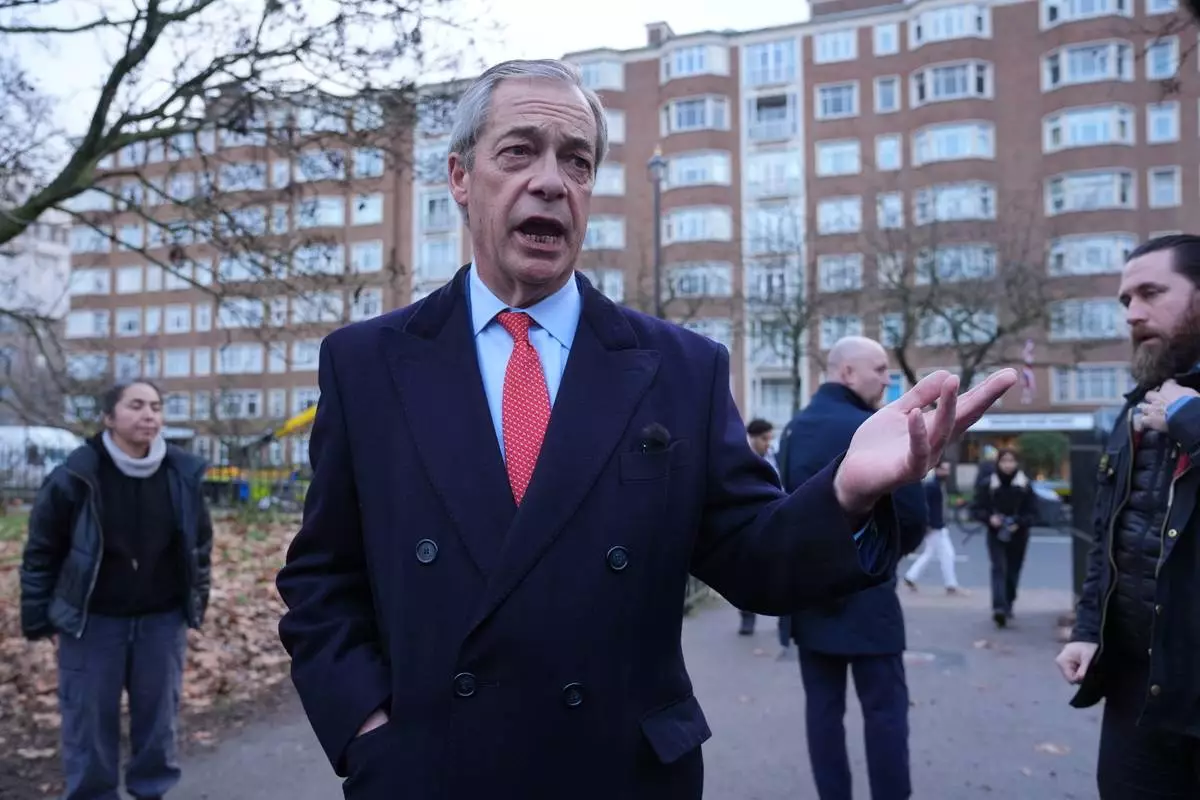
Reform Party leader Nigel Farage addresses protesters outside the Iranian embassy, in London, Monday, Jan. 12, 2026. (Yui Mok/PA via AP)
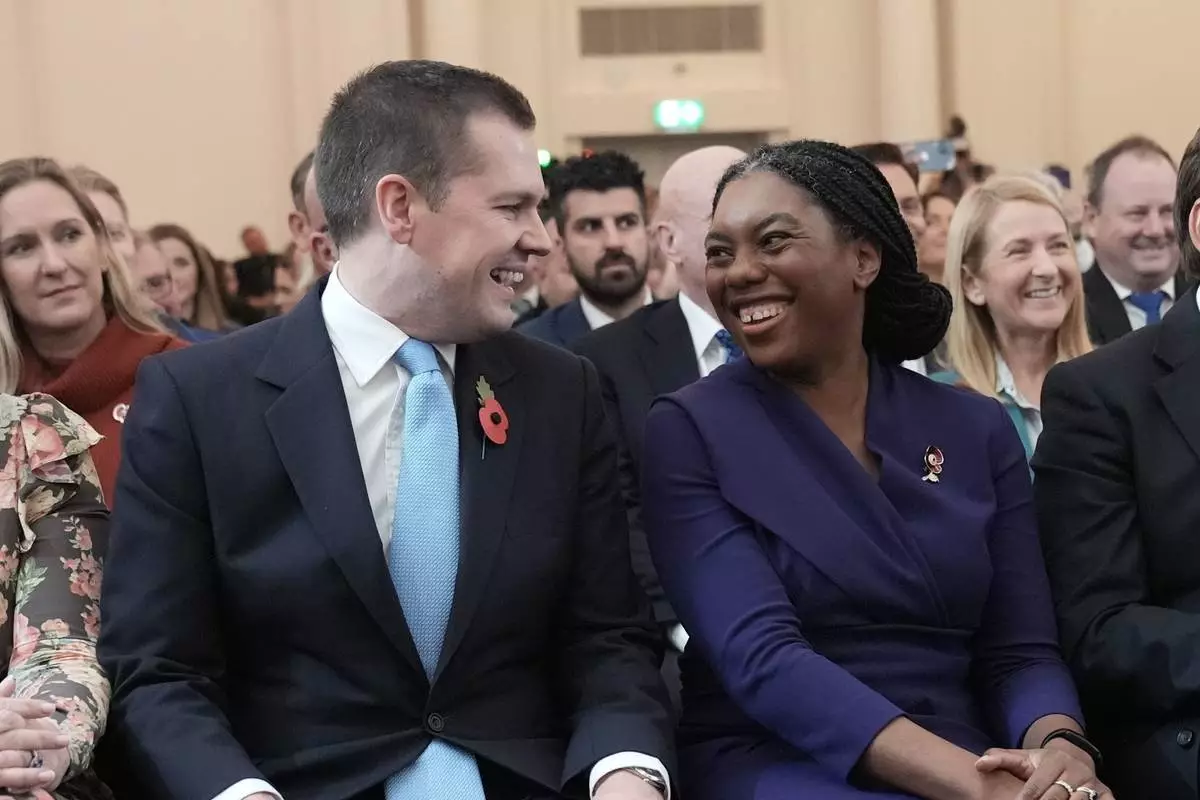
Kemi Badenoch with Robert Jenrick before being announced as the new Conservative Party leader following the vote by party members at 8 Northumberland Avenue in central London, Nov. 3, 2024. (Stefan Rousseau/PA via AP)