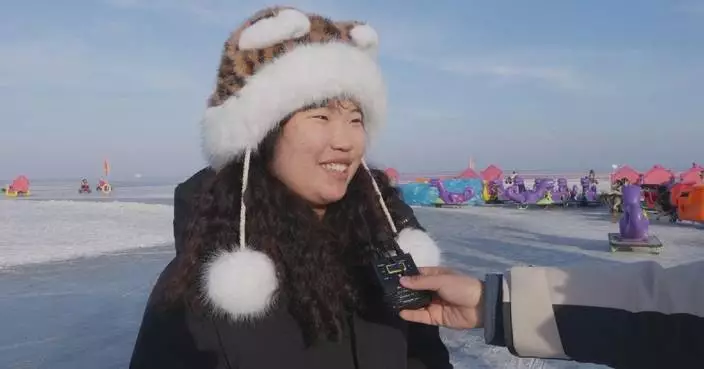
Xingcheng, a small coastal city in northeast China's Liaoning Province, has quietly emerged as a global giant in the swimwear industry.
The city with a population of less than 500,000 produces an astonishing 170 million pieces of swimwear every year -- one out of every four swimwear items sold worldwide is made here.
"Our company's current annual output is over one million pieces, with the main sales markets in the Pearl River Delta and the Yangtze River Delta. We see peak demand each year in June, July, and August," said Chen Yunpeng, head of a swimwear manufacturing company in Xingcheng.
To date, Xingcheng's swimwear industry has generated an annual combined output value of 15 billion yuan (about 2.09 billion U.S. dollars).
"The annual output value of swimwear now reaches 15 billion yuan. The domestic market accounts for 40 percent of our sales, and our products enjoy a 25-percent share of the international market, as we export to over 140 countries and regions," said Han Yanan, director of Xingcheng's Bureau of Industry and Information Technology.
The transformation of this unassuming city from a modest seaside town into a major player in the global fashion market started in the 1980s when it saw a surge in tourists flocking to its beautiful beaches. Inspired by the colorful swimwear those tourists wore, locals set out to make versions of their own at home. What began as a family business quickly grew into a booming industry.
"My grandma was one of the first people in Xingcheng to start making and selling swimwear. They worked late into the night on sewing machines, and during the day, they'd carry the swimsuits to the beach to sell. When it came to my dad and my aunt' s generation, they built a small factory and took a low-speed train to sell their goods all over the country," said Tian Shu, head of another local swimwear manufacturing enterprise.
"At present, Xingcheng's swimwear industry is undergoing a significant smart transformation. Across the city, there are more than 33,000 pieces of production equipment, with over 30 percent using advanced international technology. Among large-scale enterprises, the adoption rate of automated cutting, digital printing, and automatic fabric spreading equipment has exceeded 90 percent. Some companies have even achieved full-process management of swimwear production," said Zong Jiapeng, director of Xingcheng's Swimwear Industry Development Center.
At a local swimwear manufacturing company, workers are busy fulfilling overseas orders. According to the person in charge, their cross-border online sales exceed two million pieces or sets each year, with products shipped to more than 100 countries around the world.
"We are establishing connections with many countries in South America online, including some of their local platforms. We've now entered the South American market, including Brazil, Argentina, and Chile, and later we may expand to Peru or other South American markets in the future. We plan to increase our market share year by year, and our overall sales volume has increased by 15 percent this year," said Su Peng, head of one of Xingcheng's other swimwear businesses.
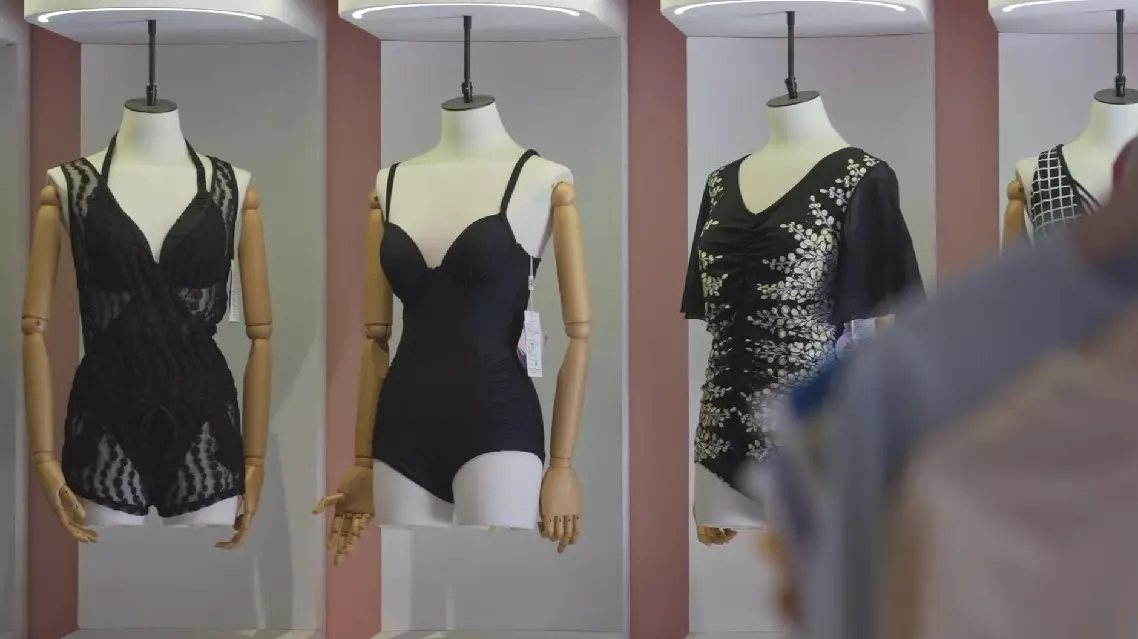
Northeastern Chinese city emerges as global giant in swimwear industry