PERKINSTON, Miss. (AP) — In the embrace of a cheerfully chittering spider monkey named Louie, an Army veteran who grappled for decades with post-traumatic stress disorder says he finally feels at peace.
“Being out here has brought a lot of faith back to me,” said John Richard. “There's no feeling like it.”
Click to Gallery
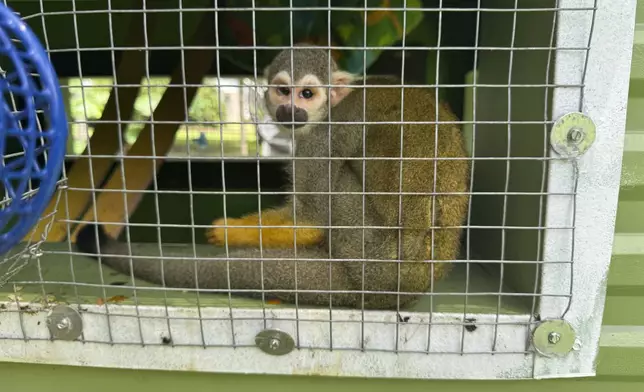
A squirrel monkey looks out from its enclosure at the Gulf Coast Primate Sanctuary in Perkinston, Mississippi on Friday, July 25, 2025. (AP Photo/Sophie Bates)
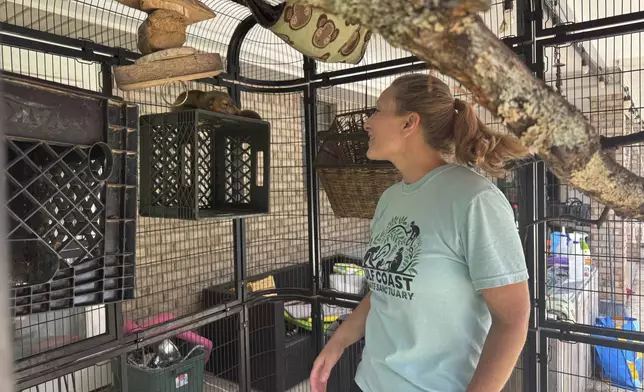
April Stewart, the founder of the Gulf Coast Primate Sanctuary, checks on a kinkajou in Perkinston, Mississippi on Friday, July 25, 2025. (AP Photo/Sophie Bates)
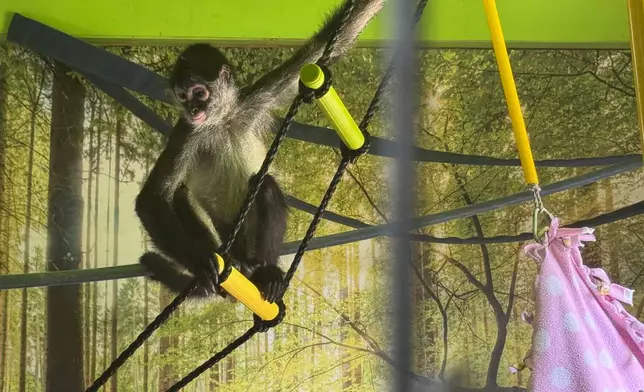
A spider monkey sits on a rope ladder inside its enclosure at the Gulf Coast Primate Sanctuary in Perkinston, Miss., Friday, July 25, 2025. (AP Photo/Sophie Bates)
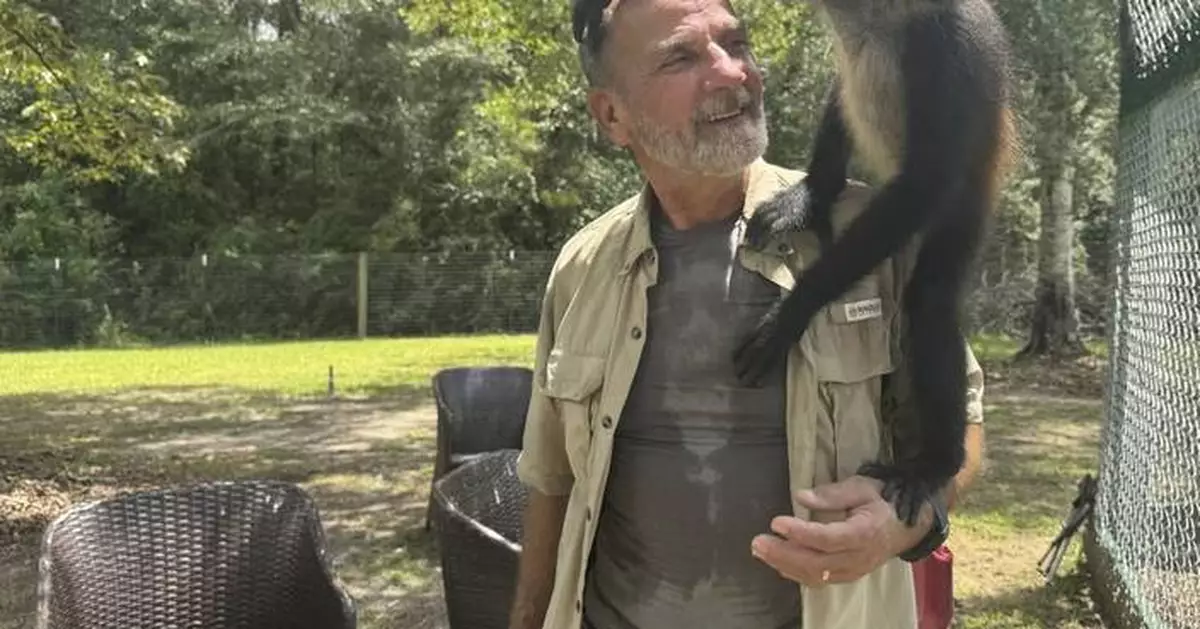
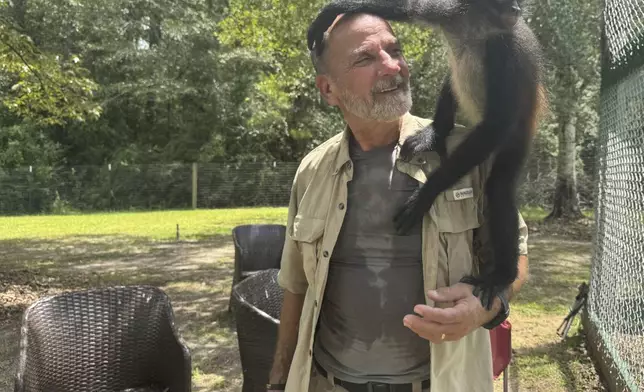
Louie the spider monkey climbs on John Richard, a volunteer at the Gulf Coast Primate Sanctuary in Perkinston, Mississippi on Friday, July 25, 2025. (AP Photo/Sophie Bates)
The bond began last fall when Richard was helping two married veterans set up the Gulf Coast Primate Sanctuary, volunteering his time to build the enclosure that's now Louie's home in rural southeast Mississippi.
During a recent visit, Louie quickly scampered up Richard's body, wrapping his arms and tail around him in a sort of hug. Richard, in turn, placed his hand on the primate's back and whispered sweetly until Louie disentangled himself and swung away.
“He's making his little sounds in my ear, and you know, he's always telling you, ‘Oh, I love you,’” Richard said. “‘I know you're OK. I know you're not going to hurt me.’”
Richard said his connection with Louie helped more than any other PTSD treatment he received since being diagnosed more than 20 years ago.
It's a similar story for the sanctuary's founder, April Stewart, an Air Force veteran who said she developed PTSD as a result of military sexual trauma.
“It was destroying my life. It was like a cancer,” she said. “It was a trauma that was never properly healed.”
Stewart's love of animals was a way to cope. She didn’t necessarily set out to create a place of healing for veterans with PTSD, but that’s what the sanctuary has become for some volunteers.
“By helping the primates learning to trust, we’re also reteaching ourselves how to trust, and we’re giving ourselves grace with people,” she said.
Her 15-acre property, nestled amid woods and farmland, is filled with rescue dogs, two rather noisy geese and a black cat. It's also now home to three spider monkeys, two squirrel monkeys and two kinkajous, a tropical mammal that is closely related to raccoons.
The sanctuary in the town of Perkinston, about 30 miles (50 kilometers) due north of the Gulf coast, includes three large enclosures for the different species. Each has a smaller, air-conditioned area and a large fenced-in outdoor zone, where the primates swing from platforms and lounge in the sun. Checking on the animals — changing their blankets, bringing food and water — is one of the first and last things Stewart does each day.
However, she can't do it alone. She relies on a group of volunteers for help, including several other veterans, and hopes to open the sanctuary to the public next summer for guided educational tours.
Stewart and her husband, also a veteran, decided to open the sanctuary in October after first rescuing and rehoming monkeys. With the help of two exotic-animal veterinarians, they formed a foundation that governs the sanctuary — which she said is the only primate sanctuary in Mississippi licensed by the U.S. Department of Agriculture — and ensures the animals will be cared for even when the Stewarts are no longer able to run it themselves.
All the animals were once somebody's pet, but their owners eventually couldn't take care of them. Stewart stressed that primates do not make good or easy pets. They need lots of space and socialization, which is often difficult for families to provide.
The sanctuary's goal is to provide as natural a habitat as possible for the animals, Stewart said, and bring them together with their own species.
“This is their family,” she said.
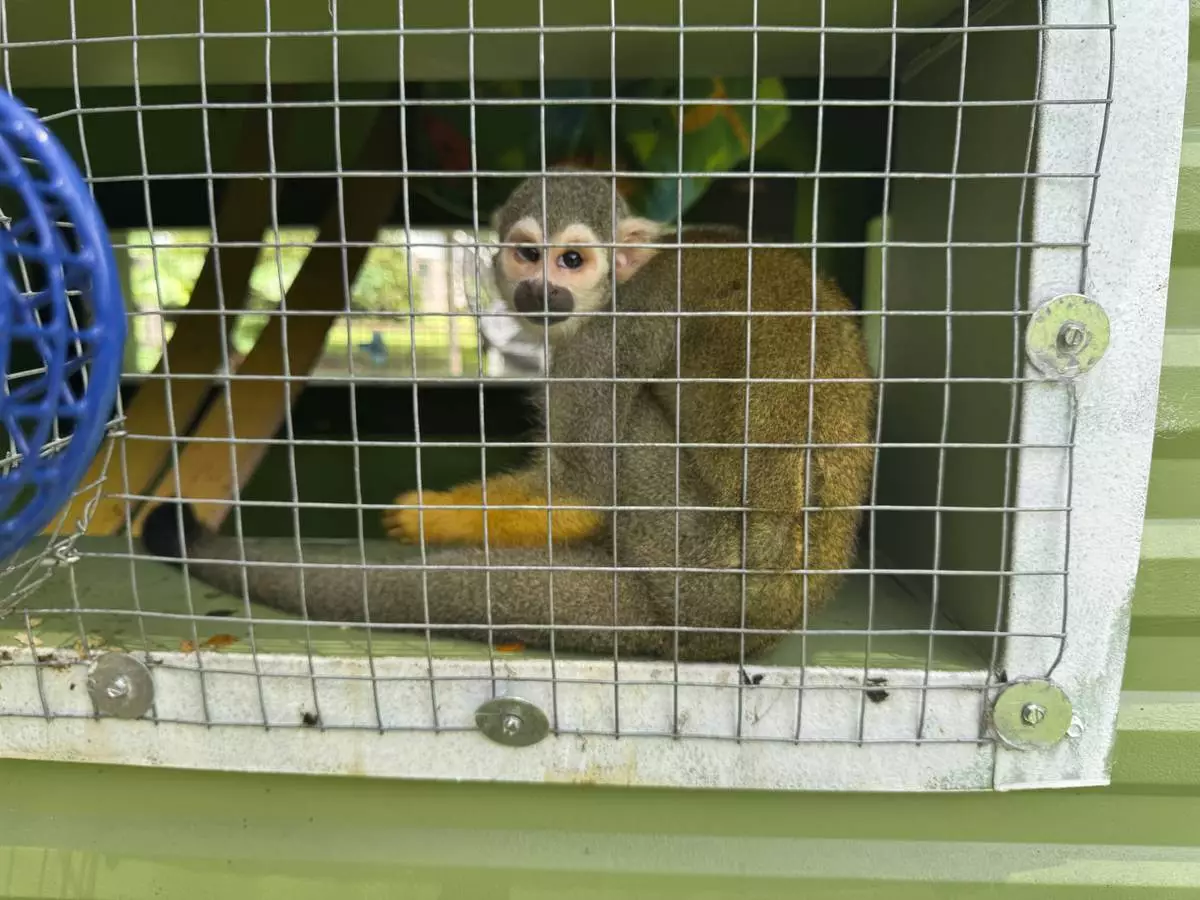
A squirrel monkey looks out from its enclosure at the Gulf Coast Primate Sanctuary in Perkinston, Mississippi on Friday, July 25, 2025. (AP Photo/Sophie Bates)
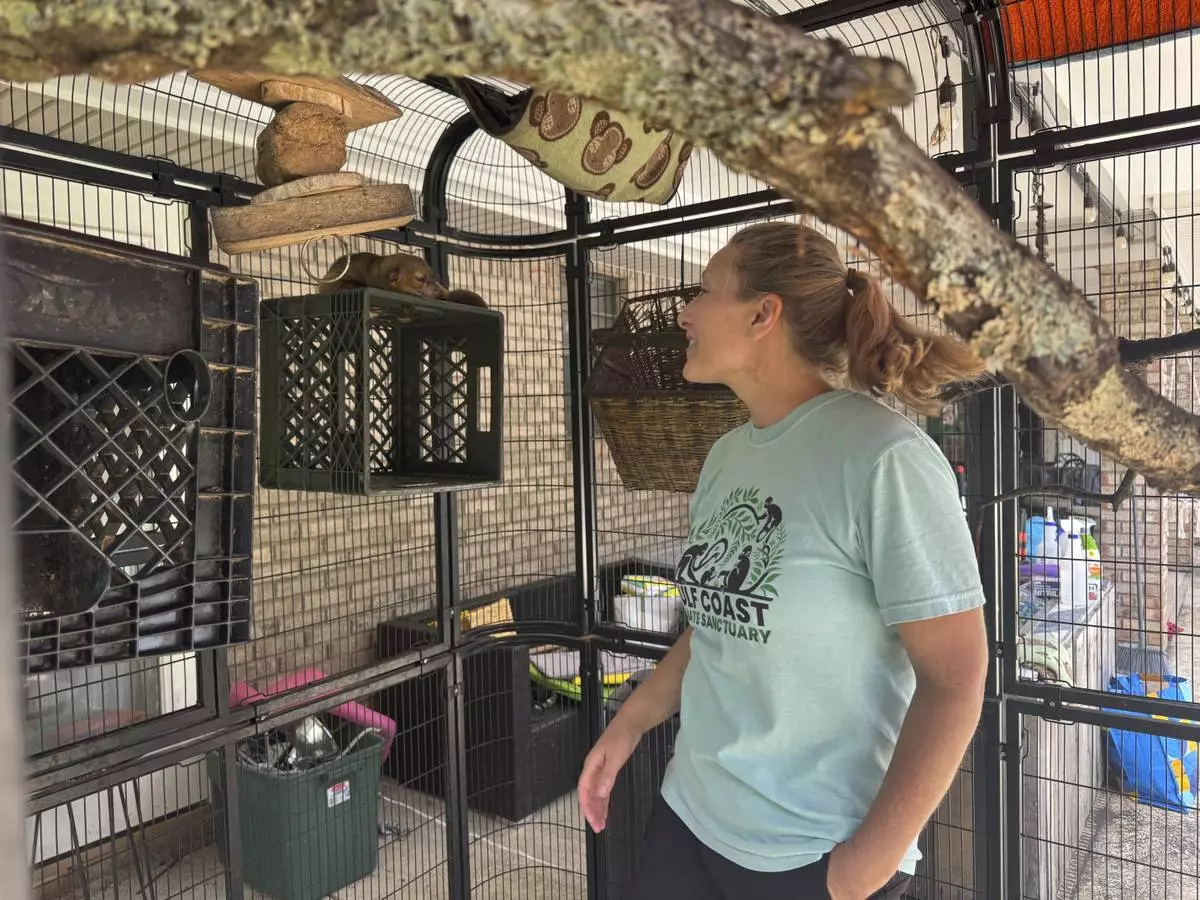
April Stewart, the founder of the Gulf Coast Primate Sanctuary, checks on a kinkajou in Perkinston, Mississippi on Friday, July 25, 2025. (AP Photo/Sophie Bates)
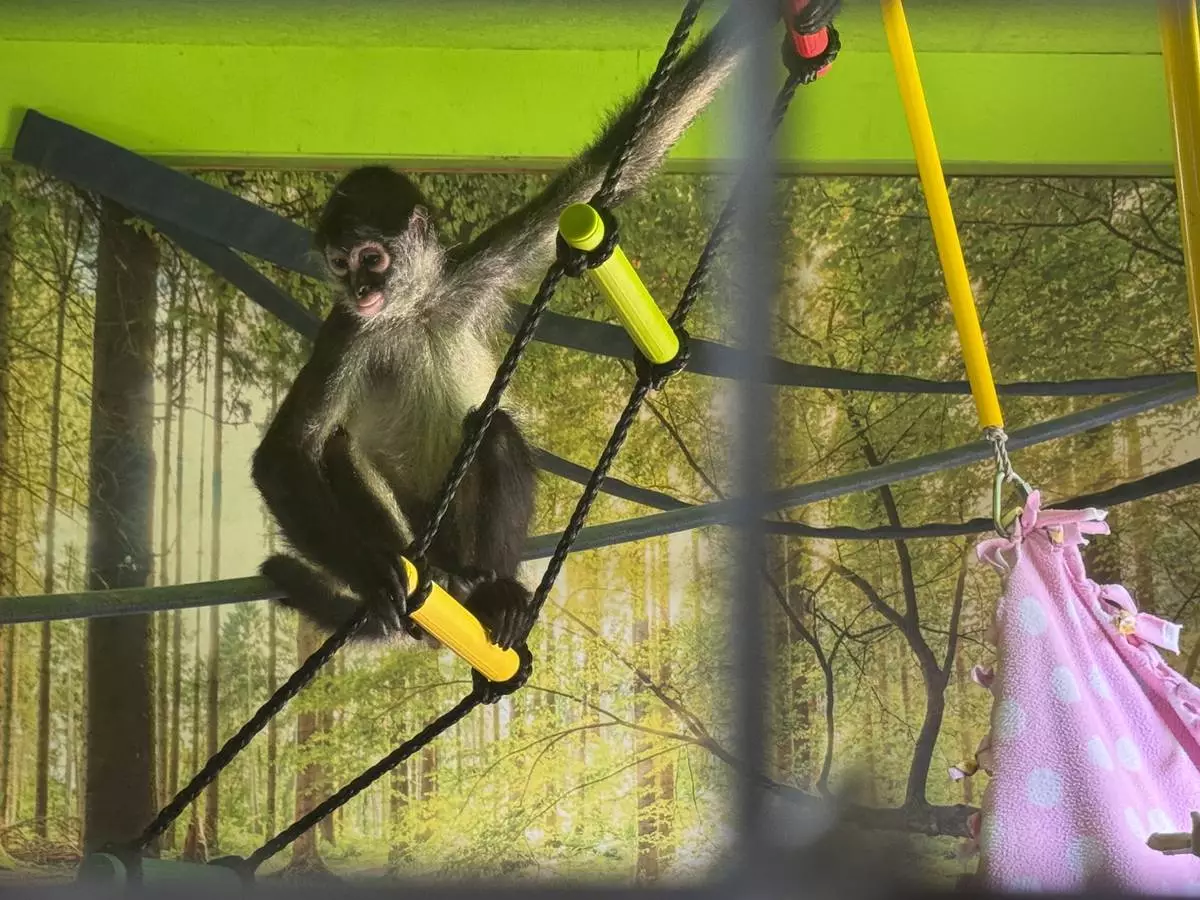
A spider monkey sits on a rope ladder inside its enclosure at the Gulf Coast Primate Sanctuary in Perkinston, Miss., Friday, July 25, 2025. (AP Photo/Sophie Bates)
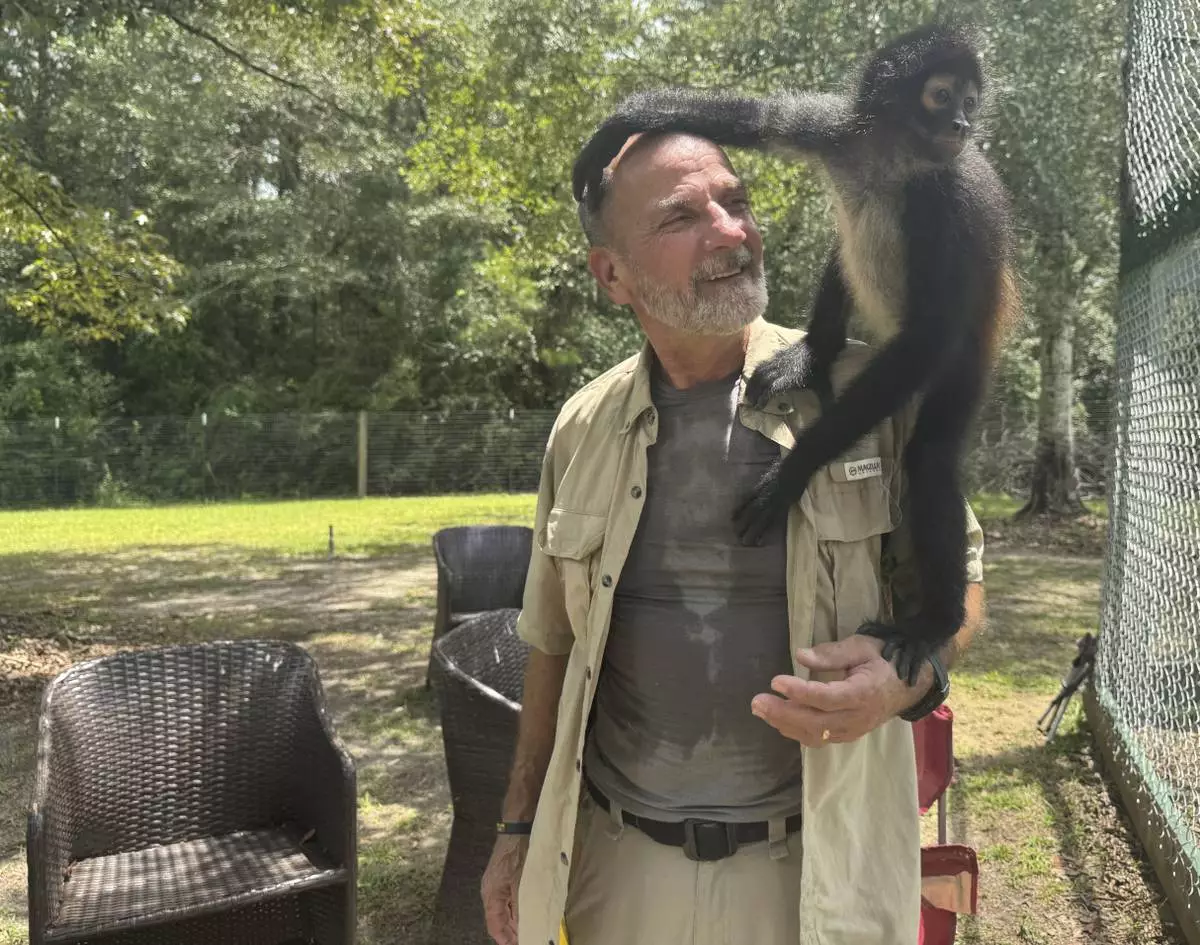
Louie the spider monkey climbs on John Richard, a volunteer at the Gulf Coast Primate Sanctuary in Perkinston, Mississippi on Friday, July 25, 2025. (AP Photo/Sophie Bates)
WASHINGTON (AP) — President Donald Trump’s second term has been eventful. You wouldn’t know it from his approval numbers.
An AP-NORC poll from January found that about 4 in 10 U.S. adults approve of Trump’s performance as president. That’s virtually unchanged from March 2025, shortly after he took office for the second time.
The new poll from The Associated Press-NORC Center for Public Affairs Research does show subtle signs of vulnerability for the Republican president. Trump hasn’t convinced Americans that the economy is in good shape, and many question whether he has the right priorities when he’s increasingly focused on foreign intervention. His approval rating on immigration, one of his signature issues, has also slipped since he took office.
Here’s how Americans’ views of Trump have — and haven’t — changed over the past year, according to AP-NORC polling.
Call it a gift or a curse — for all his unpredictability, Trump's approval numbers just don't change very much.
This was largely the case during his first term in office, too. Early in his first term, 42% of Americans approved of how he was handling the presidency. There were some ups and downs over the ensuing years, but he left office with almost the same approval.
That level of consistency on presidential approval numbers could be the new normal for U.S. politics — or it could be unique to Trump. Gallup polling since the 1950s shows that presidential approval ratings have grown less variable over time. But President Joe Biden had a slightly different experience. Biden, a Democrat, entered the White House with higher approval numbers than Trump has ever received, but those fell rapidly during his first two years in office, then stayed low for the remainder of his term.
Most Americans have held a critical view of Trump throughout his time in office, and Americans are twice as likely to say he's focused on the wrong priorities than the right ones. About half of U.S. adults say he’s mostly focusing on the wrong priorities one year into his second term, and approximately 2 in 10 say he’s mostly focused on the right priorities. Another 2 in 10, roughly, say it’s been about an even mix, and 14% say they don't have an opinion.
The economy has haunted Trump in his first year back in the White House, despite his insistence that “the Trump economic boom has officially begun.”
Just 37% of U.S. adults approve of how Trump is handling the economy. That’s up slightly from 31% in December — which marked a low point for Trump — but Trump started out with low approval on this issue, which doesn’t give him a lot of room for error.
The economy is a new problem for Trump. His approval rating on this issue in his first term fluctuated, but it was typically higher. Close to half of Americans approved of Trump’s economic approach for much of his first White House stint, and he’s struggled to adjust to this as a weak point. Americans care a lot more about costs than they did in Trump’s first term, and, like Biden, he’s persistently asserted that the U.S. economy is not a problem while the vast majority describe it as “poor.”
About 6 in 10 U.S. adults say Trump has done more to hurt the cost of living in his second term, while only about 2 in 10 say he’s done more to help. About one-quarter say he hasn't made an impact.
When Trump entered office, immigration was among his strongest issues. It’s since faded, a troubling sign for Trump, who campaigned on both economic prosperity and crackdowns to illegal immigration.
Just 38% of U.S. adults approve of how Trump is handling immigration, down from 49% in March. The poll was conducted Jan. 8-11, shortly after the death of Renee Good, who was shot and killed by a U.S. Immigration and Customs Enforcement officer in Minneapolis.
But there are signs that Americans still give Trump some leeway on immigration issues. About half of U.S. adults say Trump has “gone too far” when it comes to deporting immigrants living in the country illegally, which is unchanged since April, despite an immigration crackdown that spread to cities across the U.S. in the second half of the year.
Nearly half of Americans, 45%, say Trump has helped immigration and border security “a lot” or “a little” in his second term. This is an area where Democrats are more willing to give Trump some credit. About 2 in 10 Democrats say Trump has helped on this issue, higher than the share of Democrats who say he's helped on costs or job creation.
Trump has focused his attention more on foreign policy in his second term, and polling shows most Americans disapprove of his approach.
But much like Trump's overall approval, views of his handling of foreign policy have changed little in his second term, despite wide-ranging actions including his push to control Greenland and the recent military capture of Venezuelan President Nicolás Maduro.
About 6 in 10 Americans disapprove of how Trump is handling the issue of foreign policy, and most Americans, 56%, say Trump has “gone too far” in using the U.S. military to intervene in other countries.
Trump’s continued focus on global issues could be a liability given its sharp contrast with the “America First” platform he ran on and Americans’ growing concern with costs at home. But it could also be hard to shift views on the issue — even if Trump takes more dramatic action in the coming months.
The AP-NORC poll of 1,203 adults was conducted Jan. 8-11 using a sample drawn from NORC’s probability-based AmeriSpeak Panel, which is designed to be representative of the U.S. population. The margin of sampling error for adults overall is plus or minus 3.9 percentage points.
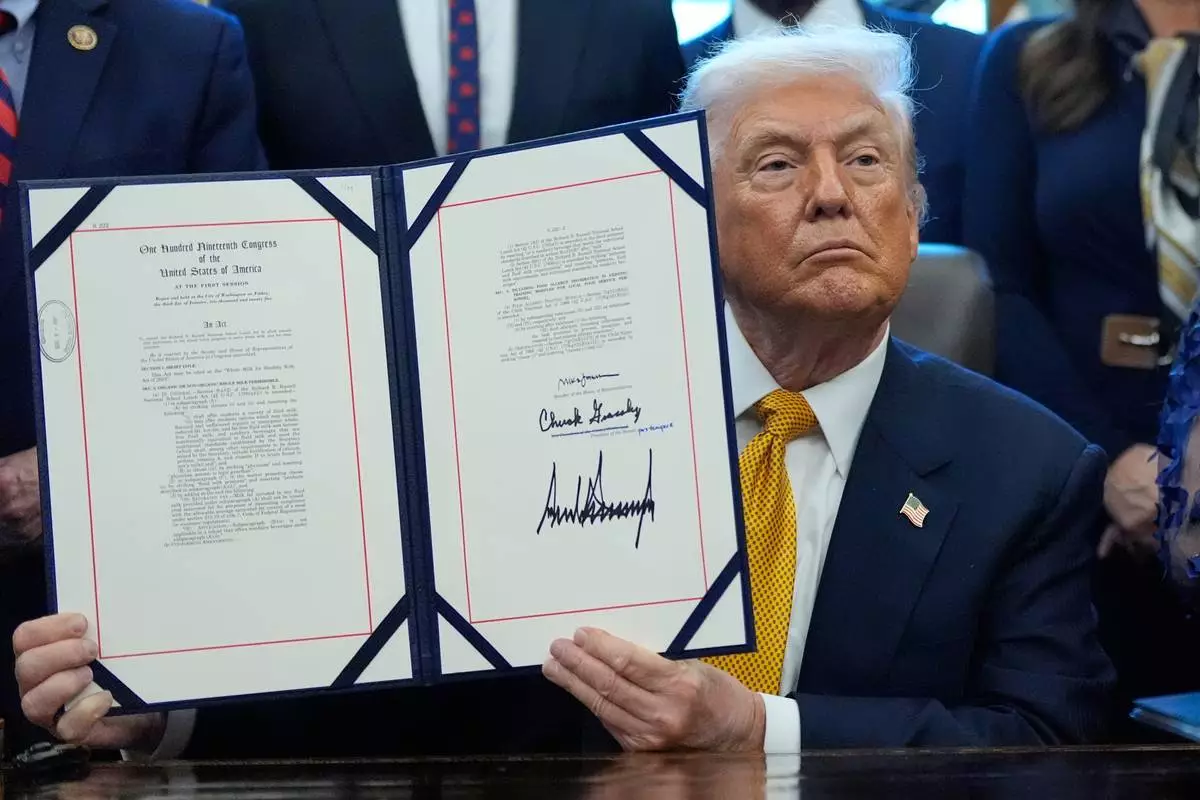
President Donald Trump holds a bill that returns whole milk to school cafeterias across the country, in the Oval Office of the White House, Wednesday, Jan. 14, 2026, in Washington. (AP Photo/Alex Brandon)
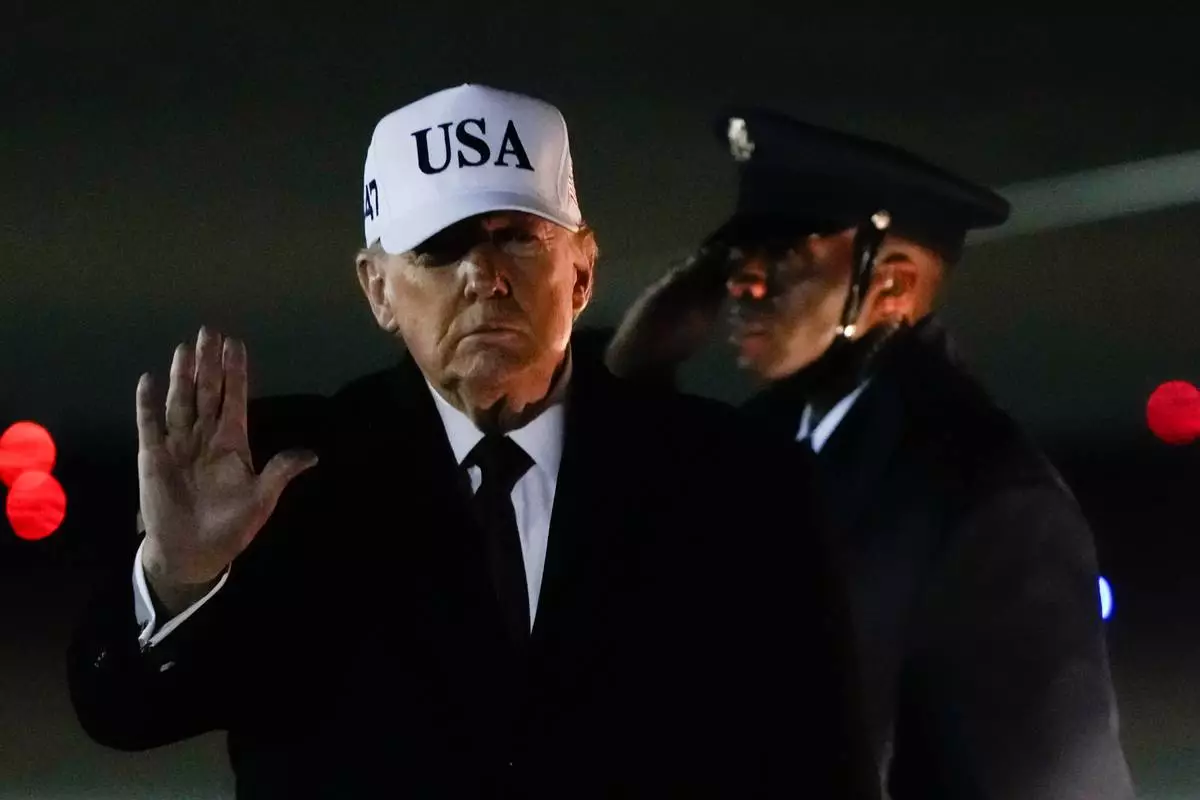
FILE - President Donald Trump waves after arriving on Air Force One from Florida, Jan. 11, 2026, at Joint Base Andrews, Md. (AP Photo/Julia Demaree Nikhinson, File)