BEIRUT (AP) — Human Rights Watch on Thursday criticized the Syrian government for what it says is the lack of accountability on perpetrators of sectarian violence and killings on all sides in clashes between government-backed armed Bedouin clans and Druze militias in a southern province in July that killed hundreds of civilians.
In its report, the rights group said it documented 86 “apparently unlawful killings” of civilians in Sweida province, of which 67 were Druze and 19 were Bedouin.
Human Rights Watch said it interviewed eyewitnesses and survivors, who said that government forces destroyed civilian property and committed summary killings.
They said the armed Bedouin groups backed by the government looted homes and kidnapped people, while Druze militias attacked and detained Bedouin civilians in a series of revenge raids.
The clashes in the southern province of Sweida marked another setback for President Ahmad al-Sharaa, who has been struggling to assert his government's full authority across the war-torn country and appeal to Syria's minorities, which are largely skeptical of his Islamist-led rule.
Under the autocratic leadership of Bashar Assad, the Druze had a degree of autonomy during the conflict as they largely stayed away from the fighting. Since his fall in December 2024, members of the small religious sect have been navigating a new, uncertain Syria.
In mid-July, armed groups affiliated with Druze spiritual leader Sheikh Hikmat al-Hijri clashed with local Bedouin clans, spurring intervention by government forces who effectively sided with the Bedouins. Hundreds of civilians, mostly Druze, were killed, many by government fighters. The United Nations estimates that 187,000 people were displaced by the end of the month.
The majority of the Druze community in Syria live in Sweida province. Since then, a large group of the militias banded together under al-Hijri, creating a de facto anonymous area in large swaths of the province, backed by neighboring Israel.
“The government’s acknowledgment of atrocities isn’t enough if those leading and directing abusive forces are shielded from justice,” deputy Middle East Director of Human Rights Watch Adam Coogle said in the report. “Without senior-level accountability and structural reform of the security sector, Syria will continue to face cycles of violence and reprisals.”
Damascus is now gearing up for a possible military escalation with the Kurdish-led Syrian Democratic Forces, which still controls large swaths of northeastern Syria, after intense clashes in two contested neighborhoods in the northern city of Aleppo. The SDF for years has been Washington’s key ally in combating the Islamic State group.
In Aleppo trials continued Thursday of defendants accused of attacking civilians during clashes in March in Syria's coastal provinces, where a counteroffensive against an insurgency by Assad loyalists spiraled into sectarian revenge attacks.
It led to the massacre of hundreds of civilians from the Alawite religious minority, who largely live along the coast. Assad and his family are Alawites.
The government said it was investigating the sectarian violence in Sweida, announcing in September that it had detained several members of the military and security forces. Damascus tasked a government body to report on abuses within three months, but in mid-November, the committee requested a two-month extension to publish its findings by the end of the year.
However, the investigation is apparently ongoing. Damascus has not said when the report's findings will be published, nor whether a trial, similar to one related to the violence along the coast, will take place.
While the government said it is investigating the incidents, no trial has yet begun for the clashes in Sweida.
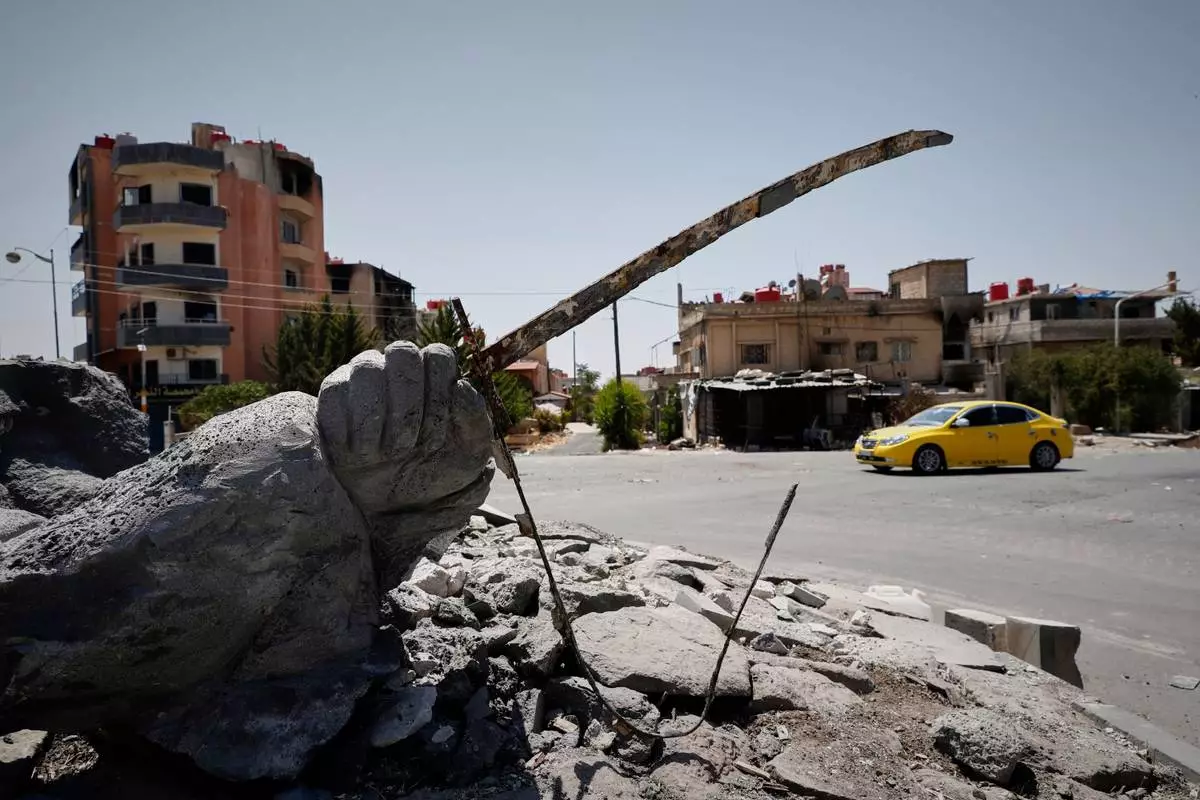
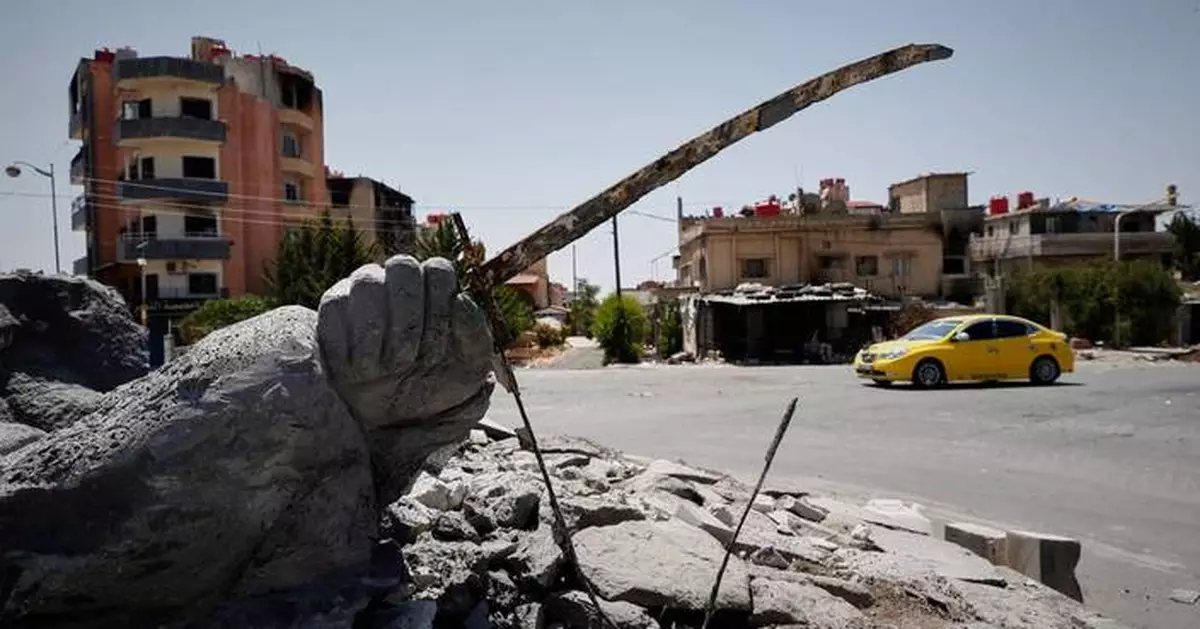
FILE - A car drives by a destroyed statue in the Druze-majority town of Sweida, Syria, July 25, 2025. (AP Photo/Omar Sanadiki, File)
The U.N. Security Council scheduled an emergency meeting Thursday to discuss Iran's deadly protests at the request of the United States, even as President Donald Trump left unclear what actions he would take against the Islamic state.
Tehran appeared to make conciliatory statements in an effort to defuse the situation after Trump threatened to take action to stop further killing of protesters, including the execution of anyone detained in Tehran’s bloody crackdown on nationwide protests.
Iran’s crackdown on the demonstrations has killed at least 2,615, the U.S.-based Human Rights Activists News Agency reported. The death toll exceeds any other round of protest or unrest in Iran in decades and recalls the chaos surrounding the country’s 1979 Islamic Revolution.
Iran closed its airspace to commercial flights for hours without explanation early Thursday and some personnel at a key U.S. military base in Qatar were advised to evacuate. The U.S. Embassy in Kuwait also ordered its personnel to “temporary halt” travel to the multiple military bases in the small Gulf Arab country.
Iran previously closed its airspace during the 12-day war against Israel in June.
Here is the latest:
In a joint statement, the foreign ministers of Canada, France, Germany, Italy, Japan, the United Kingdom, the United States and the European Union’s main foreign policy chief said the G7 members were “gravely concerned” by the developments surrounding the protests, and that they “strongly oppose the intensification of the Iranian authorities’ brutal repression of the Iranian people.”
The statement, published on the EU’s website Thursday, said the G7 were “deeply alarmed at the high level of reported deaths and injuries” and condemned “the deliberate use of violence” by Iranian security forces against protesters.
The G7 members “remain prepared to impose additional restrictive measures if Iran continues to crack down on protests and dissent in violation of international human rights obligations,” the statement said.
China’s Foreign Minister Wang Yi has spoken with his counterpart in Iran, who said the situation was “now stable,” China’s Ministry of Foreign Affairs said.
Abbas Araghchi said “he hoped China will play a greater role in regional peace and stability” during the talks, according to the statement from the ministry.
“China opposes imposing its will on other countries, and opposes a return to the ‘law of the jungle’,” Wang said.
“China believes that the Iranian government and people will unite, overcome difficulties, maintain national stability, and safeguard their legitimate rights and interests,” he added. “China hopes all parties will cherish peace, exercise restraint, and resolve differences through dialogue. China is willing to play a constructive role in this regard.”
“We are against military intervention in Iran,” Turkish Foreign Minister Hakan Fidan told journalists in Istanbul on Thursday. “Iran must address its own internal problems… They must address their problems with the region and in global terms through diplomacy so that certain structural problems that cause economic problems can be addressed.”
Ankara and Tehran enjoy warm relations despite often holding divergent interests in the region.
Fidan said the unrest in Iran was rooted in economic conditions caused by sanctions, rather than ideological opposition to the government.
Iranians have been largely absent from an annual pilgrimage to Baghdad, Iraq, to commemorate the death of Imam Musa al-Kadhim, one of the twelve Shiite imams.
Many Iranian pilgrims typically make the journey every year for the annual religious rituals.
Streets across Baghdad were crowded with pilgrims Thursday. Most had arrived on foot from central and southern provinces of Iraq, heading toward the shrine of Imam al-Kadhim in the Kadhimiya district in northern Baghdad,
Adel Zaidan, who owns a hotel near the shrine, said the number of Iranian visitors this year compared to previous years was very small. Other residents agreed.
“This visit is different from previous ones. It lacks the large numbers of Iranian pilgrims, especially in terms of providing food and accommodation,” said Haider Al-Obaidi.
Europe’s largest airline group said Thursday it would halt night flights to and from Tel Aviv and Jordan's capital Amman for five days, citing security concerns as fears grow that unrest in Iran could spiral into wider regional violence.
Lufthansa — which operates Swiss, Austrian Airlines, Brussels Airlines and Eurowings — said flights would run only during daytime hours from Thursday through Monday “due to the current situation in the Middle East.” It said the change would ensure its staff — which includes unionized cabin crews and pilots -- would not be required to stay overnight in the region.
The airline group also said its planes would bypass Iranian and Iraqi airspace, key corridors for air travel between the Middle East and Asia.
Iran closed its airspace to commercial flights for several hours early Thursday without explanation.
A spokesperson for Israel’s Airport Authority, which oversees Tel Aviv’s Ben Gurion Airport, said the airport was operating as usual.
Iranian state media has denied claims that a young man arrested during Iran’s recent protests was condemned to death. The statement from Iran’s judicial authorities on Thursday contradicted what it said were “opposition media abroad” which claimed the young man had been quickly sentenced to death during a violent crackdown on anti-government protests in the country.
State television didn’t immediately give any details beyond his name, Erfan Soltani. Iranian judicial authorities said Soltani was being held in a detention facility outside of the capital. Alongside other protesters, he has been accused of “propaganda activities against the regime,” state media said.
New Zealand’s Foreign Minister Winston Peters said Thursday that his government was “appalled by the escalation of violence and repression” in Iran.
“We condemn the brutal crackdown being carried out by Iran’s security forces, including the killing of protesters,” Peters posted on X.
“Iranians have the right to peaceful protest, freedom of expression, and access to information – and that right is currently being brutally repressed,” he said.
Peters said his government had expressed serious concerns to the Iranian Embassy in Wellington.
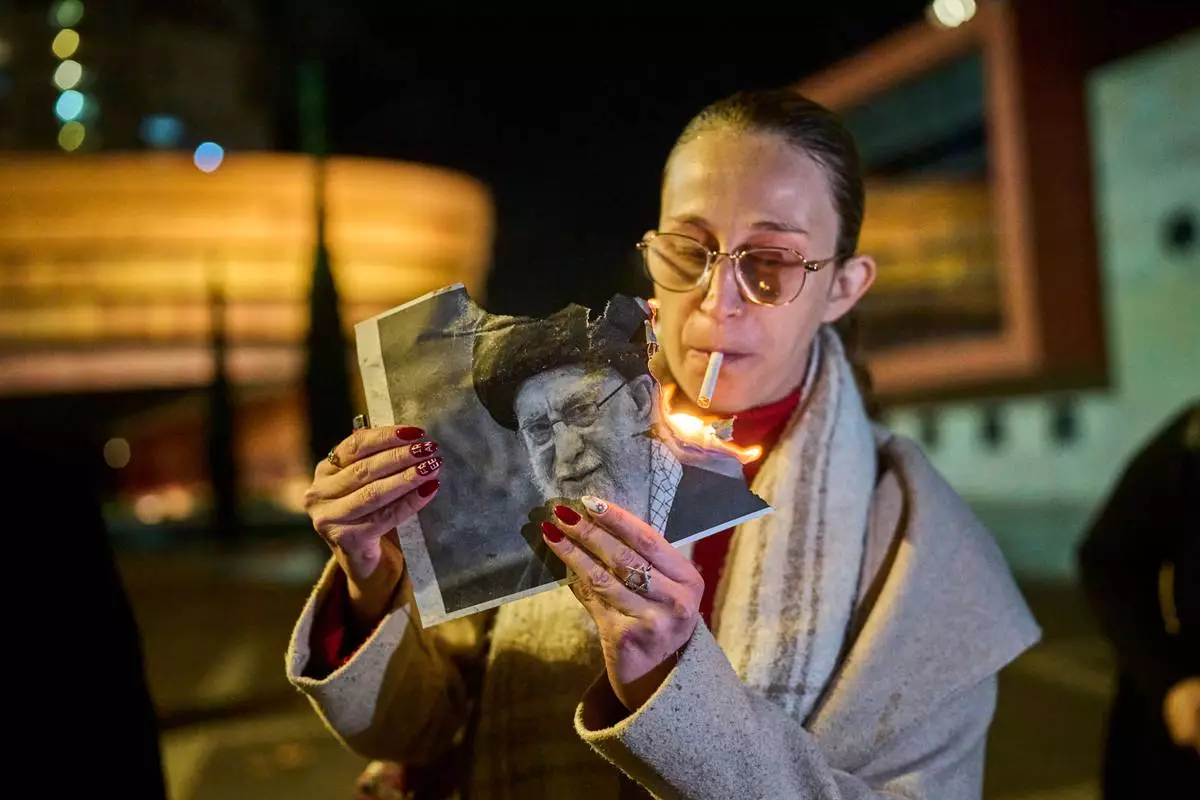
A demonstrator lights a cigarette with a burning poster depicting Supreme Leader Ayatollah Ali Khamenei during a rally in support of Iran's anti-government protests, in Holon, Israel, Wednesday, Jan. 14, 2026. (AP Photo/Ohad Zwigenberg)
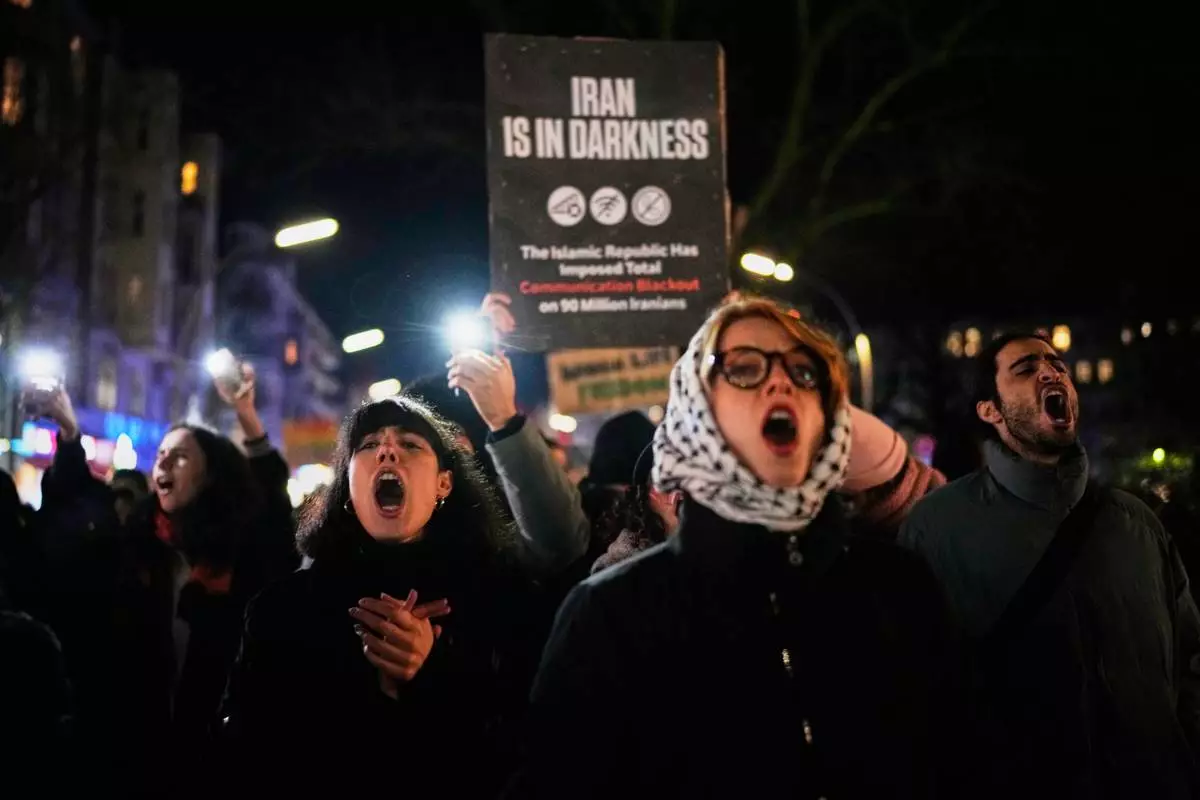
Protesters participate in a demonstration in support of the nationwide mass protests in Iran against the government, in Berlin, Germany, Wednesday, Jan. 14, 2026. (AP Photo/Ebrahim Noroozi)
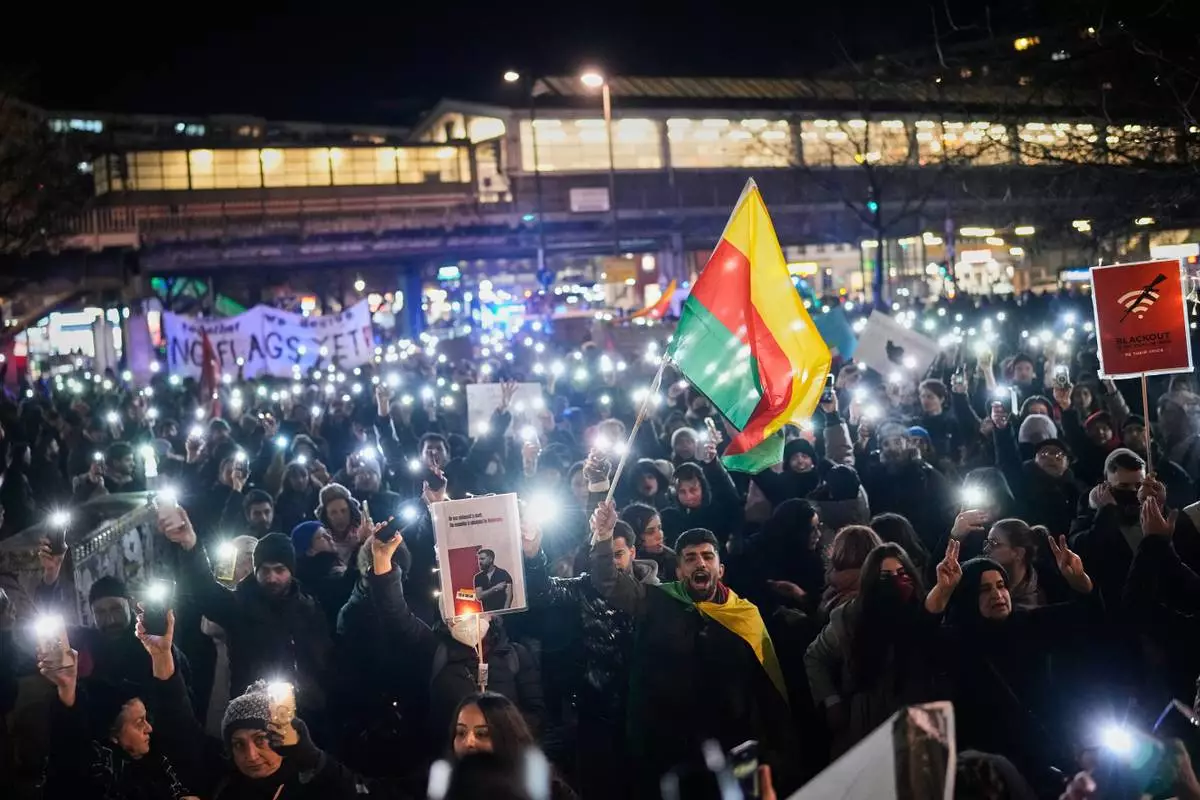
Protesters participate in a demonstration in support of the nationwide mass protests in Iran against the government, in Berlin, Germany, Wednesday, Jan. 14, 2026. (AP Photo/Ebrahim Noroozi)