"Dead to Rights," a film on the Nanjing Massacre, has ignited strong emotions of audiences, with many of them underscoring the importance of remembering history in an era of peace.
Drawing on verified photographic evidence of Japanese wartime atrocities during the Nanjing Massacre, "Dead To Rights" tells the story of a group of Chinese civilians who seek refuge in a photography studio during the brutal occupation of Nanjing, the then Chinese capital, by Japanese aggressor troops.
The Nanjing Massacre took place when Japanese troops captured the then-Chinese capital on Dec. 13, 1937. Over the course of six weeks, they proceeded to kill approximately 300,000 Chinese civilians and unarmed soldiers in one of the most barbaric episodes of World War II.
The film has deeply resonated with viewers.
"When the story in the film ended and we returned to reality -- seeing the beautiful city of Nanjing as it is today, witnessing its development -- I felt that we are truly fortunate. That was the moment that moved me the most, near the end of the film. As someone from Nanjing, the most important thing is to remember history," said Zhao Chao, a viewer.
Others echoed this sentiment.
"We are also Nanjing locals. Our textbooks have taught us about this part of history. Seeing so many real images, as Nanjing natives, we have felt deep sorrow," said Yu Qian after watching the film.
"This film uses an authentic visual language to portray certain scenes that truly strike a chord. I think it's highly educational for our [us] generation, who live in an era of peace," said another viewer.
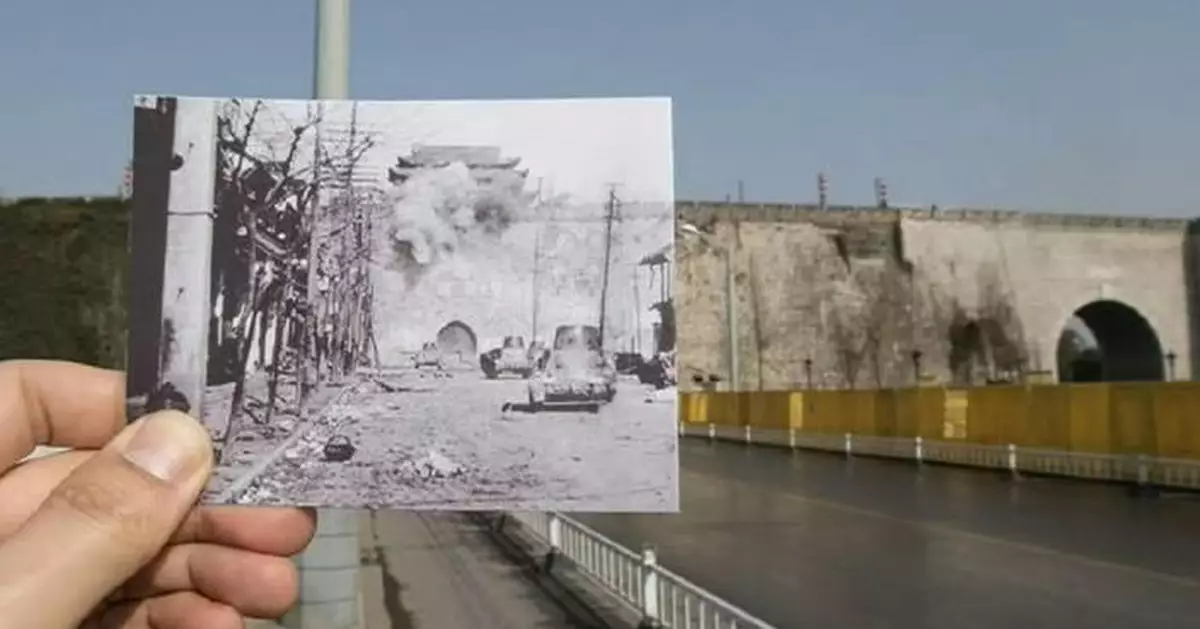
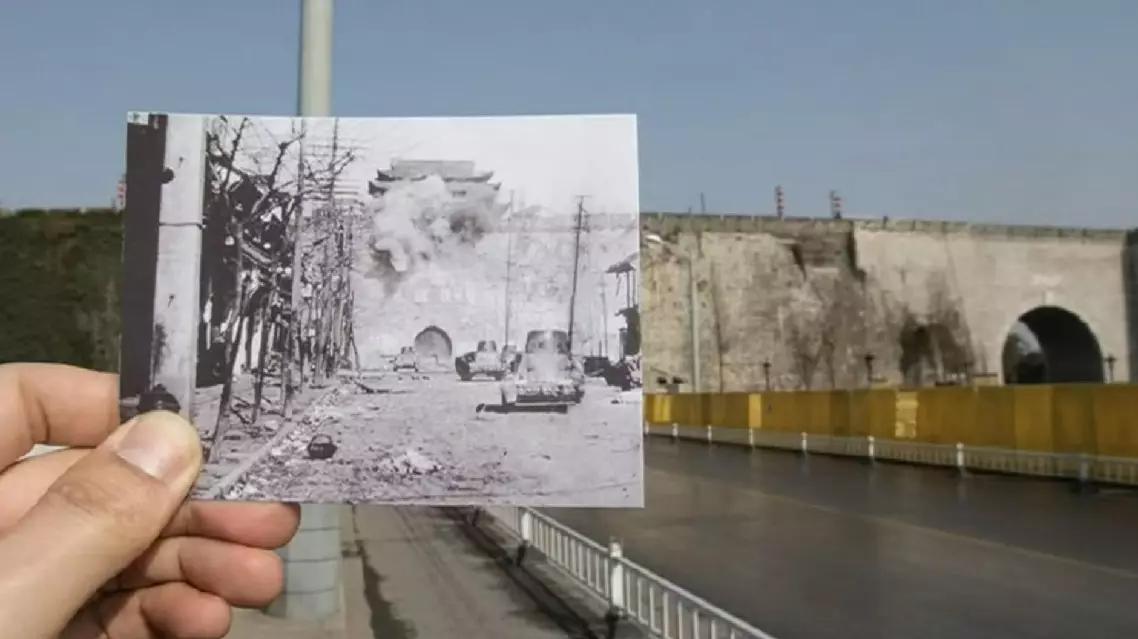
At the end of the movie, pictures of present-day Nanjing overlaid with archival wartime photographs were showcased.
Mao Shouhao, the photographer, expressed the hope that everyone could remember the history to help build a more prosperous country for future generations.
"The pictures were taken in the autumn of 2016. Back then, I traversed almost the entire city of Nanjing, overlaying old photos with scenes of today's Nanjing. They bear witness to the suffering of the Chinese nation during the war. I've watched 'Dead to Rights' several times. To contribute to such a great work -- that is the honor of my life. When audiences walk out of the theater after the movie, and see the lights shining from countless homes, that is what we truly wish to express. We hope everyone remembers history and strives to create an even more brilliant China for future generations," he said.
Directed by Shen Ao, the film has taken China's summer box office by storm, grossing over 1.5 billion yuan (about 210 million U.S. dollars) within just 10 days of its July 25 debut.
Nanjing Massacre film "Dead to Rights" evokes strong feelings among audiences