Skip to Content Facebook Feature Image

First group of Syrian refugees returns home from Lebanon under UN-backed plan

China

First group of Syrian refugees returns home from Lebanon under UN-backed plan
China

China

First group of Syrian refugees returns home from Lebanon under UN-backed plan

2025-08-04 23:59 Last Updated At:08-05 14:47

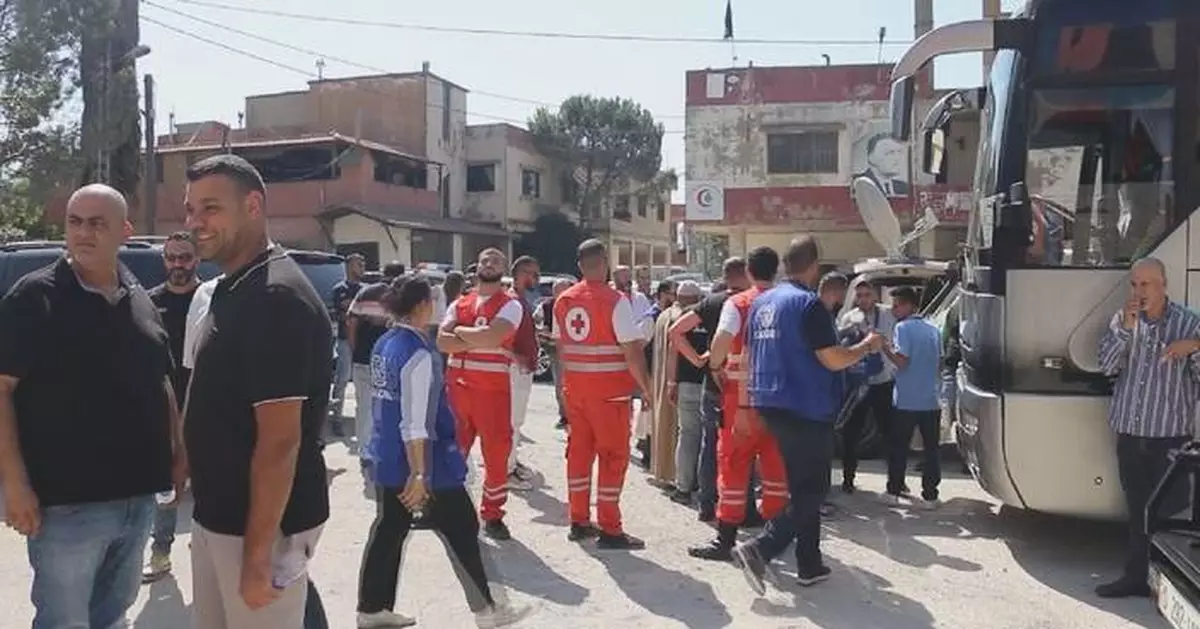
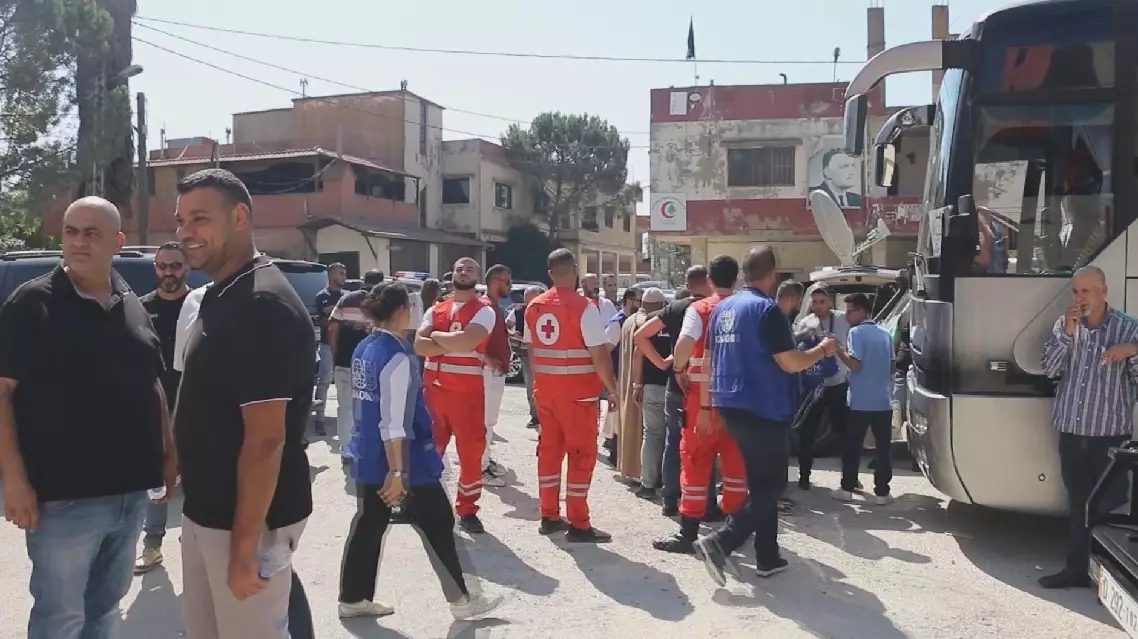
The first group of Syrian refugees has returned home from Lebanon as part of the safe return plan launched by the United Nations in coordination with the Lebanese and Syrian governments.

The return of the Syrian refugees, who fled their homes during Syria's lengthy civil war, represents the beginning of a new path towards addressing one of the most complex humanitarian issues in the region.

The step came after lengthy consultations between Lebanon, Syria, and the United Nations.

"What is required? We said international support is a very important issue, but it is not what drives the implementation of this decision. First, the decision should be an act of will. It remains primarily from the Lebanese government and people aiming to facilitate their return in coordination with the Syrian government and get direct support from both sides. I believe that technically, their return, compared to their displacement, would not have been so costly," said Elias Jradi, member of the House Health, Labor and Social Affairs Committee of Lebanon.

The plan aims to find sustainable solutions that guarantee the dignity of refugees and alleviate the pressure on host communities. The Lebanon Response Plan for 2025 includes a chapter dedicated to refugee return for the first time.

"We hope international support will be present. We hope it will be available yesterday rather than today, but unfortunately we consider this support a lost cause. This is an international responsibility. The international community has played a role in the war and peace in Syria, response to displacement, and so on, and we all know these things. So, the international community has born its responsibility for this. We are asking for international support through a clear Lebanese-Syrian plan. If they help us, it's good. If they don't, we can implement it," said Jradi.

Return will be gradual and voluntary, and will focus on alleviating the refugees' fears and providing them with humanitarian support and basic services in their areas of origin.

"No one dislikes returning to their country, but the situation there is not very stable, neither in terms of livelihood nor security and anything else. Here too, the situation is not good, but what can we do? We've been living here for 10 years, and worked our way up to the bare necessities of life, including foods and drinks. The children were born and studying in schools here. [In Syria,] there are no schools. If there were schools and if we knew we could secure foods and drinks there, we would have left" said Ali Suleiman, a Syrian refugee in Lebanon.

The goal of the program, according to the United Nations, is not refugee return alone, but also aims to provide support, and work to encourage refugees to return home.

According to estimates by Lebanon's General Security Directorate, the country currently hosts more than 2.08 million Syrian refugees, although only 825,000 are officially registered with the UN refugee agency UNHCR.
First group of Syrian refugees returns home from Lebanon under UN-backed plan
First group of Syrian refugees returns home from Lebanon under UN-backed plan

First group of Syrian refugees returns home from Lebanon under UN-backed plan
First group of Syrian refugees returns home from Lebanon under UN-backed plan
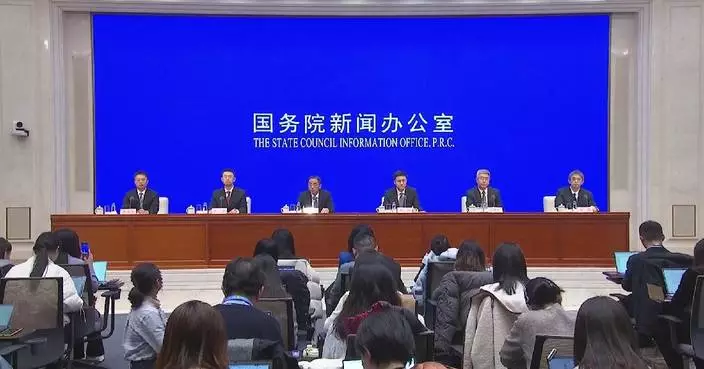
A former television host from Taiwan, Zhai Xuan, has made a pivotal decision to leave mainstream broadcasting in order to create content that provides a better understanding of the Chinese mainland and cross-strait relations.

Zhai, a seasoned television host with over a decade of experience in Taiwan's media landscape, recently addressed an audience at an event in Beijing, where she revealed her complete transition into independent online media.

In her remarks, she articulated her aspiration to bridge what she perceives as a significant information gap between audiences on both sides of the Strait, highlighting her commitment to fostering a deeper understanding and connection through her new endeavors.

"I was really surprised by all the fake news. There were stories saying people on the mainland can't afford tea eggs or that they live in mud houses and in Taiwan, this was the main information many people received," said Zhai.

Zhai said she initially began producing online videos to challenge such perceptions while continuing her work as a television host.

In April 2025, she travelled to the mainland with her father to fulfill her late grandfather's wish to return to his hometown. The trip, which reunited family members separated since 1949, was recorded in a video series titled "Journey to Find Our Roots", drawing attention from viewers in both Taiwan and the mainland.

"Many people in Taiwan told me that after watching, they wanted to apply for a mainland travel permit immediately and go looking for their relatives. Some had long forgotten these things, but after seeing my story, they began thinking about their hometowns and family members they had never met and decided to search for their roots," Zhai shared her story at the event.

By mid-2025, Zhai said she began to feel increasing pressure amid rising political tensions and a tightening atmosphere around cross-Strait exchanges in Taiwan.

After more than 12 years in the industry, Zhai resigned from her position, believing it was the right thing to do.

"At that moment, I felt this was a major issue,not just for me, but for Chinese people on both sides of the Strait. If I backed down then, I wouldn’t be standing on the right side," said Zhai.

Since leaving television, Zhai has broadened her online programming to encompass a range of daily-life topics, including practical guidance on applying for a mainland travel permit and using commonly employed mobile applications, in addition to content that delves into historical memory and cultural connections across the Strait.

As the debate over cross-Strait relations continues in Taiwan, Zhai said she remains committed to her current path.

Former Taiwan TV host bridges cross-Strait divide via online media

Former Taiwan TV host bridges cross-Strait divide via online media

Recommended Articles