
The European Union (EU) will suspend two packages of planned countermeasures against the United States' tariffs for six months, following a deal with the U.S., a European Commission spokesperson said on Monday.
The spokesperson said in a statement that the EU will continue to work with the U.S. to implement the tariff agreement reached on July 27. The statement said that to achieve this goal, the European Commission will take necessary measures to suspend the retaliatory tariffs against the U.S., originally scheduled to take effect starting this Thursday, for a period of six months.
The suspended retaliatory tariffs include a response to the U.S. tariffs on EU steel and aluminum exports, and a response to the baseline tariffs implemented by the Trump administration and the proposed auto tariffs.
U.S. President Donald Trump and European Commission President Ursula von der Leyen held an informal meeting in Scotland, the UK, on July 27.
After the meeting, Trump announced that the U.S. and the EU had reached a consensus on a new trade agreement.
Trump revealed some details of the new pact, including 15 percent tariffs for European exports to America, an additional 600 billion U.S. dollars EU investments in the U.S., and the European purchase of 750 billion U.S. dollars worth of American energy.
Josep Borrell, former High Representative of the European Union for Foreign Affairs and Security Policy, said on Monday that the tariff agreement reached between the European Commission and the United States is extremely bad from a political perspective.
He noted that the agreement sends a signal that the EU is weak and succumbing to Trump's pressure, further undermining the 27-member bloc's international image as a strategically independent actor.
Borrell criticized the tariff agreement as a direct manifestation of the current European Commission's strategic failure, and pointed out that the additional commitments set out in the deal are simply impossible for the EU to fulfill.
On July 24, EU member states overwhelmingly passed a decision to impose retaliatory tariffs on U.S. products worth 93 billion euros.
A European Commission spokesperson announced on July 23 that the EU plans to merge two packages of proposed counter tariffs on U.S. goods into a single list totaling 93 billion euros.
In April, the EU secured approval from member states for the first round of retaliatory tariffs totaling approximately 21 billion euros, targeting U.S. soybeans, motorcycles, jeans, and other products.
On July 23, EU member states approved a second list, valued at approximately 72 billion euros. This list primarily targeted high-value industrial products such as aircraft, automobiles, and electrical equipment.
Previously, the EU and several European leaders had stated that if a satisfactory trade agreement with the U.S. is not reached before the effective date of the U.S. tariffs on August 1, the EU will take countermeasures.
European Commission spokesperson Olof Gill said on July 23 that if negotiations fail, the countermeasures would take effect on August 7.
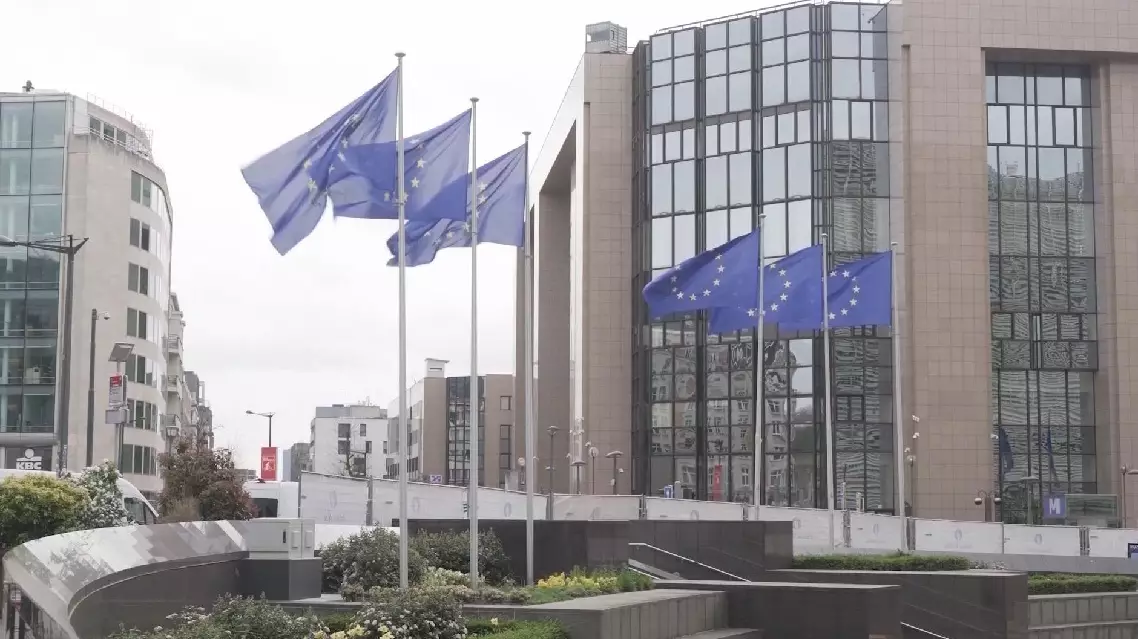
EU to suspend US tariff countermeasures for 6 months