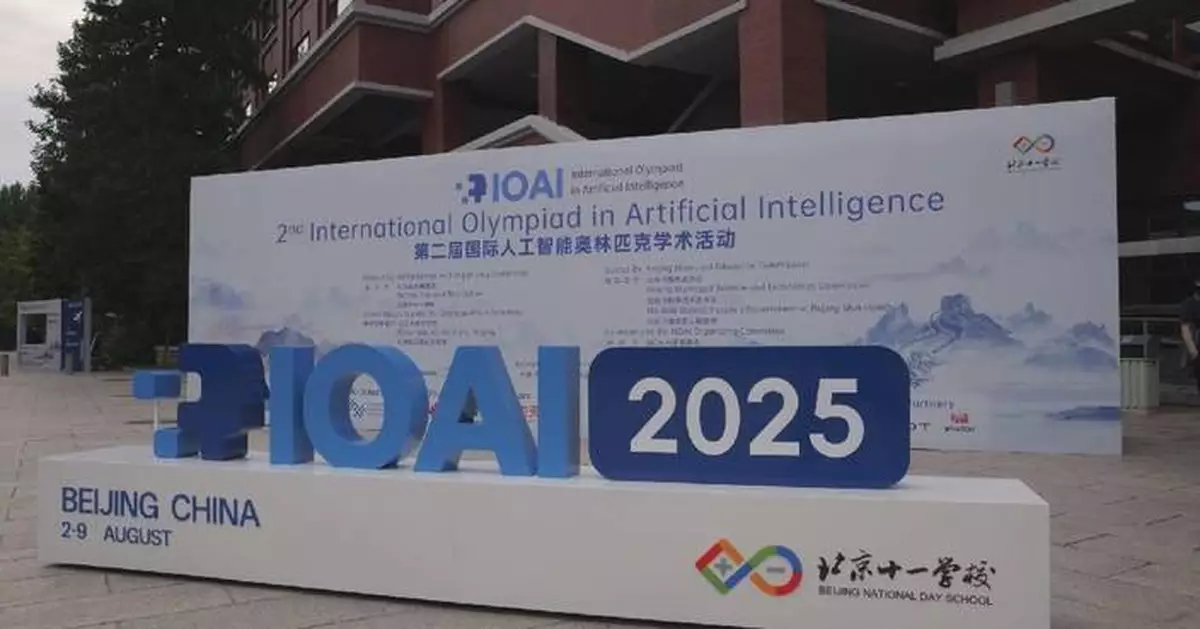
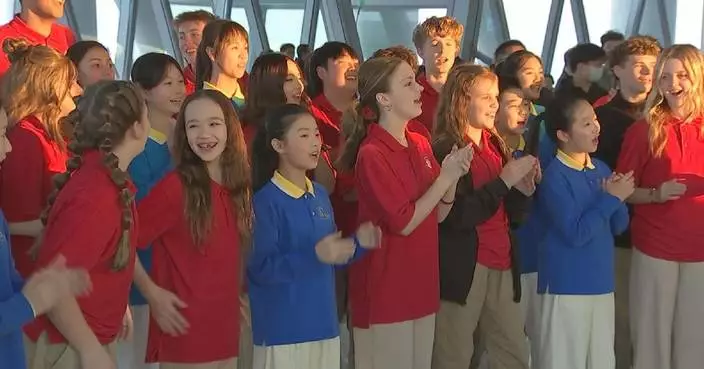
The second International Olympiad in Artificial Intelligence (IOAI) opened in Beijing on Monday, bringing together 77 teams of middle school students from 61 countries and regions in an academic event focused on AI application and innovation.
This year's event, running through Friday, has two parts: the team challenge and the individual challenge.
Under the team challenge, students will develop solutions - from task analysis to algorithm design -- within a simulated smart factory setting. The top 10 teams will have their solutions executed on actual factory hardware.
"In the team challenge, students are asked to create programs based on real-life scenarios and deploy their program codes and algorithm design to real machines, allowing robots to simulate human roles in a future factory to fulfill personalized tasks," said Zheng Zijie, principal AI instructor at Beijing National Day School and a member of the IOAI International Science Committee.
The individual challenge requires participants to complete six tasks in six hours each day over a two-day course. The tasks cover core AI topics such as machine learning, natural language processing, and computer vision.
Beyond the competition, students will visit leading technology companies, universities, and the Zhongguancun exhibition center to see China's rapid advances in sci-tech innovation.
Additional events include an "AI + Education" symposium, industry-academia forums, and traditional cultural experiences.
"The IOAI is not a competition. It's an opportunity for us to collaborate and meet the people, the great minds around the world. After I came to China, I was totally surprised how developed this country is," said Prince Kumar Mandal, a member from the Nepali team.
"We want to take this opportunity to show China's achievements in enabling AI to promote the nation's socio-economic development, so we build a platform for global exchanges and cooperation," said Tang Chao, deputy director of the Administrative Committee of Zhongguancun Science City and deputy mayor of Haidian District.
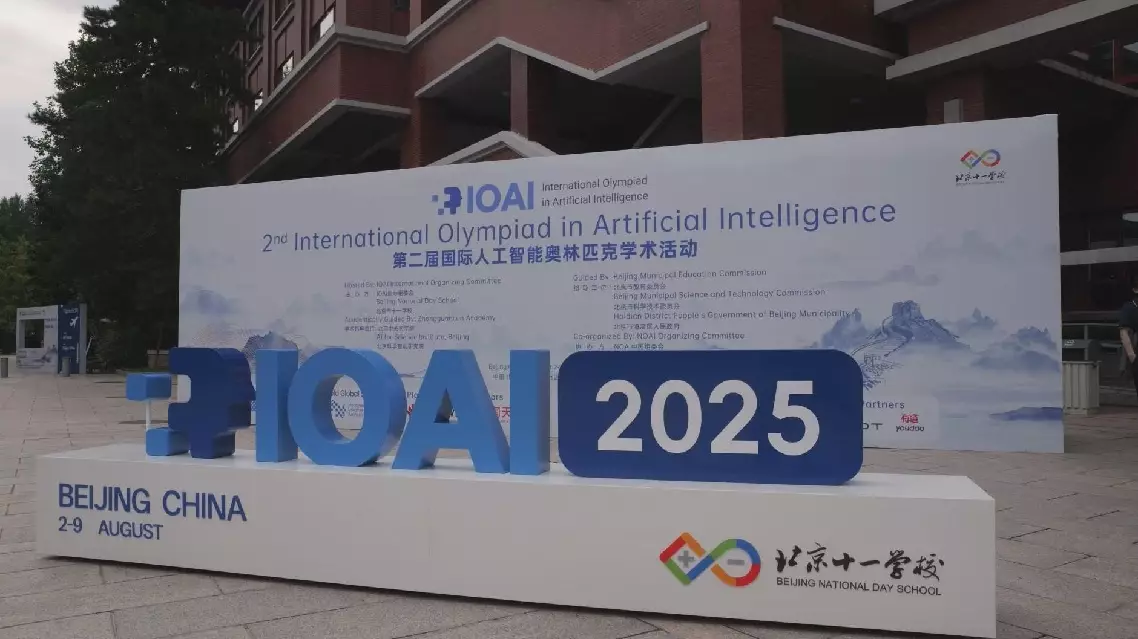
International AI Olympiad for middle school students opens in Beijing
An exhibition tracing the great Chinese philosopher Confucius' 14-year journey to seek and spread wisdom across the states of ancient China is held in Zhengzhou, central China, featuring around 197 valuable exhibits.
The exhibition "The Journey of Practicing the Way: Confucius Traveling among the States" is currently on display at the Henan Museum, featuring precious cultural relics from 28 museums across China.
This exhibition breaks away from traditional chronological narratives, instead focusing on the geographical route and spiritual quest of Confucius's journey, as revealed through artifacts.
The curatorial team selected bronzes, jade, calligraphy, paintings, and ceramics from the Spring and Autumn Period (770 BC - 221 BC) and used multimedia technology to recreate iconic scenes from Confucius's journey.
Several artifacts in the exhibition vividly trace Confucius's footsteps across the states.
One of them is a Bronze axe-head with an inscription of nine Chinese characters, including the character "zou", a name of a fief, from the Zoucheng Museum in east China's Shandong. It is also adorned with a Chinese dragon head motif, its mouth wide open and its gaze fierce.
The Bronze axe-head was discovered at a noble tomb site in the former State of Lu, a vassal state during the Zhou dynasty (1046 BC-256 BC), suggesting a connection between the object and both Confucius's birthplace and his roots in the vassal state.
Han Zichao, the organizer of the exhibition, said that Confucius's father, Shuliang He, was appointed as the magistrate of Zouyi (the capital of the State of Lu and the present-day Qufu City in east China's Shandong Province) for his military achievements.
"The 'zou' character in the location 'Zouyi' is likely the same as the one mentioned in the inscription, so we selected this artifact to reflect Confucius' birthplace," said Han.
According to Han, this bronze axe head serves as a crucial artifact referring to Confucius's birthplace, which Han said is likely near Qufu.
Another significant artifact is a Duo (a kind of bell used in ancient China for issuing proclamations or during times of war) unearthed from Tongbai County, Nanyang City, central China's Henan Province.
Beyond being a musical instrument, this object is also a symbol of the political and moral education functions in ancient society. Many local officials praised Confucius as a muduo (wooden-clapper bell) during his travels.
"The term 'Heaven will instruct the master like a wooden-clapper bell' was a high honor, reflecting how people at the time viewed Confucius's role in promoting education and persuading ancient rulers to implement benevolent governance during his travels across the states," Han said.
The exhibition, which will run until March 2026, will also feature a series of lectures and educational programs for teenagers. These initiatives aim to deepen the public’s understanding of Confucius’s enduring influence on Chinese culture and philosophy through firsthand encounters with artifacts, expert commentary, and digital interactions.
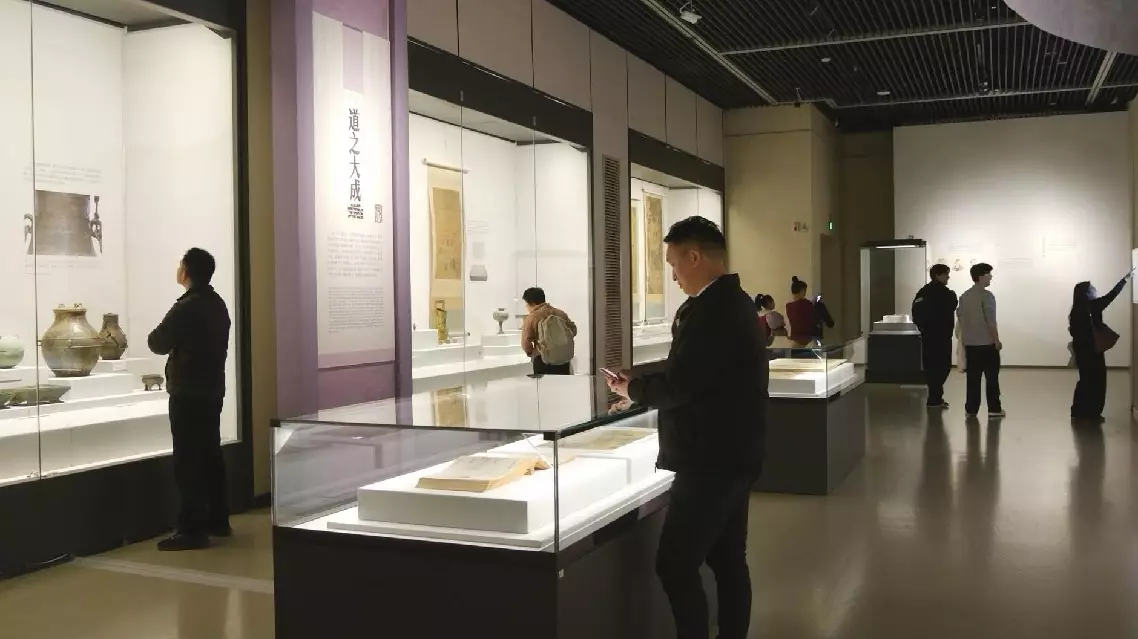
Exhibition in Henan traces Confucius' 14-year journey to seek, spread wisdom