Skip to Content Facebook Feature Image

Gaza aid truck drivers face increasing danger from desperate crowds and armed gangs

News

Gaza aid truck drivers face increasing danger from desperate crowds and armed gangs
News

News

Gaza aid truck drivers face increasing danger from desperate crowds and armed gangs

2025-08-05 23:30 Last Updated At:23:51

Truck drivers trying to deliver aid inside Gaza say their work has become increasingly dangerous in recent months as people have grown desperately hungry and violent gangs have filled a power vacuum left by the territory’s Hamas rulers.

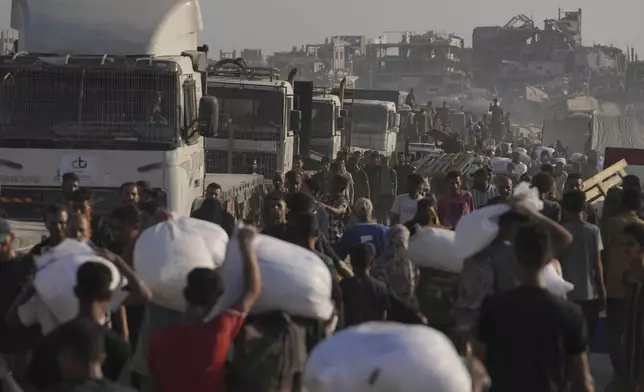
Crowds of hungry people routinely rip aid off the backs of moving trucks, the local drivers said. Some trucks are hijacked by armed men working for gangs who sell the aid in Gaza’s markets for exorbitant prices. Israeli troops often shoot into the chaos, they said.

More Images
Palestinians carry sacks of flour unloaded from a humanitarian aid convoy that reached Gaza City from the northern Gaza Strip, Saturday, July 26, 2025. (AP Photo/Jehad Alshrafi)
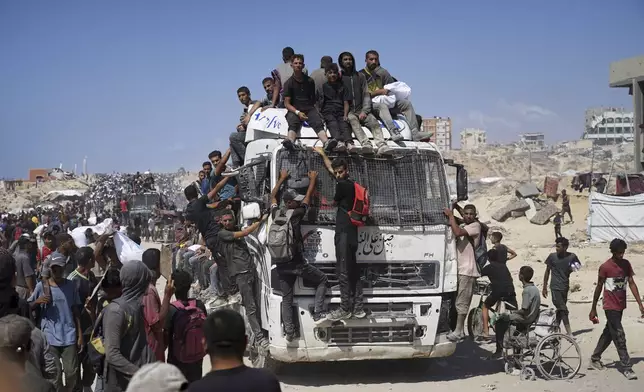
Palestinians carry sacks of flour unloaded from a humanitarian aid convoy that reached Gaza City from the northern Gaza Strip, Saturday, July 26, 2025. (AP Photo/Jehad Alshrafi)

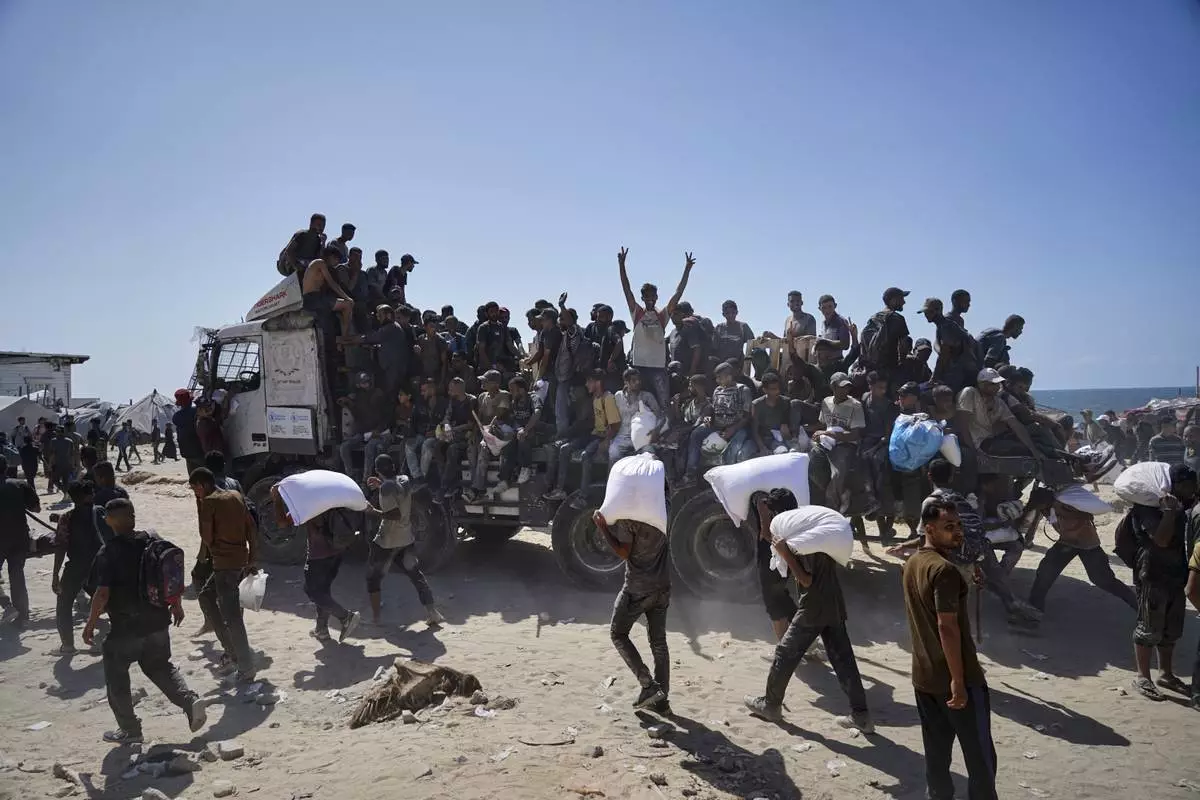
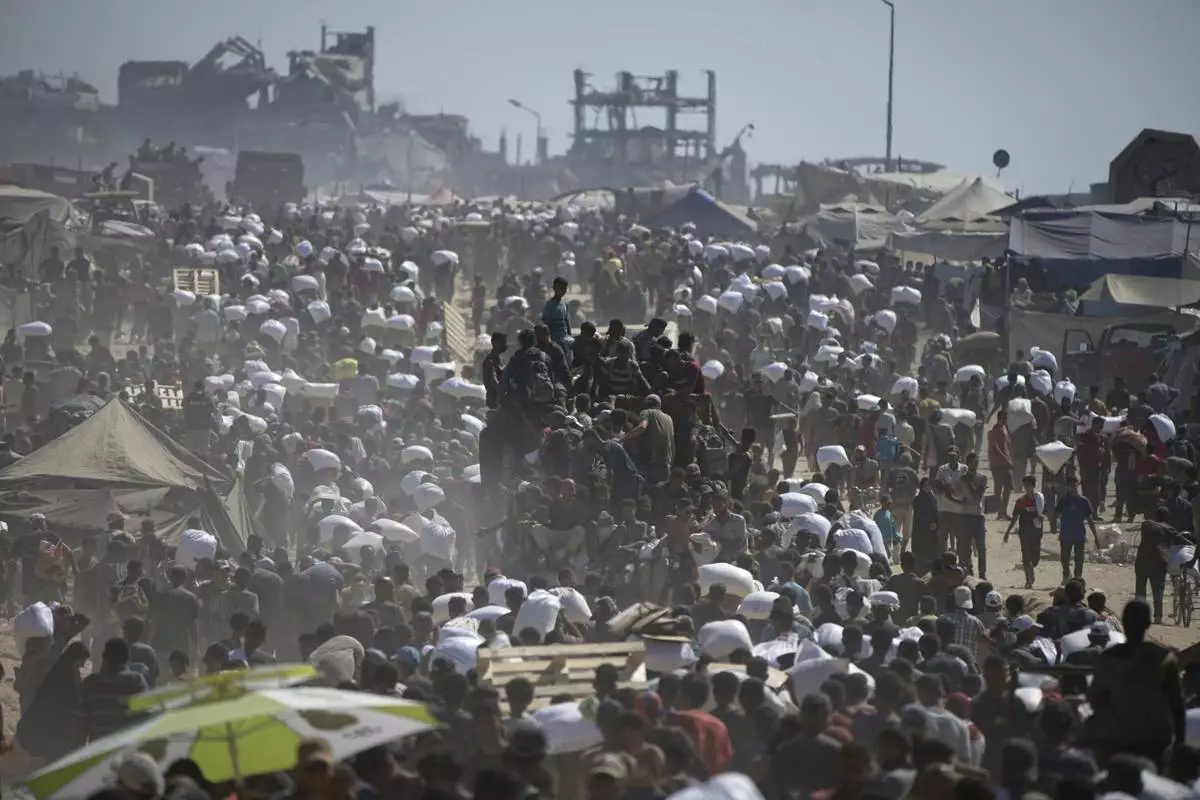
Palestinians carry sacks of flour taken from a humanitarian aid convoy en route to Gaza City, in the outskirts of Beit Lahiya, northern Gaza Strip, Friday, Aug. 1, 2025. (AP Photo/Jehad Alshrafi)
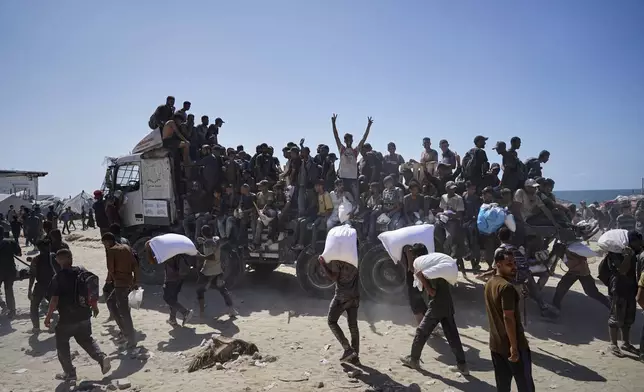
Palestinians carry sacks of flour taken from a humanitarian aid convoy en route to Gaza City, in the outskirts of Beit Lahiya, northern Gaza Strip, Friday, Aug. 1, 2025. (AP Photo/Jehad Alshrafi)
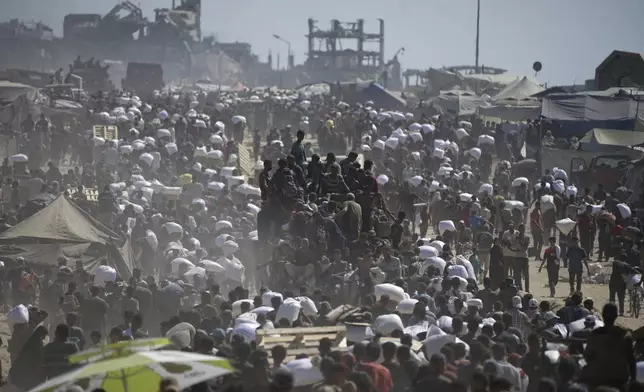
Palestinians carry sacks of flour taken from a humanitarian aid convoy en route to Gaza City, in the outskirts of Beit Lahiya, northern Gaza Strip, Friday, Aug. 1, 2025. (AP Photo/Jehad Alshrafi)

Palestinians carry sacks of flour taken from a humanitarian aid convoy en route to Gaza City, in the outskirts of Beit Lahiya, northern Gaza Strip, Friday, Aug. 1, 2025. (AP Photo/Jehad Alshrafi)

Palestinians carry sacks of flour taken from a humanitarian aid convoy en route to Gaza City, in the outskirts of Beit Lahiya, northern Gaza Strip, Friday, Aug. 1, 2025. (AP Photo/Jehad Alshrafi)

Palestinians carry sacks of flour taken from a humanitarian aid convoy en route to Gaza City, in the outskirts of Beit Lahiya, northern Gaza Strip, Friday, Aug. 1, 2025. (AP Photo/Jehad Alshrafi)

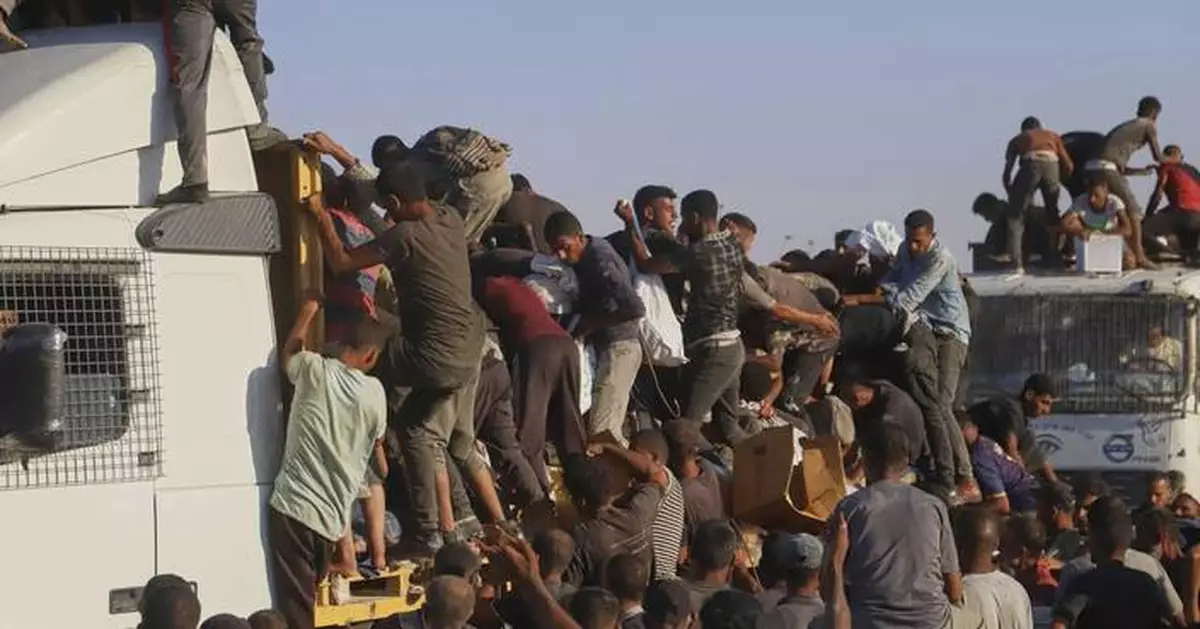
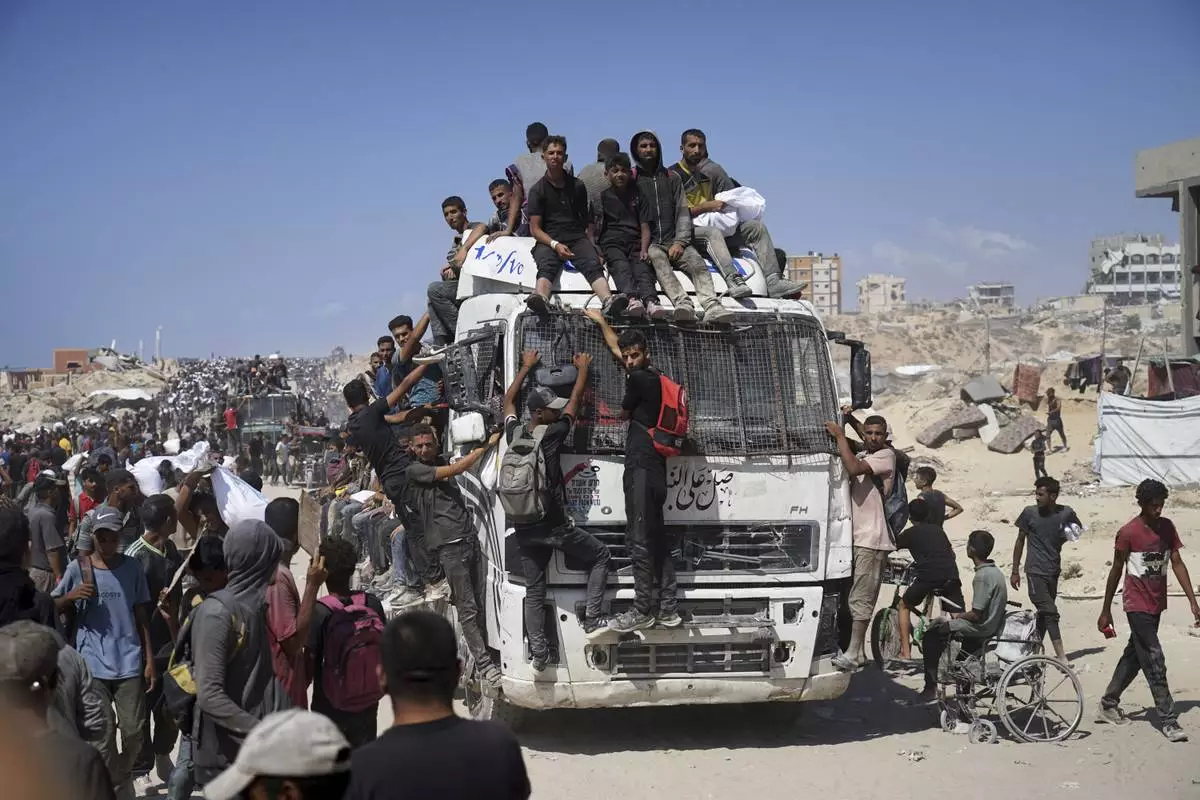
Palestinians struggle to get food and humanitarian aid from the back of a truck as it moves along the Morag corridor near Rafah, in the southern Gaza Strip, Monday, Aug. 4, 2025. (AP Photo/Mariam Dagga)

Palestinians struggle to get food and humanitarian aid from the back of a truck as it moves along the Morag corridor near Rafah, in the southern Gaza Strip, Monday, Aug. 4, 2025. (AP Photo/Mariam Dagga)

Drivers have been killed in the mayhem.

Since March, when Israel ended a ceasefire in its war with Hamas and halted all imports, the situation has grown increasingly dire in the territory of some 2 million Palestinians. International experts are now warning of a “worst-case scenario of famine” in Gaza.

Under heavy international pressure, Israel last week announced measures to let more aid into Gaza. Though aid groups say it’s still not enough, getting even that amount from the border crossings to the people who need it is difficult and extremely dangerous, the drivers said.

Thousands of people packed around the road Monday as two trucks entered southern Gaza, AP video showed. Young men overwhelmed the trucks, standing on the cabs’ roofs, dangling from the sides and clambering over each other onto the truck beds to grab boxes even as the trucks slowly kept driving.

“Some of my drivers are scared to go transfer aid because they’re concerned about how they’ll untangle themselves from large crowds of people,” said Abu Khaled Selim, vice president of the Special Transport Association, a nonprofit group that works with private transportation companies across the Gaza Strip and advocates for truck drivers' rights.

Selim said his nephew, Ashraf Selim, a father of eight, was killed July 29 by a stray bullet when Israeli forces opened fire on crowds climbing onto the aid truck he was driving.

Shifa Hospital officials said they received his body with an apparent gunshot to the head. The Israeli military said it was unaware of the incident and that “as a rule" it does not carry out deliberate attacks on aid trucks.

Earlier in the war, aid deliveries were safer because, with more food getting into Gaza, the population was less desperate. Hamas-run police had been seen securing convoys and went after suspected looters and merchants who resold aid at exorbitant prices,

Now, “with the situation unsecured, everything is permissible,” said Selim, who appealed for protection so the aid trucks could reach warehouses.

The U.N. does not accept protection from Israeli forces, saying it would violate its rules of neutrality, and said that given the urgent need for aid it would accept that hungry people were going to grab food off the back of the trucks as long as they weren’t violent.

Flooding Gaza with renewed aid would ease the desperation and make things safer for the drivers, said Juliette Touma, communications director at UNRWA, the U.N. agency for Palestinian refugees.

Ali al-Derbashi, 22, was an aid truck driver for more than a year and a half, but he quit after his last trip three weeks ago because of the increasing danger, he said. Some people taking aid off the trucks are now carrying cleavers, knives and axes, he said.

He was once ambushed and forcibly redirected to an area designated by Israel as a conflict zone in its war against Hamas. There everything was stolen, including his truck’s fuel and batteries, and his tires were shot out, he said. He was beaten and his phone was stolen.

“We put our lives in danger for this. We leave our families for two or three days every time. And we don’t even have water or food ourselves,” he said. In addition to the danger, the drivers faced humiliation from Israeli forces, he said, who put them through “prolonged searches, unclear instructions, and hours of waiting.”

The war began Oct. 7, 2023, when Hamas-led militants killed around 1,200 people, mostly civilians, and abducted 251 others. Israel’s retaliatory offensive has killed more than 61,000 Palestinians, according to the latest figures by Gaza’s Health Ministry, which doesn’t distinguish between militants and civilians and operates under the Hamas government.

Nahed Sheheibr, head of the Special Transport Association, said the danger for the drivers comes from everywhere. He accused Israel of detaining drivers and using them as human shields. The Israeli military did not comment on the accusation. In recent days, men linked to a violent Gaza clan fired at drivers, injuring one, and looted a convoy of 14 trucks, he said. They later looted a convoy of 10 trucks.

Hossni al-Sharafi, who runs a trucking company and was an aid driver himself, said he is only allowed to use drivers who have no political affiliation and have been approved by Israel to transport aid from crossings.

Al-Sharafi said he was detained by Israeli forces for more than 10 days last year while transporting aid from the southern Kerem Shalom crossing and interrogated about where the truck was headed and how the aid was being distributed. Israeli officials did not comment on the accusations.

Some drivers spoke of being shot at repeatedly by armed gangs. Others said their trucks were routinely picked clean — even of the wooden pallets— by waves of desperate people, many of whom were fighting each other for the food, while Israeli troops were shooting. Hungry families who miss out on the aid throw stones at the trucks in anger.

Anas Rabea said the moment he pulled out of the Zikkim crossing last week his aid truck was overwhelmed by a crowd.

“Our instructions are to stop, because we don’t want to run anyone over,” he said. “It’s crazy. You have people climbing all over the cargo, over the windows. It’s like you’re blind, you can’t see out.”

After the crowd had stripped everything, he drove another few hundred meters and was stopped by an armed gang that threatened to shoot him. They searched the truck and took a bag of flour he had saved for himself, he said.

“Every time we go out, we get robbed," he said. "It’s getting worse day by day.”

——-

Associated Press writers Julia Frankel contributed to this report from Jerusalem and Sally Abou Aljoud from Beirut. Mariam Dagga contributed from Khan Younis, Gaza Strip.
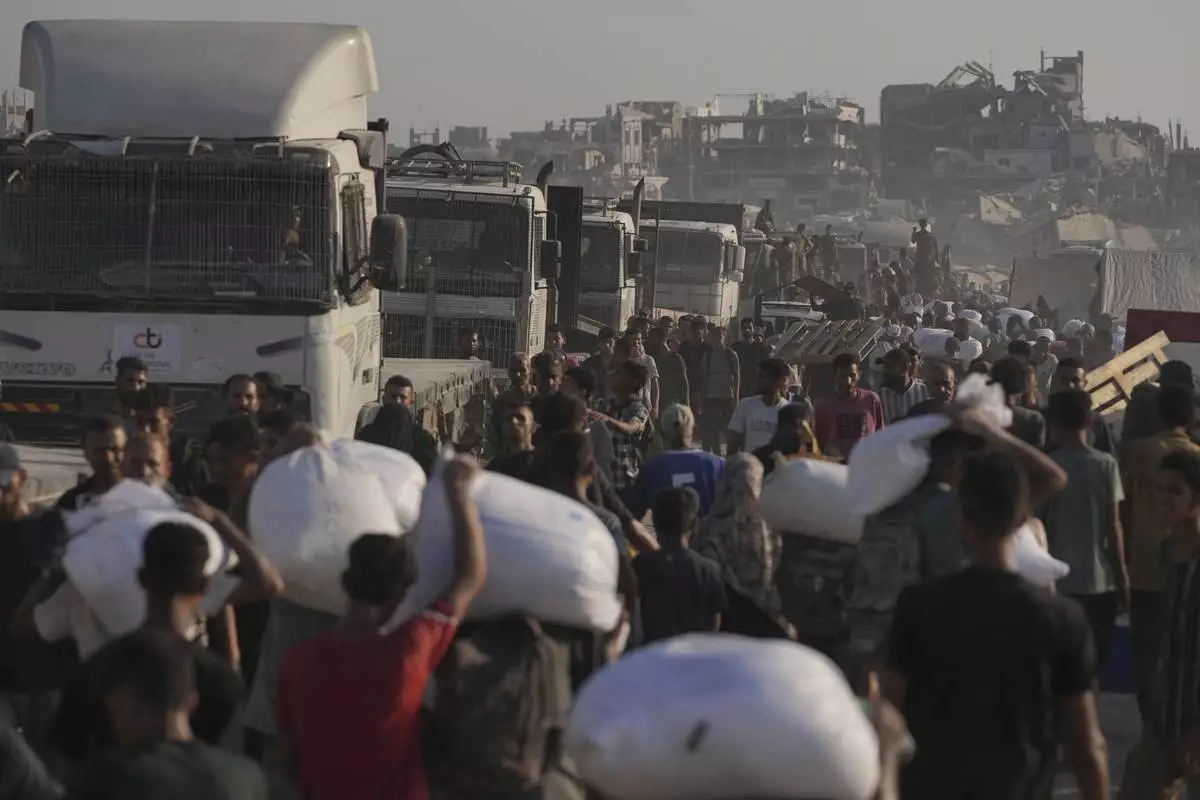
Palestinians carry sacks of flour unloaded from a humanitarian aid convoy that reached Gaza City from the northern Gaza Strip, Saturday, July 26, 2025. (AP Photo/Jehad Alshrafi)
Palestinians carry sacks of flour unloaded from a humanitarian aid convoy that reached Gaza City from the northern Gaza Strip, Saturday, July 26, 2025. (AP Photo/Jehad Alshrafi)

Palestinians carry sacks of flour taken from a humanitarian aid convoy en route to Gaza City, in the outskirts of Beit Lahiya, northern Gaza Strip, Friday, Aug. 1, 2025. (AP Photo/Jehad Alshrafi)
Palestinians carry sacks of flour taken from a humanitarian aid convoy en route to Gaza City, in the outskirts of Beit Lahiya, northern Gaza Strip, Friday, Aug. 1, 2025. (AP Photo/Jehad Alshrafi)
Palestinians carry sacks of flour taken from a humanitarian aid convoy en route to Gaza City, in the outskirts of Beit Lahiya, northern Gaza Strip, Friday, Aug. 1, 2025. (AP Photo/Jehad Alshrafi)

Palestinians carry sacks of flour taken from a humanitarian aid convoy en route to Gaza City, in the outskirts of Beit Lahiya, northern Gaza Strip, Friday, Aug. 1, 2025. (AP Photo/Jehad Alshrafi)

Palestinians carry sacks of flour taken from a humanitarian aid convoy en route to Gaza City, in the outskirts of Beit Lahiya, northern Gaza Strip, Friday, Aug. 1, 2025. (AP Photo/Jehad Alshrafi)

Palestinians carry sacks of flour taken from a humanitarian aid convoy en route to Gaza City, in the outskirts of Beit Lahiya, northern Gaza Strip, Friday, Aug. 1, 2025. (AP Photo/Jehad Alshrafi)

Palestinians struggle to get food and humanitarian aid from the back of a truck as it moves along the Morag corridor near Rafah, in the southern Gaza Strip, Monday, Aug. 4, 2025. (AP Photo/Mariam Dagga)
Palestinians struggle to get food and humanitarian aid from the back of a truck as it moves along the Morag corridor near Rafah, in the southern Gaza Strip, Monday, Aug. 4, 2025. (AP Photo/Mariam Dagga)
MINNEAPOLIS (AP) — President Donald Trump on Thursday threatened to invoke an 1807 law and deploy troops to quell persistent protests against the federal officers sent to Minneapolis to enforce his administration's massive immigration crackdown.

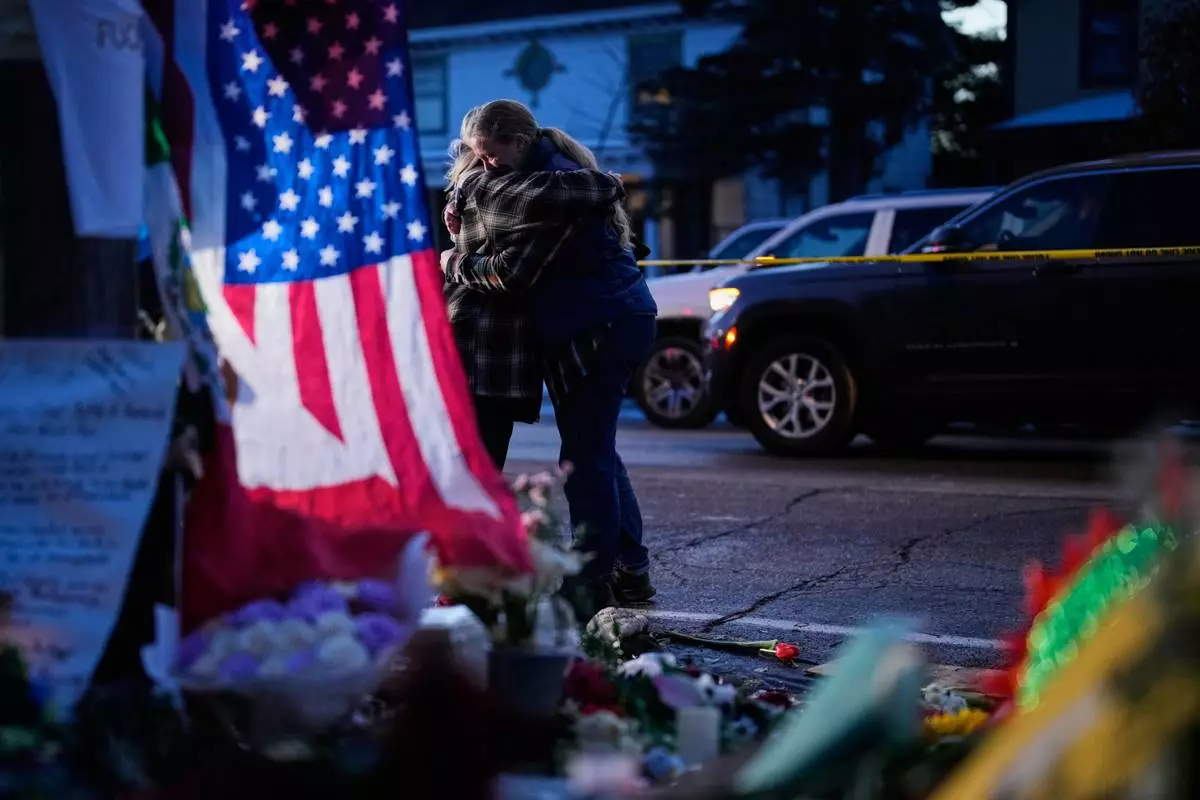
The threat comes a day after a man was shot and wounded by an immigration officer who had been attacked with a shovel and broom handle. That shooting further heightened the fear and anger that has radiated across the city since an Immigration and Customs Enforcement agent fatally shot Renee Good in the head.

Trump has repeatedly threatened to invoke the Insurrection Act, a rarely used federal law, to deploy the U.S. military or federalize the National Guard for domestic law enforcement, over the objections of state governors.

“If the corrupt politicians of Minnesota don’t obey the law and stop the professional agitators and insurrectionists from attacking the Patriots of I.C.E., who are only trying to do their job, I will institute the INSURRECTION ACT, which many Presidents have done before me, and quickly put an end to the travesty that is taking place in that once great State,” Trump said in social media post.

Presidents have invoked the law more than two dozen times, most recently in 1992 by President George H.W. Bush to end unrest in Los Angeles. In that instance, local authorities had asked for the assistance.

“I’m making a direct appeal to the President: Let’s turn the temperature down. Stop this campaign of retribution. This is not who we are,” Gov. Tim Walz, a Democrat, said on X.

Minnesota Attorney General Keith Ellison said he would challenge any such action in court. He's already suing to try to stop the surge by the Department of Homeland Security, which says officers have arrested more than 2,500 people since Nov. 29 as part of an immigration operation in the Twin Cities called Metro Surge.

The operation grew when ICE sent 2,000 officers and agents to the area early in January. ICE is a DHS agency.

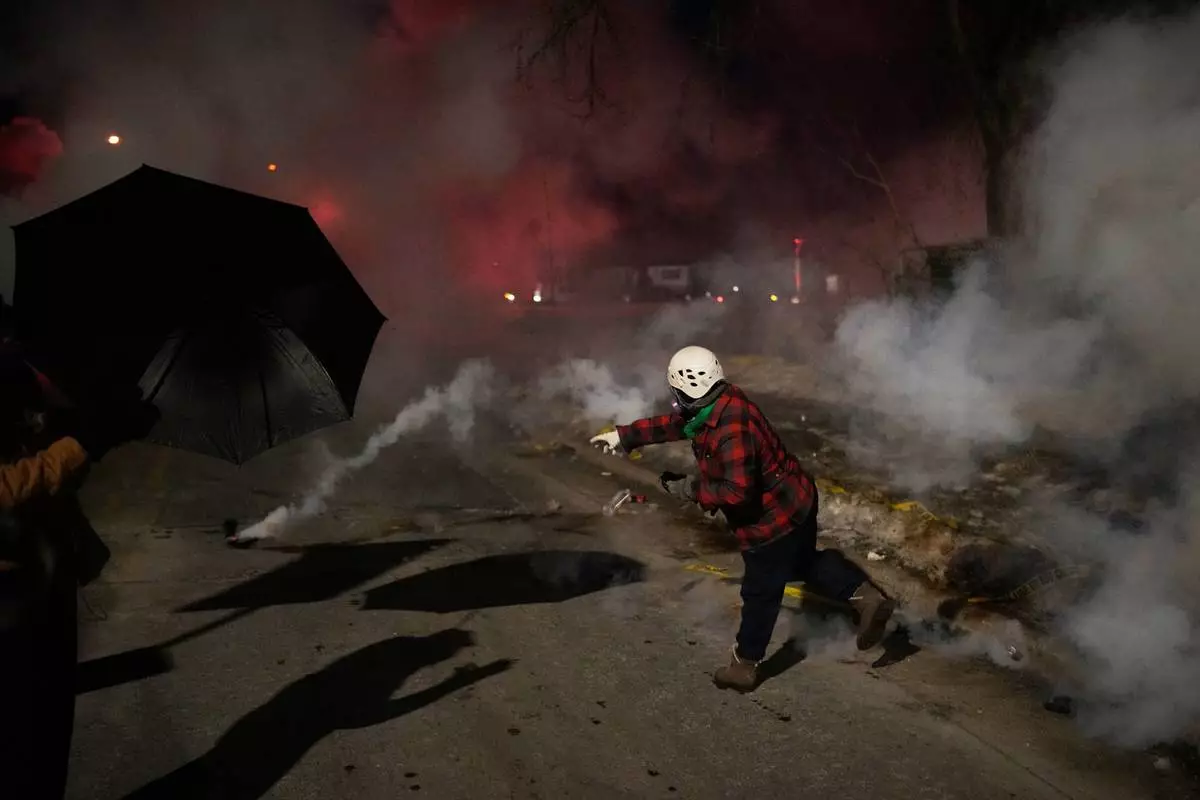
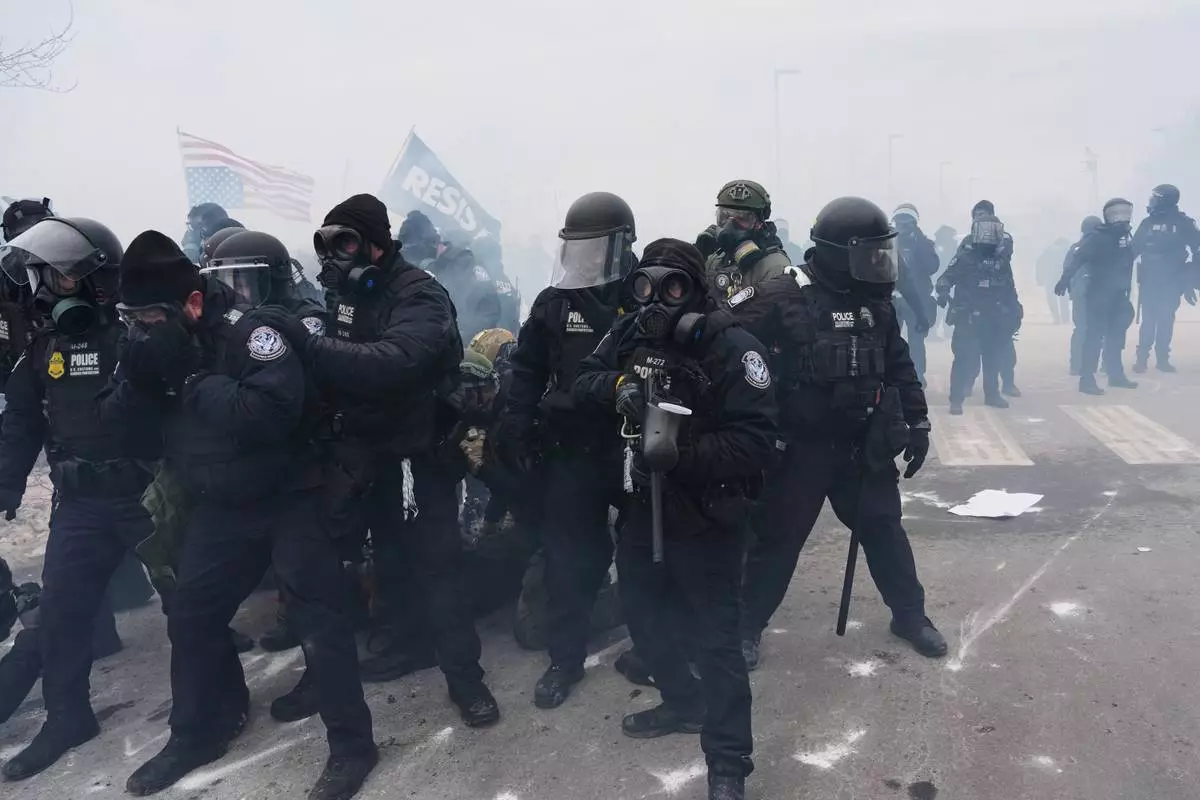
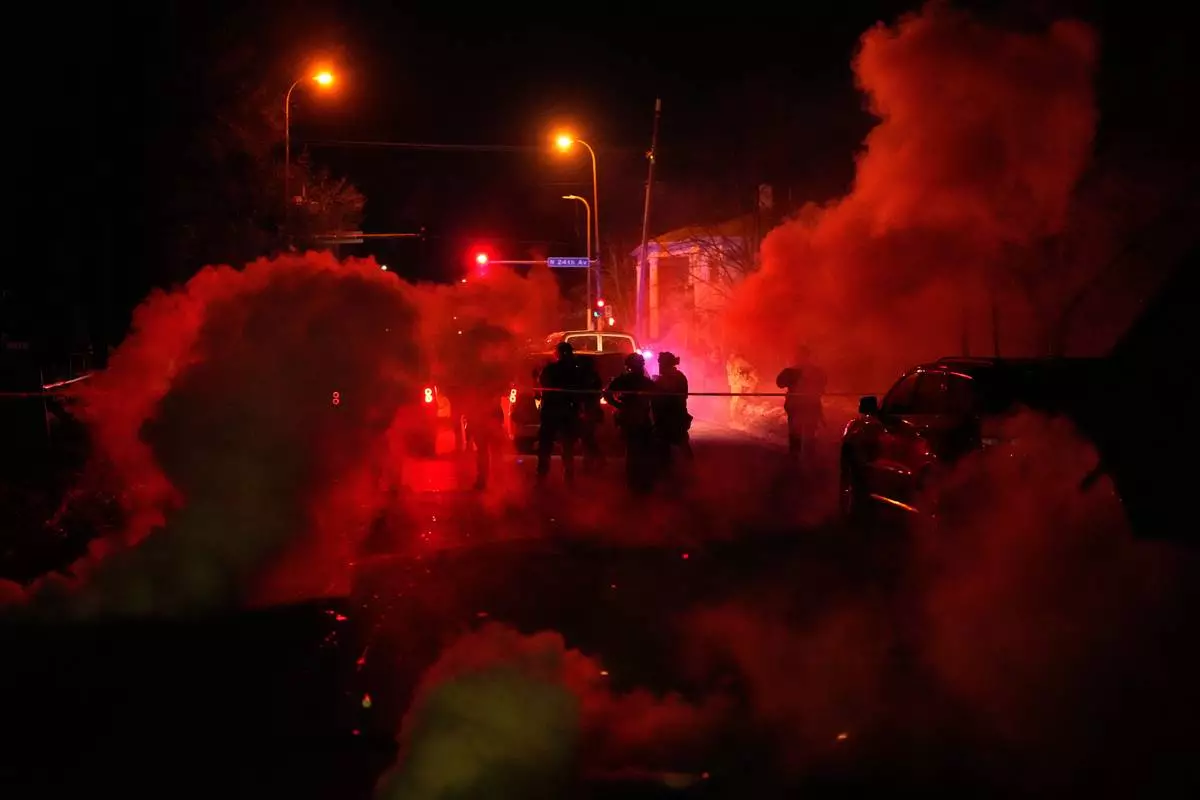
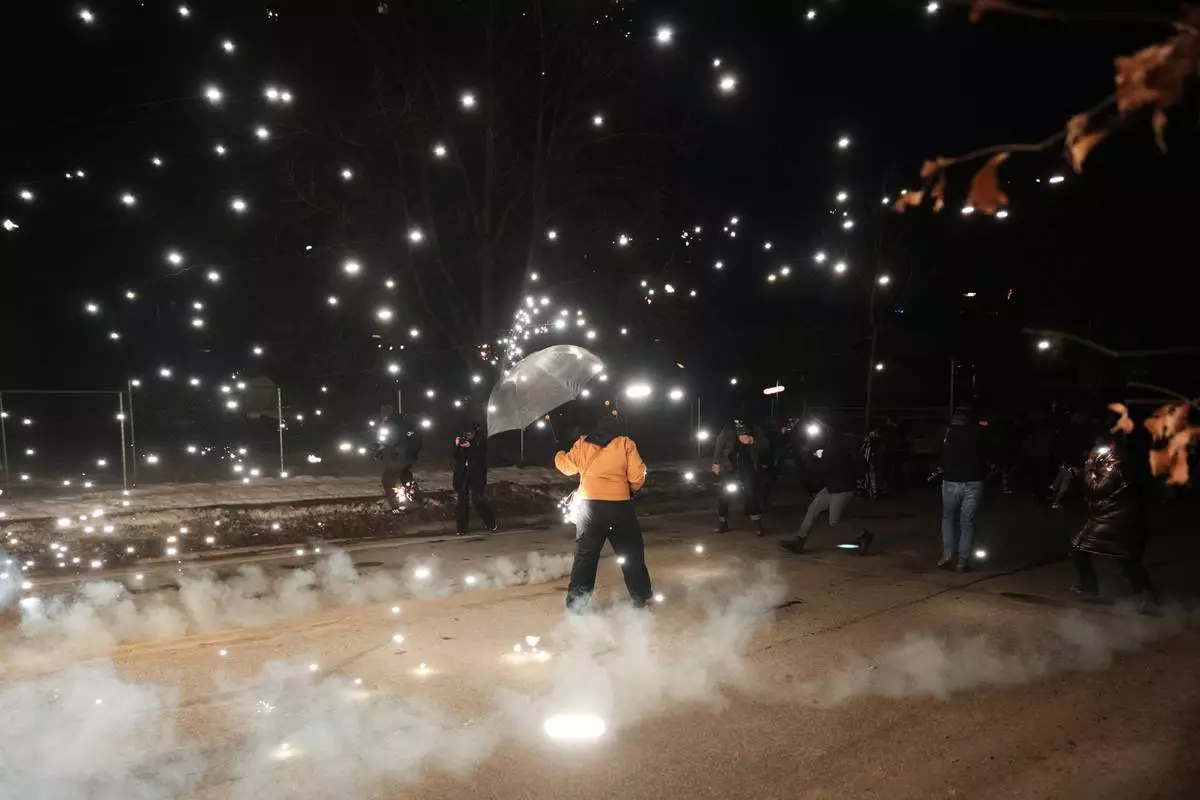
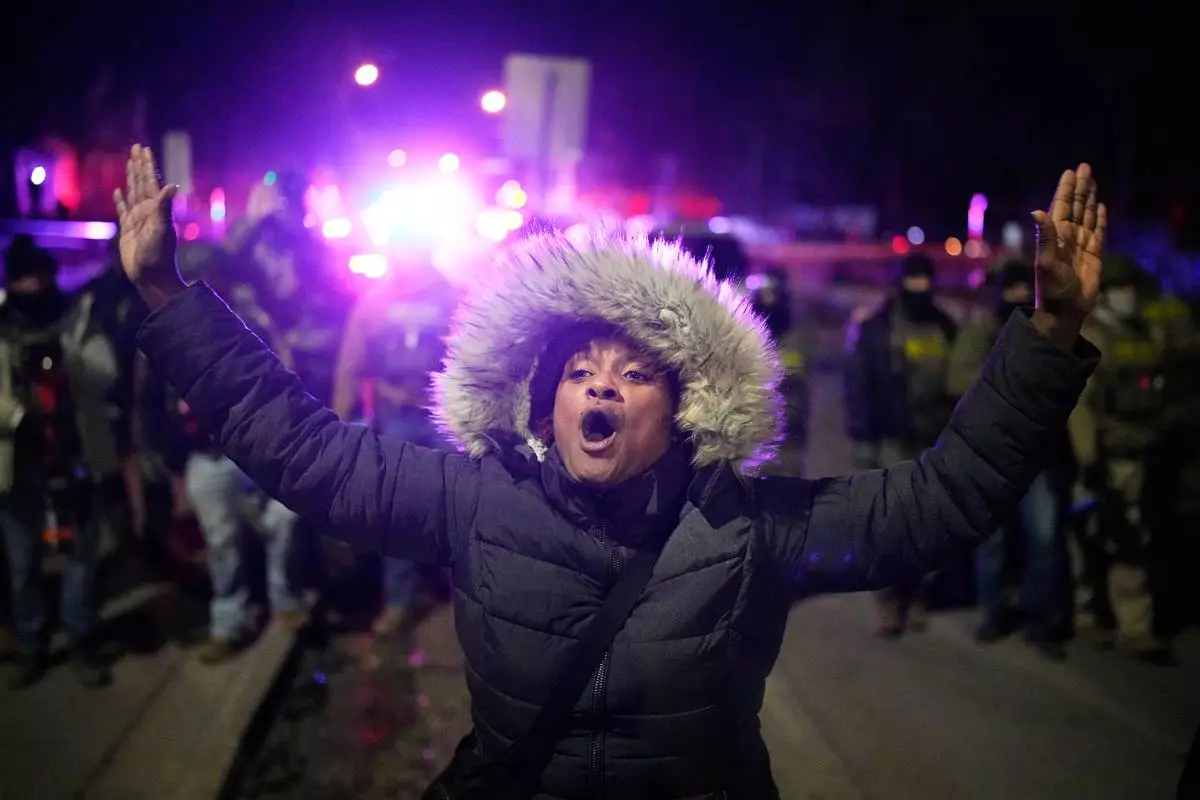
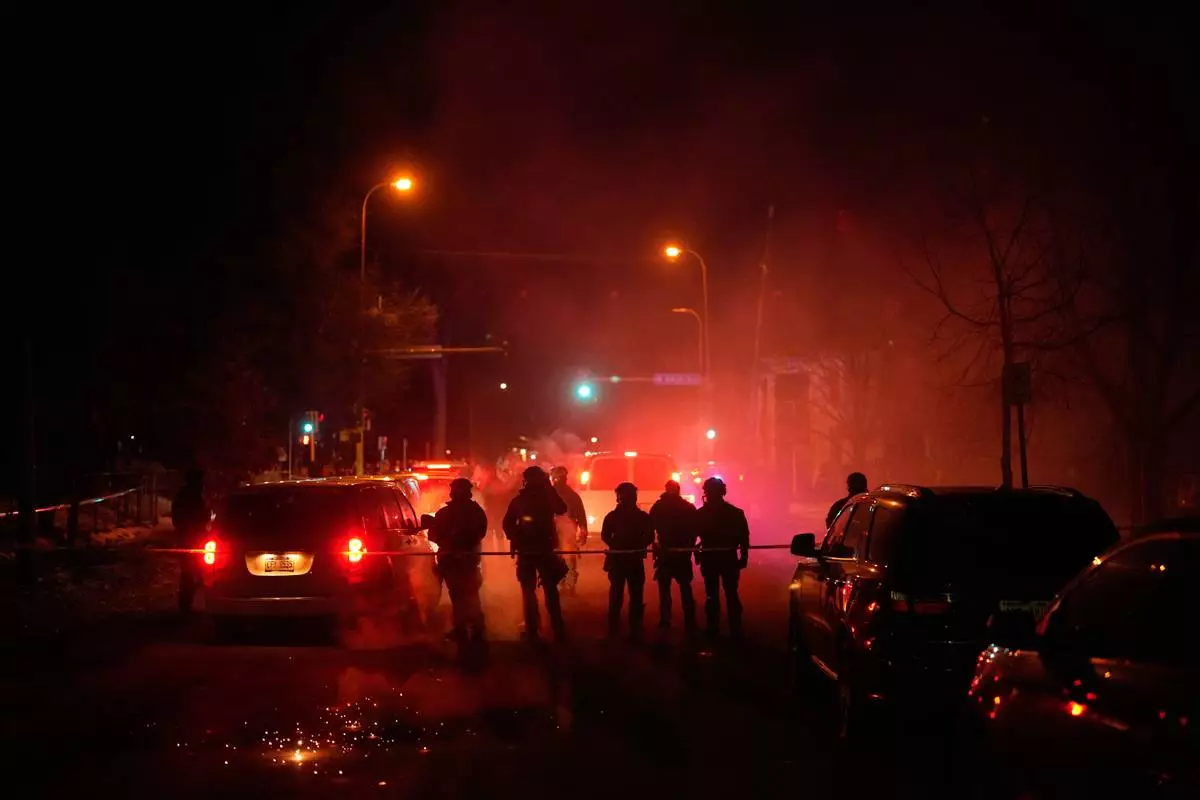
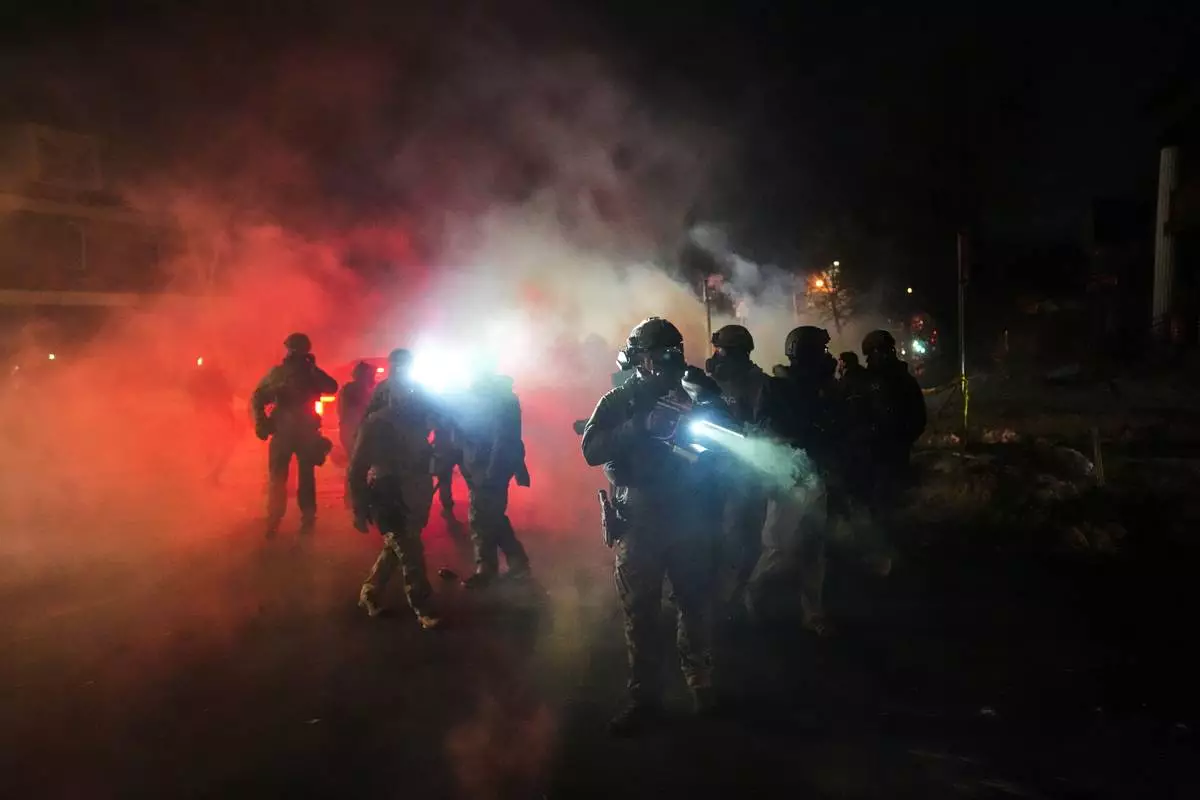
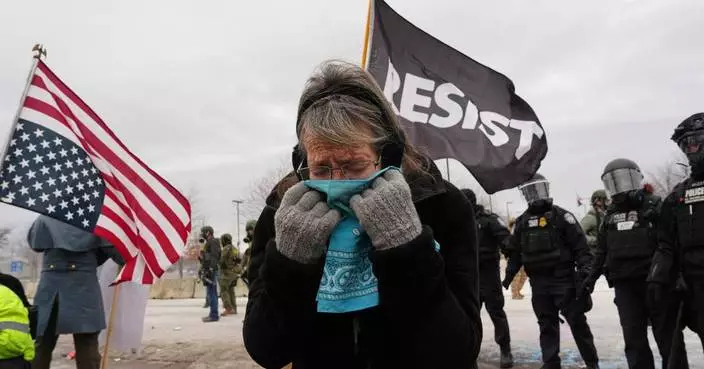
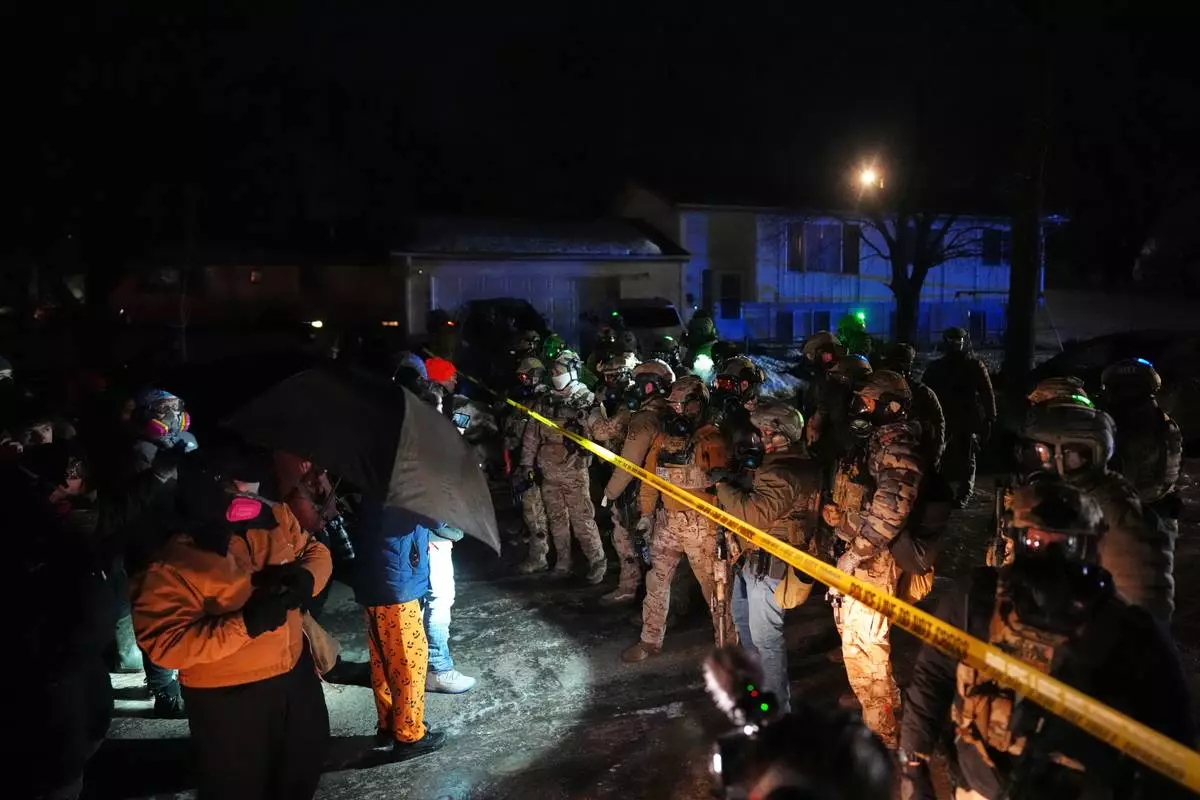
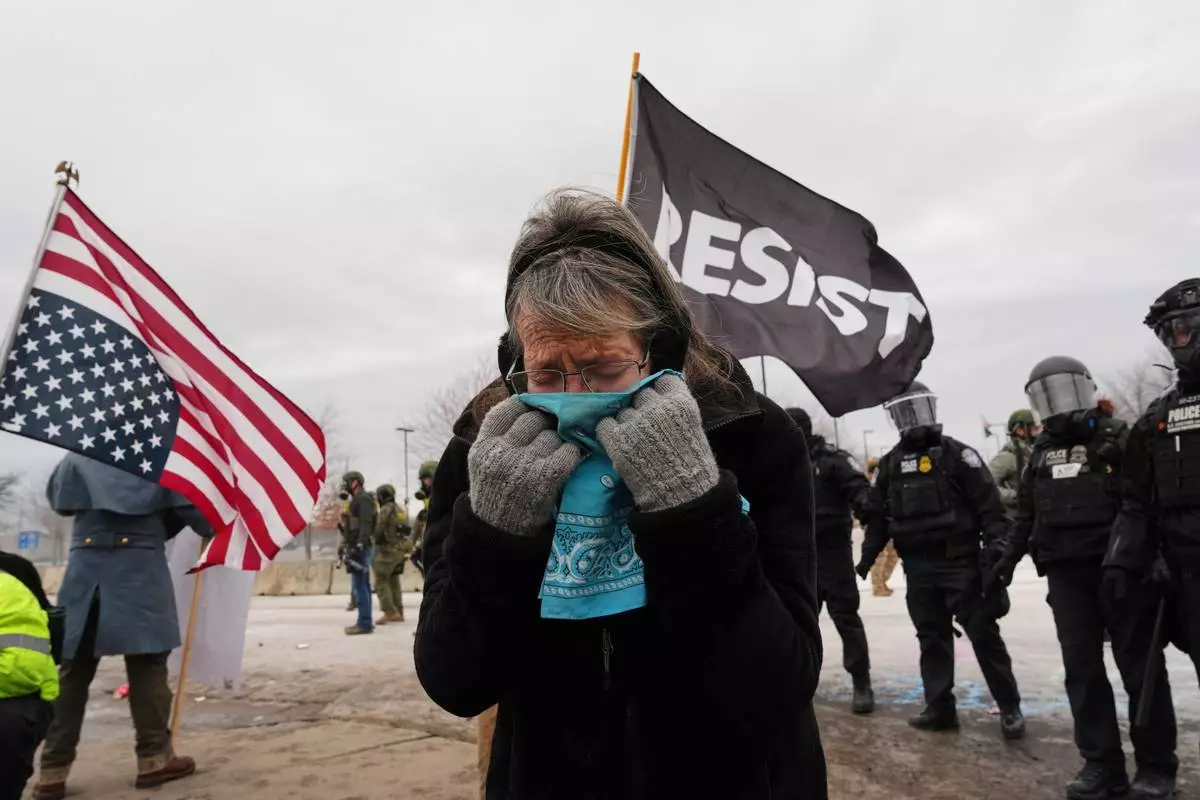
In Minneapolis, smoke filled the streets Wednesday night near the site of the latest shooting as federal officers wearing gas masks and helmets fired tear gas into a small crowd. Protesters responded by throwing rocks and shooting fireworks.

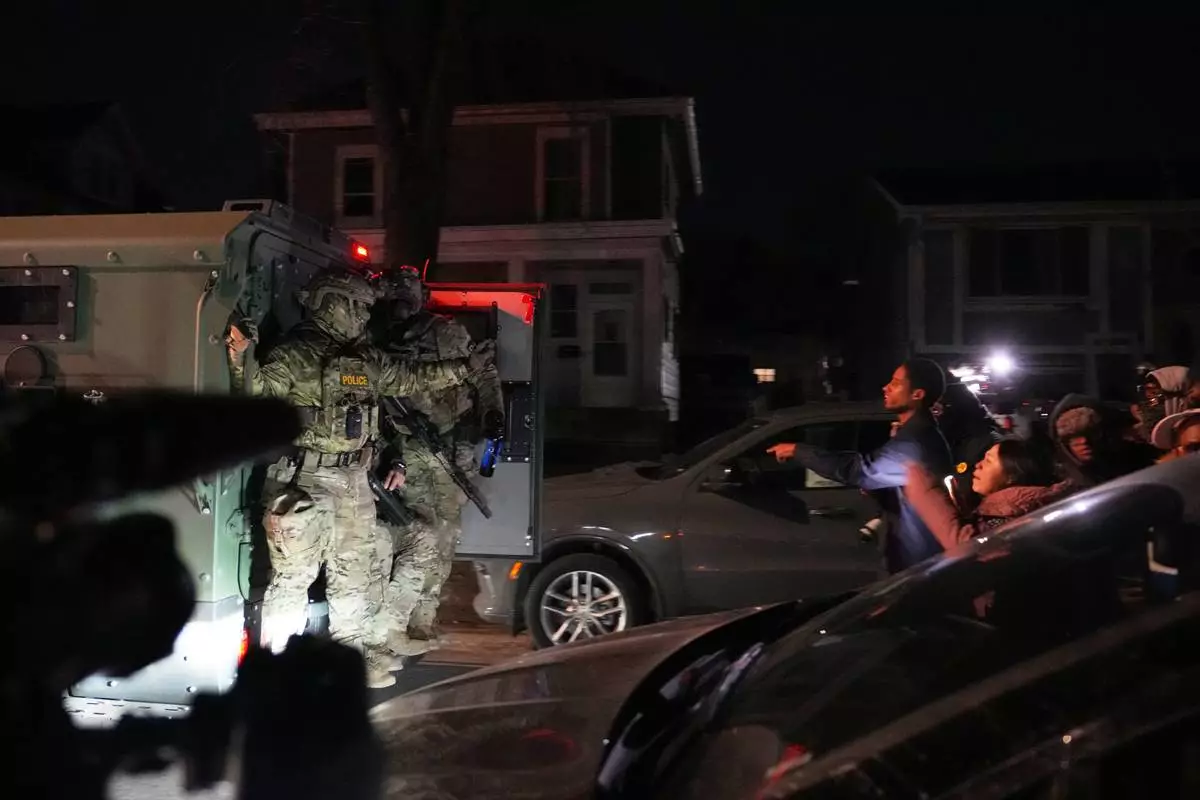
Demonstrations have become common in Minneapolis since Good was fatally shot on Jan. 7. Agents who have yanked people from their cars and homes have been confronted by angry bystanders demanding they leave.

“This is an impossible situation that our city is presently being put in and at the same time we are trying to find a way forward to keep people safe, to protect our neighbors, to maintain order,” Minneapolis Mayor Jacob Frey said.

The American Civil Liberties Union of Minnesota filed a class-action lawsuit on behalf of three people who said they were questioned or detained in recent days. The lawsuit says two are Somali and one is Hispanic; all three are U.S. citizens. The lawsuit seeks an end to what the ACLU describes as a practice of racial profiling and warrantless arrests. The government did not immediately comment.

Homeland Security said in a statement that federal law enforcement officers on Wednesday stopped a driver from Venezuela who is in the U.S. illegally. The person drove off then crashed into a parked car before fleeing on foot, DHS said.

Officers caught up, then two other people arrived and the three started attacking the officer, according to DHS.

“Fearing for his life and safety as he was being ambushed by three individuals, the officer fired a defensive shot to defend his life,” DHS said. The confrontation took place about 4.5 miles (7.2 kilometers) from where Good was killed.

Police chief Brian O’Hara said the man who was shot did not have a life-threatening injury. O’Hara's account of what happened largely echoed that of Homeland Security, which later said the other two men were also in the U.S. illegally from Venezuela.

The FBI said several government vehicles were damaged and property inside was stolen when agents responded to the shooting. Photos show broken windows and insults made with paint. A reward of up to $100,000 is being offered for information. The FBI’s Minneapolis office did not immediately reply to messages seeking more details.

St. Paul Public Schools, with more than 30,000 students, said it would begin offering an online learning option for students who do not feel comfortable coming to school. Schools will be closed next week until Thursday to prepare for those accommodations.

Minneapolis Public Schools, which has a similar enrollment, is also offering temporary remote learning. The University of Minnesota will start a new term next week with different options depending on the class.

Madhani reported from Washington, D.C. Associated Press reporters Sophia Tareen in Chicago; Bill Barrow in Atlanta; Rebecca Santana in Washington; and Ed White in Detroit contributed.

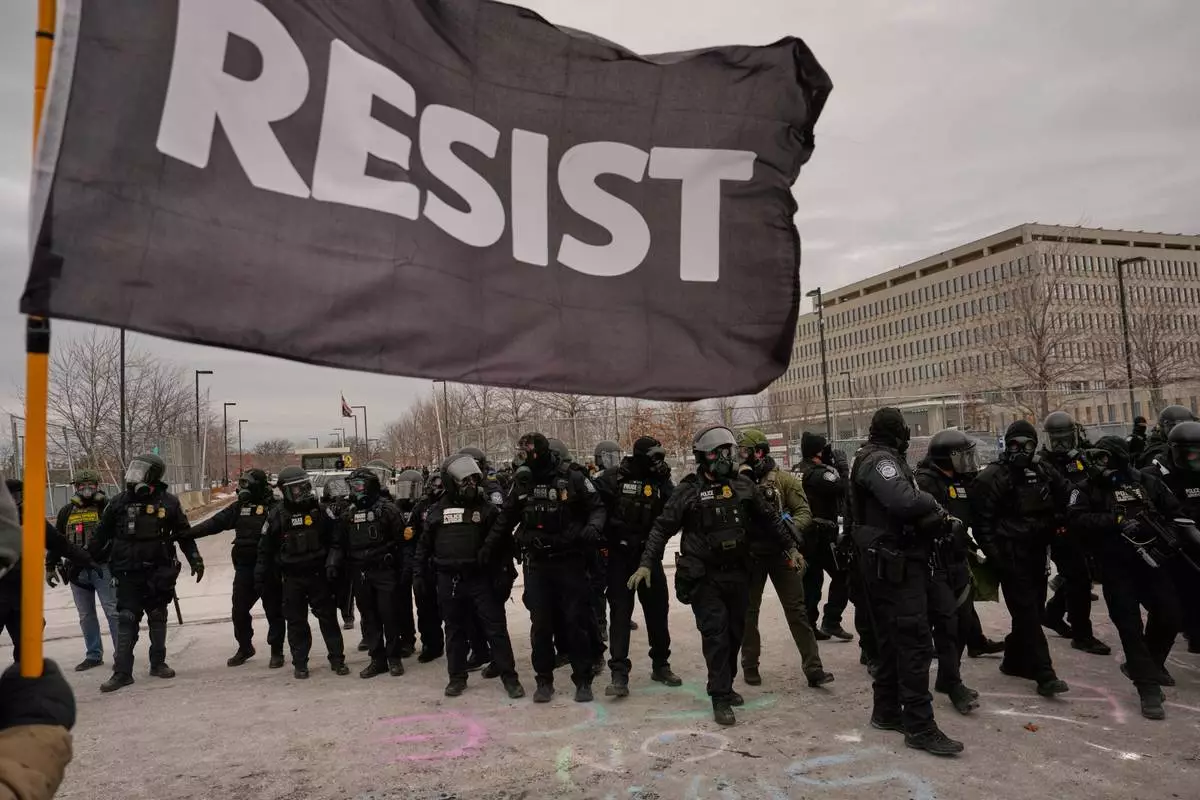
Federal immigration officers confront protesters outside Bishop Henry Whipple Federal Building, Thursday, Jan. 15, 2026, in Minneapolis. (AP Photo/John Locher)

Federal immigration officers confront protesters outside Bishop Henry Whipple Federal Building, Thursday, Jan. 15, 2026, in Minneapolis. (AP Photo/John Locher)

Law enforcement officers at the scene of a reported shooting Wednesday, Jan. 14, 2026, in Minneapolis. (AP Photo/Adam Gray)

Law enforcement officers at the scene of a reported shooting Wednesday, Jan. 14, 2026, in Minneapolis. (AP Photo/Adam Gray)

A woman covers her face from tear gas as federal immigration officers confront protesters outside Bishop Henry Whipple Federal Building, Thursday, Jan. 15, 2026, in Minneapolis. (AP Photo/Adam Gray)

A woman covers her face from tear gas as federal immigration officers confront protesters outside Bishop Henry Whipple Federal Building, Thursday, Jan. 15, 2026, in Minneapolis. (AP Photo/Adam Gray)

A protester throws back a tear gas canister during a protest after a shooting on Wednesday, Jan. 14, 2026, in Minneapolis. (AP Photo/John Locher)

A protester throws back a tear gas canister during a protest after a shooting on Wednesday, Jan. 14, 2026, in Minneapolis. (AP Photo/John Locher)

Federal immigration officers confront protesters outside Bishop Henry Whipple Federal Building, Thursday, Jan. 15, 2026, in Minneapolis. (AP Photo/Adam Gray)

Federal immigration officers confront protesters outside Bishop Henry Whipple Federal Building, Thursday, Jan. 15, 2026, in Minneapolis. (AP Photo/Adam Gray)

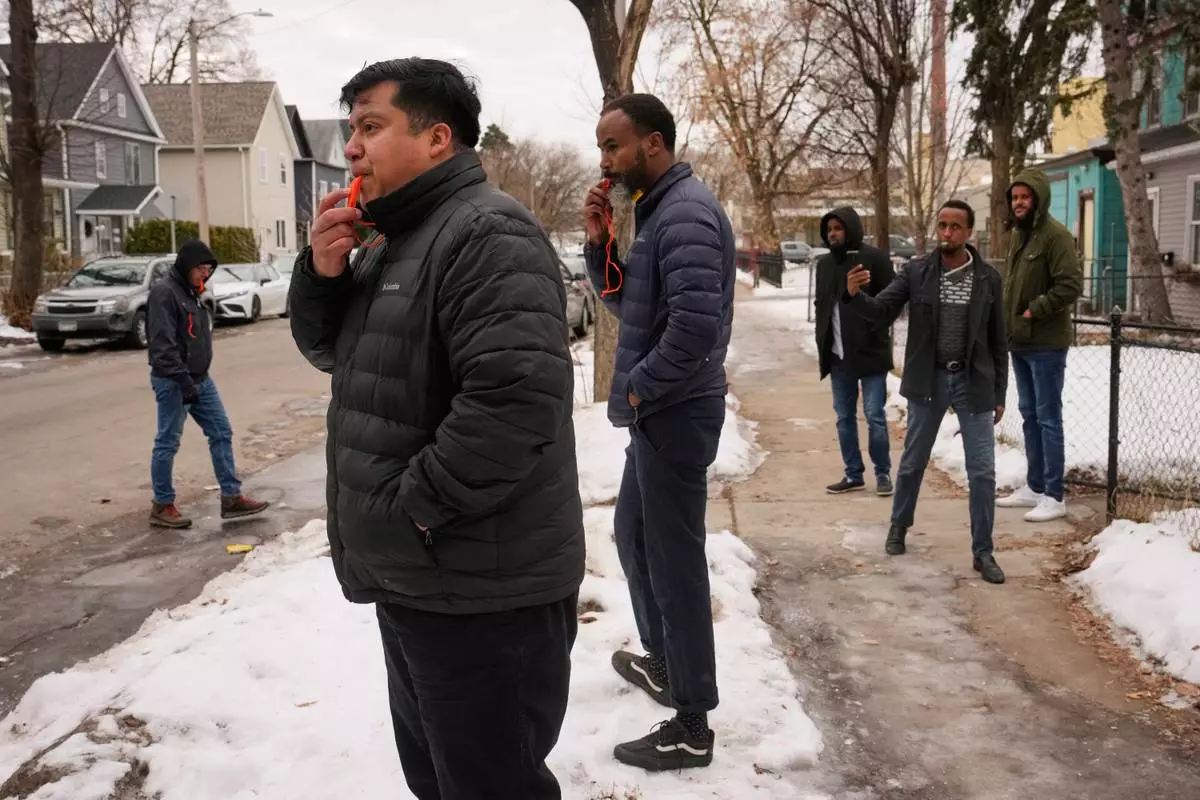
Minneapolis City Council Member Jason Chavez, second from left, blows a whistle with other activists to warn people of federal immigration officers Thursday, Jan. 15, 2026, in Minneapolis. (AP Photo/John Locher)

Minneapolis City Council Member Jason Chavez, second from left, blows a whistle with other activists to warn people of federal immigration officers Thursday, Jan. 15, 2026, in Minneapolis. (AP Photo/John Locher)

Tear gas surrounds federal law enforcement officers as they leave a scene after a shooting on Wednesday, Jan. 14, 2026, in Minneapolis. (AP Photo/John Locher)

Tear gas surrounds federal law enforcement officers as they leave a scene after a shooting on Wednesday, Jan. 14, 2026, in Minneapolis. (AP Photo/John Locher)

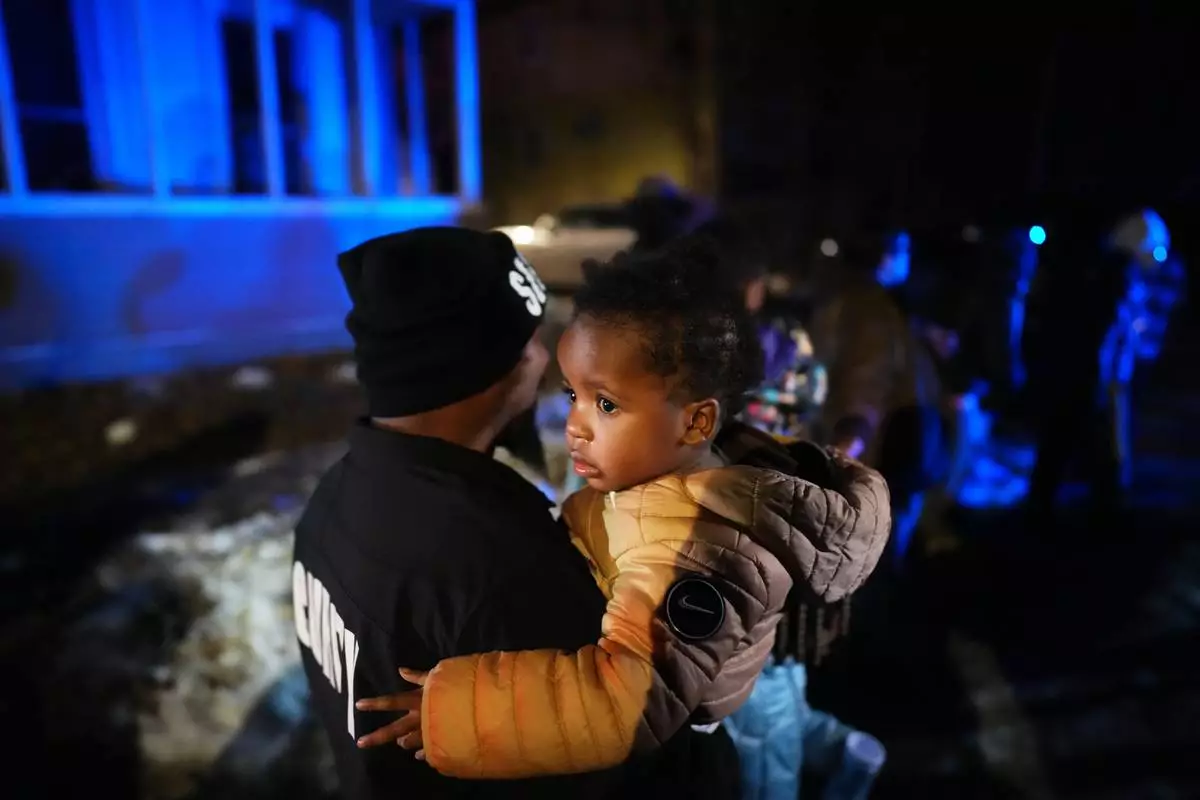
A child and family are escorted away after federal law enforcement deployed tear gas in a neighborhood during protests on Wednesday, Jan. 14, 2026, in Minneapolis. (AP Photo/Adam Gray)

A child and family are escorted away after federal law enforcement deployed tear gas in a neighborhood during protests on Wednesday, Jan. 14, 2026, in Minneapolis. (AP Photo/Adam Gray)

A protester holds an umbrella as sparks fly from a flash bang deployed by law enforcement on Wednesday, Jan. 14, 2026, in Minneapolis. (AP Photo/Adam Gray)

A protester holds an umbrella as sparks fly from a flash bang deployed by law enforcement on Wednesday, Jan. 14, 2026, in Minneapolis. (AP Photo/Adam Gray)

Monica Travis shares an embrace while visiting a makeshift memorial for Renee Good, who was fatally shot by an ICE officer last week, Monday, Jan. 12, 2026, in Minneapolis. (AP Photo/John Locher)

Monica Travis shares an embrace while visiting a makeshift memorial for Renee Good, who was fatally shot by an ICE officer last week, Monday, Jan. 12, 2026, in Minneapolis. (AP Photo/John Locher)

A protester yells in front of law enforcement after a shooting on Wednesday, Jan. 14, 2026, in Minneapolis. (AP Photo/John Locher)

A protester yells in front of law enforcement after a shooting on Wednesday, Jan. 14, 2026, in Minneapolis. (AP Photo/John Locher)

Tear gas surrounds federal law enforcement officers as they leave a scene after a shooting on Wednesday, Jan. 14, 2026, in Minneapolis. (AP Photo/John Locher)

Tear gas surrounds federal law enforcement officers as they leave a scene after a shooting on Wednesday, Jan. 14, 2026, in Minneapolis. (AP Photo/John Locher)

Protesters shout at law enforcement officers after a shooting on Wednesday, Jan. 14, 2026, in Minneapolis. (AP Photo/Abbie Parr)

Protesters shout at law enforcement officers after a shooting on Wednesday, Jan. 14, 2026, in Minneapolis. (AP Photo/Abbie Parr)

Law enforcement officers stand amid tear gas at the scene of a reported shooting Wednesday, Jan. 14, 2026, in Minneapolis. (AP Photo/Adam Gray)

Law enforcement officers stand amid tear gas at the scene of a reported shooting Wednesday, Jan. 14, 2026, in Minneapolis. (AP Photo/Adam Gray)

Recommended Articles