WASHINGTON (AP) — The Environmental Protection Agency said Tuesday it will defend the Biden administration's aggressive rule for reducing lead in drinking water against a court challenge, though public health advocates worry officials could still weaken it.
The rule gave cities and towns a 10-year deadline to replace all of their lead pipes and was the strongest overhaul of lead-in-water standards in roughly three decades. Litigation against the rule was on pause so the Trump administration could decide whether it supported the policy. On Tuesday, the agency said it would defend the tough standards.
"At the same time, EPA will develop new tools and information to support practical implementation flexibilities and regulatory clarity. The agency will announce next steps in the coming months,” the agency said.
Lead, a heavy metal once common in products like pipes and paints, is a neurotoxin that can lower IQ scores in children, stunt their development and increase blood pressure in adults. Lead pipes can corrode and contaminate drinking water. The previous Trump administration's rule had looser standards and did not mandate the replacement of all pipes.
Jared Thompson, a senior attorney with the environmental nonprofit Natural Resources Defense Council that supports the Biden-era rule, said he doesn't know what the EPA means with terms like “practical implementation flexibility.”
“The concern is that, are they going to try to use that to create some sort of loopholes that would allow water systems to not fully comply with the rule, or will they actually proceed with full implementation," he said. “We just don't know at this point.”
He said he's also concerned with the Trump administration's earlier proposal to significantly cut funding for local water infrastructure. The EPA has said there are programs and resources available to ensure lead pipe replacement projects proceed smoothly and cost-effectively.
The agency asked a D.C. federal appeals court on Monday to resume the case. It wants to file its arguments with the court in early December.
The EPA under President Donald Trump has celebrated deregulation. Officials have sought to slash climate change programs and promote fossil fuel development. On drinking water issues, however, their initial actions have been more nuanced.
In March, for example, the EPA announced plans to partially roll back rules to reduce so-called “forever chemicals” in drinking water — the other major Biden-era tap water protection. That change, however, sought to keep tough limits for some common PFAS. It also proposed scrapping and reconsidering standards for other types and extending deadlines.
PFAS and lead pipes are both costly threats to safe water. There are roughly 9 million lead pipes providing water to homes and businesses in the United States.
The American Water Works Association, a utility industry association, had challenged the lead rule, saying utilities should not be responsible for the portion of the lead pipe that is on private property. They also described the 10-year deadline as “not feasible.”
The Biden-era regulation required water systems to ensure that lead concentrations do not exceed an “action level” of 10 parts per billion, down from 15 parts per billion under the previous standard. If high lead levels are found, water systems must inform the public about ways to protect their health, including the use of water filters, and take action to reduce lead exposure while working to replace all lead pipes.
Lead pipes are most commonly found in older, industrial parts of the country, including major cities such as Chicago, Cleveland, New York, Detroit and Milwaukee. The rule also revises the way lead amounts are measured, which could significantly expand the number of communities found violating the rules.
Water utilities were given three years to prepare before the 10-year timeframe starts. And some cities with a lot of lead will have longer.
The EPA estimated at the time officials issued the stricter standards that they would protect up to 900,000 infants from having low birth weight and avoid up to 1,500 premature deaths a year from heart disease.
The original lead and copper rule for drinking water was enacted by the EPA more than 30 years ago. The rules have significantly reduced lead in tap water but have included loopholes that allowed cities to move slowly when lead levels rose too high.
Associated Press writer Matthew Daly contributed from Washington.
The Associated Press receives support from the Walton Family Foundation for coverage of water and environmental policy. The AP is solely responsible for all content. For all of AP’s environmental coverage, visit https://apnews.com/hub/climate-and-environment
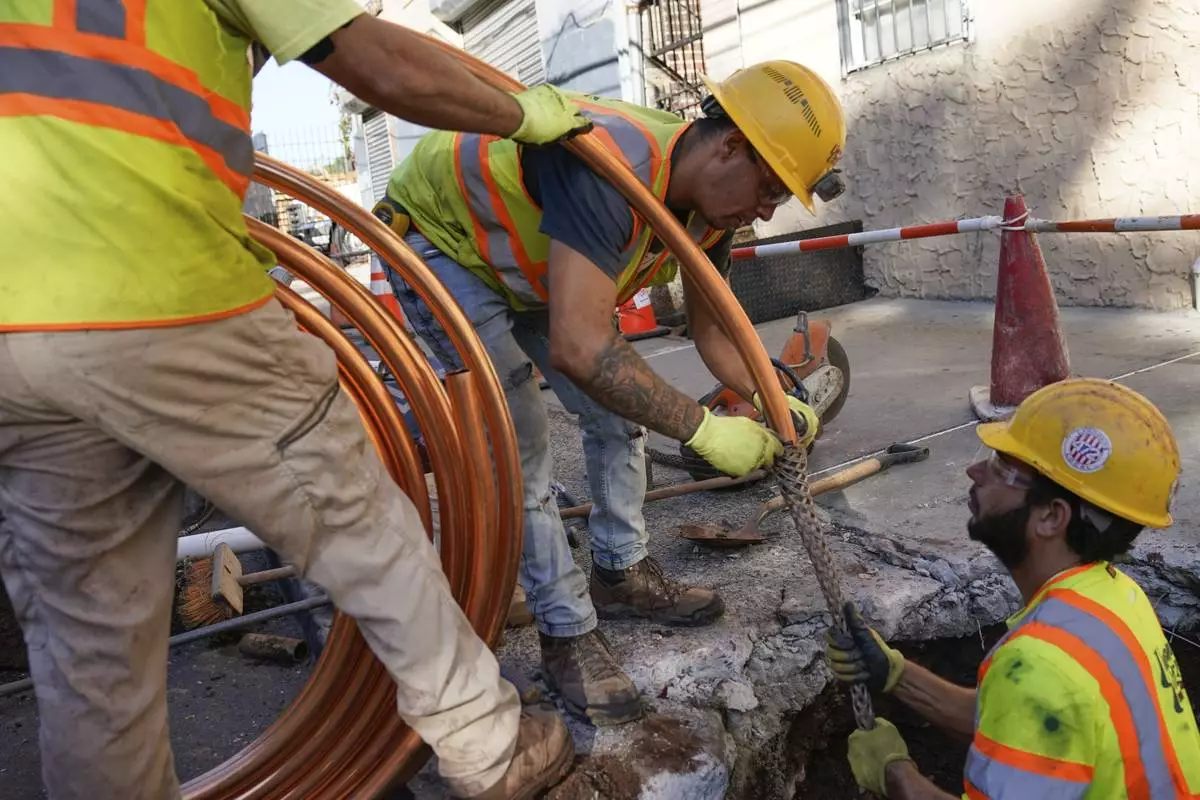
FILE - Workmen prepare to replace older water pipes with a new copper one in Newark, N.J., Oct. 21, 2021. (AP Photo/Seth Wenig, File)

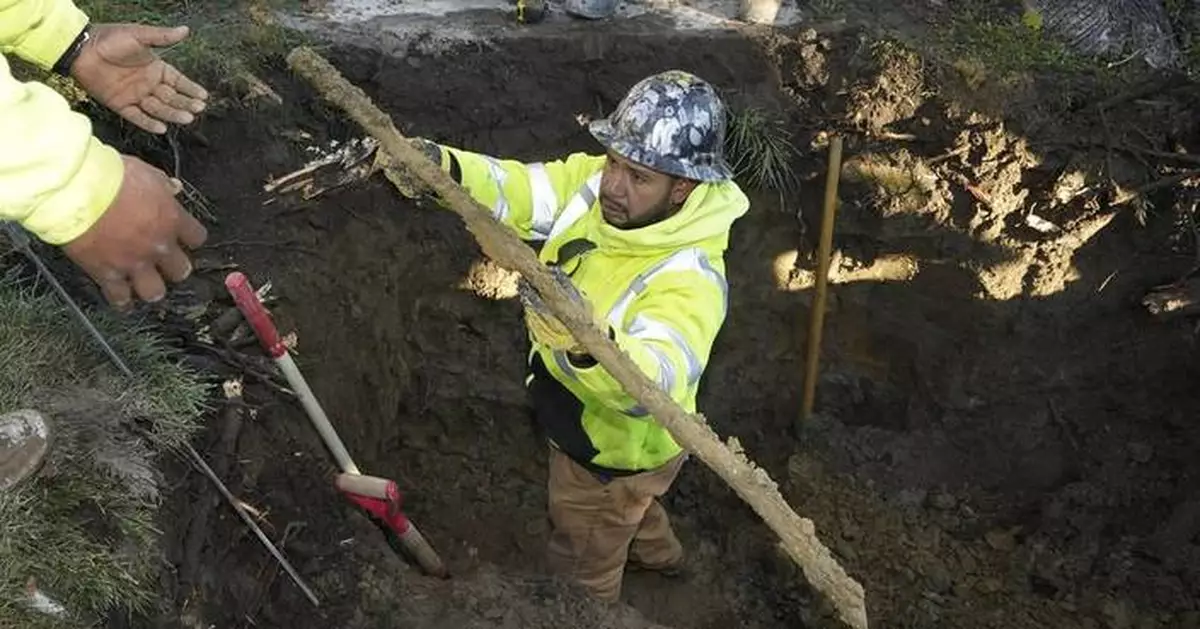
FILE - A cut lead pipe is pulled from a dig site for testing at a home in Royal Oak, Mich., on Nov. 16, 2021. (AP Photo/Carlos Osorio, File)