A new generation of scientists is dedicating themselves to preserving the Qinghai-Xizang Plateau, home to the Lalu Wetland, an ecological treasure known as the "Lungs of Lhasa."
This unique high-altitude ecosystem lies at the center of efforts to protect the country's alpine environment.
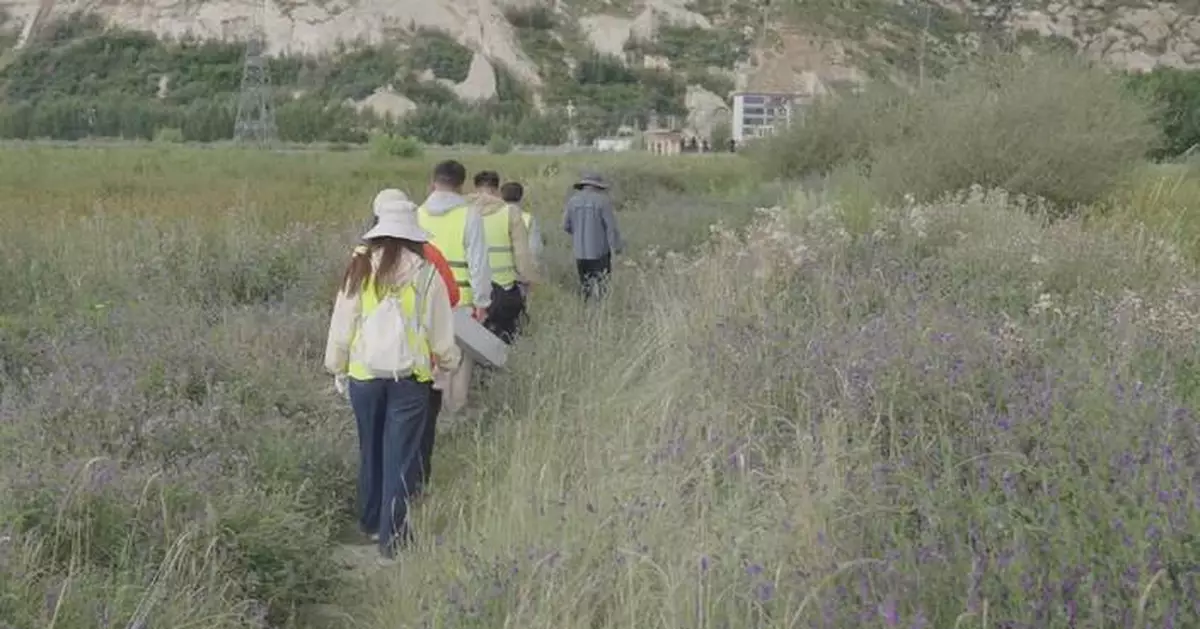
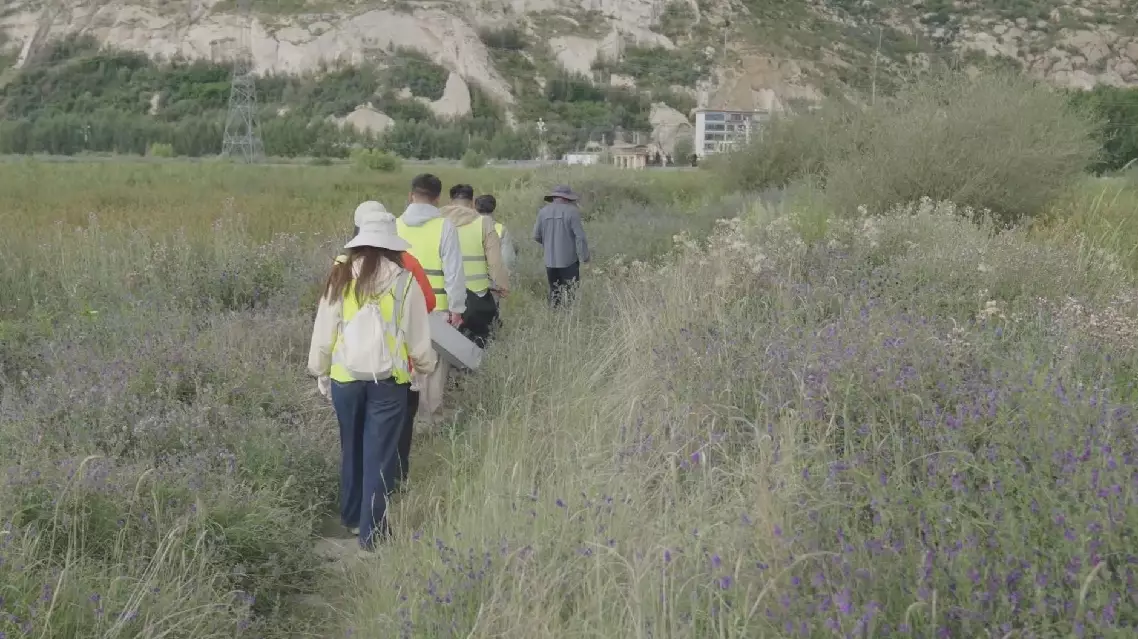
At the Lalu Wetland in Lhasa, the capital of southwest China's Xizang Autonomous Region, Professor Zhang Jifeng from Xizang University and his students are closely monitoring water quality.
"We conduct regular surveys of the wetland's water environment. My students' on-site sampling can measure water temperature, dissolved oxygen, chlorophyll, and other parameters," said Zhang.
The Lalu Wetland is China's highest-altitude and largest urban wetland. As a key ecological barrier on the plateau and a haven for high-altitude species, it serves as a vital gene bank and plays an important role in ecological restoration.
In 2023, Zhang transferred from the Chinese Academy of Sciences to Xizang University in response to a national call for talent, becoming the university's youngest full professor. Bringing new tools and ideas from Beijing, he oversaw the establishment of the Lalu Wetland Field Observation Station. Completed in 2024, the station marked a new era of smart conservation in the region.
Data collected from the station feeds into the Eye of Brahmaputra [or Yarlung Zangbo River] ecological safety monitoring platform, enabling real-time, round-the-clock observation of the river basin's environment.
Zhang first set foot on the Qinghai-Xizang Plateau in 2009 as a graduate student, which is a trip that left a lasting impression.
"While conducting our research, we also experienced the unique culture of the plateau. Many people have misconceptions about Xizang, thinking that life here is very difficult. In fact, the climate in Lhasa is quite pleasant, with temperatures around 20 degrees [Celsius] in summer and not too cold in winter," he said.
Over the past 16 years, Zhang has traveled across all seven prefecture-level areas in Xizang.
"Road conditions in Xizang have improved a lot. In the early years, the roads were not as good as they are now. I remember going to investigate a lake in northern Xizang around 2010. We spent five whole days on the road, eating and sleeping in the car. The wheels often got stuck in the mud, and we had to dig and push the car along the way," Zhang recalled.
For Zhang, cultivating young local talent is just as important as scientific discovery.
"Research conditions in Xizang are improving, and what we need most is talent. I hope more young people will come here and use their scientific knowledge to protect the ecology of this land," he said.
One of his students, Darlha Wangmo, hopes to carry that mission forward.
"After graduation, I want to return to my hometown and engage in science popularization. I want more people to understand the importance of the environment and protect our mountains and rivers using scientific methods," she said.
China Global Television Network (CGTN) has been releasing new series showcasing inspiring stories about Xizang youth, as part of its efforts to mark the 60th founding anniversary of the Xizang Autonomous Region. Zhang's episode is part of the ducumentary.
Inspiring young scientists unlock secrets of Xizang's alpine wetlands