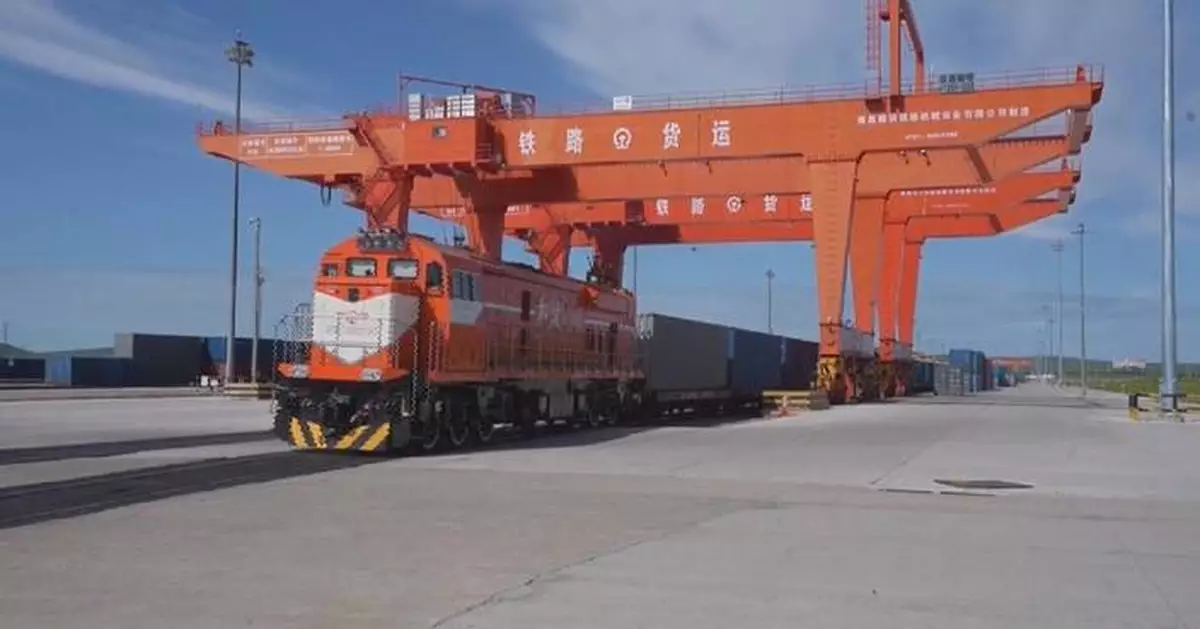
More than 3,000 freight trains have traveled through the eastern corridor of the China-Europe Railway Express network as of Wednesday this year, delivering over 300,000 twenty-foot equivalent unit (TEU) containers of goods, according to China Railway Harbin Group.
The eastern corridor, consisting of Manzhouli, Suifenhe and Tongjiang railway ports, accounted for 26.6 percent of the national total of China-Europe freight train trips, with return trips making up 33.1 percent of the nationwide figure.
"This year, the freight volume by return trains has been relatively high, and the variety of goods has also expanded. For example, soybean oil, decorative items, and auto tires are newly added categories this year. For return trains eligible for release within the same day, we perform direct transshipment of the cargoes to avoid ground handling, so as to further improve the transport efficiency," said Yang Liang, a duty officer at the Manzhouli Station.
Currently, there have been 27 routes via the corridor, connecting China with 14 countries, including Poland, Germany and the Netherlands. The routes link more than 60 cities across China, including Changsha, Zhengzhou, Chengdu and Suzhou.
A total of 12 categories of goods, including electronic products, aviation parts, light textiles and general merchandise, grains and soybean oils, have been transported through the eastern corridor.
To increase trade flows among Belt and Road participating countries, railway, border inspection, and customs departments have been collaborating closely to shorten the stay of return freight trains at related ports.
Now, the clearance efficiency for return trains has increased by nearly 10 percent.
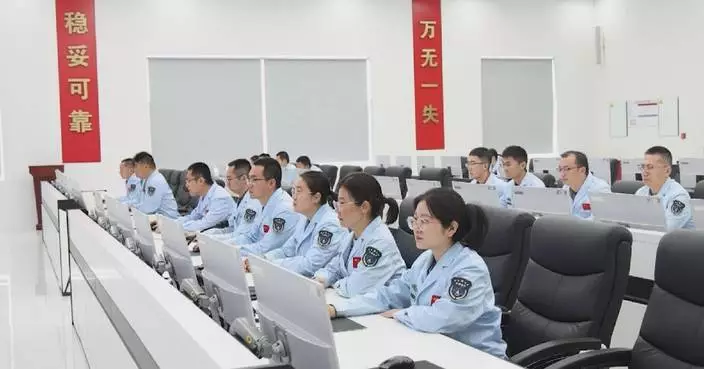
"We have been accelerating the development of a 'smart port' and working with railway operators to develop a railway data platform. By doing so, we aim to establish a seamlessly coordinated service and management model, ensuring zero-delay inspections and customs clearance for China-Europe freight trains," said Qi Qiulai, deputy team leader at the Manzhouli border inspection station.
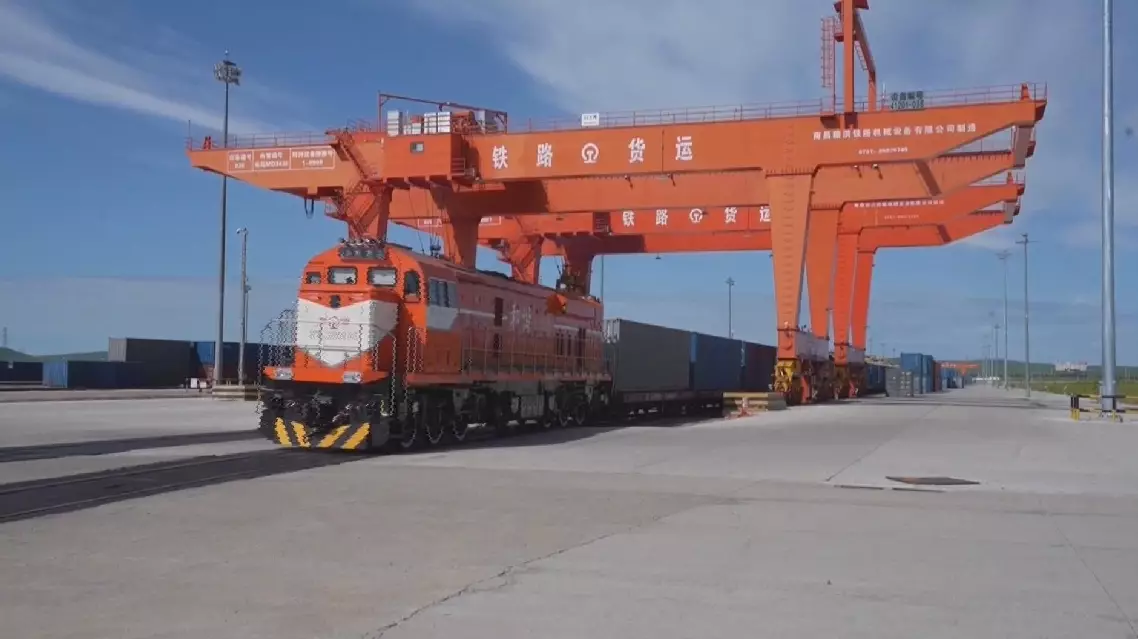
China-Europe Railway Express sees over 3,000 train trips via eastern corridor
China's Minister of Commerce Wang Wentao outlined the key priorities of the 32nd Asia-Pacific Economic Cooperation (APEC) Ministers Responsible for Trade Meeting, which opened on Friday in Suzhou, East China's Jiangsu province.
In an interview with CGTN ahead of the two-day meeting, Wang said free trade, digital cooperation and green economy are high on the agenda of the meeting.
"The key areas include advancing regional economic integration and the Free Trade Area of the Asia-Pacific, supporting the World Trade Organization (WTO) in strengthening digital cooperation and developing green economy. At present, the international situation is marked by intertwined turbulence and chaos, with intensified geopolitical instability. The rise of unilateralism and protectionism poses serious challenges to the international economic and trade order, disrupting global and Asia-Pacific development. Against this backdrop, all parties have higher expectations for this trade ministers' meeting, hoping that it can build consensus and deliver outcomes," Wang said.
This year marks China's third time hosting the APEC meetings and the 35th anniversary of its membership.
By 2025, China had become the largest trading partner of 13 APEC economies. Trade between China and APEC economies reached 3.7 trillion U.S. dollars, accounting for 57.8 percent of China's total foreign trade.
China has signed 24 free trade agreements or economic and trade arrangements with 31 countries and regions, including 15 APEC economies. In recent years, China has also completed upgrades of free trade agreements with APEC economies such as Singapore and Peru.
The minister said that China has always been a firm supporter and an important contributor to APEC.
"We have actively shared our vast market and development opportunities with all parties. China's door to the world will only open wider and wider. Facing the common challenges, China will continue to fulfill its responsibilities as a major country, further deepen reform, expand high-standard opening-up, and continue to provide new opportunities for the Asia-Pacific region and the world with its new achievements in Chinese modernization," the minister said.
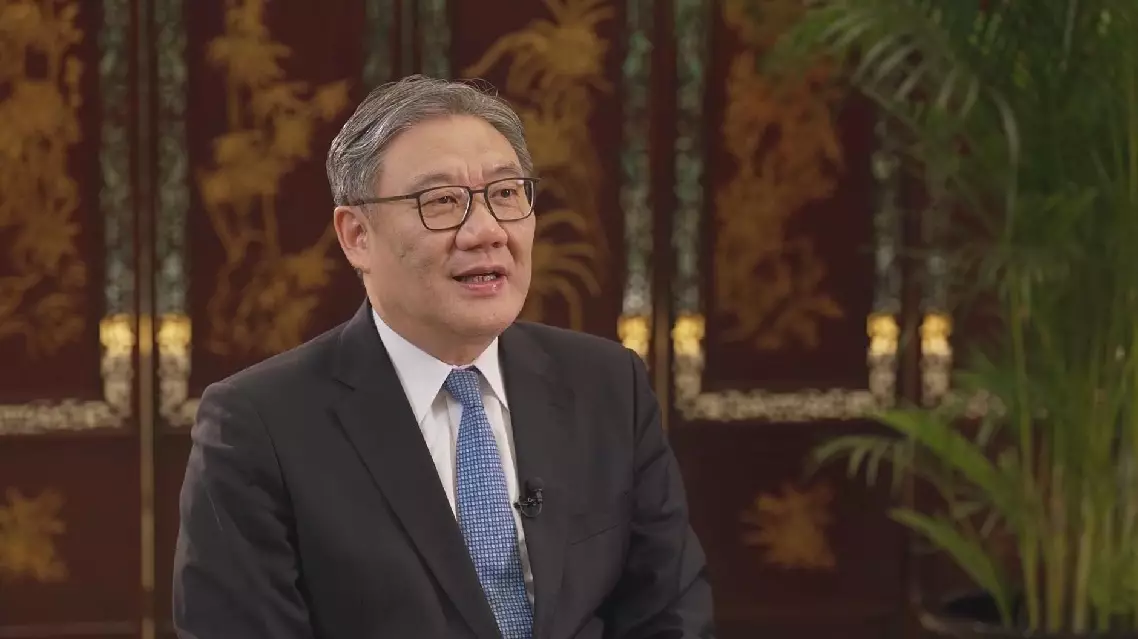
China's Commerce Minister outlines priorities for 32nd APEC trade ministers' meeting