Skip to Content Facebook Feature Image

Largest Fintech Fund in Credit Union Industry History, Curql Fund II, Closes with $360 Million

News

Largest Fintech Fund in Credit Union Industry History, Curql Fund II, Closes with $360 Million
News

News

Largest Fintech Fund in Credit Union Industry History, Curql Fund II, Closes with $360 Million

2025-08-06 21:02 Last Updated At:21:10

DES MOINES, Iowa--(BUSINESS WIRE)--Aug 6, 2025--

Curql, a collective of 160+ credit unions jointly investing in fintech, today announced the final close of Curql Fund II at $360 million. The fund is 40% larger than its record-setting predecessor, making it the largest fintech fundraise in credit union history and placing it well within the top 25 U.S. venture capital raises in the first half of 2025, per Pitchbook’s published rankings. This brings Curql’s AUM (assets under management) to over $600 million.

This press release features multimedia. View the full release here: https://www.businesswire.com/news/home/20250806477973/en/

Closing amid a challenging investment climate, Curql Fund II's scale signals just how deeply the credit union movement believes in collective capital and purpose-built fintech. Fund II builds on the momentum of Curql Fund I and affirms the strength of a model built by credit unions, for credit unions.

“This fund and our business model are both a statement and a victory for the credit union movement,” said Nick Evens, President and CEO of Curql Collective. Together, we’ve built something unprecedented, and together we’ll now put this capital to work to help credit unions large and small bring the next generation of fintech to their members. This is the next chapter of credit unions leading digital transformation rather than chasing it, the next phase of battling unregulated fintech and monstrous investment by those continuing to try and disintermediate credit unions.”

A Fund Built to Work for Credit Unions and Fintech

With Fund II now closed and a new fund not on the horizon for several more years, Curql Collective is focused on putting capital to work. Through Curql, fintech startups gain much more than funding; they gain a built-in network of credit unions as early adopters and advisors. In turn, credit union investors secure preferred pricing, early access to new technologies, and influence over how those solutions evolve to meet member needs.

A Proven Ecosystem, Poised to Scale

This collaboration is already delivering tangible value. To date, Curql participants have access to millions of dollars of savings (discounts), illustrating the real financial impact of “together we win.”

“Fintech and credit unions are natural allies,” said Brenda Worrell, CEO of Idaho Central Credit Union. “We both face pressure from big tech. We both succeed through collaboration, and Curql makes it happen at scale. We’re already seeing the results.”

For credit unions, banding together via Curql is also a strategic response to competitive pressures. Big banks, Big Tech, and direct-to-consumer fintech have been encroaching on consumer finance, raising the stakes for community-based institutions. By pooling resources in Curql, even mid-sized and smaller credit unions can access cutting-edge fintech that would be out of reach individually, and in some cases lead the market. For example, Curql portfolio companies like Zest AI (AI underwriting), Eltropy (digital communications), LoanStreet (loan trading platform), Equipifi (buy-now-pay-later services), ModernFi (deposit network management), and Trust & Will (digital estate planning) have rapidly scaled across credit unions with Curql’s support. With more than 30% of the U.S. credit union market already using one or more Curql fintech, Curql-backed solutions are becoming essential infrastructure in the industry.

Together, We Win

Curql’s fintech portfolio now includes roughly 50 companies, many of which are already reshaping how credit unions serve their members across AI lending, engagement, and cybersecurity. Credit unions of all sizes are now deploying these solutions, allowing them to compete on par with larger institutions in digital innovation.

The Search for Mission-Driven Fintech

Curql’s focus now shifts to deploying its $360 million in newly committed capital into promising fintech partnerships that will directly benefit credit unions, their members, and the fintech powering them. The vision remains the same: keep credit unions at the forefront of financial innovation through collective investment and cooperation. In an era of rapid fintech evolution, Curql’s leaders believe their model has turned a corner; from proving concept to delivering industry-scale impact. As credit unions roll out the next wave of fintech solutions born from Curql’s investments, the message is clear: by standing together, credit unions can not only survive the fintech revolution but lead it.

About Curql Collective

Curql Collective is a fintech investment ecosystem built by credit unions, for credit unions. With the backing of over 160 progressive credit unions, Curql invests in and accelerates the development of fintech solutions that empower credit unions to better serve their members and stay competitive. Curql Fund II closed in 2025 at $360 million (the largest credit union-led fintech fund ever), following the success of Fund I ($252 million closed in 2021). Through Curql Fund I, Curql Fund II, and Curql Accelerate, the collective has partnered with over 50 fintech companies to bring transformative technologies directly to the credit union movement. Together, we’re creating opportunities for growth, enhancing member experiences, and driving meaningful change across the industry. For more information, visit www.curql.com.

Confetti falling, celebrating a historic moment in credit union history - the largest ever credit-union led fintech fundraise at $360 million from over 160 credit unions.


Confetti falling, celebrating a historic moment in credit union history - the largest ever credit-union led fintech fundraise at $360 million from over 160 credit unions.

WASHINGTON (AP) — U.S. forces in the Caribbean Sea have seized another sanctioned oil tanker that the Trump administration says has ties to Venezuela, part of a broader U.S. effort to take control of the South American country’s oil.

The U.S. Coast Guard boarded the tanker, named Veronica, early Thursday, Homeland Security Secretary Kristi Noem wrote on social media. The ship had previously passed through Venezuelan waters and was operating in defiance of President Donald Trump’s "established quarantine of sanctioned vessels in the Caribbean,” she said.

U.S. Southern Command said Marines and sailors launched from the aircraft carrier USS Gerald R. Ford to take part in the operation alongside a Coast Guard tactical team, which Noem said conducted the boarding as in previous raids. The military said the ship was seized “without incident.”

Several U.S. government social media accounts posted brief videos that appeared to show various parts of the ship’s capture. Black-and-white footage showed at least four helicopters approaching the ship before hovering over the deck while armed troops dropped down by rope. At least nine people could be seen on the deck of the ship.

The Veronica is the sixth sanctioned tanker seized by U.S. forces as part of the effort by Trump’s administration to control the production, refining and global distribution of Venezuela’s oil products and the fourth since the U.S. ouster of Venezuela President Nicolás Maduro in a surprise nighttime raid almost two weeks ago.

The Veronica last transmitted its location on Jan. 3 as being at anchor off the coast of Aruba, just north of Venezuela’s main oil terminal. According to the data it transmitted at the time, it was partially filled with crude.

The ship is currently listed as flying the flag of Guyana and is considered part of the shadow fleet that moves cargoes of oil in violation of U.S. sanctions.

According to its registration data, the ship also has been known as the Gallileo, owned and managed by a company in Russia. In addition, a tanker with the same registration number previously sailed under the name Pegas and was sanctioned by the U.S. Treasury Department for moving cargoes of illicit Russian oil.

As with prior posts about such raids, Noem and the military framed the seizure as part of an effort to enforce the law. Noem argued that the multiple captures show that “there is no outrunning or escaping American justice.”

Speaking to reporters at the White House later Thursday, Noem declined to say how many sanctioned oil tankers the U.S. is tracking or whether the government is keeping tabs on freighters beyond the Caribbean Sea.

“I can’t speak to the specifics of the operation, although we are watching the entire shadow fleet and how they’re moving,” she told reporters.

However, other officials in Trump's Republican administration have made clear that they see the actions as a way to generate cash as they seek to rebuild Venezuela’s battered oil industry and restore its economy.

Trump met with executives from oil companies last week to discuss his goal of investing $100 billion in Venezuela to repair and upgrade its oil production and distribution. His administration has said it expects to sell at least 30 million to 50 million barrels of sanctioned Venezuelan oil.

This story has been corrected to show the Veronica is the fourth, not the third, tanker seized by U.S. forces since Maduro’s capture and the ship also has been known as the Gallileo, not the Galileo.

Associated Press writer Ben Finley contributed to this report.

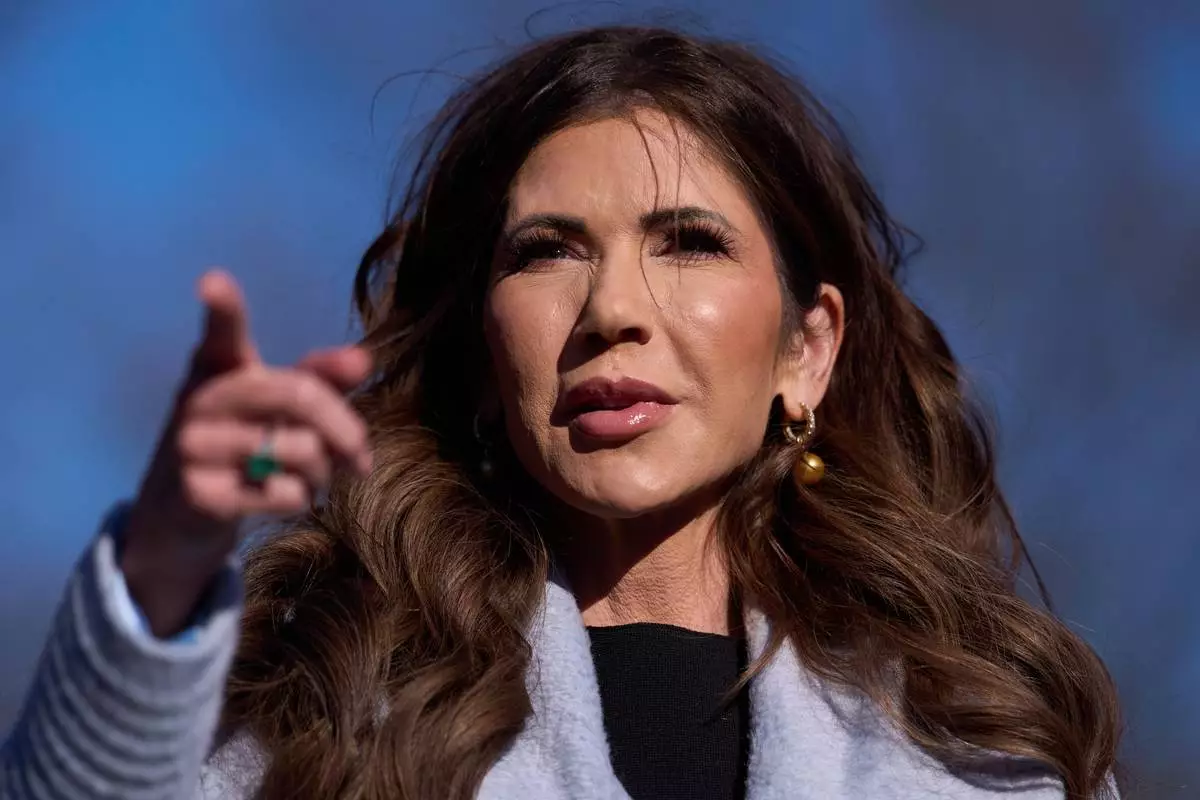
Homeland Security Secretary Kristi Noem speaks with reporters at the White House, Thursday, Jan. 15, 2026, in Washington. (AP Photo/Alex Brandon)

Homeland Security Secretary Kristi Noem speaks with reporters at the White House, Thursday, Jan. 15, 2026, in Washington. (AP Photo/Alex Brandon)

Homeland Security Secretary Kristi Noem speaks with reporters at the White House, Thursday, Jan. 15, 2026, in Washington. (AP Photo/Evan Vucci)

Homeland Security Secretary Kristi Noem speaks with reporters at the White House, Thursday, Jan. 15, 2026, in Washington. (AP Photo/Evan Vucci)

Homeland Security Secretary Kristi Noem speaks with reporters at the White House, Thursday, Jan. 15, 2026, in Washington. (AP Photo/Evan Vucci)

Homeland Security Secretary Kristi Noem speaks with reporters at the White House, Thursday, Jan. 15, 2026, in Washington. (AP Photo/Evan Vucci)

Homeland Security Secretary Kristi Noem speaks with reporters at the White House, Thursday, Jan. 15, 2026, in Washington. (AP Photo/Evan Vucci)

Homeland Security Secretary Kristi Noem speaks with reporters at the White House, Thursday, Jan. 15, 2026, in Washington. (AP Photo/Evan Vucci)

Homeland Security Secretary Kristi Noem speaks with reporters at the White House, Thursday, Jan. 15, 2026, in Washington. (AP Photo/Evan Vucci)

Homeland Security Secretary Kristi Noem speaks with reporters at the White House, Thursday, Jan. 15, 2026, in Washington. (AP Photo/Evan Vucci)

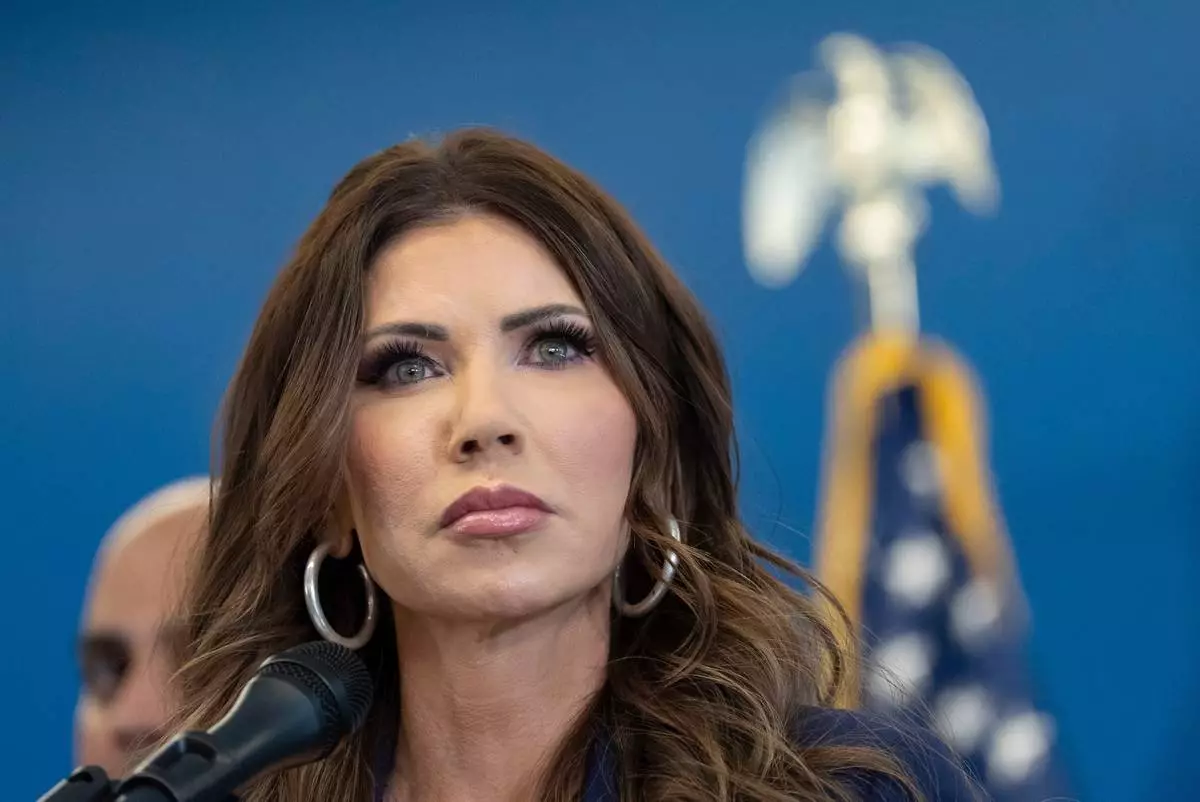
U.S. Homeland Security Secretary Kristi Noem speaks during a press conference, Thursday, Jan. 8, 2026, in New York. (AP Photo/Yuki Iwamura)

U.S. Homeland Security Secretary Kristi Noem speaks during a press conference, Thursday, Jan. 8, 2026, in New York. (AP Photo/Yuki Iwamura)

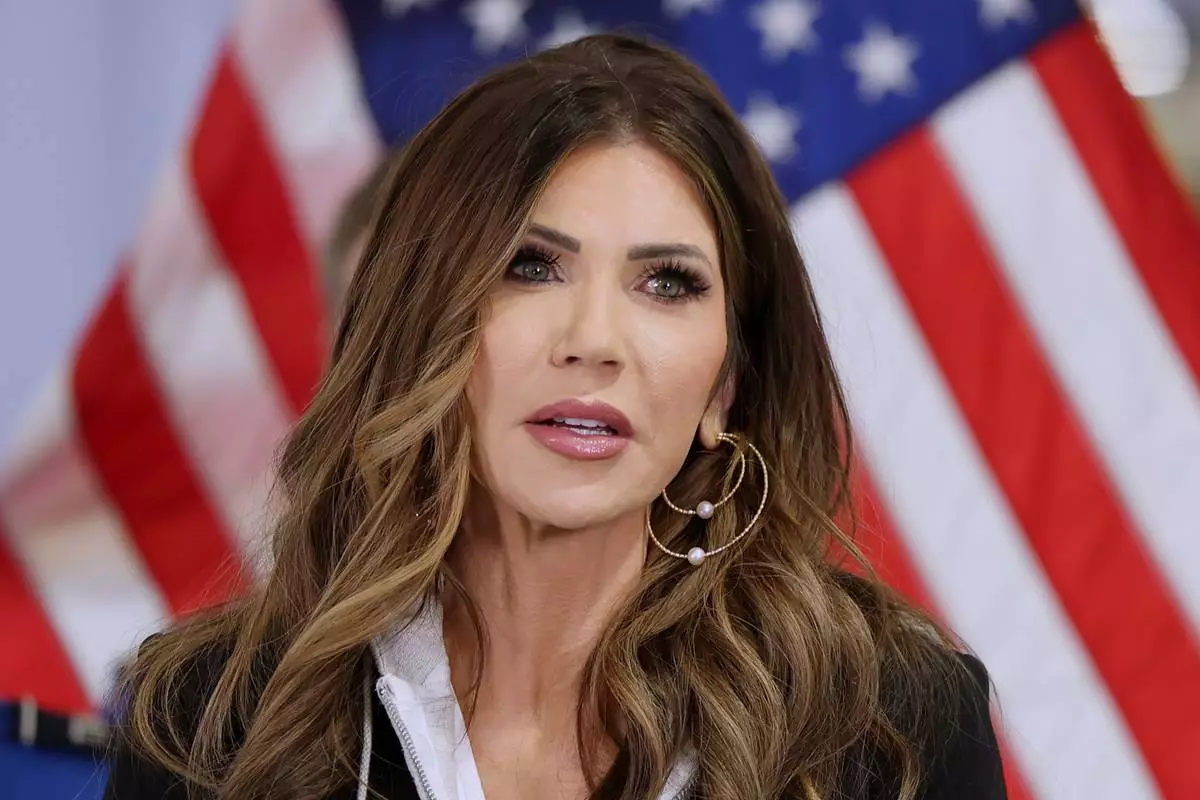
U.S. Homeland Security Secretary Kristi Noem speaks at a news conference at Harry Reid International Airport, Nov. 22, 2025, in Las Vegas. (AP Photo/Ronda Churchill, File)

U.S. Homeland Security Secretary Kristi Noem speaks at a news conference at Harry Reid International Airport, Nov. 22, 2025, in Las Vegas. (AP Photo/Ronda Churchill, File)

Recommended Articles