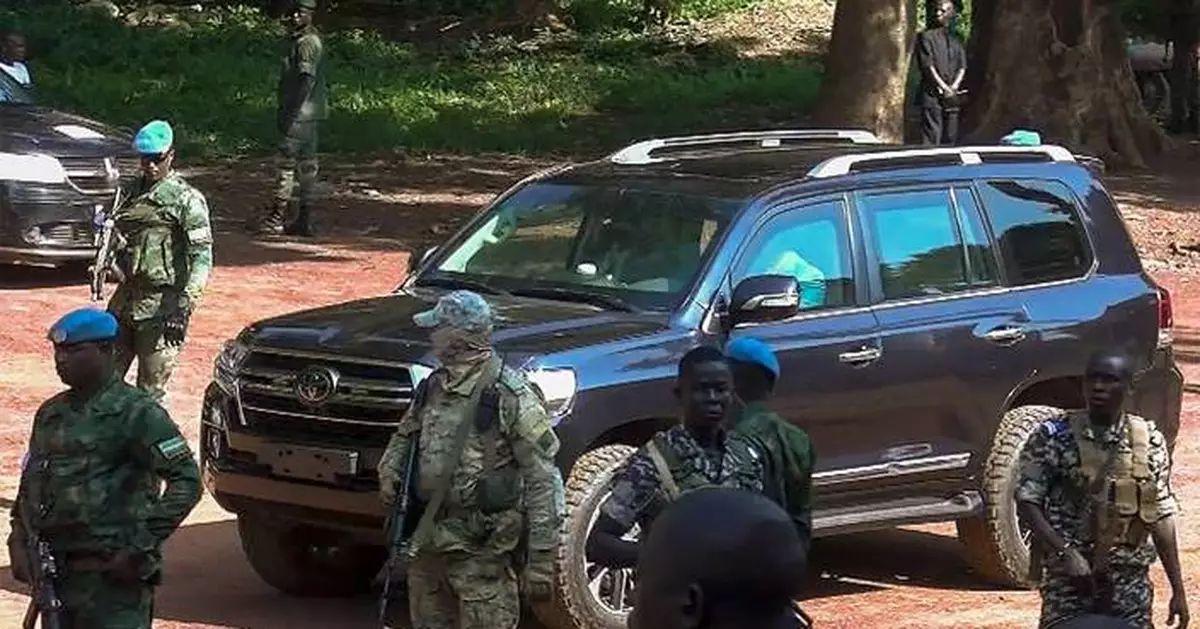
BANGUI, Central African Republic (AP) — Officials in the Central African Republic have said that Russia has called on the country to replace the private Wagner mercenary group with Moscow's state-run Africa Corps and requested payment for further security services.
The Central African Republic's government has been reluctant to agree to Moscow's demands, because it sees Wagner as more effective and they prefer to pay for services with minerals, not in cash.
For years, Wagner has been in Central African Republic, where they are protecting President Faustin Archange Touadera and his government, and helped him win a 2023 constitutional referendum that could extend his power indefinitely. In exchange, they've enjoyed access to the country's rich minerals, including gold.
But Russia has been trying to transition from Wagner to Africa Corps since Wagner's leader, Yevgeny Prigozhin, was killed in a plane crash in 2023. The Wagner mercenaries were replaced earlier this year in Mali.
A Central African Republic military official told The Associated Press on Tuesday that the Russian deputy defense minister made the demands about a shift to Africa Corps and payment for its services earlier this year during several visits to the country.
The official said government authorities are reluctant to agree, because they believe the private-run Wagner would be more effective than Africa Corps, which is under direct command of the Russian defense ministry.
Wagner has “connections with the officers, are feared operationally and have the resources,” said the official, who wasn't allowed to publicly discuss the matter so spoke on condition of anonymity.
The military official said that according to the Russian demands, the Central African Republic “must not only cover the costs of Africa Corps personnel, but also pay significant sums of money to Russia, amounting to billions of CFA francs (millions of dollars).
“But authorities in Bangui said they are unable to pay the amount," the official said. "Instead, they hope to compensate Russia with strategic and mineral resources, notably gold, uranium, and iron.”
A senior Central African lawmaker with direct knowledge of the negotiations confirmed the demands by Russia to the AP.
"We discussed it, and the government needs to make proposals," said the lawmaker, who who wasn't authorized to talk to reporters about the issue so spoke on condition of anonymity.
There are also questions regarding the Kremlin’s demand for payment. Both officials who spoke with the AP didn't mention a specific amount, but they suggested that it was too much for the country to pay.
Russia’s Defense Ministry didn't immediately respond to a request for comment.
The Central African Republic has been in conflict since 2013 when predominantly Muslim rebels seized power and forced the president from office. A 2019 peace deal was signed but six of the 14 armed groups involved in the deal withdrew from it. Wagner is credited for helping prevent the rebels from retaking the capital in 2021.
Unlike Wagner, which fights rebels alongside government forces, Africa Corps is more focused on training and that could be a contentious issues for both countries, said Ulf Laessing, head of the Sahel program at the Konrad Adenauer Foundation.
“In Mali, they forced them to accept the change," Laessing said. “I don’t think the Central African Republic has options since they chased away the Europeans.”
France, the Central African Republic’s former colonial ruler, had a significant military presence in the country since it’s independence in 1960, but withdrew its last troops in 2022 after a fallout with authorities.
Mark Banchereau reported from Dakar, Senegal.
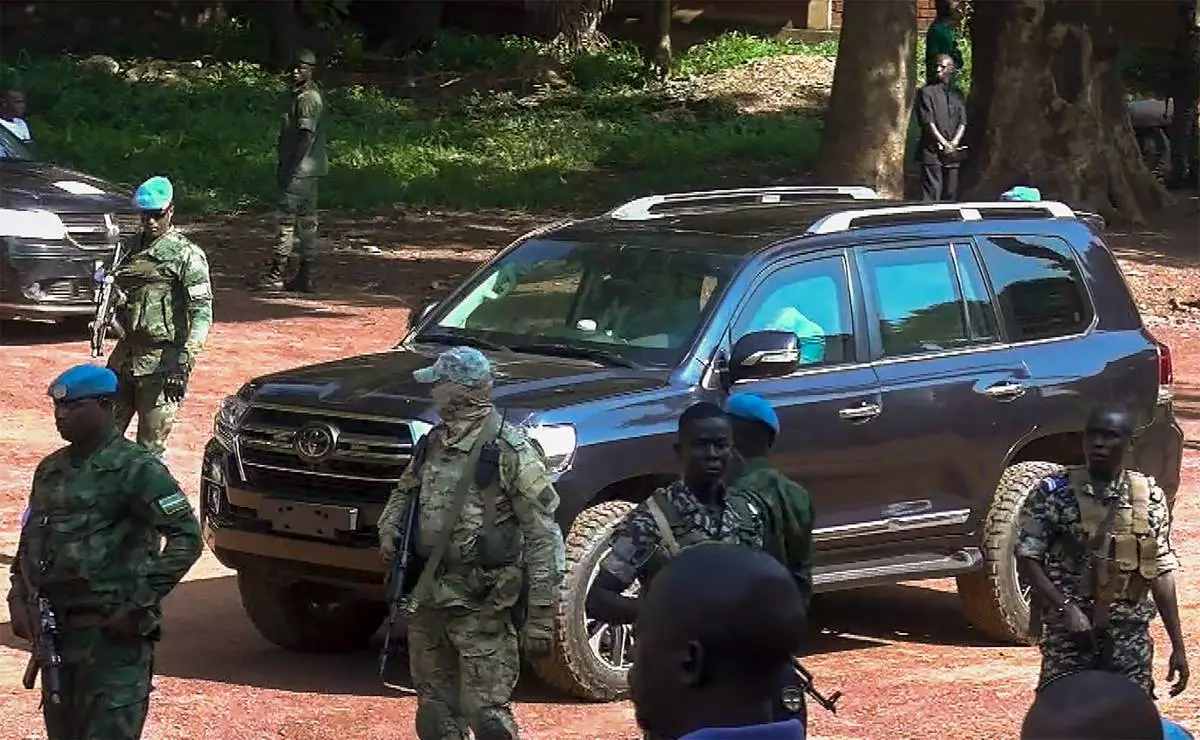
FILE - In this image taken from video, President of the Central African Republic Faustin-Archange Touadera arrives at a polling station in Bangui, Central African Republic, Sunday, July 30, 2023. (AP Photo, File)
WASHINGTON (AP) — U.S. forces in the Caribbean Sea have seized another sanctioned oil tanker that the Trump administration says has ties to Venezuela, part of a broader U.S. effort to take control of the South American country’s oil.
The U.S. Coast Guard boarded the tanker, named Veronica, early Thursday, Homeland Security Secretary Kristi Noem wrote on social media. The ship had previously passed through Venezuelan waters and was operating in defiance of President Donald Trump’s "established quarantine of sanctioned vessels in the Caribbean,” she said.
U.S. Southern Command said Marines and sailors launched from the aircraft carrier USS Gerald R. Ford to take part in the operation alongside a Coast Guard tactical team, which Noem said conducted the boarding as in previous raids. The military said the ship was seized “without incident.”
Several U.S. government social media accounts posted brief videos that appeared to show various parts of the ship’s capture. Black-and-white footage showed at least four helicopters approaching the ship before hovering over the deck while armed troops dropped down by rope. At least nine people could be seen on the deck of the ship.
The Veronica is the sixth sanctioned tanker seized by U.S. forces as part of the effort by Trump’s administration to control the production, refining and global distribution of Venezuela’s oil products and the fourth since the U.S. ouster of Venezuela President Nicolás Maduro in a surprise nighttime raid almost two weeks ago.
The Veronica last transmitted its location on Jan. 3 as being at anchor off the coast of Aruba, just north of Venezuela’s main oil terminal. According to the data it transmitted at the time, it was partially filled with crude.
The ship is currently listed as flying the flag of Guyana and is considered part of the shadow fleet that moves cargoes of oil in violation of U.S. sanctions.
According to its registration data, the ship also has been known as the Gallileo, owned and managed by a company in Russia. In addition, a tanker with the same registration number previously sailed under the name Pegas and was sanctioned by the U.S. Treasury Department for moving cargoes of illicit Russian oil.
As with prior posts about such raids, Noem and the military framed the seizure as part of an effort to enforce the law. Noem argued that the multiple captures show that “there is no outrunning or escaping American justice.”
Speaking to reporters at the White House later Thursday, Noem declined to say how many sanctioned oil tankers the U.S. is tracking or whether the government is keeping tabs on freighters beyond the Caribbean Sea.
“I can’t speak to the specifics of the operation, although we are watching the entire shadow fleet and how they’re moving,” she told reporters.
However, other officials in Trump's Republican administration have made clear that they see the actions as a way to generate cash as they seek to rebuild Venezuela’s battered oil industry and restore its economy.
Trump met with executives from oil companies last week to discuss his goal of investing $100 billion in Venezuela to repair and upgrade its oil production and distribution. His administration has said it expects to sell at least 30 million to 50 million barrels of sanctioned Venezuelan oil.
This story has been corrected to show the Veronica is the fourth, not the third, tanker seized by U.S. forces since Maduro’s capture and the ship also has been known as the Gallileo, not the Galileo.
Associated Press writer Ben Finley contributed to this report.
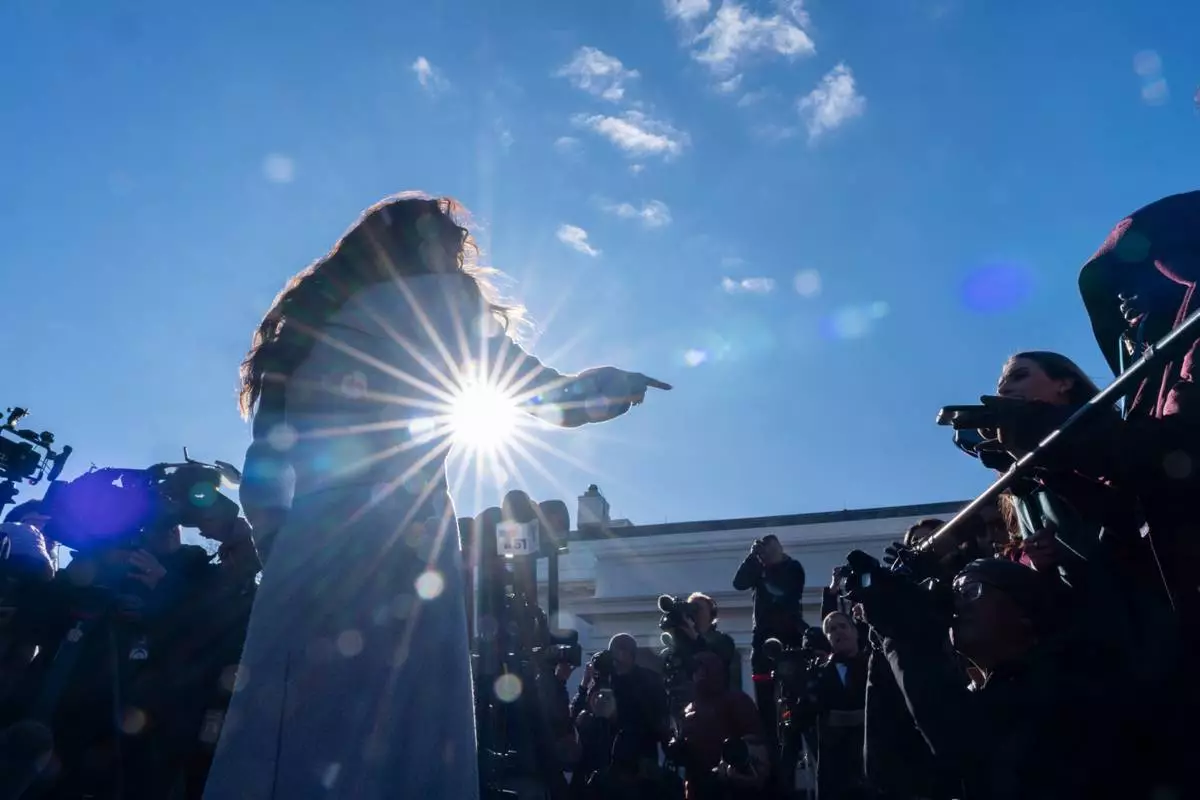
Homeland Security Secretary Kristi Noem speaks with reporters at the White House, Thursday, Jan. 15, 2026, in Washington. (AP Photo/Alex Brandon)
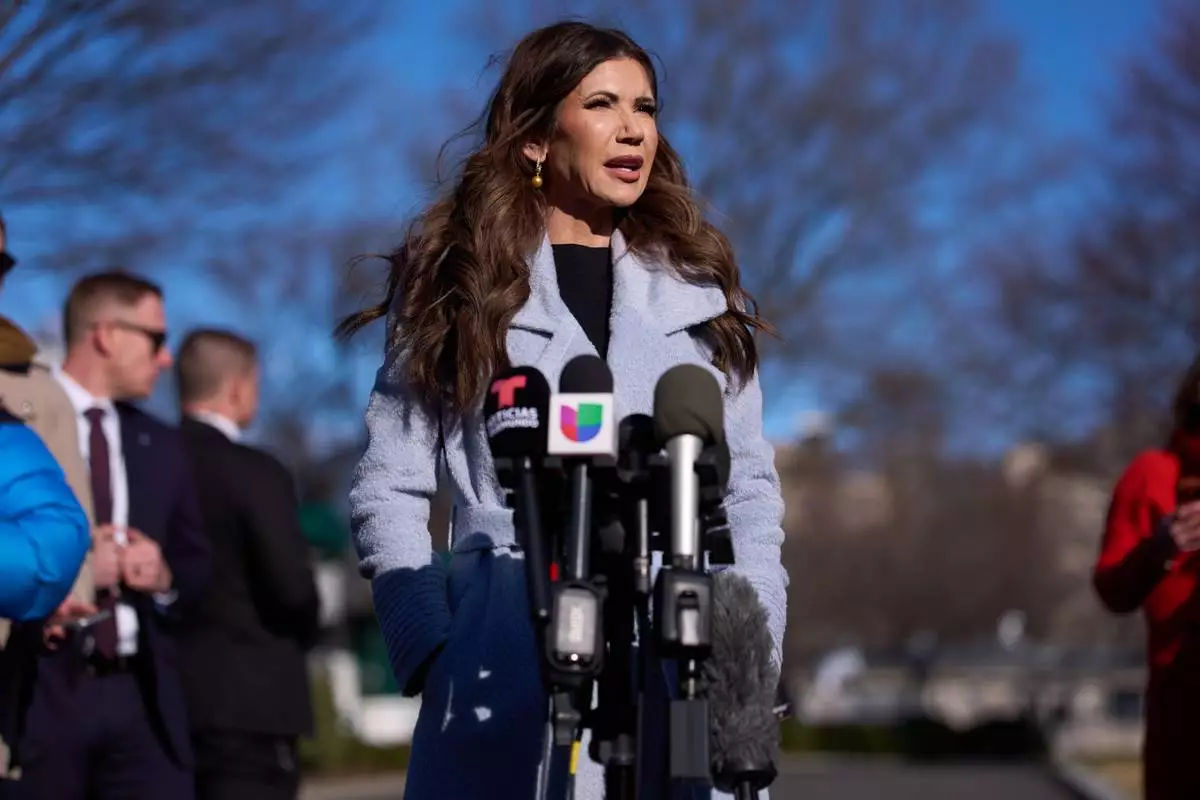
Homeland Security Secretary Kristi Noem speaks with reporters at the White House, Thursday, Jan. 15, 2026, in Washington. (AP Photo/Evan Vucci)
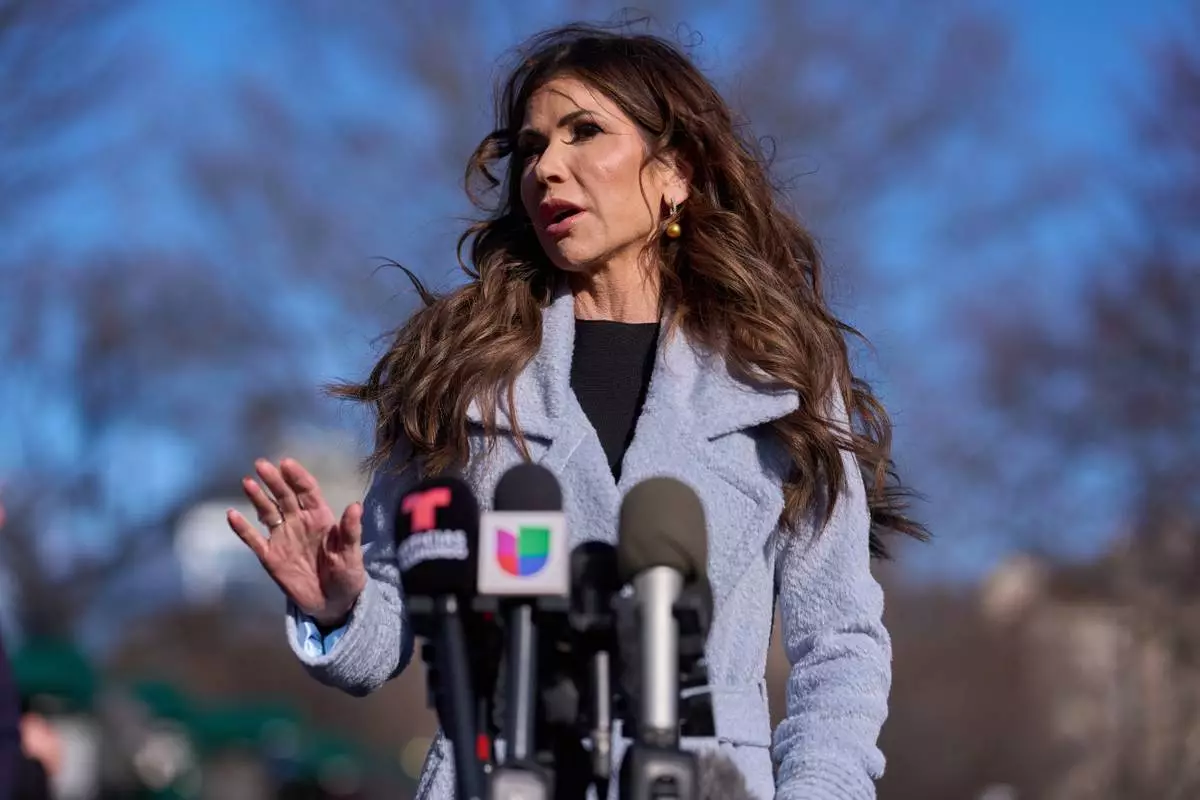
Homeland Security Secretary Kristi Noem speaks with reporters at the White House, Thursday, Jan. 15, 2026, in Washington. (AP Photo/Evan Vucci)
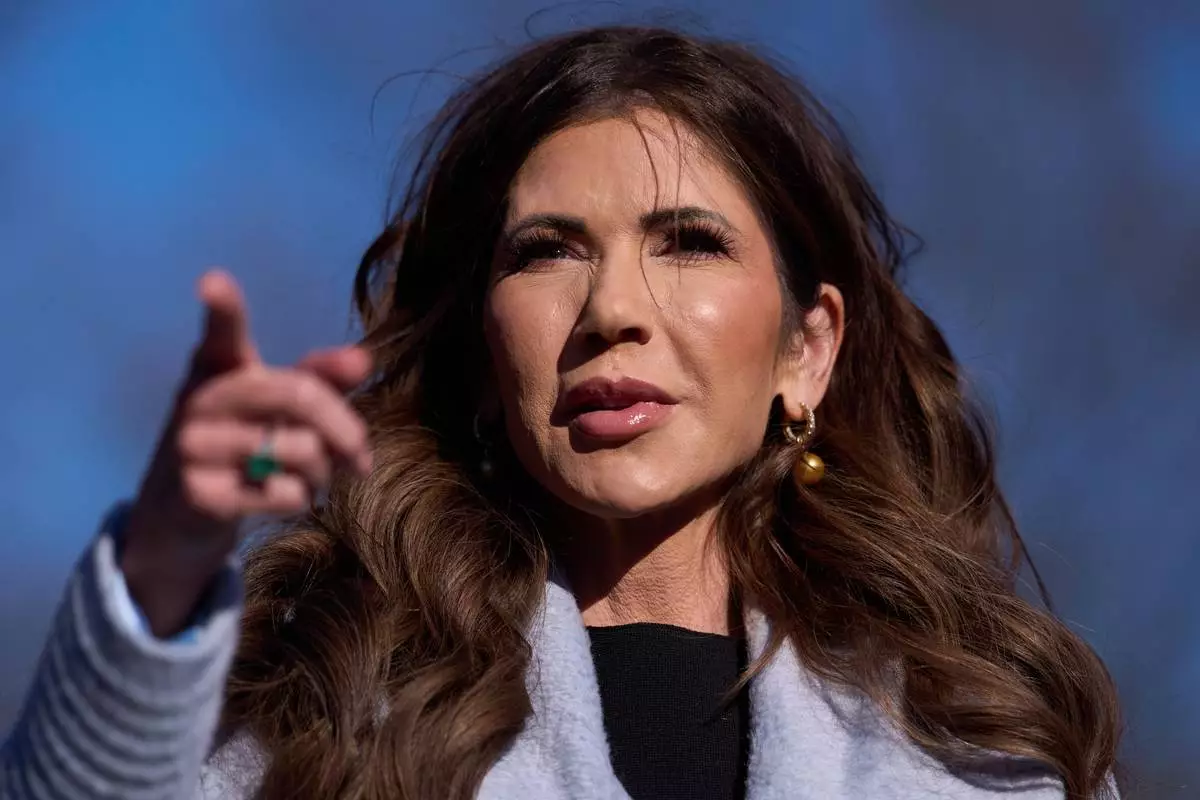
Homeland Security Secretary Kristi Noem speaks with reporters at the White House, Thursday, Jan. 15, 2026, in Washington. (AP Photo/Evan Vucci)
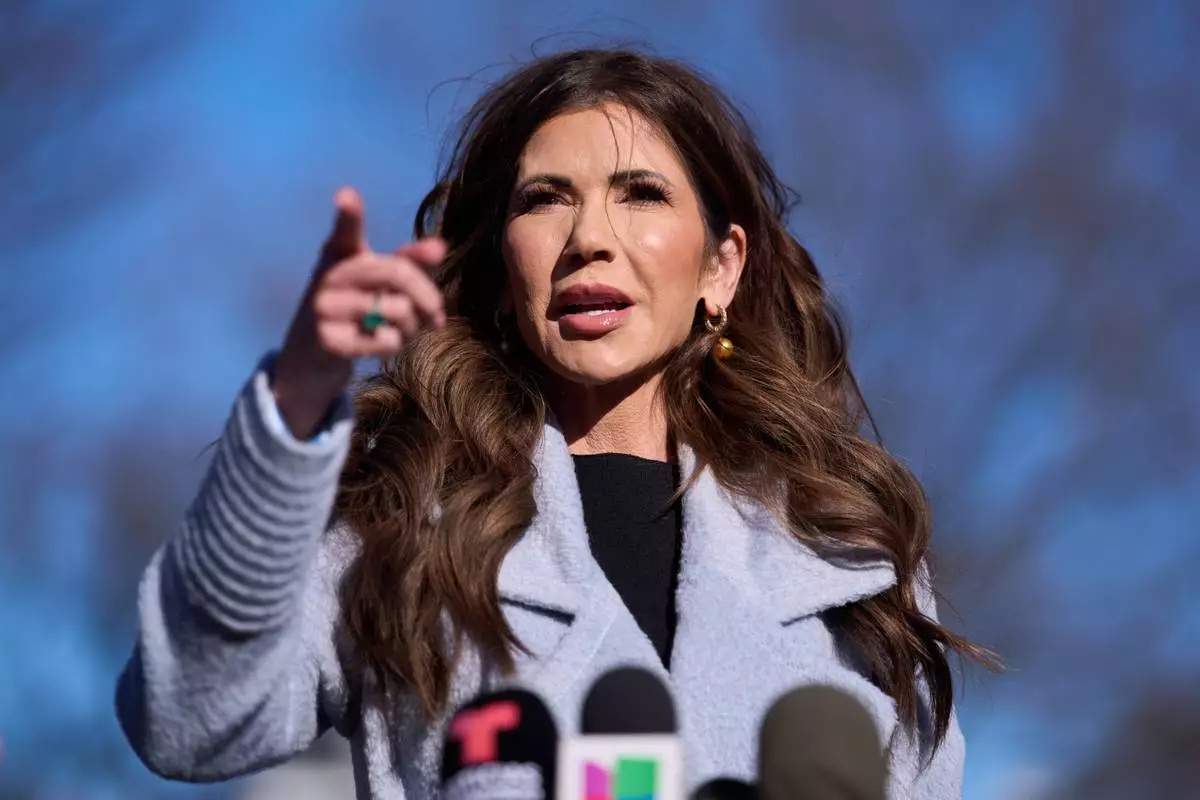
Homeland Security Secretary Kristi Noem speaks with reporters at the White House, Thursday, Jan. 15, 2026, in Washington. (AP Photo/Evan Vucci)
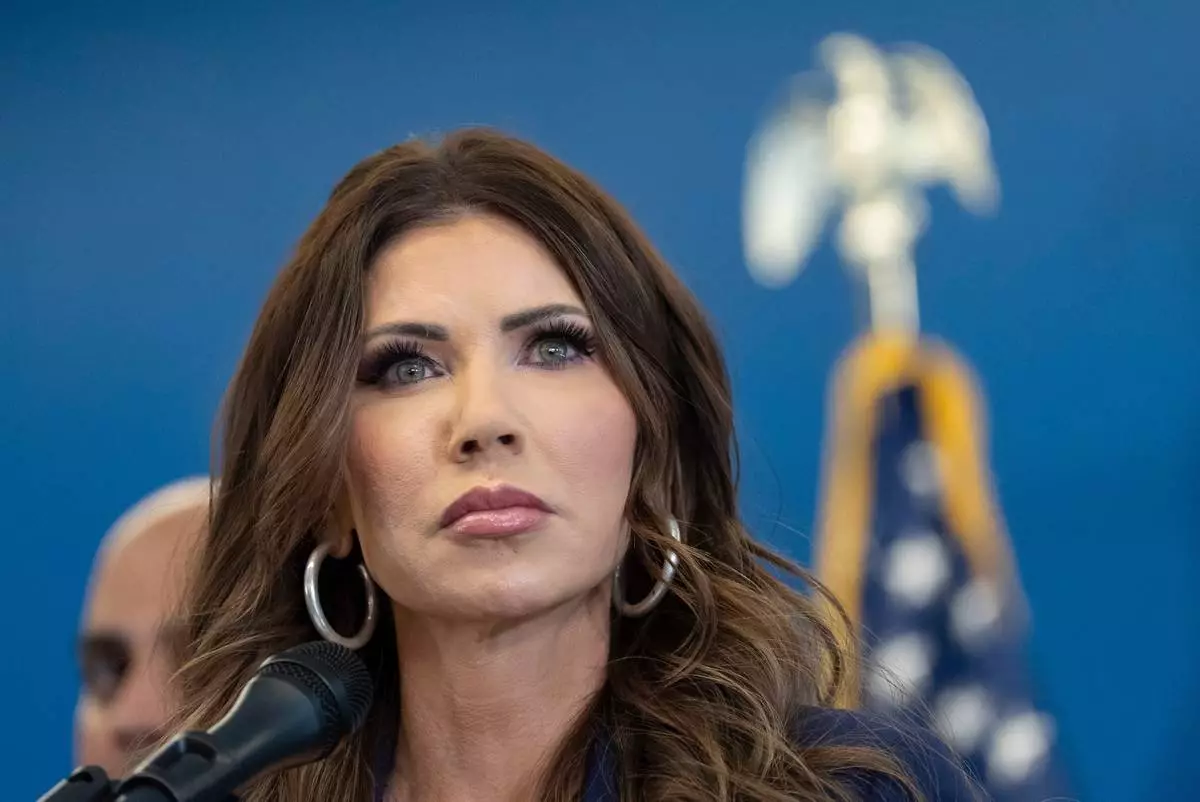
U.S. Homeland Security Secretary Kristi Noem speaks during a press conference, Thursday, Jan. 8, 2026, in New York. (AP Photo/Yuki Iwamura)
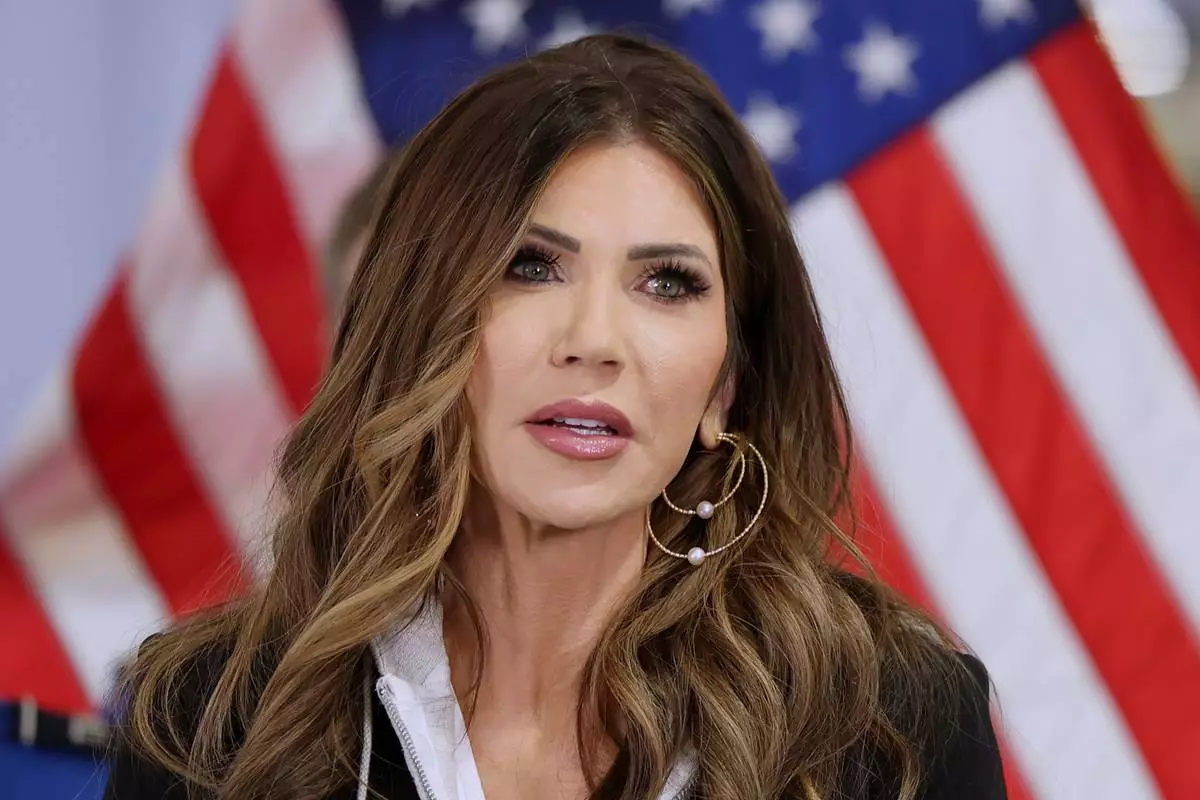
U.S. Homeland Security Secretary Kristi Noem speaks at a news conference at Harry Reid International Airport, Nov. 22, 2025, in Las Vegas. (AP Photo/Ronda Churchill, File)