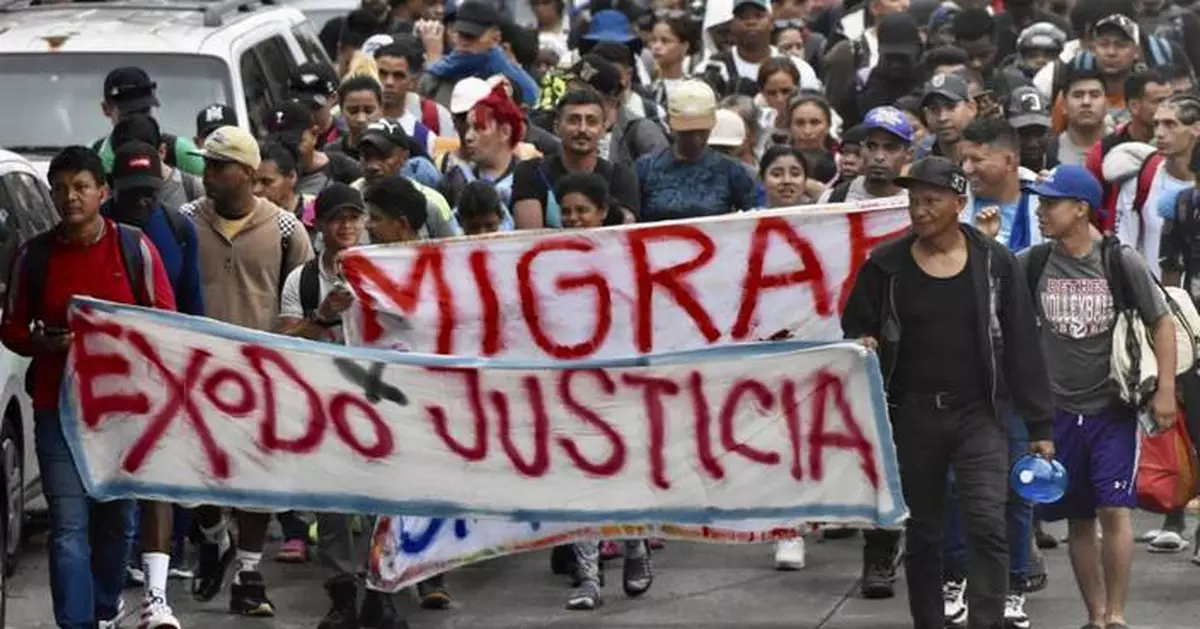
TAPACHULA, Mexico (AP) — Escorted by police and accompanied by a Catholic priest, about 300 migrants began walking north on Wednesday from southern Mexico, even as the activist who helped organize them remained in police custody over allegations of human trafficking.
On Tuesday, authorities arrested Luis García Villagrán, the leader of a local nongovernmental organization in the city of Tapachula, in the state of Chiapas, for alleged crimes related to his work with migrants.
Mexico's President Claudia Sheinbaum said during her daily news briefing on Wednesday that he was “not an activist” but was tied to trafficking people — and “that is the crime.”
Sheinbaum said there had been an arrest order pending for García Villagrán for years. It was not known why the outspoken and very public figure had not been arrested earlier.
Later Wednesday, Mexican authorities said in a statement that investigators had identified a network of migrant smugglers that used various organizations and foundations as a front to move migrants and drugs through Mexico. They did not provide any details.
The joint statement from the Attorney General’s Office and security forces said García Villagran’s alleged role was obtaining false documentation for migrants to allow them to cross Mexico.
The group of migrants that left Tapachula, near the border with Guatemala, was small in comparison to migrant caravans in years past. There has been very little movement of migrants in public since U.S. President Donald Trump took office in January, though migration numbers had been falling even prior to that.
Those walking Wednesday said their goal was not to reach the United States, but rather central Mexico. They complained that they had been waiting for months to legalize their status or receive asylum.
In recent years, the Mexican government has worked to contain migrants in southern Mexico — far from the border with the U.S. At times, this strategy has swollen migrant numbers in Tapachula until hundreds set out walking in protest. Chiapas is Mexico’s poorest state and migrants complain there is little work or available housing.
On Wednesday, Johnny López of Ecuador walked with his wife and three children, including a baby born in Tapachula. They had waited in the southern city for the outcome of their asylum application, which was eventually rejected. Now they planned to travel to Mexico City, where López hopes to find work to support his family.
The migrants were escorted by immigration agents, police, marines and paramedics.
Heyman Vázquez, a Catholic priest who accompanied the migrants, called García Villagran’s arrest “unjust.”
Vázquez said it showed the Mexican government’s concern over migrant caravans, which he said would be resolved by making it easier for migrants to legalize their status.
Follow AP’s coverage of Latin America and the Caribbean at https://apnews.com/hub/latin-america
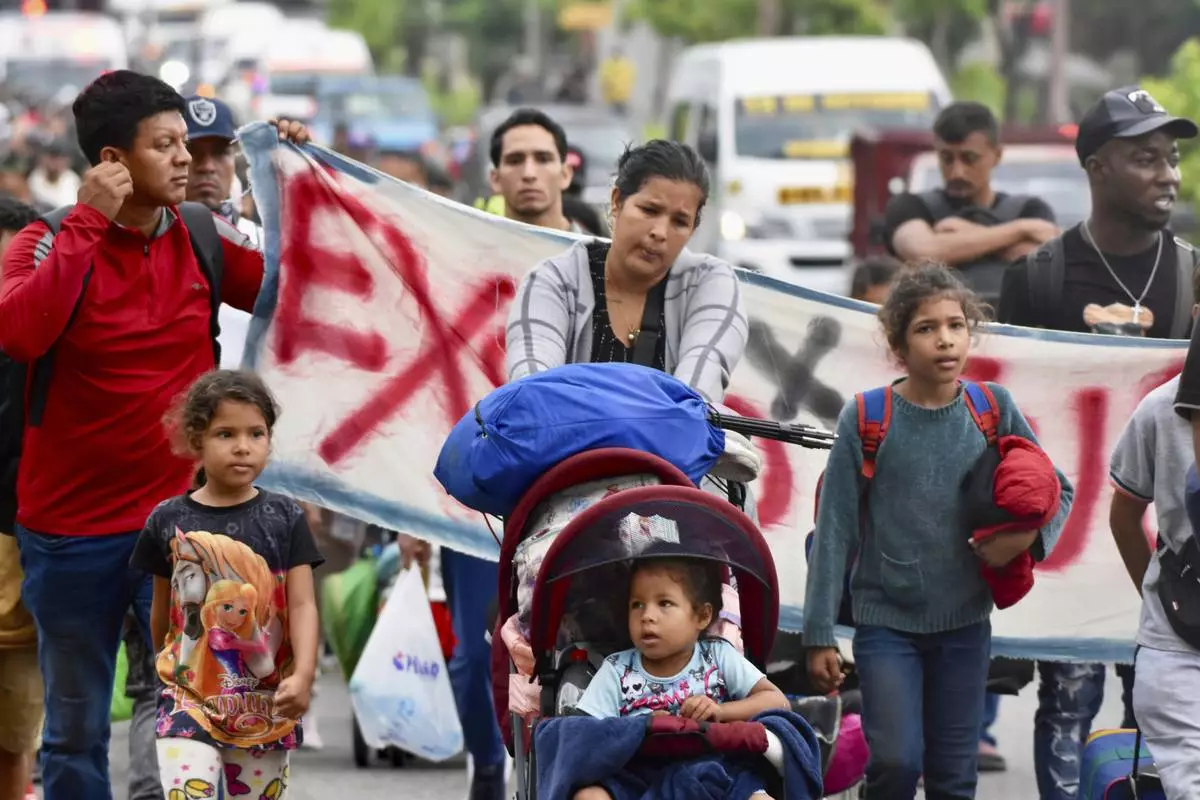
Migrants leave Tapachula, Chiapas state, Mexico, where they had been waiting for months to legalize their status or receive asylum, but unable to do so, Wednesday, Aug. 6, 2025. (AP Photo/Edgar H. Clemente)
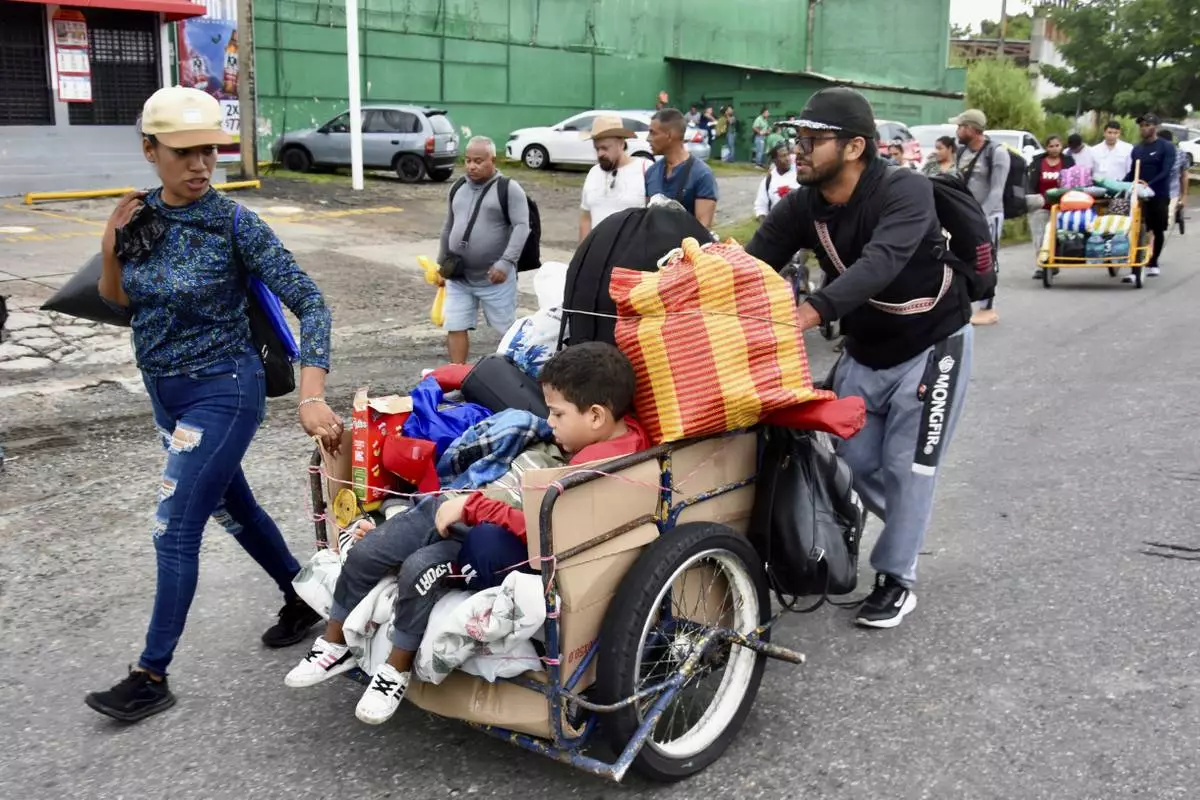
Migrants leave Tapachula, Chiapas state, Mexico, where they had been waiting for months to legalize their status or receive asylum, but unable to do so, Wednesday, Aug. 6, 2025. (AP Photo/Edgar H. Clemente)
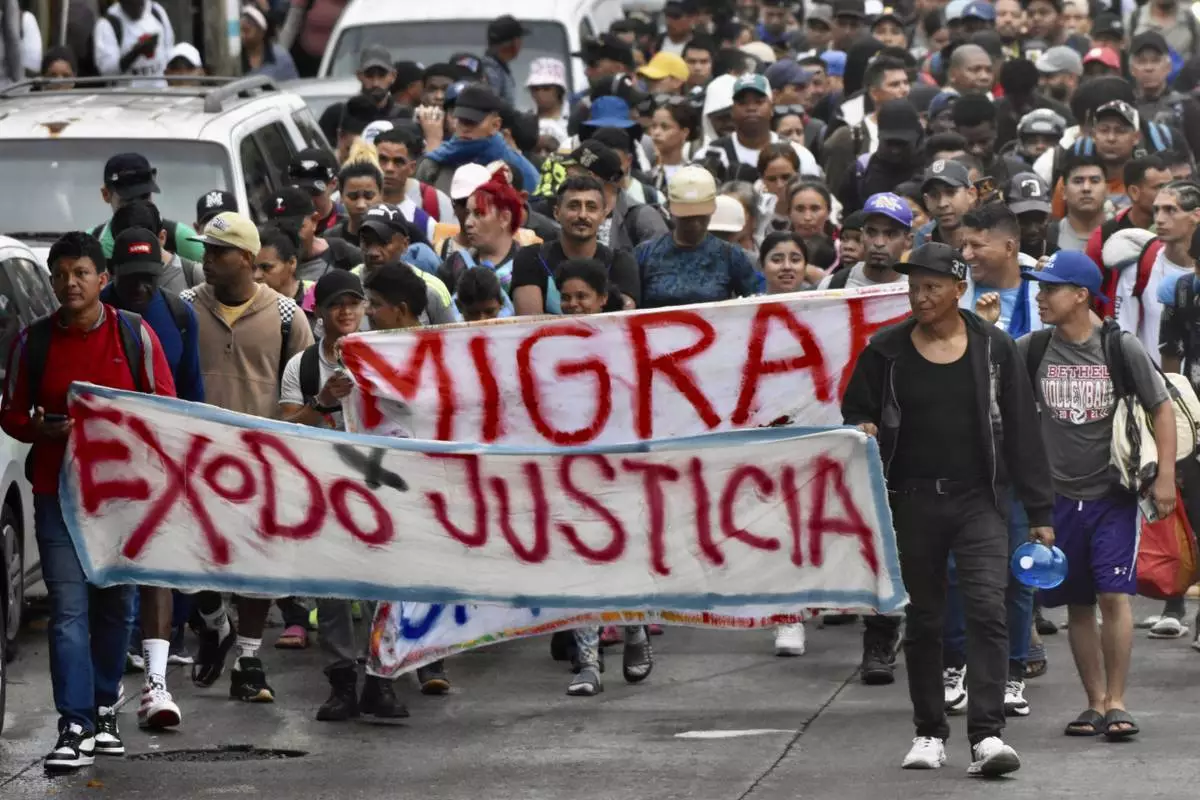
Migrants carry a sign "Exodus for justice. Migrant," as they walk out of Tapachula, Chiapas state, Mexico, where they had been waiting for months to legalize their status or receive asylum, but unable to do so, Wednesday, Aug. 6, 2025. (AP Photo/Edgar H. Clemente)
WASHINGTON (AP) — U.S. forces in the Caribbean Sea have seized another sanctioned oil tanker that the Trump administration says has ties to Venezuela, part of a broader U.S. effort to take control of the South American country’s oil.
The U.S. Coast Guard boarded the tanker, named Veronica, early Thursday, Homeland Security Secretary Kristi Noem wrote on social media. The ship had previously passed through Venezuelan waters and was operating in defiance of President Donald Trump’s "established quarantine of sanctioned vessels in the Caribbean,” she said.
U.S. Southern Command said Marines and sailors launched from the aircraft carrier USS Gerald R. Ford to take part in the operation alongside a Coast Guard tactical team, which Noem said conducted the boarding as in previous raids. The military said the ship was seized “without incident.”
Several U.S. government social media accounts posted brief videos that appeared to show various parts of the ship’s capture. Black-and-white footage showed at least four helicopters approaching the ship before hovering over the deck while armed troops dropped down by rope. At least nine people could be seen on the deck of the ship.
The Veronica is the sixth sanctioned tanker seized by U.S. forces as part of the effort by Trump’s administration to control the production, refining and global distribution of Venezuela’s oil products and the fourth since the U.S. ouster of Venezuela President Nicolás Maduro in a surprise nighttime raid almost two weeks ago.
The Veronica last transmitted its location on Jan. 3 as being at anchor off the coast of Aruba, just north of Venezuela’s main oil terminal. According to the data it transmitted at the time, it was partially filled with crude.
The ship is currently listed as flying the flag of Guyana and is considered part of the shadow fleet that moves cargoes of oil in violation of U.S. sanctions.
According to its registration data, the ship also has been known as the Gallileo, owned and managed by a company in Russia. In addition, a tanker with the same registration number previously sailed under the name Pegas and was sanctioned by the U.S. Treasury Department for moving cargoes of illicit Russian oil.
As with prior posts about such raids, Noem and the military framed the seizure as part of an effort to enforce the law. Noem argued that the multiple captures show that “there is no outrunning or escaping American justice.”
Speaking to reporters at the White House later Thursday, Noem declined to say how many sanctioned oil tankers the U.S. is tracking or whether the government is keeping tabs on freighters beyond the Caribbean Sea.
“I can’t speak to the specifics of the operation, although we are watching the entire shadow fleet and how they’re moving,” she told reporters.
However, other officials in Trump's Republican administration have made clear that they see the actions as a way to generate cash as they seek to rebuild Venezuela’s battered oil industry and restore its economy.
Trump met with executives from oil companies last week to discuss his goal of investing $100 billion in Venezuela to repair and upgrade its oil production and distribution. His administration has said it expects to sell at least 30 million to 50 million barrels of sanctioned Venezuelan oil.
This story has been corrected to show the Veronica is the fourth, not the third, tanker seized by U.S. forces since Maduro’s capture and the ship also has been known as the Gallileo, not the Galileo.
Associated Press writer Ben Finley contributed to this report.
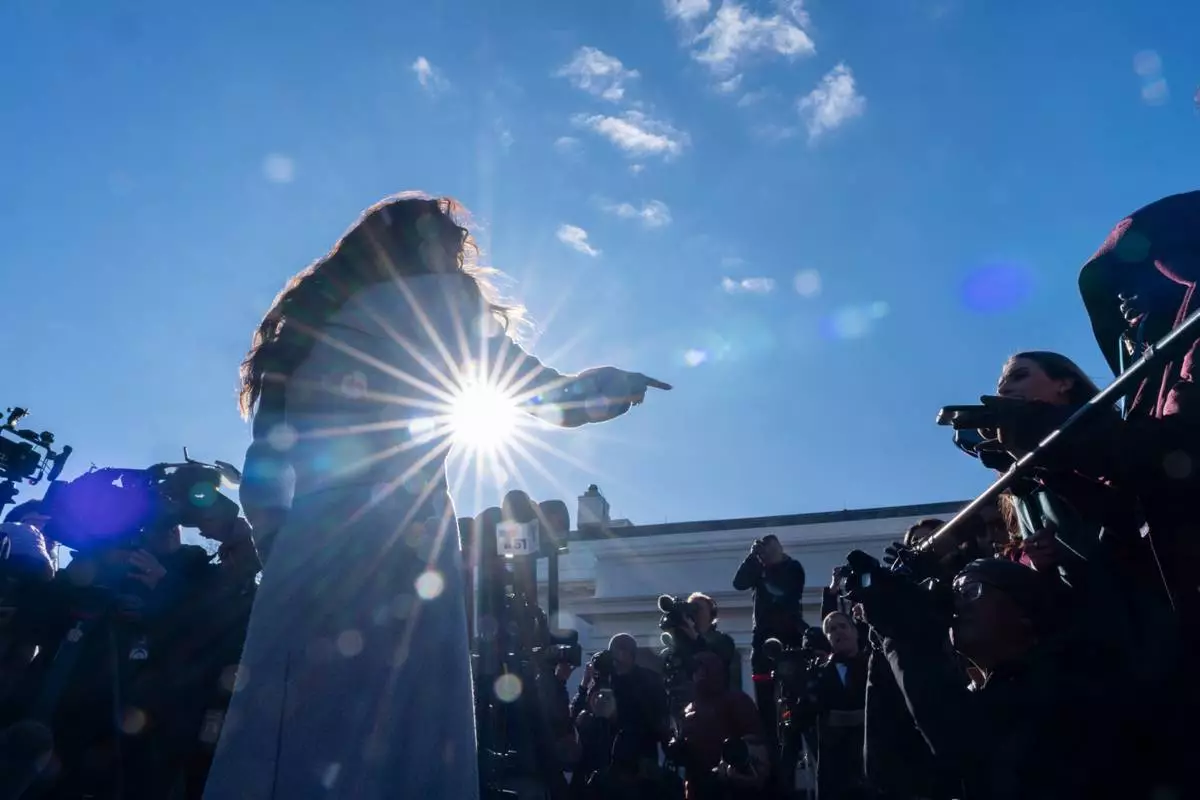
Homeland Security Secretary Kristi Noem speaks with reporters at the White House, Thursday, Jan. 15, 2026, in Washington. (AP Photo/Alex Brandon)
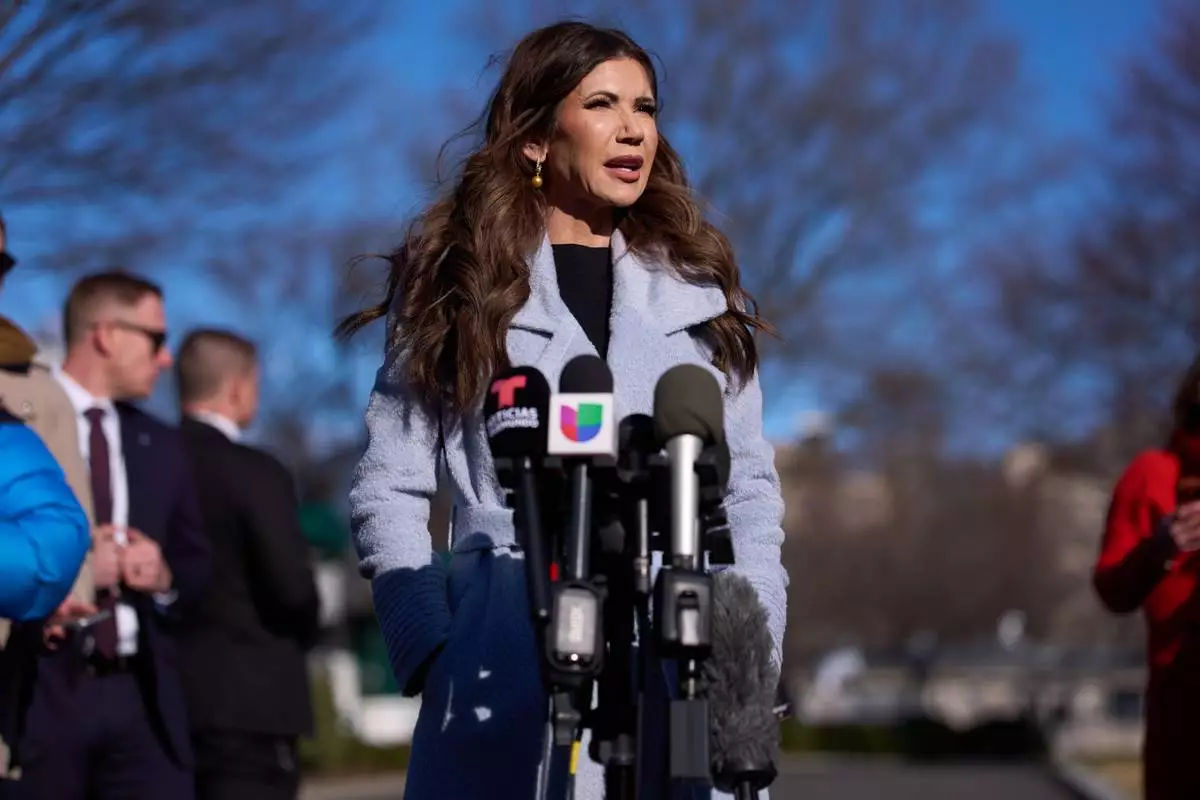
Homeland Security Secretary Kristi Noem speaks with reporters at the White House, Thursday, Jan. 15, 2026, in Washington. (AP Photo/Evan Vucci)
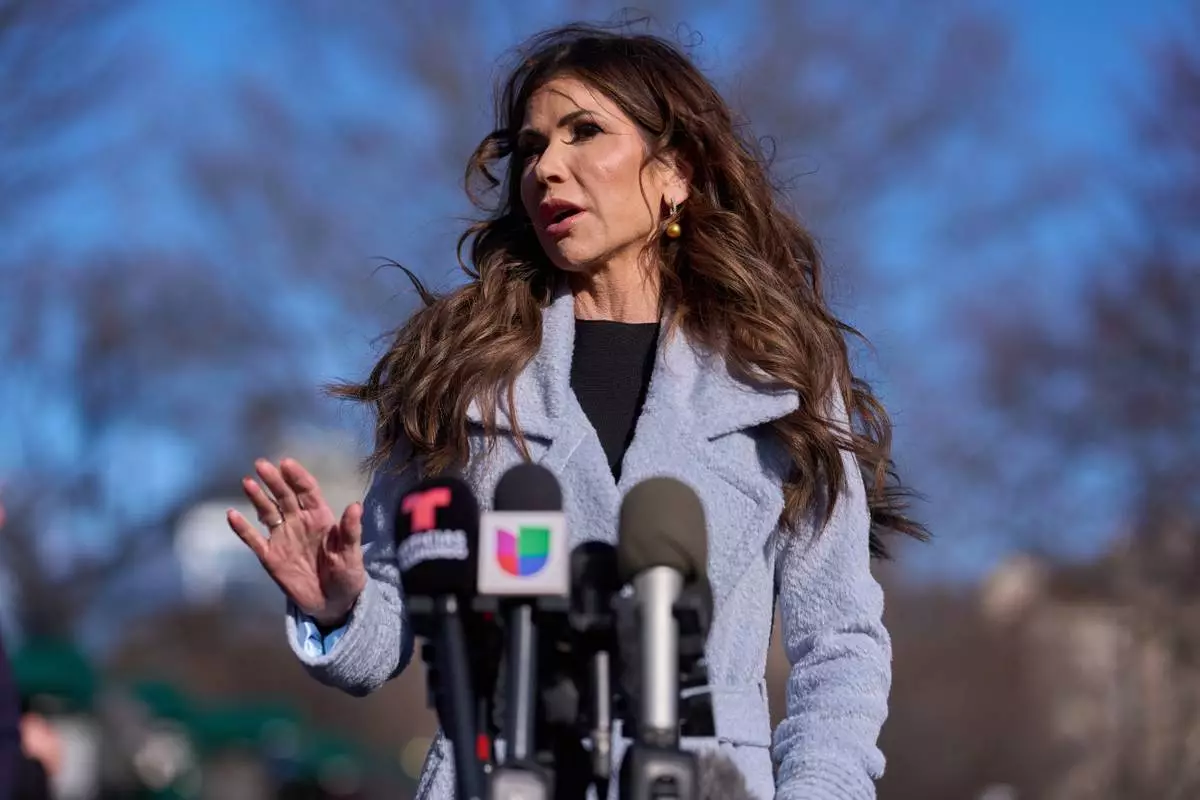
Homeland Security Secretary Kristi Noem speaks with reporters at the White House, Thursday, Jan. 15, 2026, in Washington. (AP Photo/Evan Vucci)

Homeland Security Secretary Kristi Noem speaks with reporters at the White House, Thursday, Jan. 15, 2026, in Washington. (AP Photo/Evan Vucci)
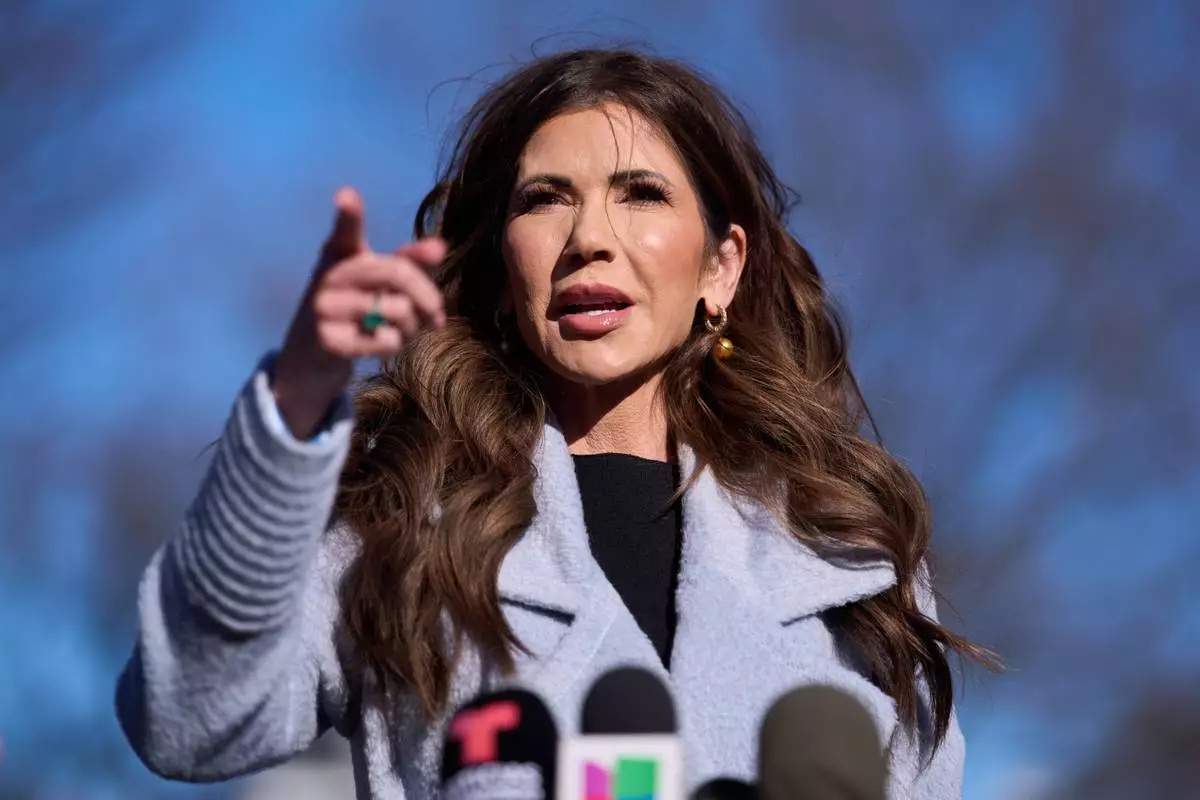
Homeland Security Secretary Kristi Noem speaks with reporters at the White House, Thursday, Jan. 15, 2026, in Washington. (AP Photo/Evan Vucci)

U.S. Homeland Security Secretary Kristi Noem speaks during a press conference, Thursday, Jan. 8, 2026, in New York. (AP Photo/Yuki Iwamura)

U.S. Homeland Security Secretary Kristi Noem speaks at a news conference at Harry Reid International Airport, Nov. 22, 2025, in Las Vegas. (AP Photo/Ronda Churchill, File)