WASHINGTON (AP) — President Donald Trump hailed as a “medical miracle” the mRNA vaccines developed to combat the deadly COVID-19 pandemic in 2020.
Now, his health secretary Robert F. Kennedy Jr., is effectively halting the vaccine technology’s advancement. Kennedy announced Tuesday that the federal government is canceling $500 million worth of mRNA research development contracts, putting an end to U.S.-backed hopes for the vaccine technology to prevent future pandemics, treat cancer or prevent flu infections.
It's a sharp pivot from how Trump and top officials described the technology during his first term.
Here's a look at what Trump and some of his closest advisers have said about mRNA vaccines that were credited with slowing the pandemic five years ago.
“A COVID-19 vaccine is the thing that will get Americans back to normal everyday life,” said Redfield, in a Sept. 16, 2020, statement.
Americans were still donning face masks as one of the few ways of protecting themselves from a virus that had killed nearly 200,000 in just over six months. Redfield promised that the new vaccines — developed for the first time using mRNA technology — would offer a return to normalcy.
“Don’t let Joe Biden take credit for the vaccines ... because the vaccines were me, and I pushed people harder than they’ve ever been pushed before .. The vaccines are — there are those that say it’s one of the greatest things. It’s a medical miracle.” Trump said on Nov. 26, 2020, during a news conference in the White House.
Weeks earlier, Trump had lost the election in a bitter race against Democrat Joe Biden. As the Republican grappled with leaving Washington and continued to plan for the rollout of the COVID-19 vaccines, he reminded reporters that he oversaw the development of the new shots.
“They say it’s somewhat of a miracle and I think that’s true,” Trump said on Dec. 8, 2020, during a speech at the Eisenhower Executive Office Building.
The event celebrated “Operation Warp Speed," the government-funded project that accelerated vaccine development with pharmaceutical companies. Trump was promoting the shots as the government prepared to offer them to frontline health workers.
“It's clear that many Americans are learning these vaccines are safe and extraordinarily effective,” Azar said on Dec. 16, 2020, at a news conference.
The government was shipping out mRNA vaccines to states, preparing to distributed it to the masses. Azar noted that a vast majority of Americans — between 70% to 80%, according to polls — intended to get the new COVID-19 vaccine that would be available to the public in the coming months.
“It takes somewhere between five and 10 years to put a vaccine on the street. Look what we did. Now, that’s because of the great work of the scientists who had done the research on mRNA vaccines and others because of industry working on this, they just didn’t wake up one day and start working on it,” Perna said during a podcast interview that aired on May 9, 2023.
Reflecting in an interview about his time overseeing “Operation Warp Speed,” Perna credited the mRNA technology with the government's ability to get shots in arms mere months after the pandemic started claiming lives in the U.S. in 2020.
“Take credit because we saved tens of millions of lives. Take credit. Don’t let them take that away from you,” Trump said on Dec. 19, 2021 during a live interview with former Fox News host Bill O’Reilly.
Daily COVID-19 deaths had ticked down to 1,500 compared to 3,000 from a year earlier after Americans began receiving their first doses of the mRNA vaccines.
Trump revealed to O’Reilly and the audience that he had just gotten a COVID-19 booster.
The crowd booed.
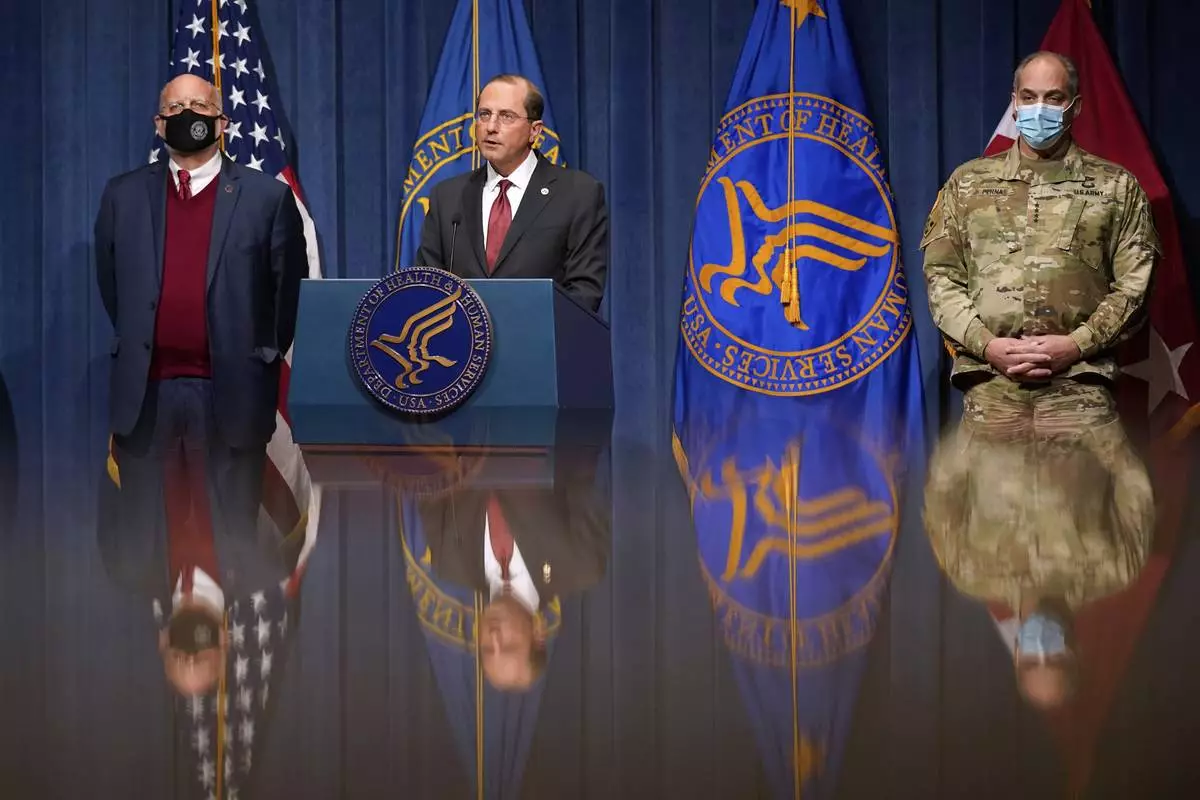
FILE - Health and Human Services Secretary Alex Azar, center, speaks during a news conference on Operation Warp Speed and COVID-19 vaccine distribution, Jan. 12, 2021, in Washington. Standing alongside Azar from left are Dr. Robert Redfield, director of the Centers for Disease Control and Prevention, and U.S. Army Gen. Gustave Perna, chief operating officer of Operation Warp Speed. (AP Photo/Patrick Semansky, Pool, File)
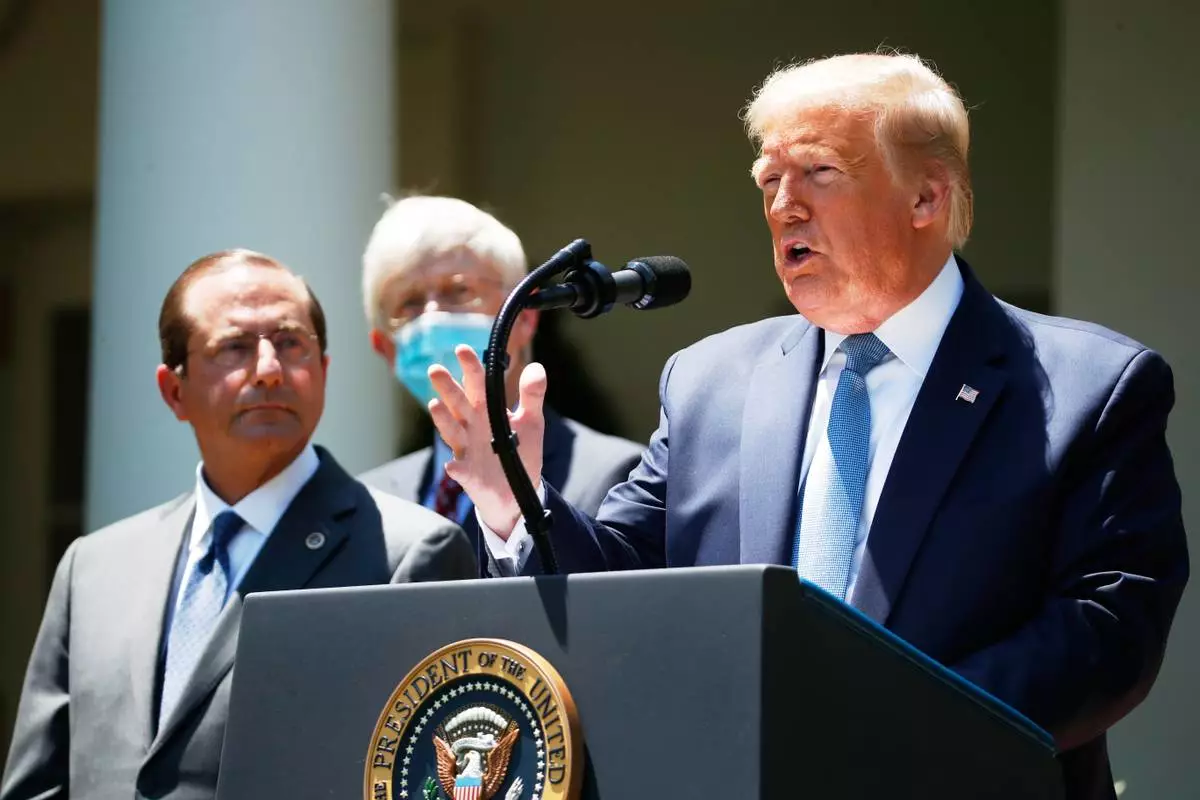
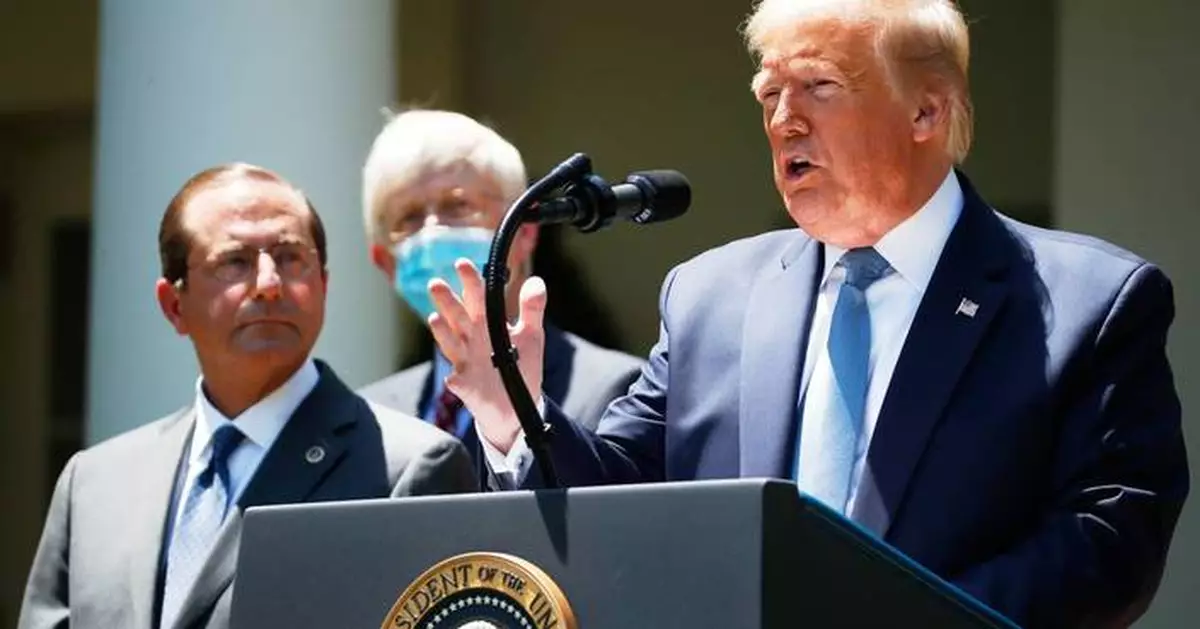
FILE - President Donald Trump speaks about the coronavirus in the Rose Garden of the White House, May 15, 2020, in Washington. Department of Health and Human Services Secretary Alex Azar, left, and Dr. Robert Redfield, director of the Centers for Disease Control and Prevention listen. (AP Photo/Alex Brandon, File)
WASHINGTON (AP) — U.S. forces in the Caribbean Sea have seized another sanctioned oil tanker that the Trump administration says has ties to Venezuela, part of a broader U.S. effort to take control of the South American country’s oil.
The U.S. Coast Guard boarded the tanker, named Veronica, early Thursday, Homeland Security Secretary Kristi Noem wrote on social media. The ship had previously passed through Venezuelan waters and was operating in defiance of President Donald Trump’s "established quarantine of sanctioned vessels in the Caribbean,” she said.
U.S. Southern Command said Marines and sailors launched from the aircraft carrier USS Gerald R. Ford to take part in the operation alongside a Coast Guard tactical team, which Noem said conducted the boarding as in previous raids. The military said the ship was seized “without incident.”
Several U.S. government social media accounts posted brief videos that appeared to show various parts of the ship’s capture. Black-and-white footage showed at least four helicopters approaching the ship before hovering over the deck while armed troops dropped down by rope. At least nine people could be seen on the deck of the ship.
The Veronica is the sixth sanctioned tanker seized by U.S. forces as part of the effort by Trump’s administration to control the production, refining and global distribution of Venezuela’s oil products and the fourth since the U.S. ouster of Venezuela President Nicolás Maduro in a surprise nighttime raid almost two weeks ago.
The Veronica last transmitted its location on Jan. 3 as being at anchor off the coast of Aruba, just north of Venezuela’s main oil terminal. According to the data it transmitted at the time, it was partially filled with crude.
The ship is currently listed as flying the flag of Guyana and is considered part of the shadow fleet that moves cargoes of oil in violation of U.S. sanctions.
According to its registration data, the ship also has been known as the Gallileo, owned and managed by a company in Russia. In addition, a tanker with the same registration number previously sailed under the name Pegas and was sanctioned by the U.S. Treasury Department for moving cargoes of illicit Russian oil.
As with prior posts about such raids, Noem and the military framed the seizure as part of an effort to enforce the law. Noem argued that the multiple captures show that “there is no outrunning or escaping American justice.”
Speaking to reporters at the White House later Thursday, Noem declined to say how many sanctioned oil tankers the U.S. is tracking or whether the government is keeping tabs on freighters beyond the Caribbean Sea.
“I can’t speak to the specifics of the operation, although we are watching the entire shadow fleet and how they’re moving,” she told reporters.
However, other officials in Trump's Republican administration have made clear that they see the actions as a way to generate cash as they seek to rebuild Venezuela’s battered oil industry and restore its economy.
Trump met with executives from oil companies last week to discuss his goal of investing $100 billion in Venezuela to repair and upgrade its oil production and distribution. His administration has said it expects to sell at least 30 million to 50 million barrels of sanctioned Venezuelan oil.
This story has been corrected to show the Veronica is the fourth, not the third, tanker seized by U.S. forces since Maduro’s capture and the ship also has been known as the Gallileo, not the Galileo.
Associated Press writer Ben Finley contributed to this report.
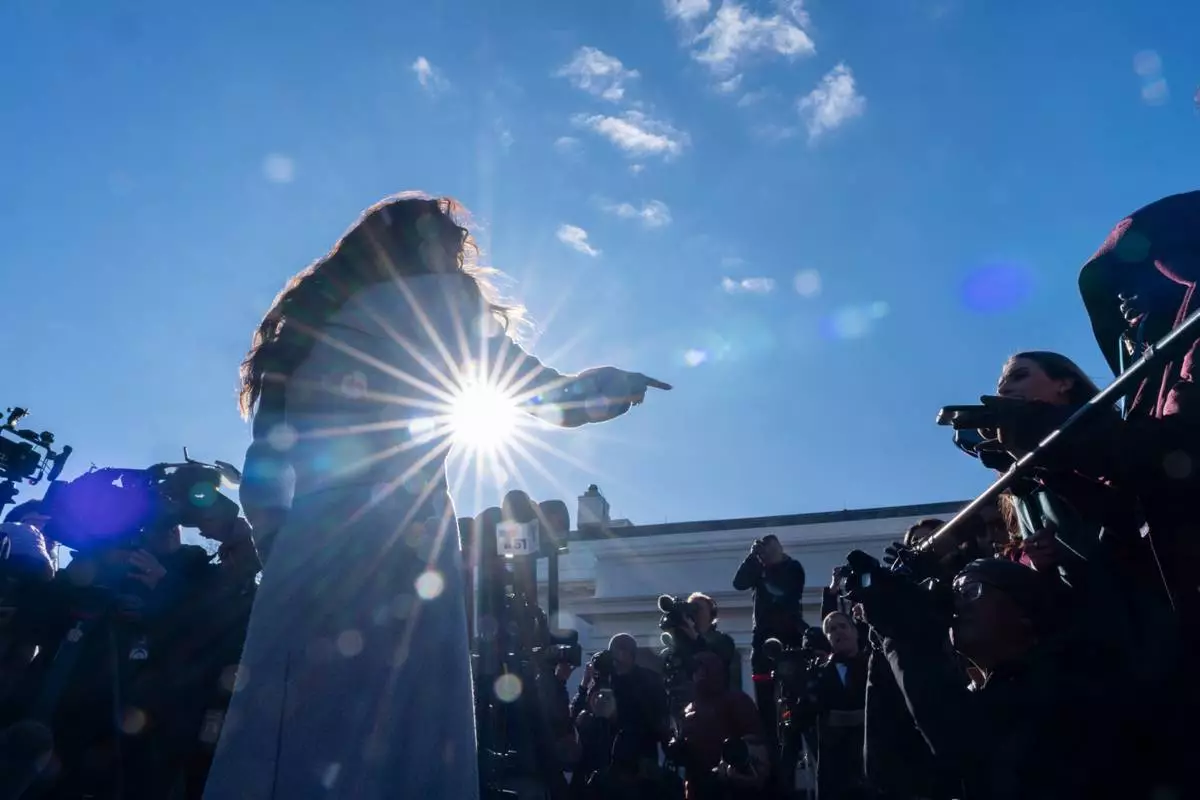
Homeland Security Secretary Kristi Noem speaks with reporters at the White House, Thursday, Jan. 15, 2026, in Washington. (AP Photo/Alex Brandon)
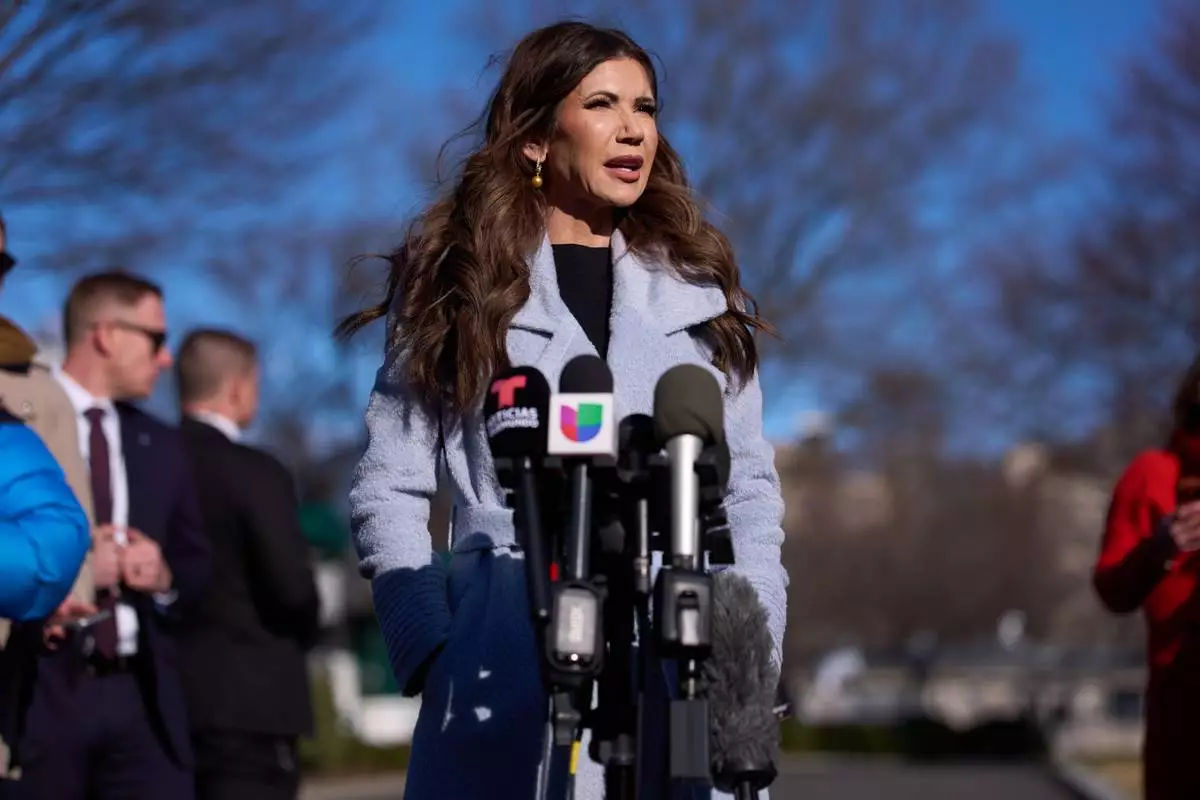
Homeland Security Secretary Kristi Noem speaks with reporters at the White House, Thursday, Jan. 15, 2026, in Washington. (AP Photo/Evan Vucci)
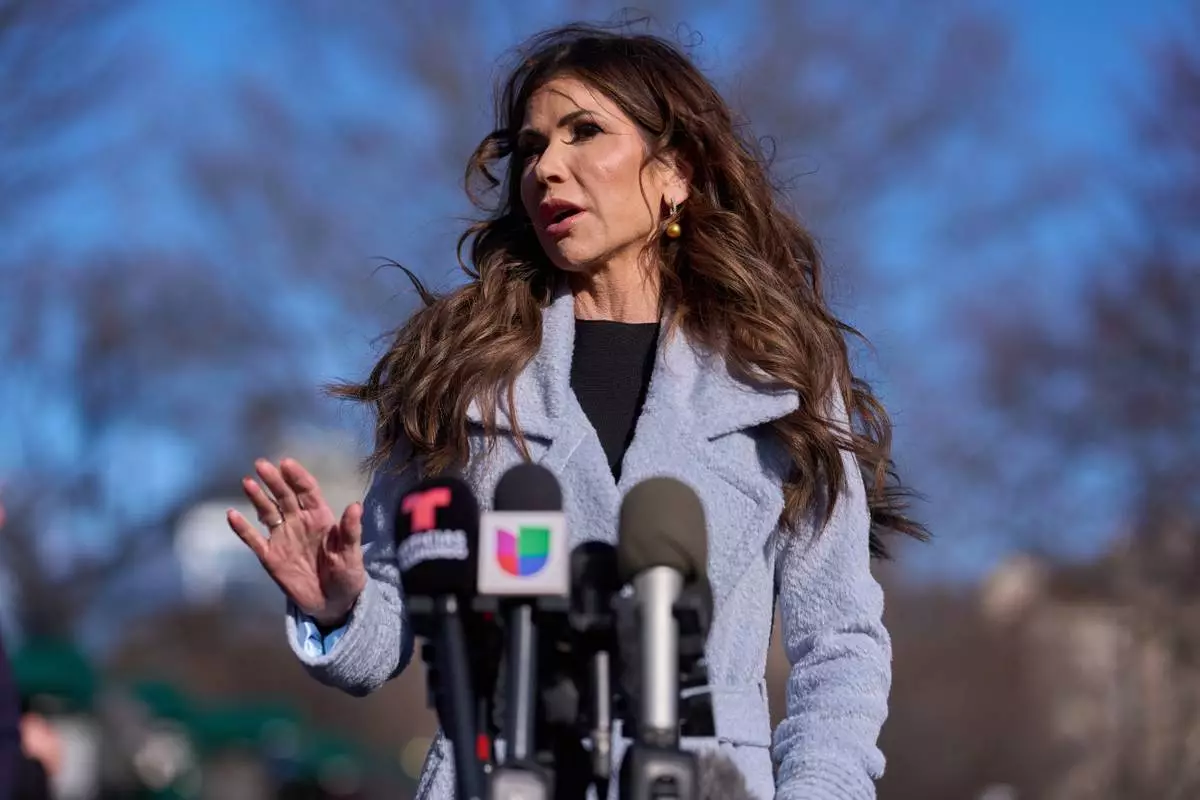
Homeland Security Secretary Kristi Noem speaks with reporters at the White House, Thursday, Jan. 15, 2026, in Washington. (AP Photo/Evan Vucci)
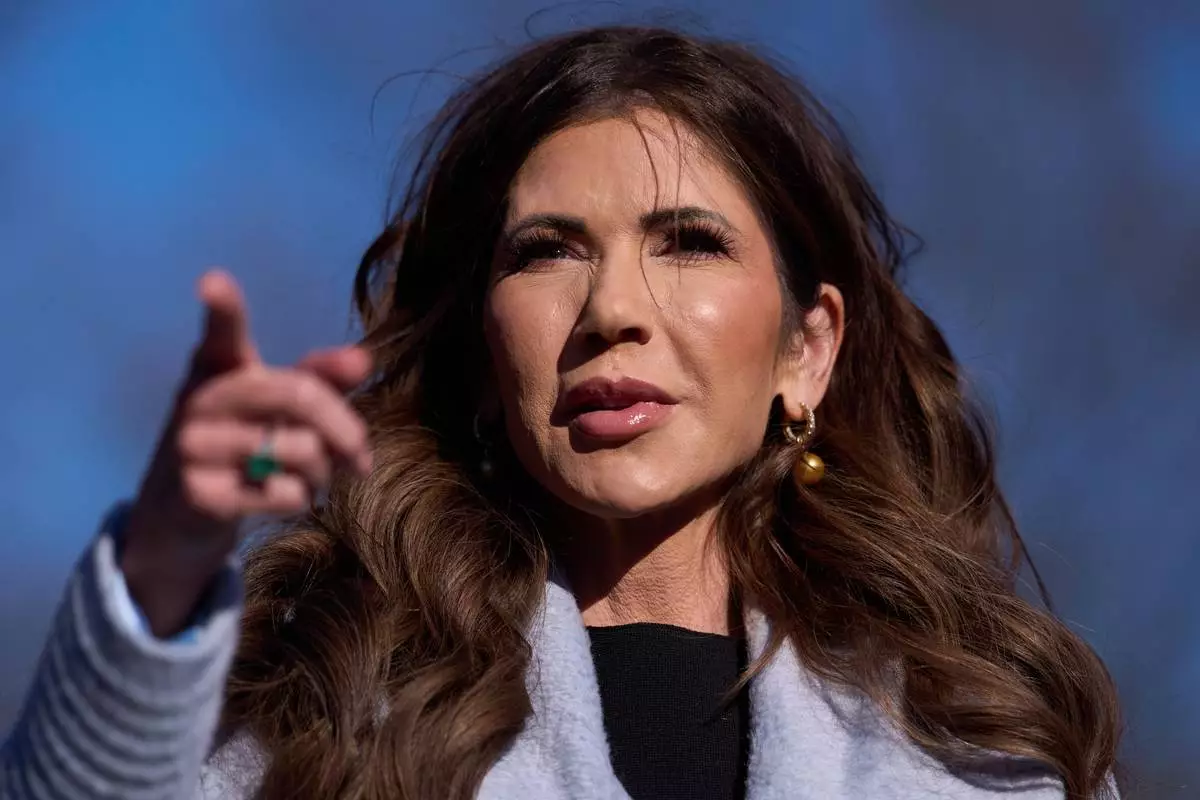
Homeland Security Secretary Kristi Noem speaks with reporters at the White House, Thursday, Jan. 15, 2026, in Washington. (AP Photo/Evan Vucci)
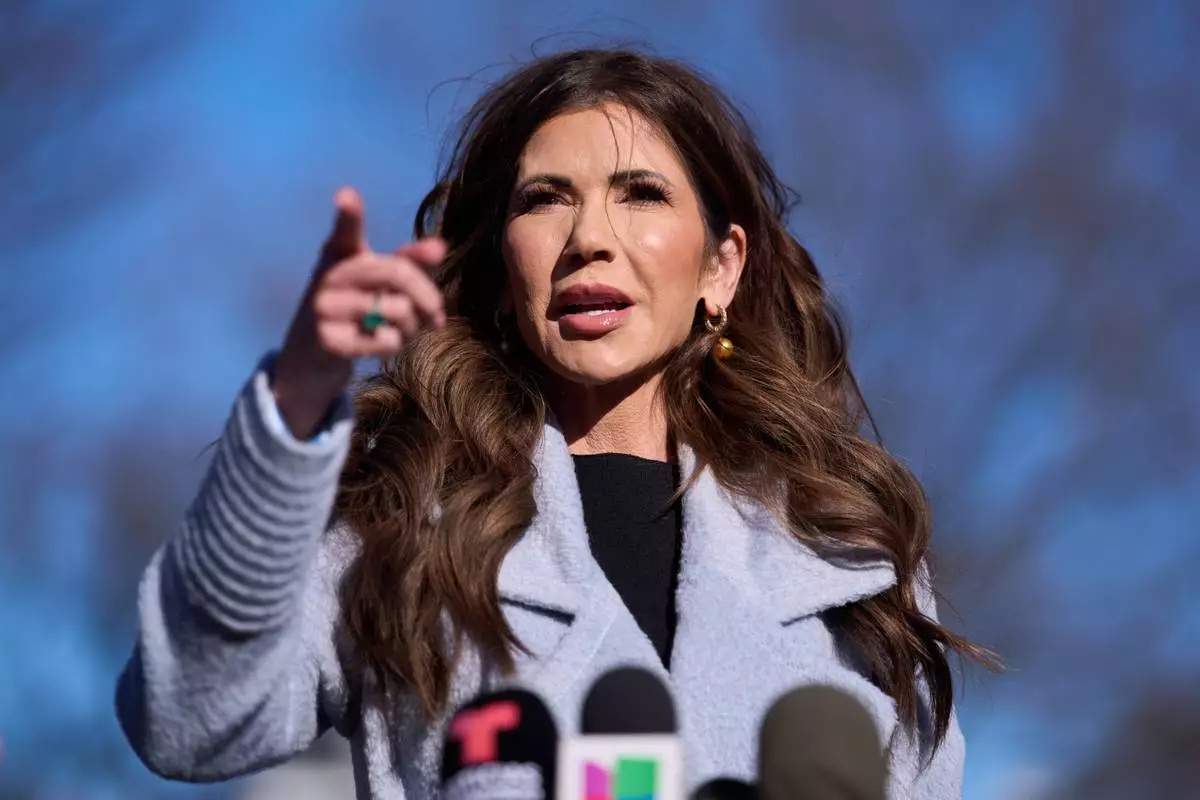
Homeland Security Secretary Kristi Noem speaks with reporters at the White House, Thursday, Jan. 15, 2026, in Washington. (AP Photo/Evan Vucci)
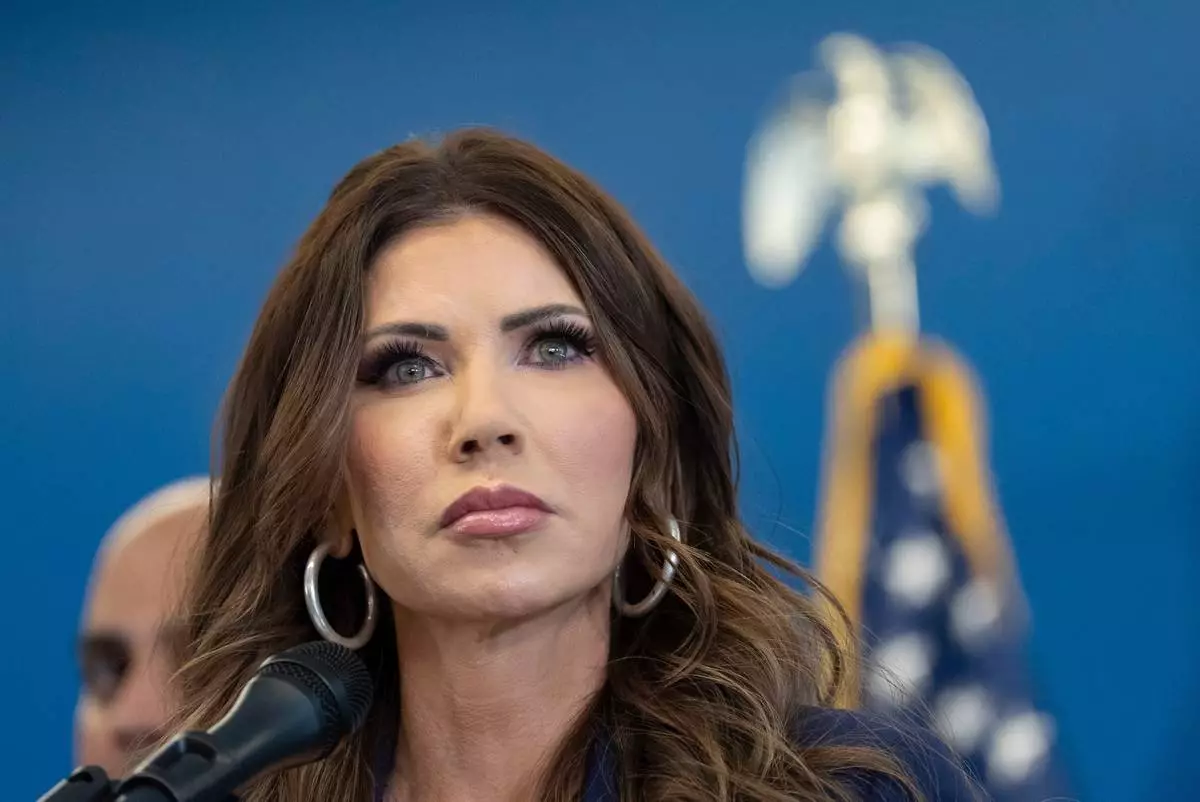
U.S. Homeland Security Secretary Kristi Noem speaks during a press conference, Thursday, Jan. 8, 2026, in New York. (AP Photo/Yuki Iwamura)
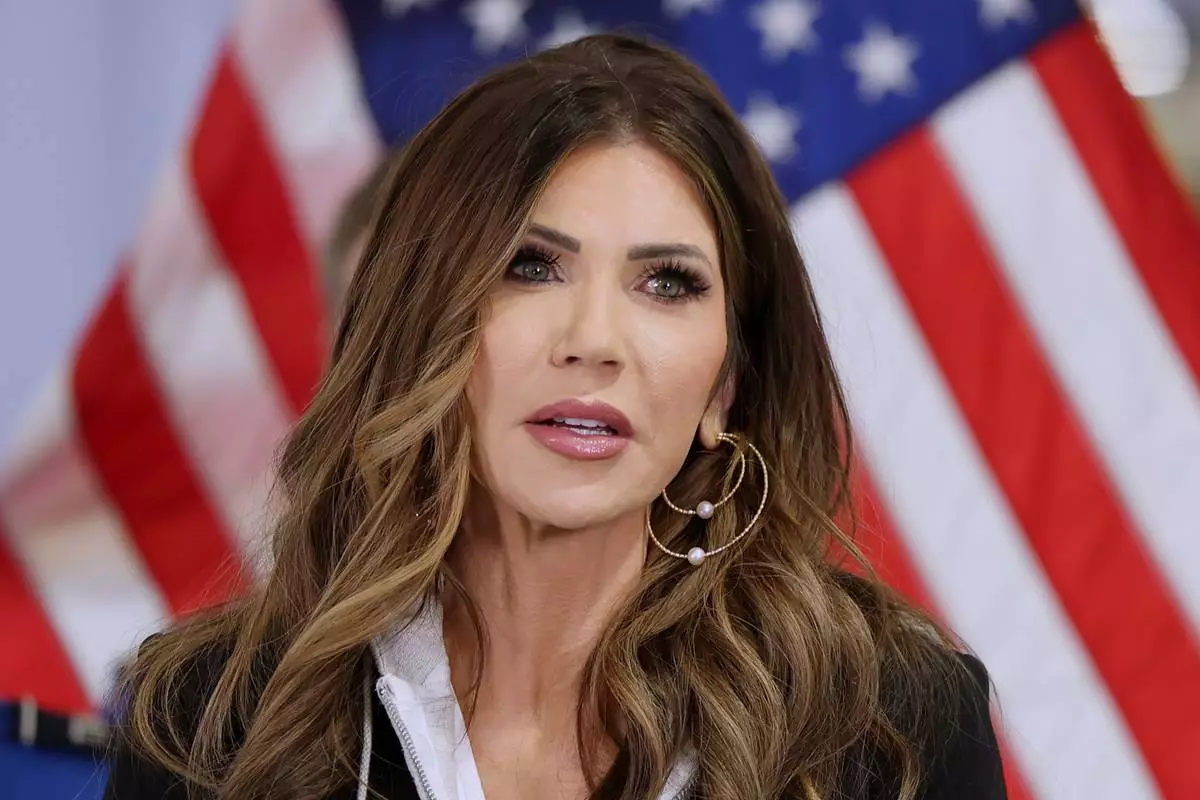
U.S. Homeland Security Secretary Kristi Noem speaks at a news conference at Harry Reid International Airport, Nov. 22, 2025, in Las Vegas. (AP Photo/Ronda Churchill, File)