MELBOURNE, Australia (AP) — The Great Barrier Reef has experienced its greatest annual loss of live coral across most of its expanse in four decades of record-keeping, Australian authorities say.
But due to increasing coral cover since 2017, the coral deaths — caused mainly by bleaching last year associated with climate change — have left the area of living coral across the iconic reef system close to its long-term average, the Australian Institute of Marine Science said in its annual survey on Wednesday.
Click to Gallery
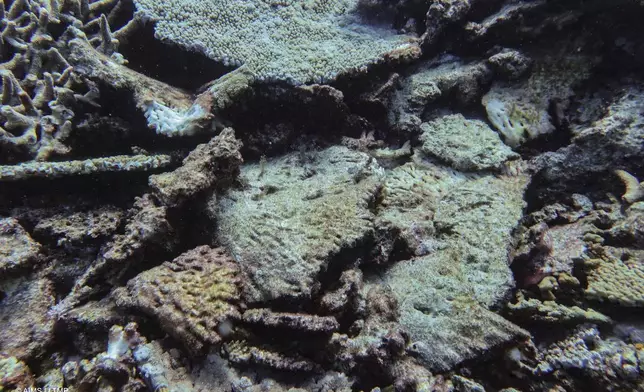
Broken hard coral is seen at Lady Musgrave Island following storm damage on the northern Great Barrier Reef in far North Queensland, Australia, on Nov. 6, 2024. (Australian Institute of Marine Science via AP)
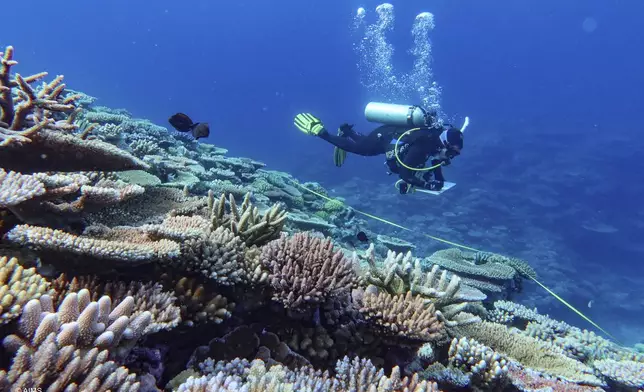
A diver inspects coral at the Great Barrier Reef in far North Queensland, Australia, Sept. 23, 2024. (Australian Institute of Marine Science via AP)
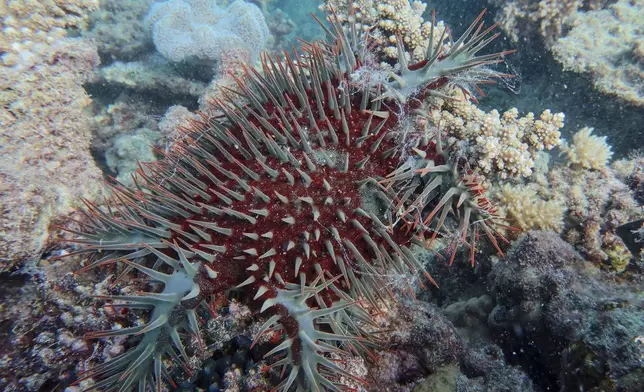
Crown-of-thorns starfish are seen at Tern Island on the northern Great Barrier Reef in far North Queensland, Australia, on Jan. 14, 2025. (Australian Institute of Marine Science via AP)
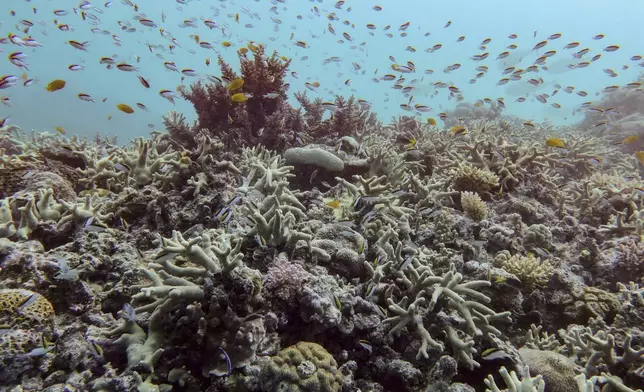
A diverse coral assemblage is seen despite impacts from the 2024 bleaching event at Pompey Reef at the northern Great Barrier Reef in far North Queensland, Australia, on Jan. 1, 2025. (Australian Institute of Marine Science via AP)
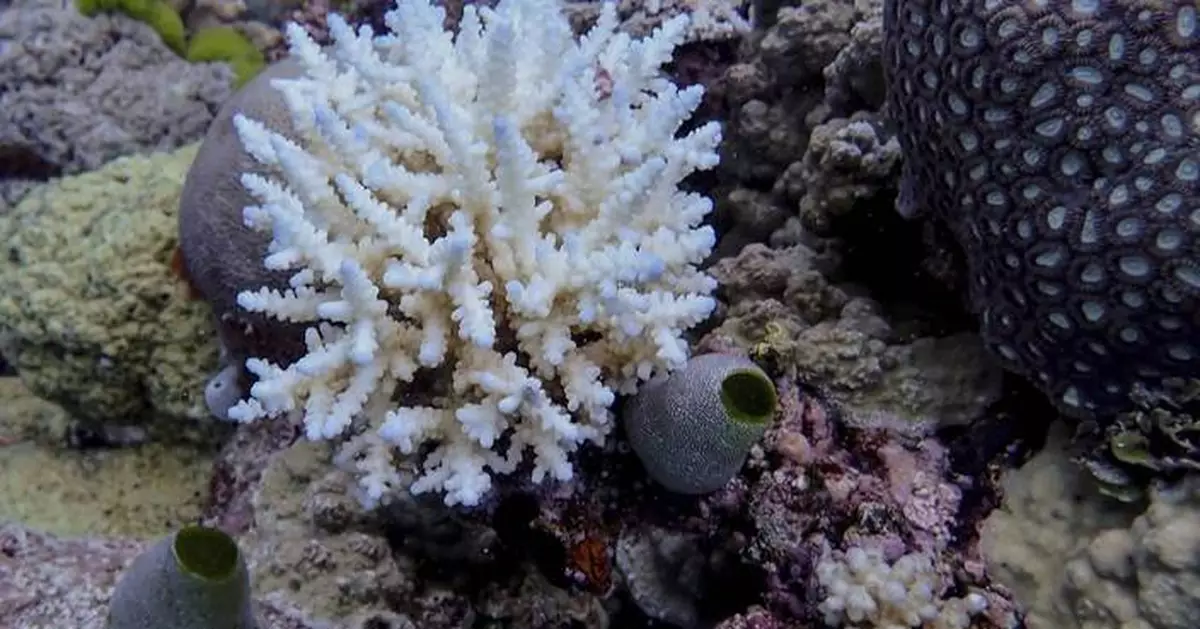
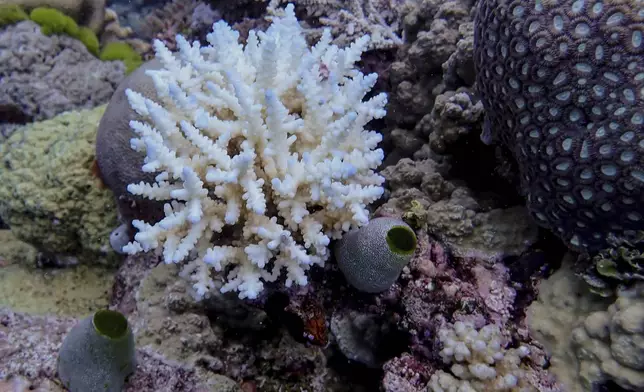
Minor bleaching is seen to a Acropora colony at Lagoon Reef at the northern Great Barrier Reef in far North Queensland, Australia, Dec. 18, 2024. (Australian Institute of Marine Science via AP)
The change underscores a new level of volatility on the UNESCO World Heritage Site, the report said.
Mike Emslie, who heads the tropical marine research agency’s long-term monitoring program, said the live coral cover measured in 2024 was the largest recorded in 39 years of surveys.
The losses from such a high base of coral cover had partially cushioned the serious climate impacts on the world’s largest reef ecosystem, which covers 344,000 square kilometers (133,000 square miles) off the northeast Australian coast, he said.
“These are substantial impacts and evidence that the increasing frequency of coral bleaching is really starting to have detrimental effects on the Great Barrier Reef,” Emslie said on Thursday.
“While there’s still a lot of coral cover out there, these are record declines that we have seen in any one year of monitoring,” he added.
Emslie’s agency divides the Great Barrier Reef, which extends 1,500 kilometers (900 miles) along the Queensland state coast, into three similarly-sized regions: northern, central and southern.
Living coral cover shrunk by almost a third in the south in a year, a quarter in the north and by 14% in the central region, the report said.
Because of record global heat in 2023 and 2024, the world is still going through its biggest — and fourth ever recorded — mass coral bleaching event on record, with heat stress hurting nearly 84% of the world’s coral reef area, including the Great Barrier Reef, according to the U.S. National Oceanic and Atmospheric Administration’s coral reef watch. So far at least 83 countries have been impacted.
This bleaching event started in January 2023 and was declared a global crisis in April 2024. It easily eclipsed the previous biggest global coral bleaching event, from 2014 to 2017, when 68.2% had bleaching from heat stress.
Large areas around Australia — but not the Great Barrier Reef — hit the maximum or near maximum of bleaching alert status during this latest event. Australia in March this year started aerial surveys of 281 reefs across the Torres Strait and the entire northern Great Barrier Reef and found widespread coral bleaching. Of the 281 reefs, 78 were more than 30% bleached.
Coral has a hard time thriving and at times even surviving in prolonged hot water. They can survive short bursts, but once certain thresholds of weeks and high temperatures are passed, the coral is bleached, which means it turns white because it expels the algae that live in the tissue and give them their colors. Bleached corals are not dead, but they are weaker and more vulnerable to disease.
Coral reefs often bounce back from these mass global bleaching events, but often they are not as strong as they were before.
Coral reefs are considered a “unique and threatened system” due to climate change and are especially vulnerable to global warming beyond 1.5 degrees Celsius (2.7 degrees Fahrenheit) since pre-industrial times, the United Nations Intergovernmental Panel on Climate Change proclaimed in 2018. The world has now warmed 1.3 degrees Celsius since pre-industrial times. That report said “tropical corals may be even more vulnerable to climate change than indicated in assessments made in 2014.”
The report said back-to-back big bleaching events at the Great Barrier Reef in the mid 2010s “suggest that the research community may have underestimated climate risks for coral reefs.”
“Warm water (tropical) coral reefs are projected to reach a very high risk of impact at 1.2°C, with most available evidence suggesting that coral-dominated ecosystems will be non-existent at this temperature or higher. At this point, coral abundance will be near zero at many locations,” the report said.
Associated Press Science Writer Seth Borenstein in Washington, D.C., contributed to this report.
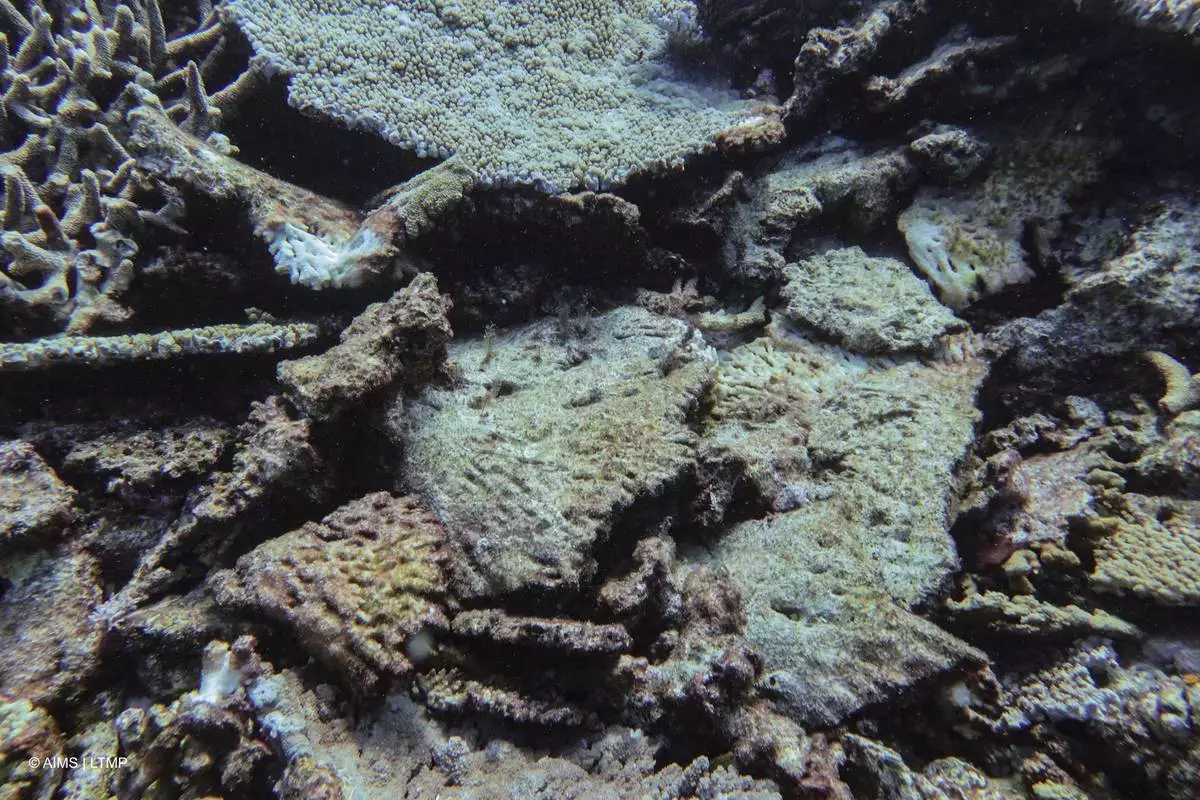
Broken hard coral is seen at Lady Musgrave Island following storm damage on the northern Great Barrier Reef in far North Queensland, Australia, on Nov. 6, 2024. (Australian Institute of Marine Science via AP)
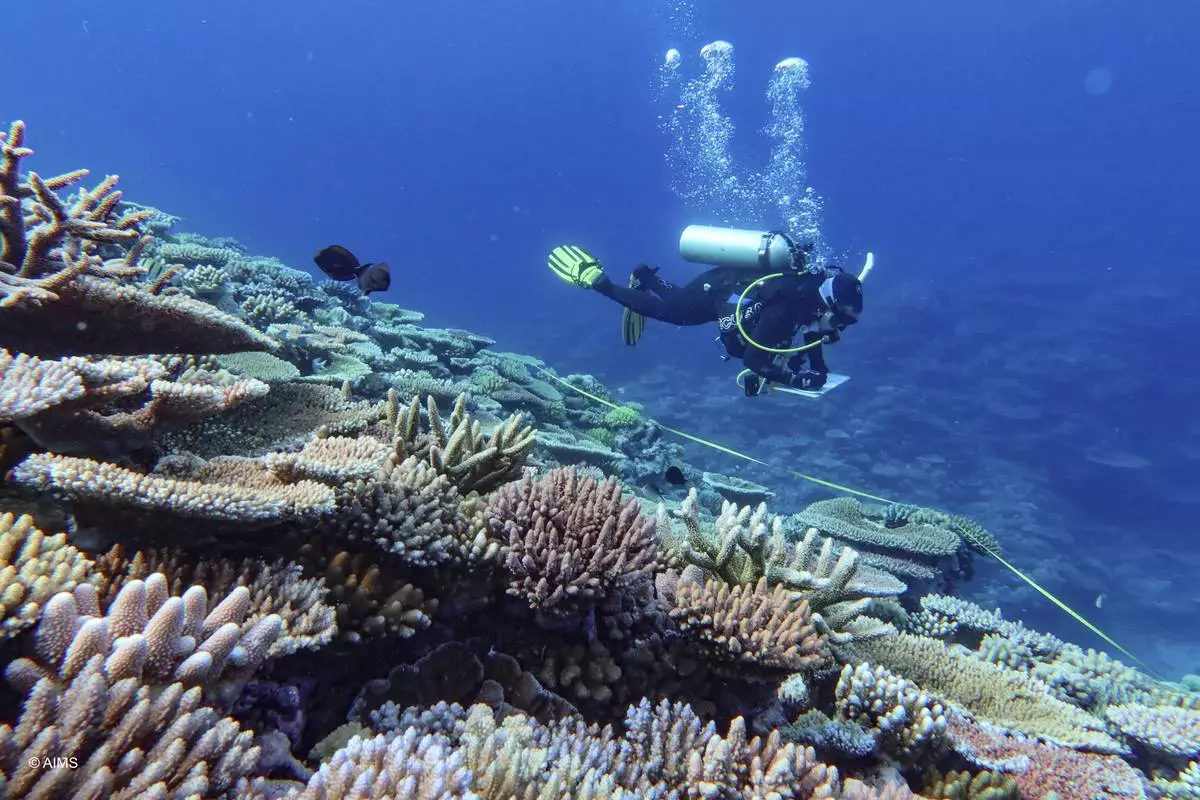
A diver inspects coral at the Great Barrier Reef in far North Queensland, Australia, Sept. 23, 2024. (Australian Institute of Marine Science via AP)
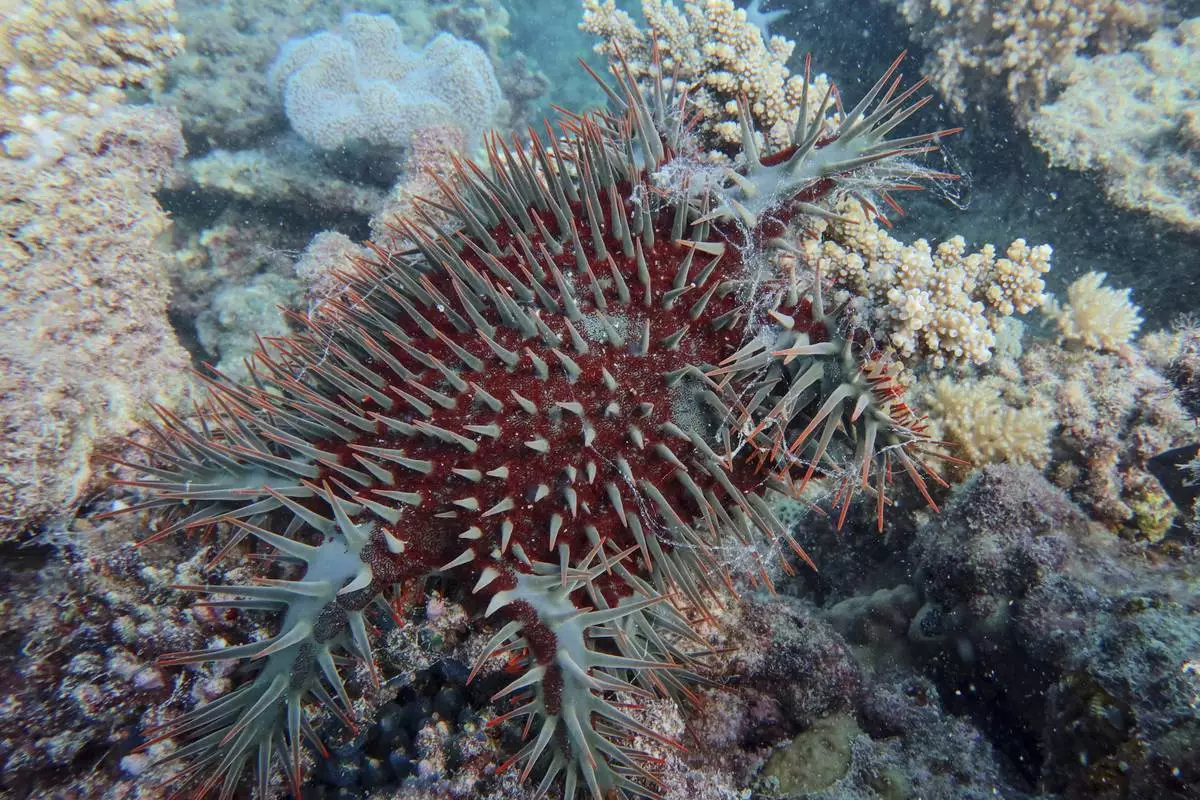
Crown-of-thorns starfish are seen at Tern Island on the northern Great Barrier Reef in far North Queensland, Australia, on Jan. 14, 2025. (Australian Institute of Marine Science via AP)
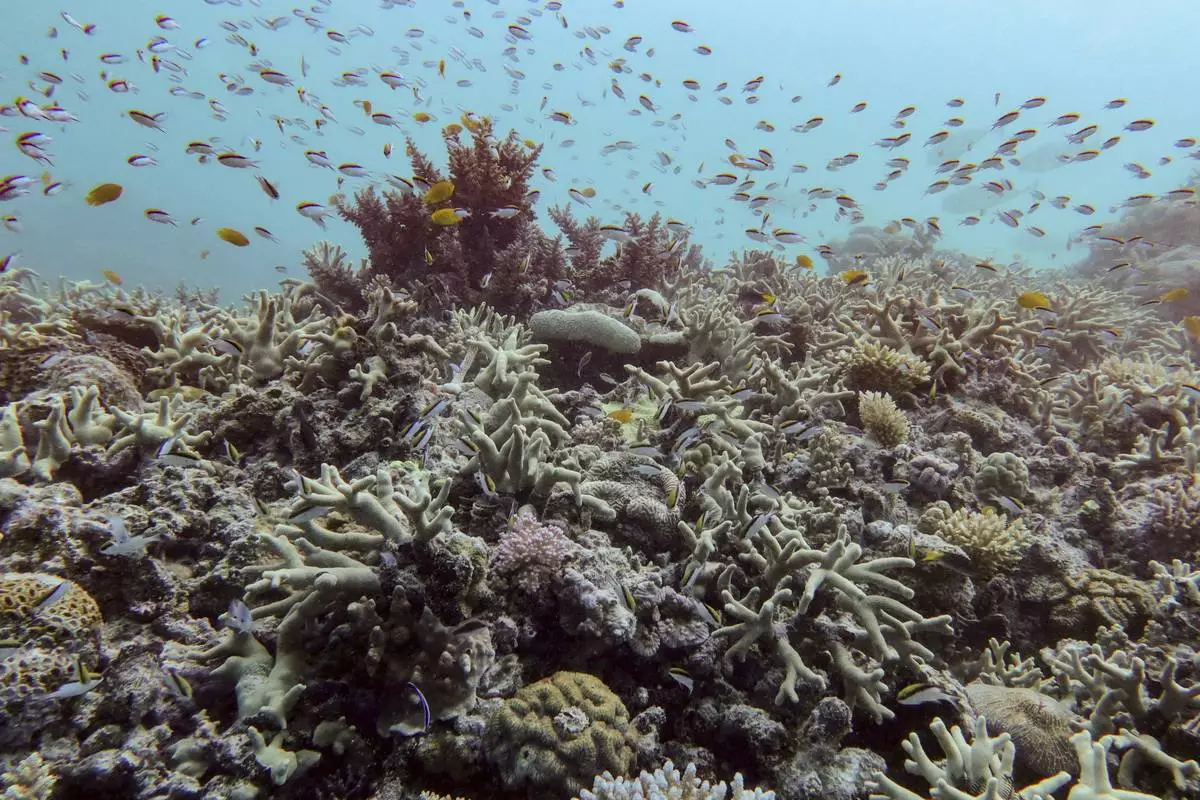
A diverse coral assemblage is seen despite impacts from the 2024 bleaching event at Pompey Reef at the northern Great Barrier Reef in far North Queensland, Australia, on Jan. 1, 2025. (Australian Institute of Marine Science via AP)
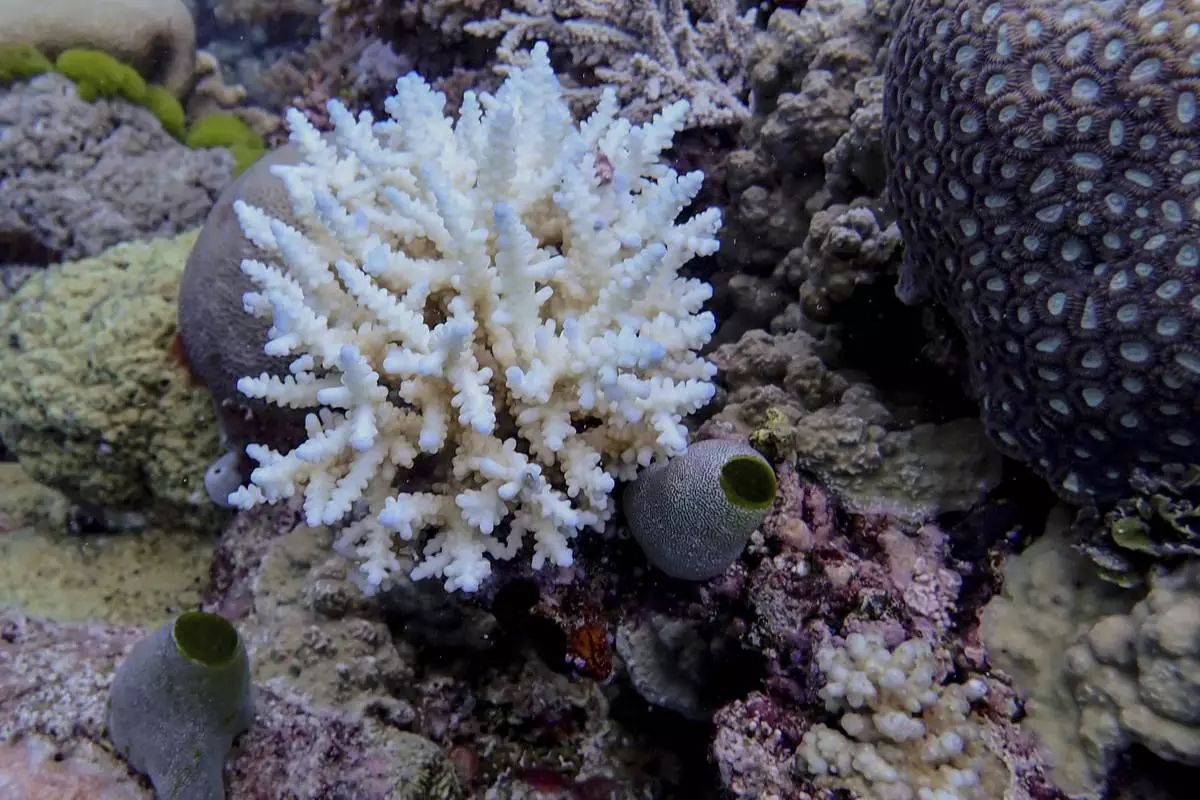
Minor bleaching is seen to a Acropora colony at Lagoon Reef at the northern Great Barrier Reef in far North Queensland, Australia, Dec. 18, 2024. (Australian Institute of Marine Science via AP)
MINNEAPOLIS (AP) — President Donald Trump on Thursday threatened to invoke an 1807 law and deploy troops to quell persistent protests against the federal officers sent to Minneapolis to enforce his administration's massive immigration crackdown.
The threat comes a day after a man was shot and wounded by an immigration officer who had been attacked with a shovel and broom handle. That shooting further heightened the fear and anger that has radiated across the city since an Immigration and Customs Enforcement agent fatally shot Renee Good in the head.
Trump has repeatedly threatened to invoke the Insurrection Act, a rarely used federal law, to deploy the U.S. military or federalize the National Guard for domestic law enforcement, over the objections of state governors.
“If the corrupt politicians of Minnesota don’t obey the law and stop the professional agitators and insurrectionists from attacking the Patriots of I.C.E., who are only trying to do their job, I will institute the INSURRECTION ACT, which many Presidents have done before me, and quickly put an end to the travesty that is taking place in that once great State,” Trump said in social media post.
Presidents have invoked the law more than two dozen times, most recently in 1992 by President George H.W. Bush to end unrest in Los Angeles. In that instance, local authorities had asked for the assistance.
“I’m making a direct appeal to the President: Let’s turn the temperature down. Stop this campaign of retribution. This is not who we are,” Gov. Tim Walz, a Democrat, said on X.
Minnesota Attorney General Keith Ellison said he would challenge any such action in court. He's already suing to try to stop the surge by the Department of Homeland Security, which says officers have arrested more than 2,500 people since Nov. 29 as part of an immigration operation in the Twin Cities called Metro Surge.
The operation grew when ICE sent 2,000 officers and agents to the area early in January. ICE is a DHS agency.
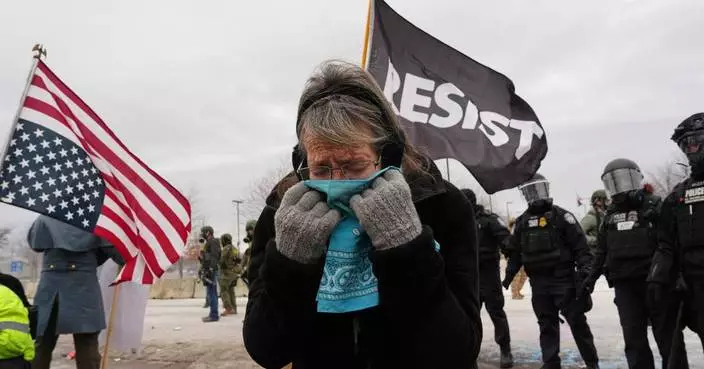
In Minneapolis, smoke filled the streets Wednesday night near the site of the latest shooting as federal officers wearing gas masks and helmets fired tear gas into a small crowd. Protesters responded by throwing rocks and shooting fireworks.
Demonstrations have become common in Minneapolis since Good was fatally shot on Jan. 7. Agents who have yanked people from their cars and homes have been confronted by angry bystanders demanding they leave.
“This is an impossible situation that our city is presently being put in and at the same time we are trying to find a way forward to keep people safe, to protect our neighbors, to maintain order,” Minneapolis Mayor Jacob Frey said.
The American Civil Liberties Union of Minnesota filed a class-action lawsuit on behalf of three people who said they were questioned or detained in recent days. The lawsuit says two are Somali and one is Hispanic; all three are U.S. citizens. The lawsuit seeks an end to what the ACLU describes as a practice of racial profiling and warrantless arrests. The government did not immediately comment.
Homeland Security said in a statement that federal law enforcement officers on Wednesday stopped a driver from Venezuela who is in the U.S. illegally. The person drove off then crashed into a parked car before fleeing on foot, DHS said.
Officers caught up, then two other people arrived and the three started attacking the officer, according to DHS.
“Fearing for his life and safety as he was being ambushed by three individuals, the officer fired a defensive shot to defend his life,” DHS said. The confrontation took place about 4.5 miles (7.2 kilometers) from where Good was killed.
Police chief Brian O’Hara said the man who was shot did not have a life-threatening injury. O’Hara's account of what happened largely echoed that of Homeland Security, which later said the other two men were also in the U.S. illegally from Venezuela.
The FBI said several government vehicles were damaged and property inside was stolen when agents responded to the shooting. Photos show broken windows and insults made with paint. A reward of up to $100,000 is being offered for information. The FBI’s Minneapolis office did not immediately reply to messages seeking more details.
St. Paul Public Schools, with more than 30,000 students, said it would begin offering an online learning option for students who do not feel comfortable coming to school. Schools will be closed next week until Thursday to prepare for those accommodations.
Minneapolis Public Schools, which has a similar enrollment, is also offering temporary remote learning. The University of Minnesota will start a new term next week with different options depending on the class.
Madhani reported from Washington, D.C. Associated Press reporters Sophia Tareen in Chicago; Bill Barrow in Atlanta; Rebecca Santana in Washington; and Ed White in Detroit contributed.
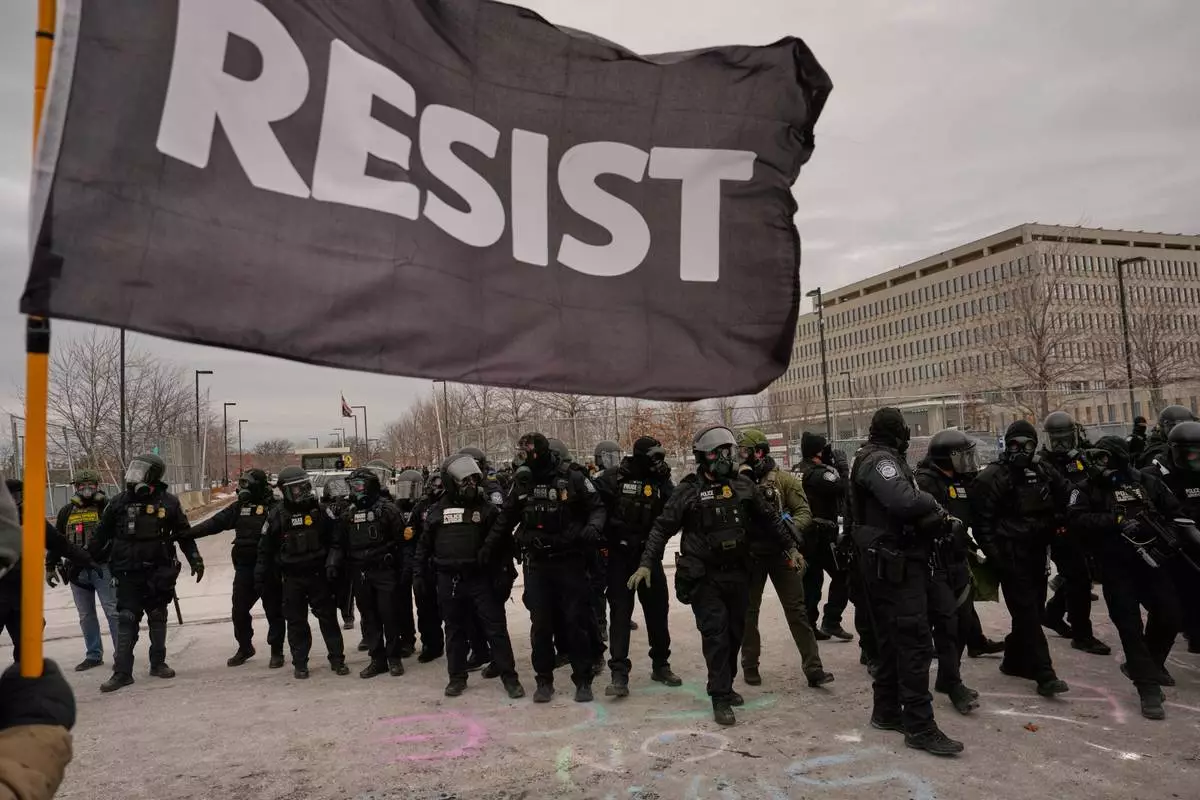
Federal immigration officers confront protesters outside Bishop Henry Whipple Federal Building, Thursday, Jan. 15, 2026, in Minneapolis. (AP Photo/John Locher)
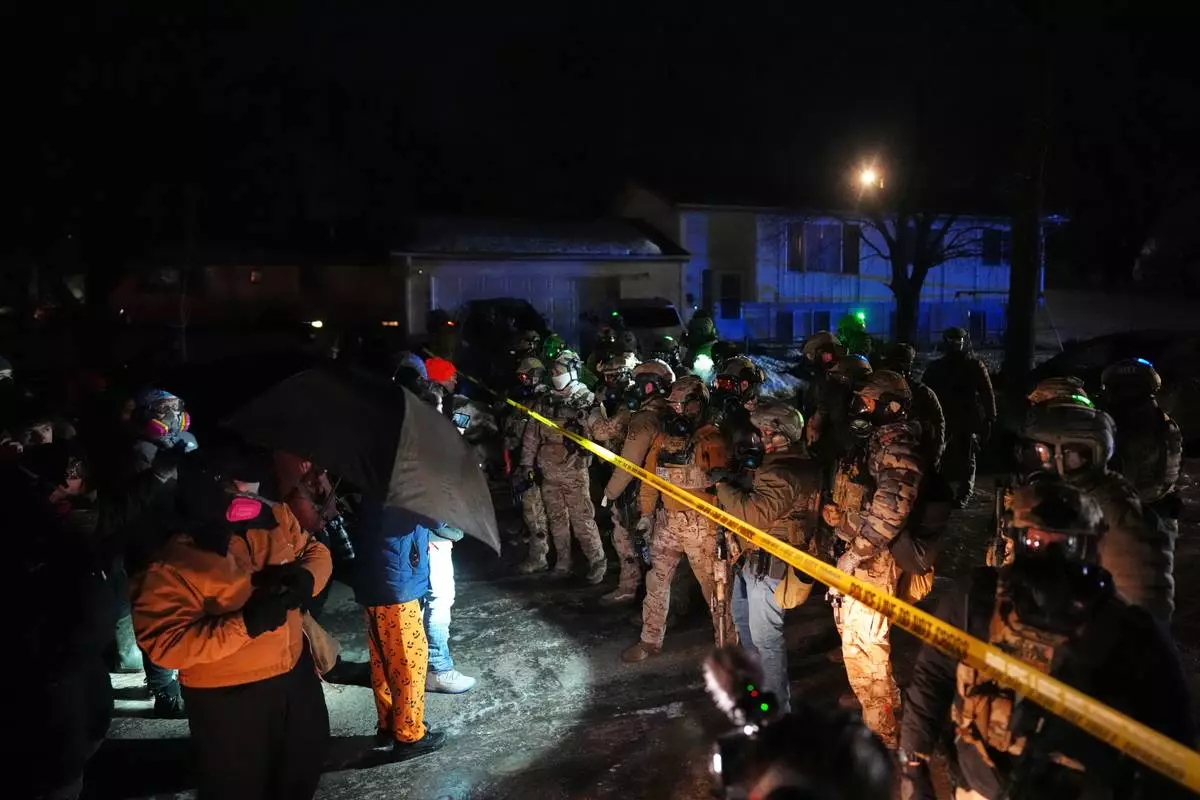
Law enforcement officers at the scene of a reported shooting Wednesday, Jan. 14, 2026, in Minneapolis. (AP Photo/Adam Gray)
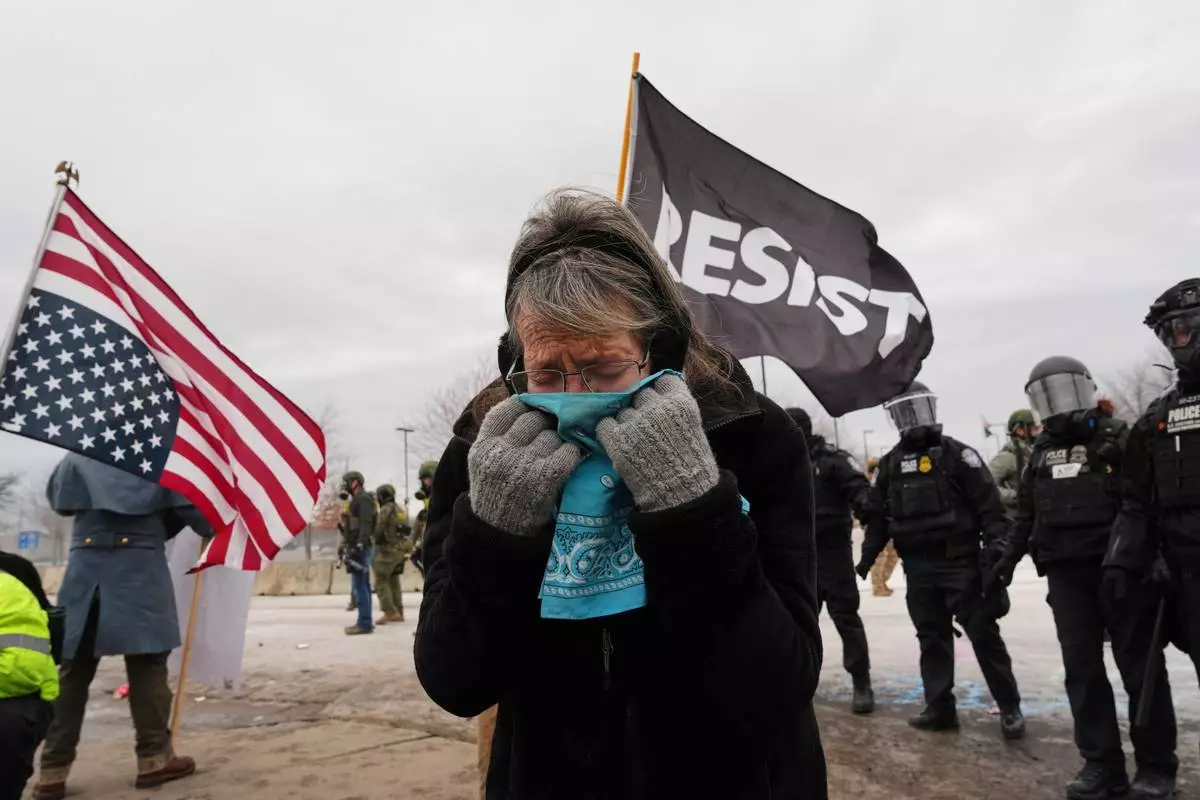
A woman covers her face from tear gas as federal immigration officers confront protesters outside Bishop Henry Whipple Federal Building, Thursday, Jan. 15, 2026, in Minneapolis. (AP Photo/Adam Gray)
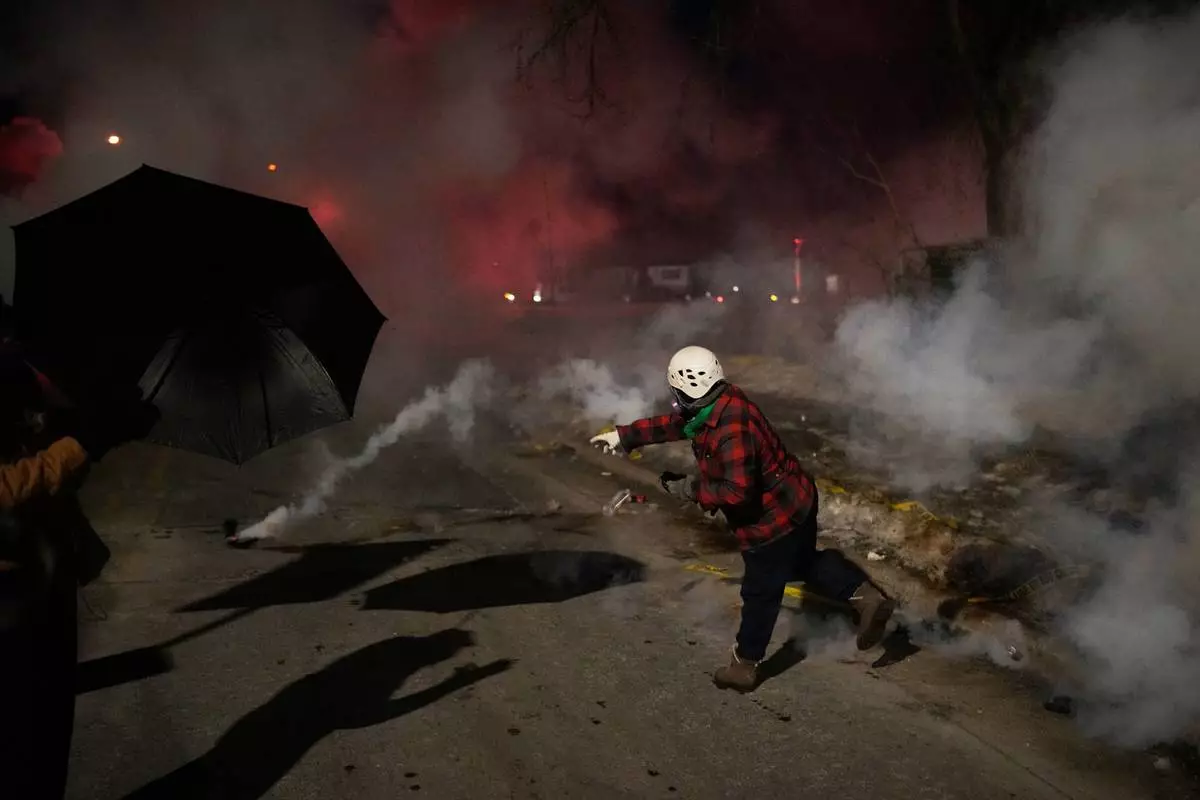
A protester throws back a tear gas canister during a protest after a shooting on Wednesday, Jan. 14, 2026, in Minneapolis. (AP Photo/John Locher)
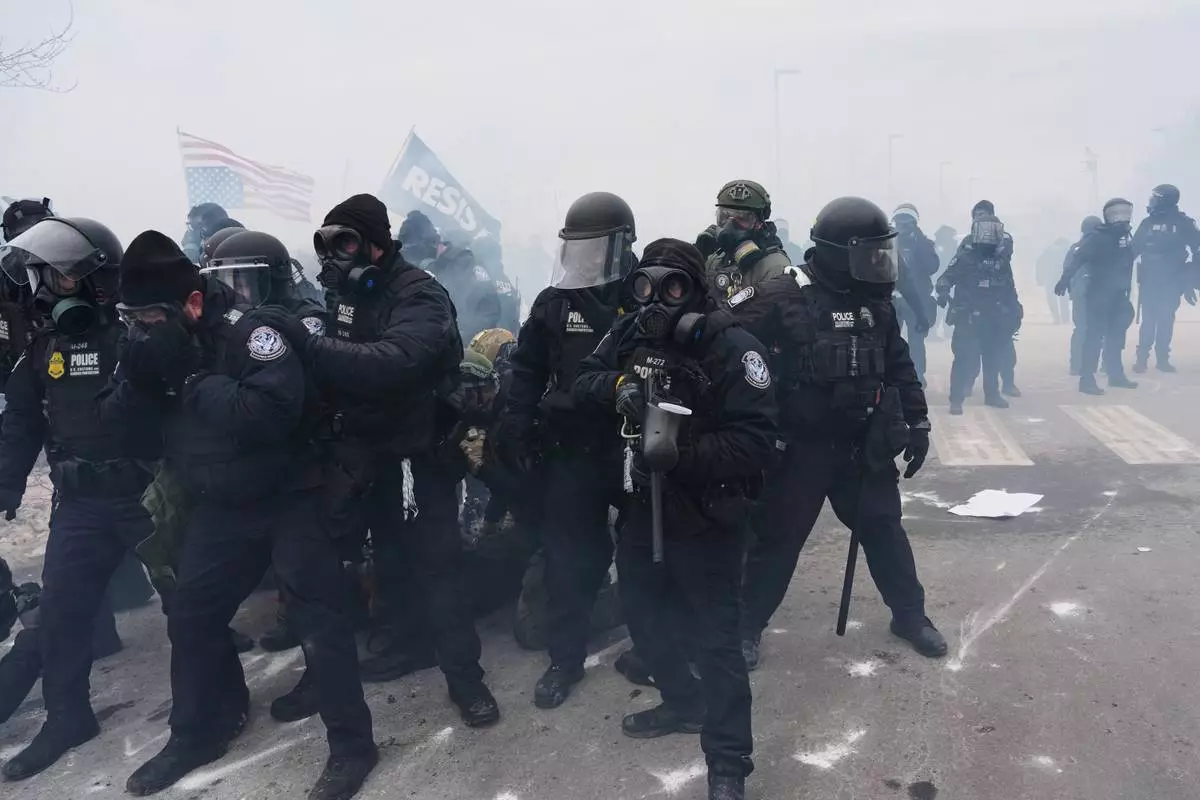
Federal immigration officers confront protesters outside Bishop Henry Whipple Federal Building, Thursday, Jan. 15, 2026, in Minneapolis. (AP Photo/Adam Gray)
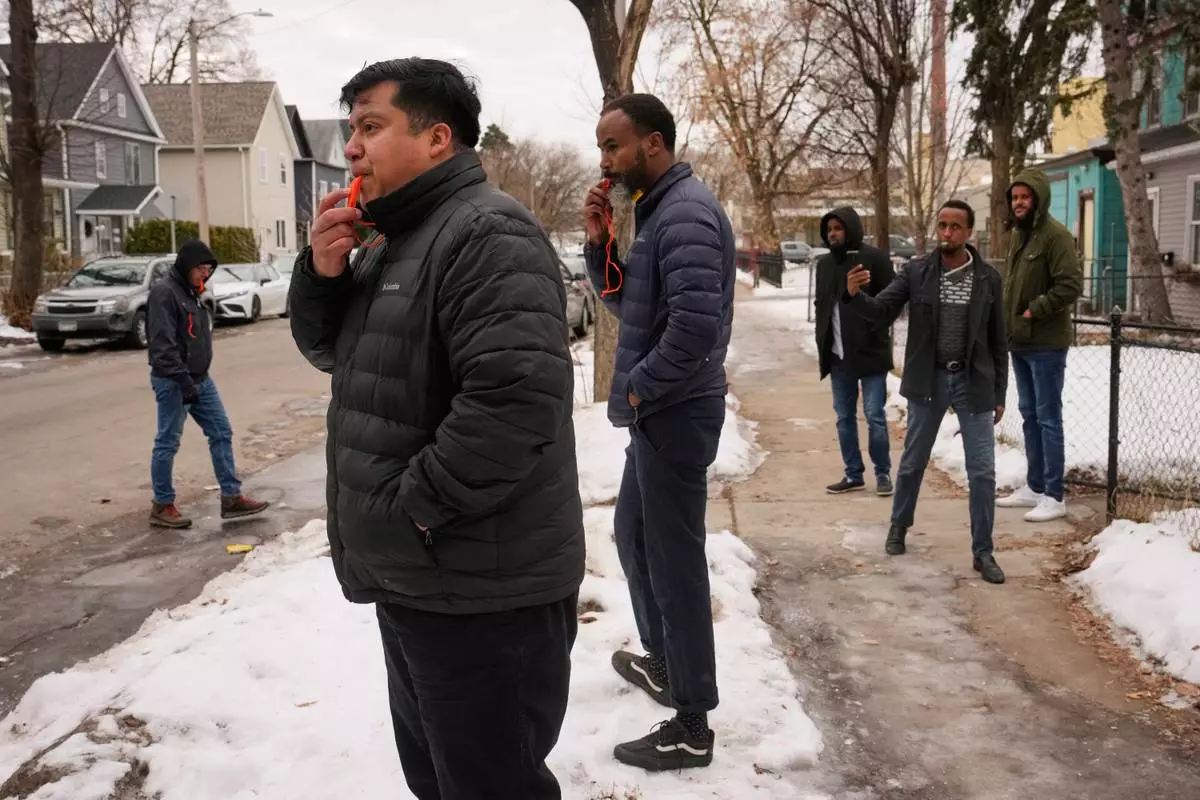
Minneapolis City Council Member Jason Chavez, second from left, blows a whistle with other activists to warn people of federal immigration officers Thursday, Jan. 15, 2026, in Minneapolis. (AP Photo/John Locher)
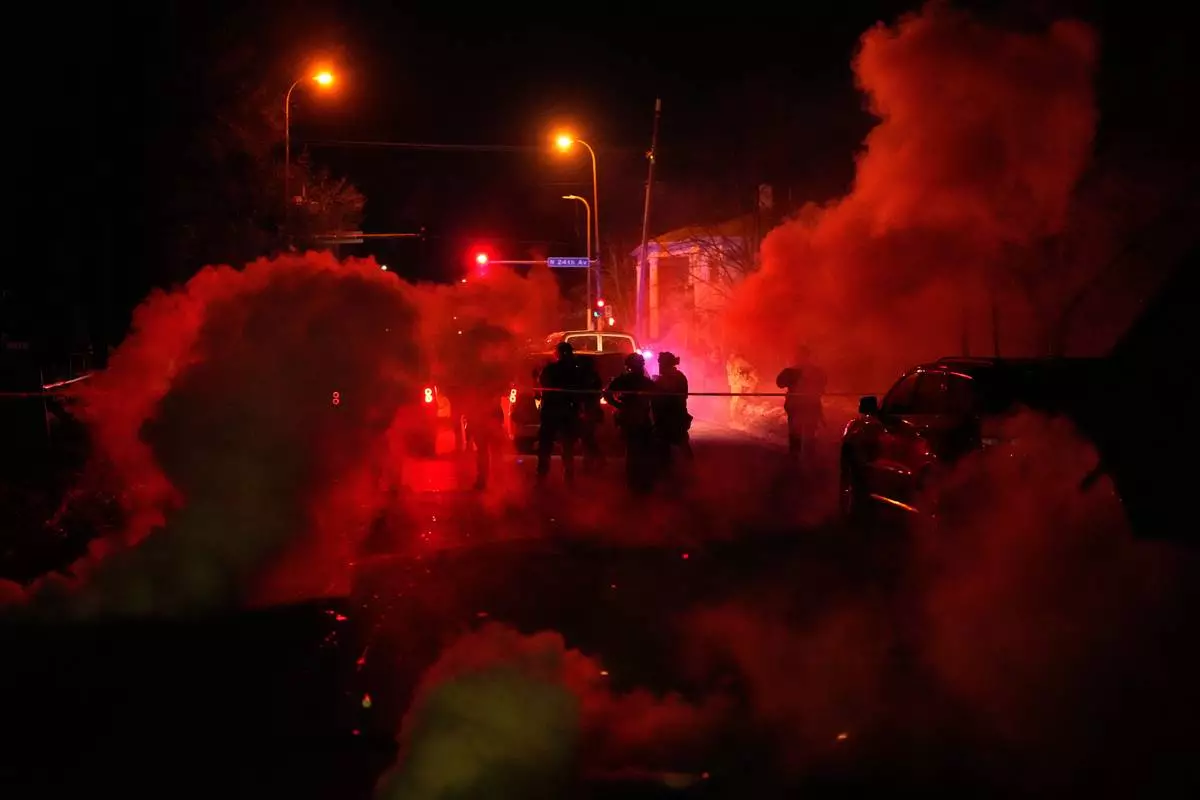
Tear gas surrounds federal law enforcement officers as they leave a scene after a shooting on Wednesday, Jan. 14, 2026, in Minneapolis. (AP Photo/John Locher)
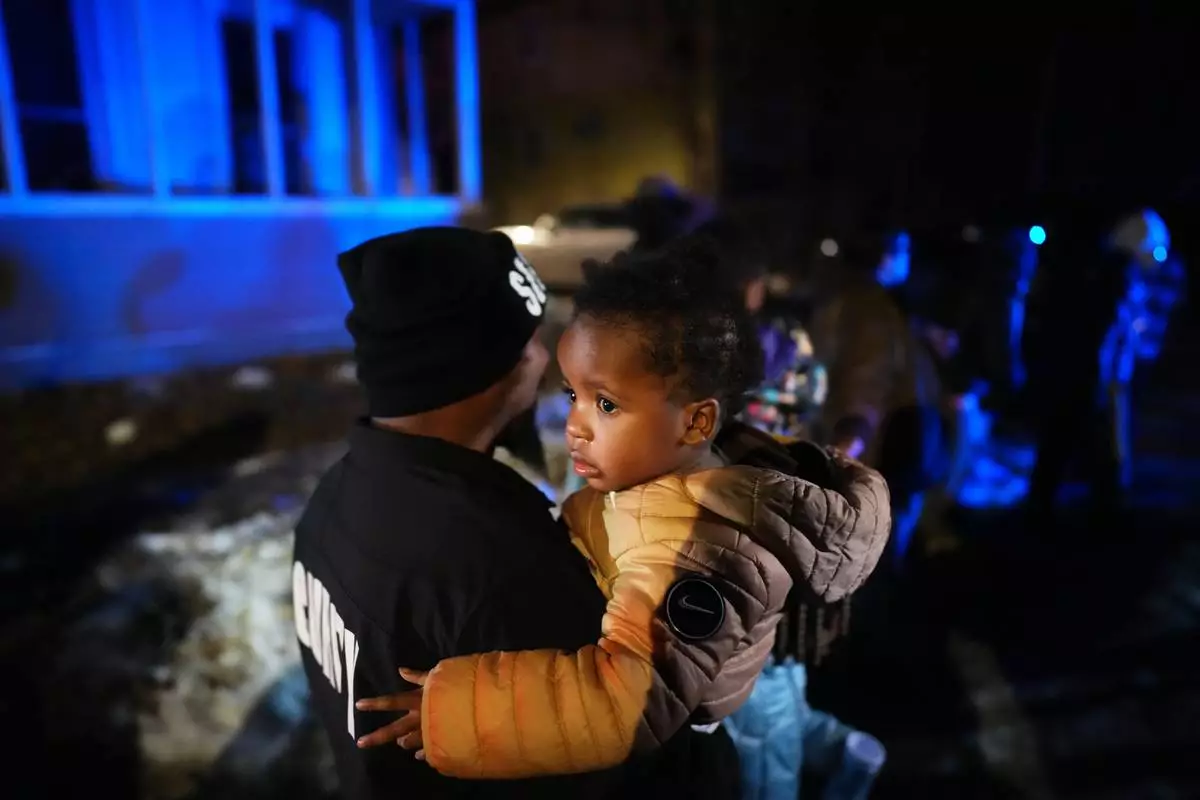
A child and family are escorted away after federal law enforcement deployed tear gas in a neighborhood during protests on Wednesday, Jan. 14, 2026, in Minneapolis. (AP Photo/Adam Gray)
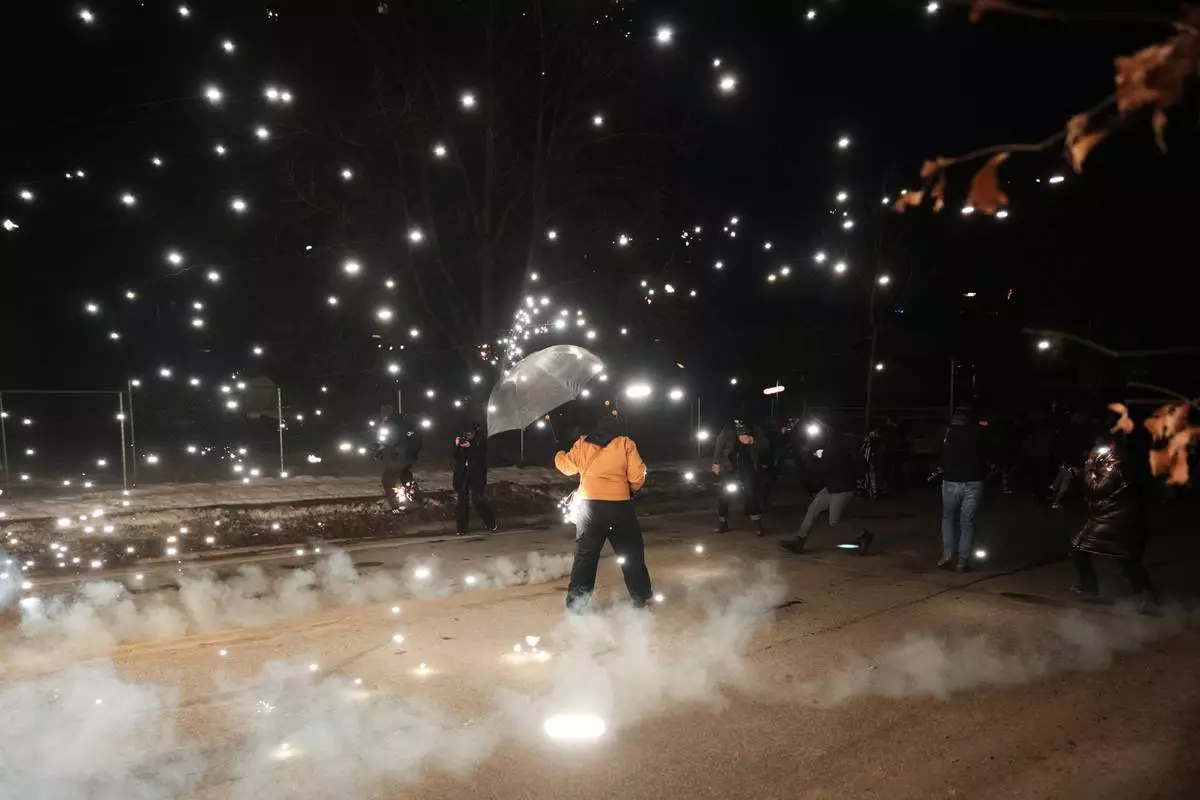
A protester holds an umbrella as sparks fly from a flash bang deployed by law enforcement on Wednesday, Jan. 14, 2026, in Minneapolis. (AP Photo/Adam Gray)
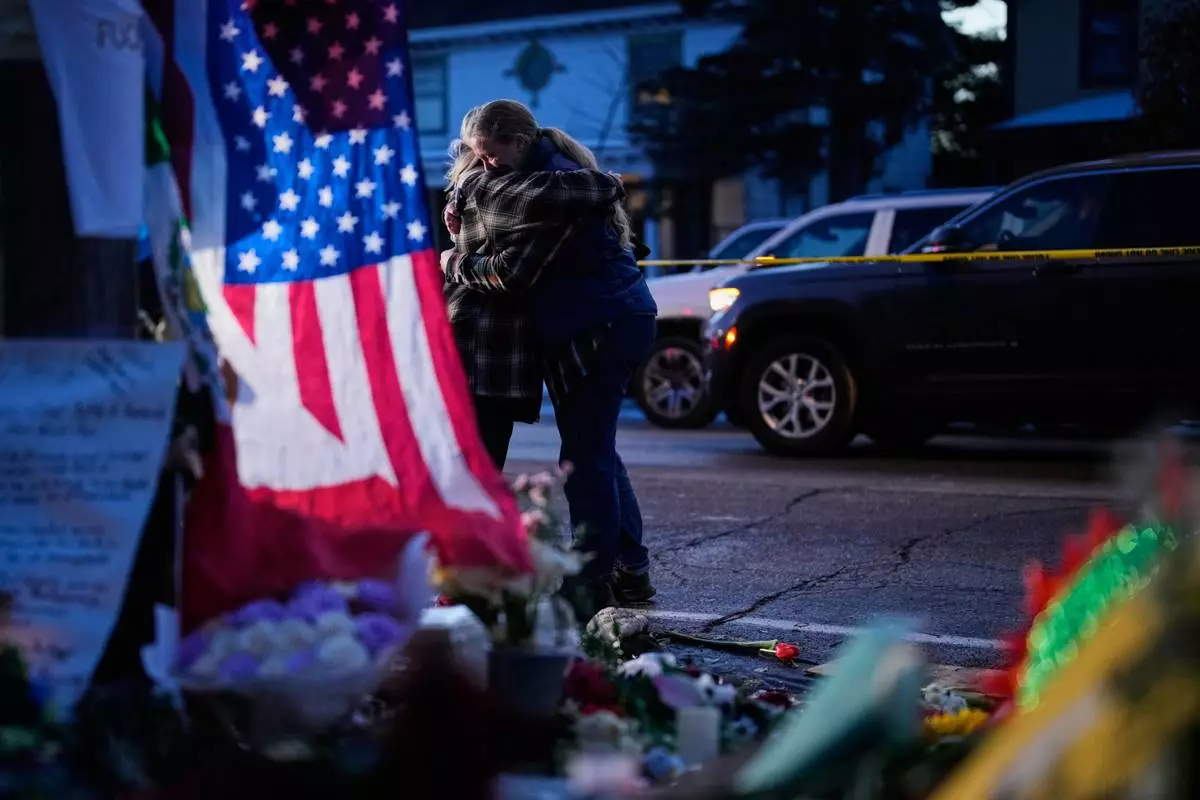
Monica Travis shares an embrace while visiting a makeshift memorial for Renee Good, who was fatally shot by an ICE officer last week, Monday, Jan. 12, 2026, in Minneapolis. (AP Photo/John Locher)
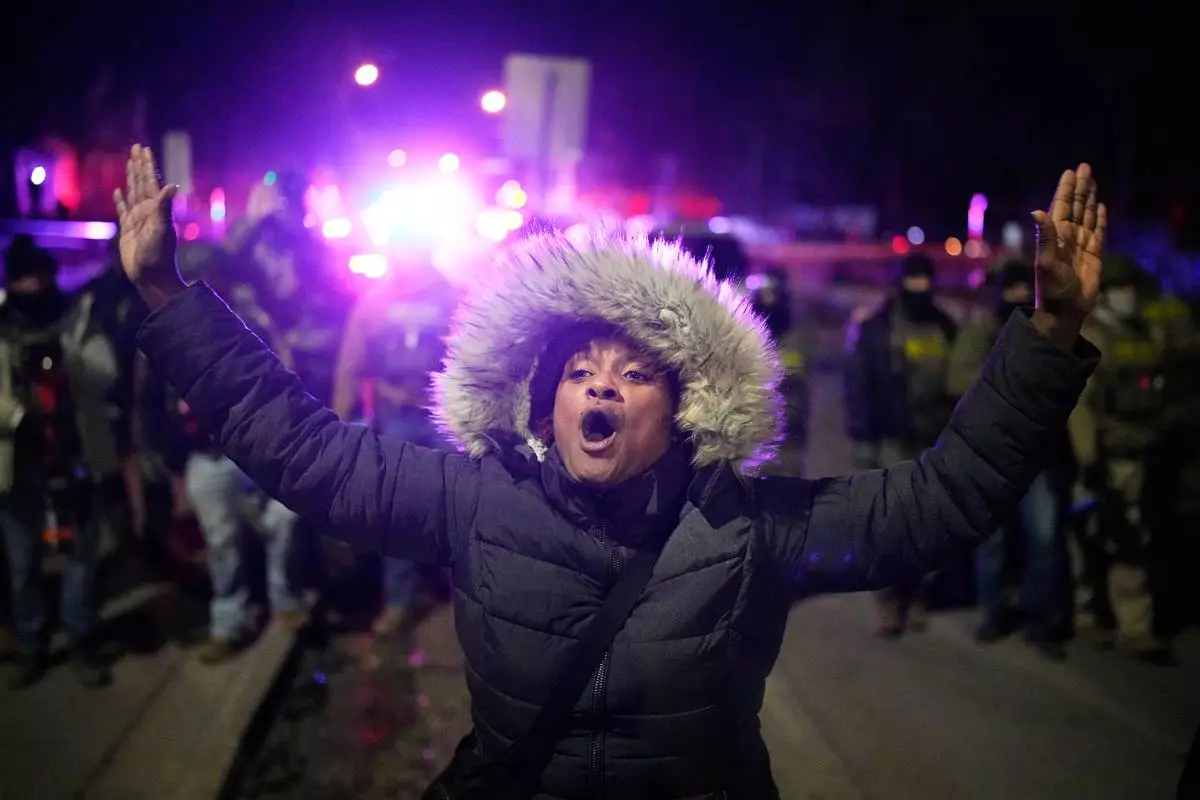
A protester yells in front of law enforcement after a shooting on Wednesday, Jan. 14, 2026, in Minneapolis. (AP Photo/John Locher)
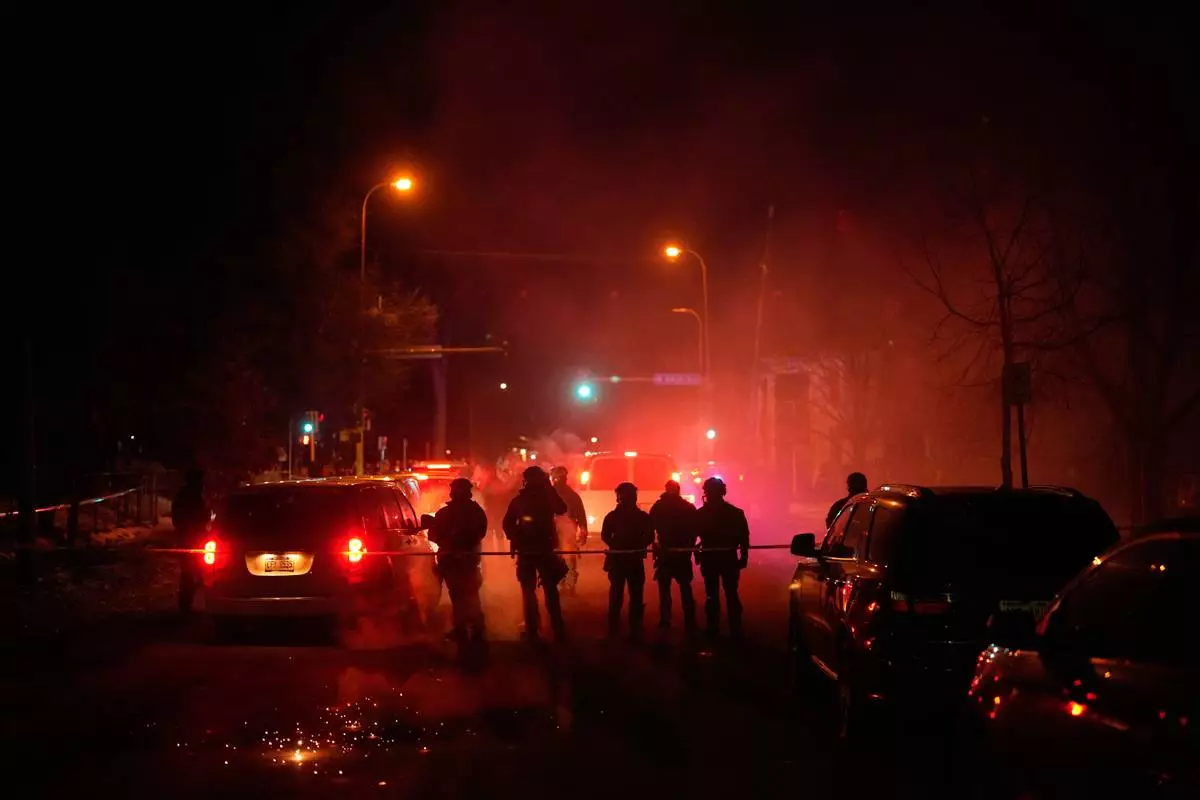
Tear gas surrounds federal law enforcement officers as they leave a scene after a shooting on Wednesday, Jan. 14, 2026, in Minneapolis. (AP Photo/John Locher)
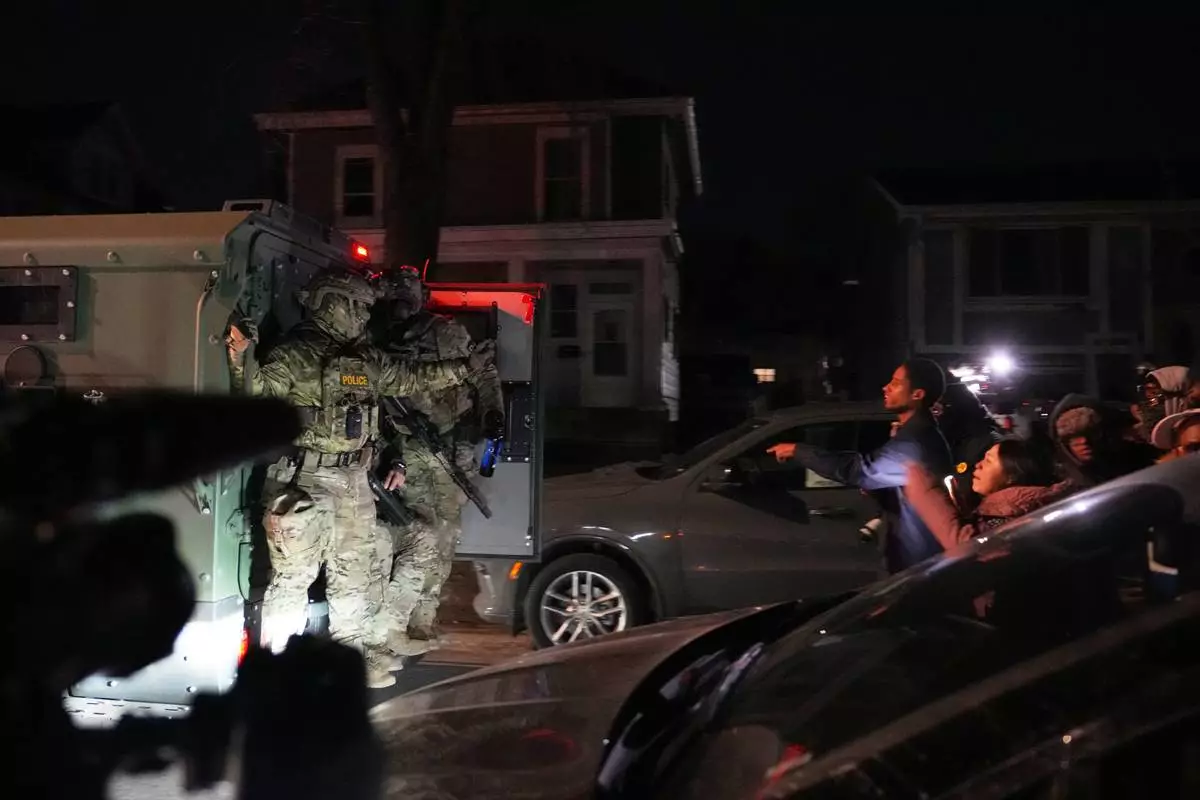
Protesters shout at law enforcement officers after a shooting on Wednesday, Jan. 14, 2026, in Minneapolis. (AP Photo/Abbie Parr)
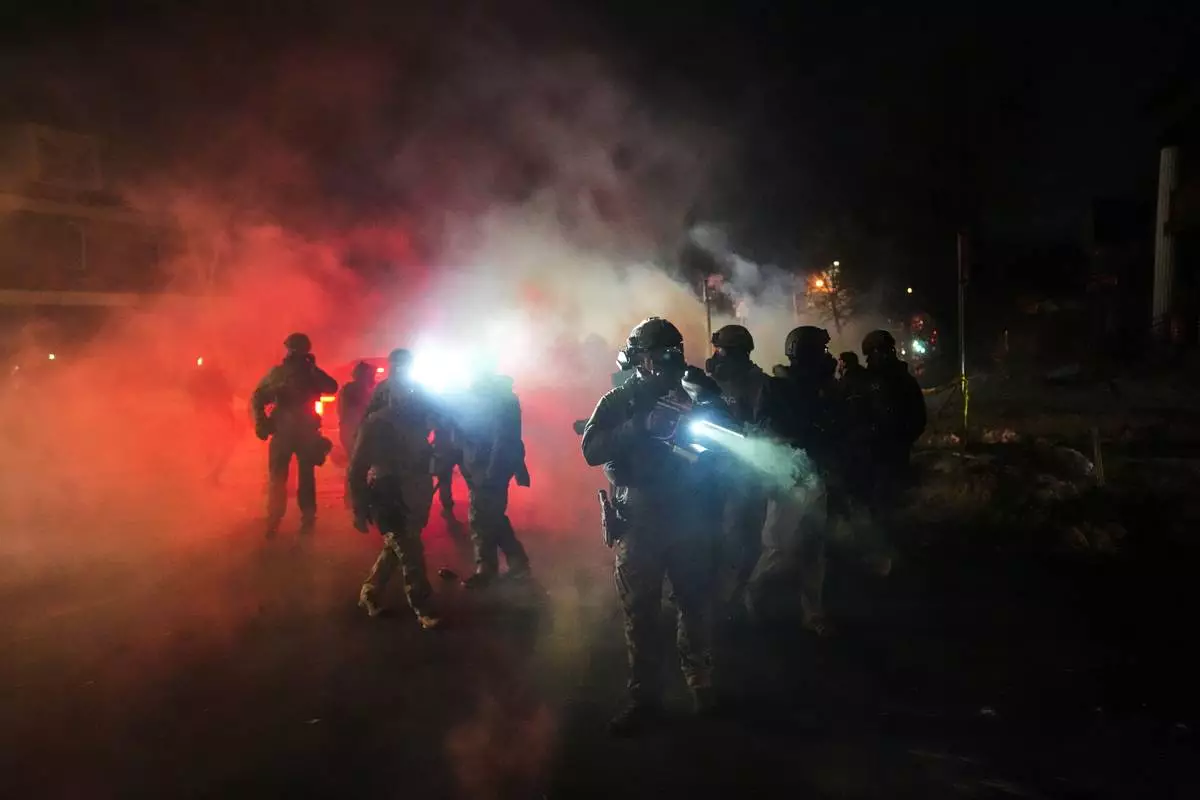
Law enforcement officers stand amid tear gas at the scene of a reported shooting Wednesday, Jan. 14, 2026, in Minneapolis. (AP Photo/Adam Gray)