Hungary's sweltering summer is reshaping its workforce, as professionals from diverse trades retrain as HVAC (Heating, Ventilation, and Air Conditioning) technicians to meet soaring demand for air conditioning, now a necessity instead of a luxury.
As temperatures climb, demand has surged for affordable air conditioning units, many manufactured in China, along with the need for skilled technicians to install these systems.
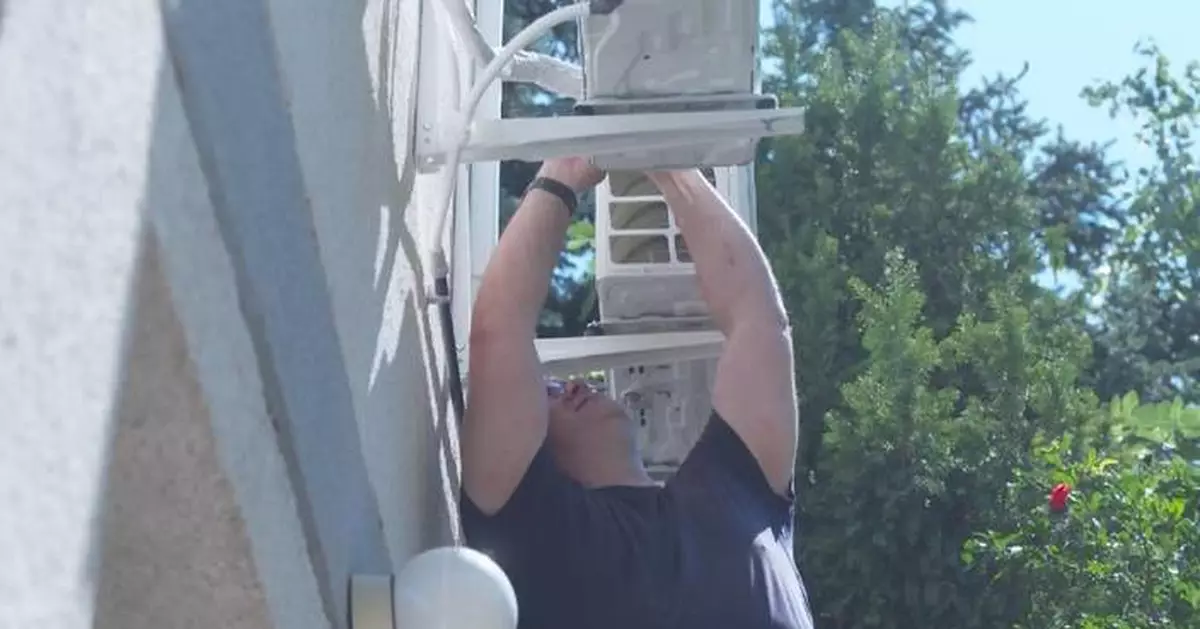
On the fourth floor of a Budapest apartment building, Ferenc Pallai is back at work, fitting yet another air conditioner.
"We're putting in the fourth AC unit in this building today. The tenants were complaining about the heat, so we've been here working for a week to get the units," said Ferenc Pallai, owner of Master Cool Klimatechnika.
Pallai's business has always thrived in summer, but this year’s demand has reached unprecedented heights.
"We have been really busy these past few months, and I'm already booked up even after summer. I think we'll stay busy at least through October," said Pallai.
His crews work year-round now, driven by hotter summers, and a surge in budget-friendly, dual-purpose cooling-heating systems -- many of them made in China.
But keeping up with the demand requires more than just equipment -- it requires people.
As more Hungarians rush to cool their homes, the country finds itself in a different kind of problem: a race to train the people qualified to install AC units.
At a training center Ezkimo Academia, Karoly Marton trains the next generation of HVAC technicians. He says demand for his courses has exploded.
"The number of students has definitely gone up. It's become a really in-demand profession. These days, every building needs to have air conditioning. It wasn't like that before. AC used to be a luxury, now it's a standard. That shift has made more people want to learn the trade," said Karoly Marton, owner of Ezkimo Academia.
These days, Marton is retraining everyone from waiters to musicians, not just students with technical backgrounds.
"It's not uncommon to have IT people, former violinists, people from all different backgrounds studying to become technicians," said Marton.
In Hungary, it takes about three months to become certified, and the payoff is real.
"A good climate technician can earn in a few days the money that the average person earns in a month," said Marton.
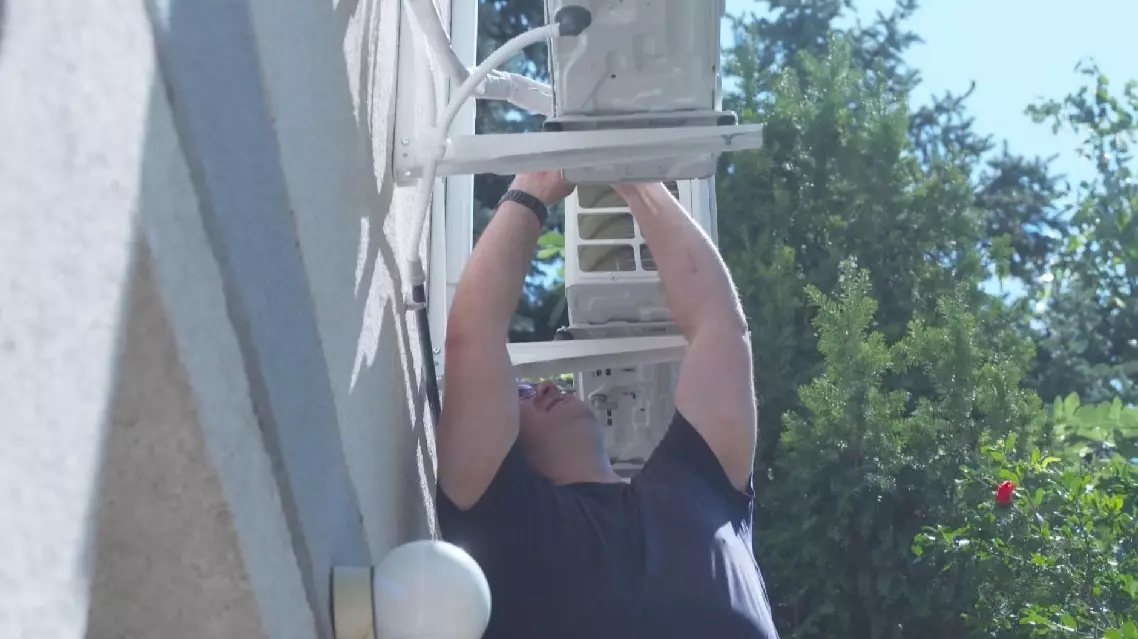
Hungary's heatwave sparks AC rush amid cooling demand
A former television host from Taiwan, Zhai Xuan, has made a pivotal decision to leave mainstream broadcasting in order to create content that provides a better understanding of the Chinese mainland and cross-strait relations.
Zhai, a seasoned television host with over a decade of experience in Taiwan's media landscape, recently addressed an audience at an event in Beijing, where she revealed her complete transition into independent online media.
In her remarks, she articulated her aspiration to bridge what she perceives as a significant information gap between audiences on both sides of the Strait, highlighting her commitment to fostering a deeper understanding and connection through her new endeavors.
"I was really surprised by all the fake news. There were stories saying people on the mainland can't afford tea eggs or that they live in mud houses and in Taiwan, this was the main information many people received," said Zhai.
Zhai said she initially began producing online videos to challenge such perceptions while continuing her work as a television host.
In April 2025, she travelled to the mainland with her father to fulfill her late grandfather's wish to return to his hometown. The trip, which reunited family members separated since 1949, was recorded in a video series titled "Journey to Find Our Roots", drawing attention from viewers in both Taiwan and the mainland.
"Many people in Taiwan told me that after watching, they wanted to apply for a mainland travel permit immediately and go looking for their relatives. Some had long forgotten these things, but after seeing my story, they began thinking about their hometowns and family members they had never met and decided to search for their roots," Zhai shared her story at the event.
By mid-2025, Zhai said she began to feel increasing pressure amid rising political tensions and a tightening atmosphere around cross-Strait exchanges in Taiwan.
After more than 12 years in the industry, Zhai resigned from her position, believing it was the right thing to do.
"At that moment, I felt this was a major issue,not just for me, but for Chinese people on both sides of the Strait. If I backed down then, I wouldn’t be standing on the right side," said Zhai.
Since leaving television, Zhai has broadened her online programming to encompass a range of daily-life topics, including practical guidance on applying for a mainland travel permit and using commonly employed mobile applications, in addition to content that delves into historical memory and cultural connections across the Strait.
As the debate over cross-Strait relations continues in Taiwan, Zhai said she remains committed to her current path.

Former Taiwan TV host bridges cross-Strait divide via online media