TAMPERE, Finland--(BUSINESS WIRE)--Aug 7, 2025--
Ancient DNA research led by the Museum Centre Vapriikki in Tampere, Finland, in collaboration with the universities of Turku and Helsinki, has produced new insights into kinship, health, and population continuity in medieval and early modern Finland. Published in the peer-reviewed journal iScience, the research presents results from 25 individuals in Finland – a significant result in a country where acidic soils often lead to poor preservation of bones and genetic material.
This press release features multimedia. View the full release here: https://www.businesswire.com/news/home/20250807066724/en/
Researchers successfully recovered DNA from individuals buried between the 12th and 19th centuries at three cemeteries in the Tampere region. The study is part of Vapriikki’s research project that applies scientific methods to investigate the region’s past.
Family ties and genetic continuity
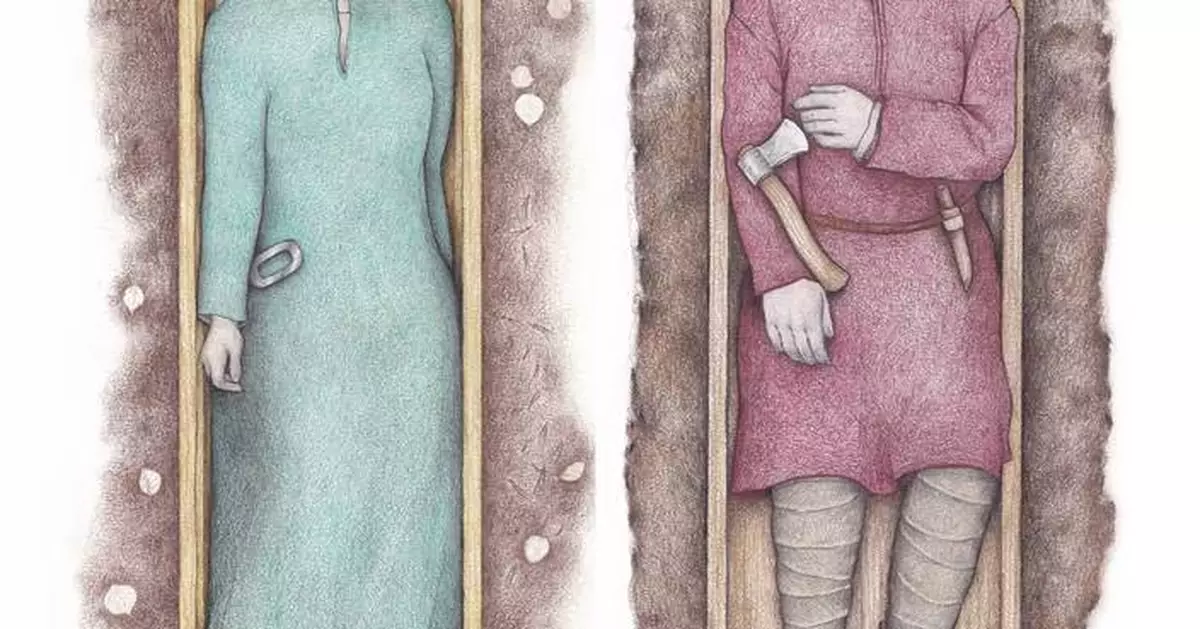
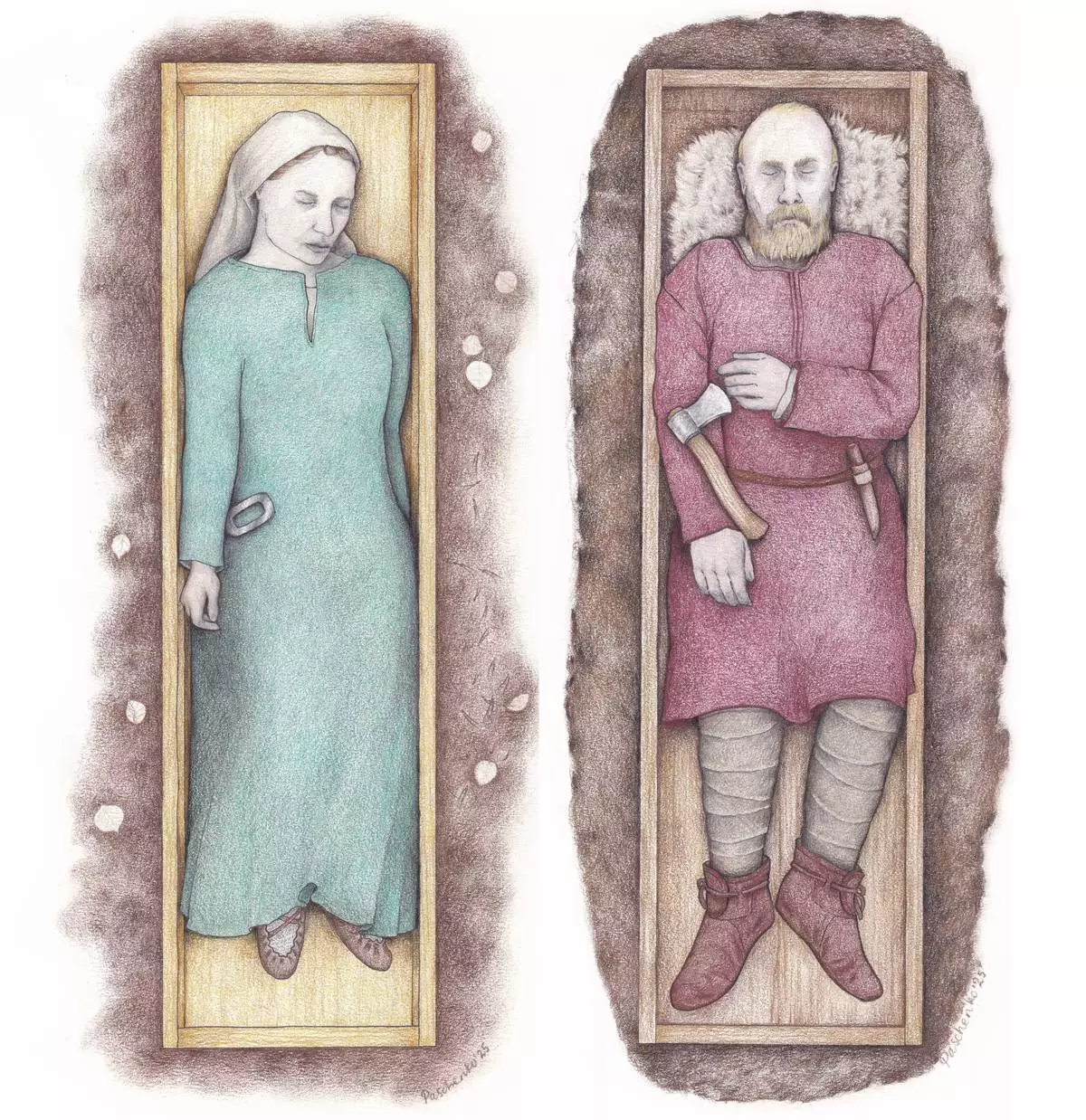
One of the study’s findings was the discovery of full siblings buried 30 kilometers apart. A woman buried in Tampere and a man in Pälkäne, both from the 12th century, were confirmed to be sister and brother.
“This provides tangible evidence of family connections between different communities,” says Dr. Ulla Nordfors, researcher at Vapriikki.
Comparisons with over 4,000 modern Finnish genomes from the Finnish Institute for Health and Welfare’s biobank revealed that the ancient individuals from Tampere region share the closest genetic affinities with people living in the same region today.
“These results point to a remarkable degree of genetic continuity in the area since at least the early Middle Ages,” says Sanni Peltola, a doctoral researcher at the University of Helsinki.
Additional genetic links were detected between Finnish individuals and previously published ancient genomes from Scandinavia and the Lake Ladoga region, providing evidence of mobility and cultural contacts in the Viking Age and beyond.
“Although the dataset is relatively small, the findings clearly show that medieval Finland was not isolated,” Peltola notes. “It was part of the wider networks of interaction that shaped northern Europe.”
Health and traits revealed
The analysis also recovered microbial DNA that sheds light on health in past populations. Bacteria in 13th-century dental calculus included species linked to both oral and systemic health. DNA from a post-medieval man revealed the presence of Treponema, a bacterial genus that includes the causative agent of syphilis.
Hereditary traits were also uncovered. Most individuals were lactose tolerant, like modern Finns, and a 12th-century man likely had corneal dystrophy, a degenerative eye disease that may have impaired his vision.
“Genes cannot capture the full complexity of a person and their life, but learning about health, traits, and family ties can help us see ancient people as individuals who once lived, felt, and experienced the world,” says Nordfors. “When interpreted within their archaeological and historical context, these details allow us to approach the past on a more human level.”
Archaeogenetics reveals fine-scale genetic continuity and patterns of kinship and health in medieval Finland: iScience
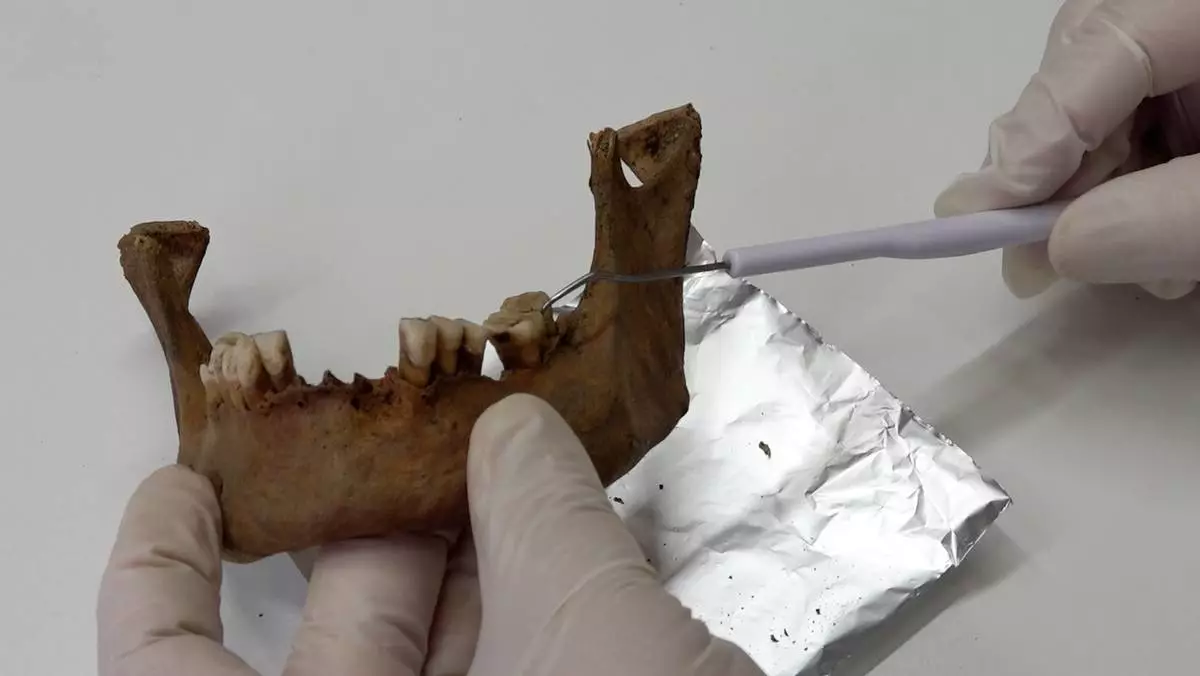
In an ancient DNA study conducted in collaboration between Vapriikki and the Universities of Turku and Helsinki, 25 individuals were analyzed from Vilusenharju in Tampere, Ristiänmäki in Pälkäne (ca. 1100–1200 CE), and the Ruins Church in Pälkäne (1200–1800 CE). Photo by Heli Nousiainen / Vapriikki.
The woman’s grave in Vilusenharju, Tampere was discovered in 1962, and the man’s grave in Ristiänmäki, Pälkäne in 1982. Ancient DNA research has now revealed that the deceased were siblings. Illustrations by Veronika Paschenko. Photo by Vapriikki.
ANCHORAGE, Alaska (AP) — A state appeals court will decide whether to dismiss felony voter misconduct charges against an Alaska resident born in American Samoa, one of numerous cases that has put a spotlight on the complex citizenship status of people born in the U.S. territory.
The Alaska Court of Appeals heard arguments Thursday in the case against Tupe Smith, who was arrested after winning election to a regional school board in 2023. Smith has said she relied on erroneous information from local election officials in the community of Whittier when she identified herself as a U.S. citizen on voter registration forms.
American Samoa is the only U.S. territory where residents are not automatically granted citizenship by being born on American soil and instead are considered U.S. nationals. Paths to citizenship exist, such as naturalization, though that process can be expensive and cumbersome.
American Samoans can serve in the military, obtain U.S. passports and vote in elections in American Samoa, but they cannot hold public office in the U.S. or participate in most U.S. elections.
Smith's attorneys have asked the appeals court to reverse a lower court's decision that let stand the indictment brought against her. Smith's supporters say she made an innocent mistake that does not merit charges, but the state has argued that Smith falsely and deliberately claimed citizenship.
State prosecutors separately have brought charges against 10 other people from American Samoa in Whittier, including Smith’s husband, Michael Pese.
Thursday's arguments centered on the meaning of the word intentionally.
Smith “and others like her who get caught up in Alaska’s confusing election administration system and do not have any intent to mislead or deceive should not face felony voter misconduct charges,” one of her attorneys, Whitney Brown, told the court.
But Kayla Doyle, an assistant attorney general, said that as part of ensuring election integrity, it's important that oaths being relied upon are accurate.
About 25 people gathered on a snowy street outside the Anchorage courthouse before Thursday’s hearing to support Smith. Some carried signs that read, ”We support Samoans.”
State Sen. Forrest Dunbar, a Democrat who attended the rally, said the Alaska Department of Law has limited resources.
“We should be going after people who are genuine criminals, who are violent criminals, or at least have the intent to deceive,” he said.
In a court filing in 2024, one of Smith's previous attorneys said that when Smith answered questions from the Alaska state trooper who arrested her, she said she was aware that she could not vote in presidential elections but was “unaware of any other restrictions on her ability to vote."
Smith said she marks herself as a U.S. national on paperwork. But when there was no such option on voter registration forms, she was told by city representatives that it was appropriate to mark U.S. citizen, according to the filing.
Smith “exercised what she believed was her right to vote in a local election. She did so without any intent to mislead or deceive anyone,” her current attorneys said in a filing in September. “Her belief that U.S. nationals may vote in local elections, which was supported by advice from City of Whittier election officials, was simply mistaken.”
The state has said Smith falsely and deliberately claimed citizenship. Prosecutors pointed to the language on the voter application forms she filled out in 2020 and 2022, which explicitly said that if the applicant was not at least 18 years old and a U.S. citizen, “do not complete this form, as you are not eligible to vote.”
The counts Smith was indicted on “did not have anything to do with her belief in her ability to vote in certain elections; rather they concerned the straightforward question of whether or not Smith intentionally and falsely swore she was a United States citizen,” Doyle said in a court filing last year.
One of Smith's attorneys, Neil Weare, co-founder of the Washington-based Right to Democracy Project, has said the appeals court could dismiss the case or send it back to the lower court “to consider whether the state can meet the standard it has set forth for voter misconduct.” The state also could decide to file other charges if the case is dismissed, he said.
The court did not give a timeline for when it would issue a ruling.
Bohrer reported from Juneau, Alaska.
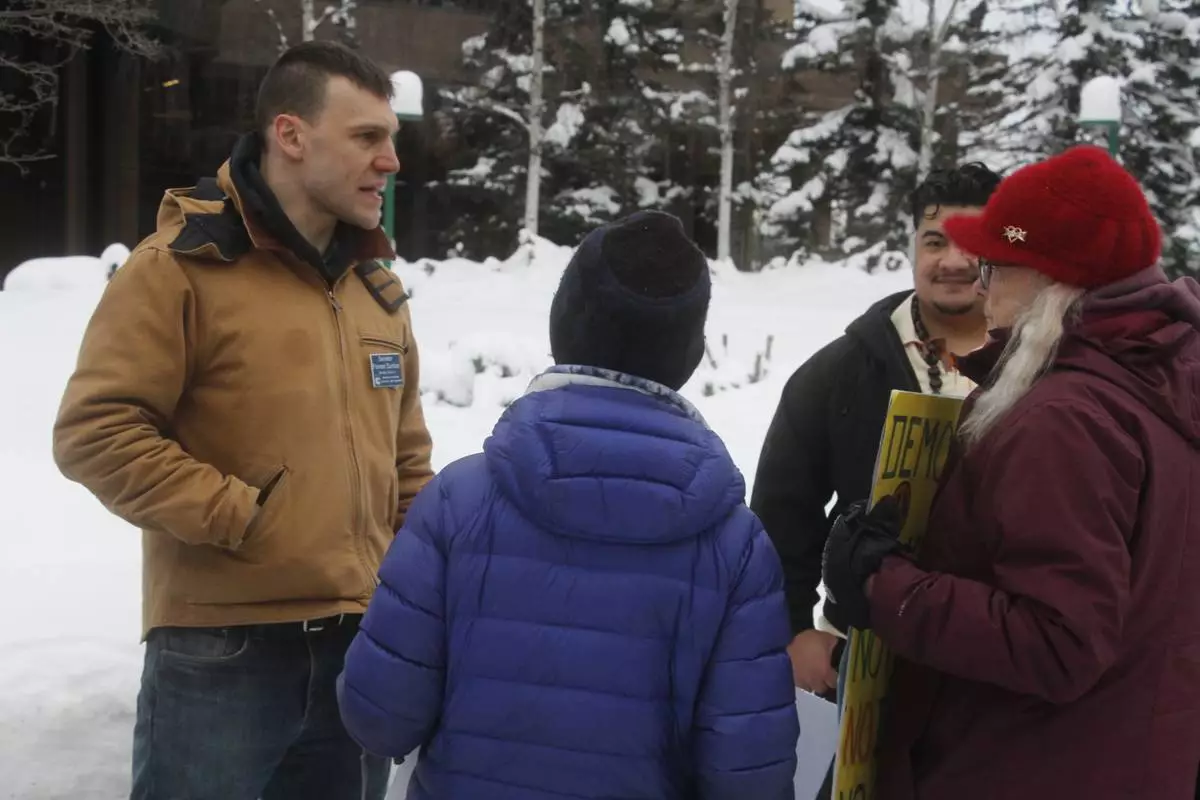
State Sen. Forrest Dunbar, left, stands with supporters of Tupe Smith gathered Thursday, Jan. 15, 2026, outside the Boney Courthouse in Anchorage, Alaska, ahead of the Alaska Court of Appeals hearing a challenge to the voter misconduct case brought against American Samoa native Tupe Smith by the state. (AP Photo/Mark Thiessen)
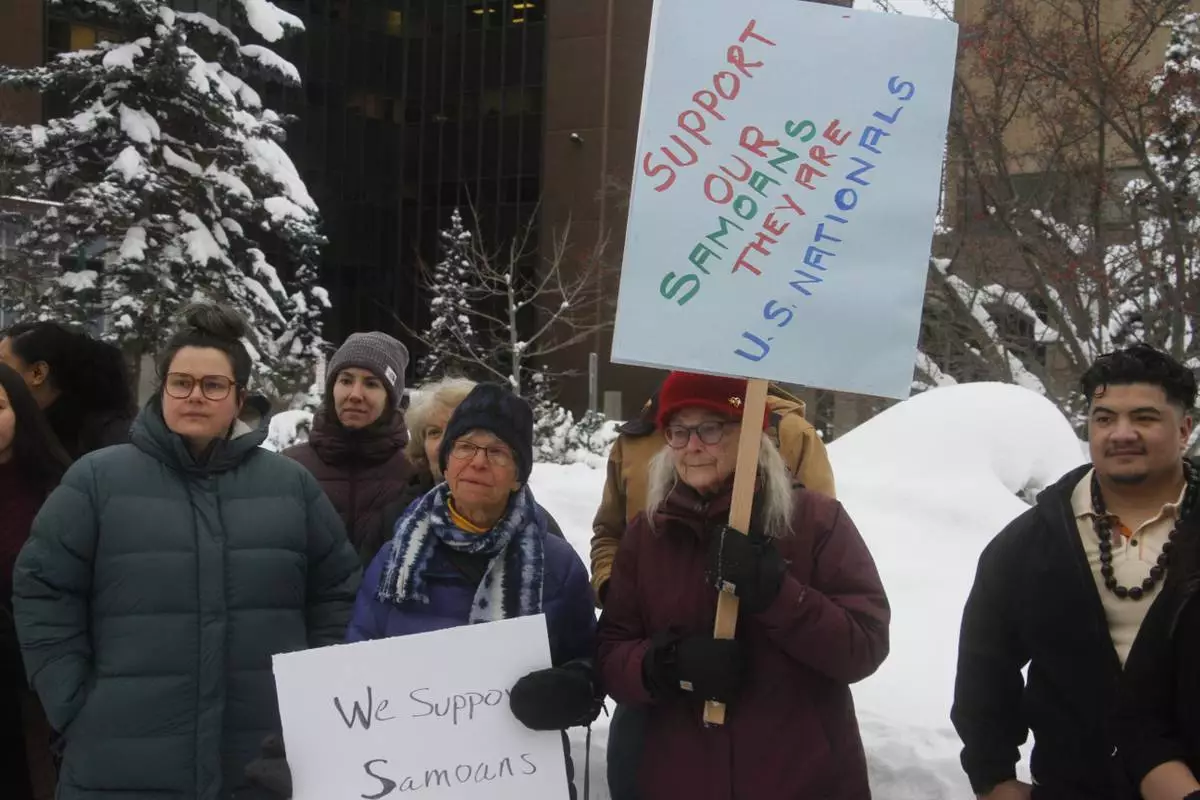
Supporters of Tupe Smith gather outside the Boney Courthouse in Anchorage, Alaska, Thursday, Jan. 15, 2026, ahead of the Alaska Court of Appeals hearing a challenge to the voter misconduct case brought against American Samoa native Tupe Smith by the state. (AP Photo/Mark Thiessen)
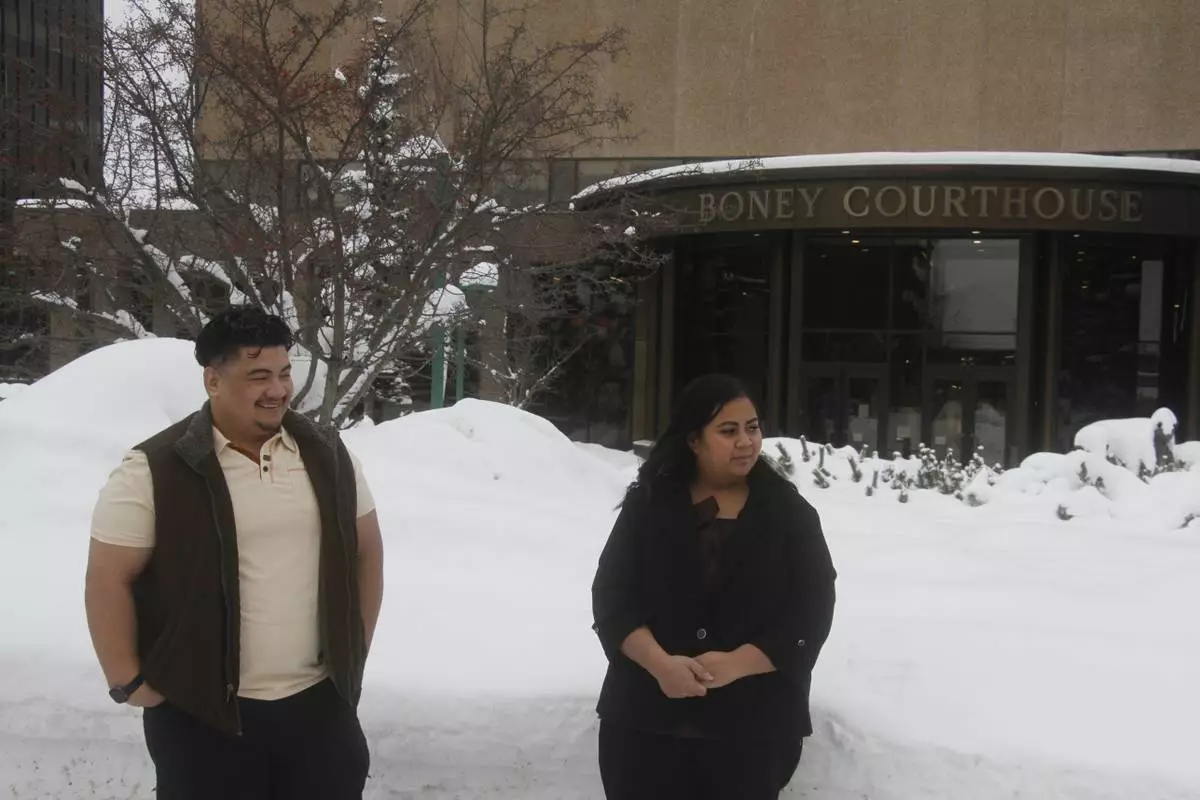
Michael Pese and his wife, Tupe Smith, stand outside the Boney Courthouse in Anchorage, Alaska, Thursday, Jan. 15, 2026, ahead of the Alaska Court of Appeals hearing a challenge to the voter fraud case brought against her by the state. (AP Photo/Mark Thiessen)
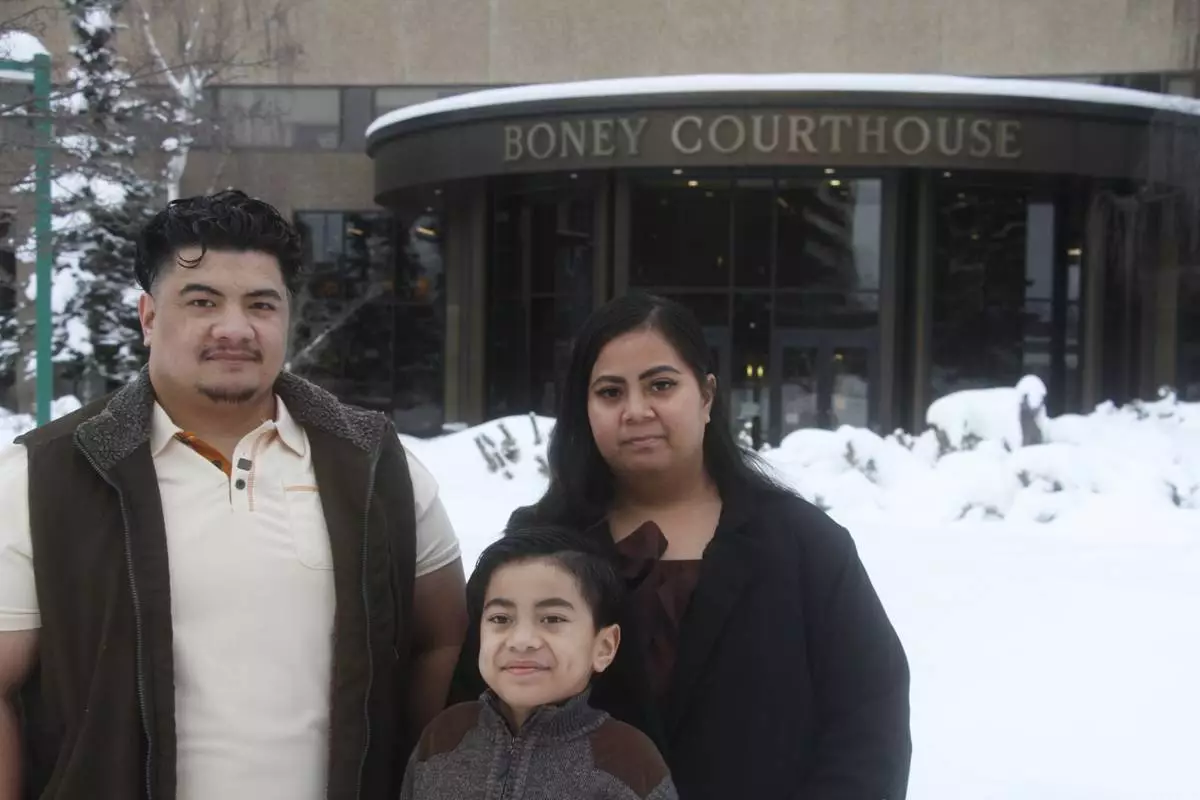
Michael Pese, left, his wife, Tupe Smith, and their son Maximus pose for a photo outside the Boney Courthouse in Anchorage, Alaska, Thursday, Jan. 15, 2026, ahead of the Alaska Court of Appeals hearing a challenge to the voter fraud case brought against her by the state. (AP Photo/Mark Thiessen)
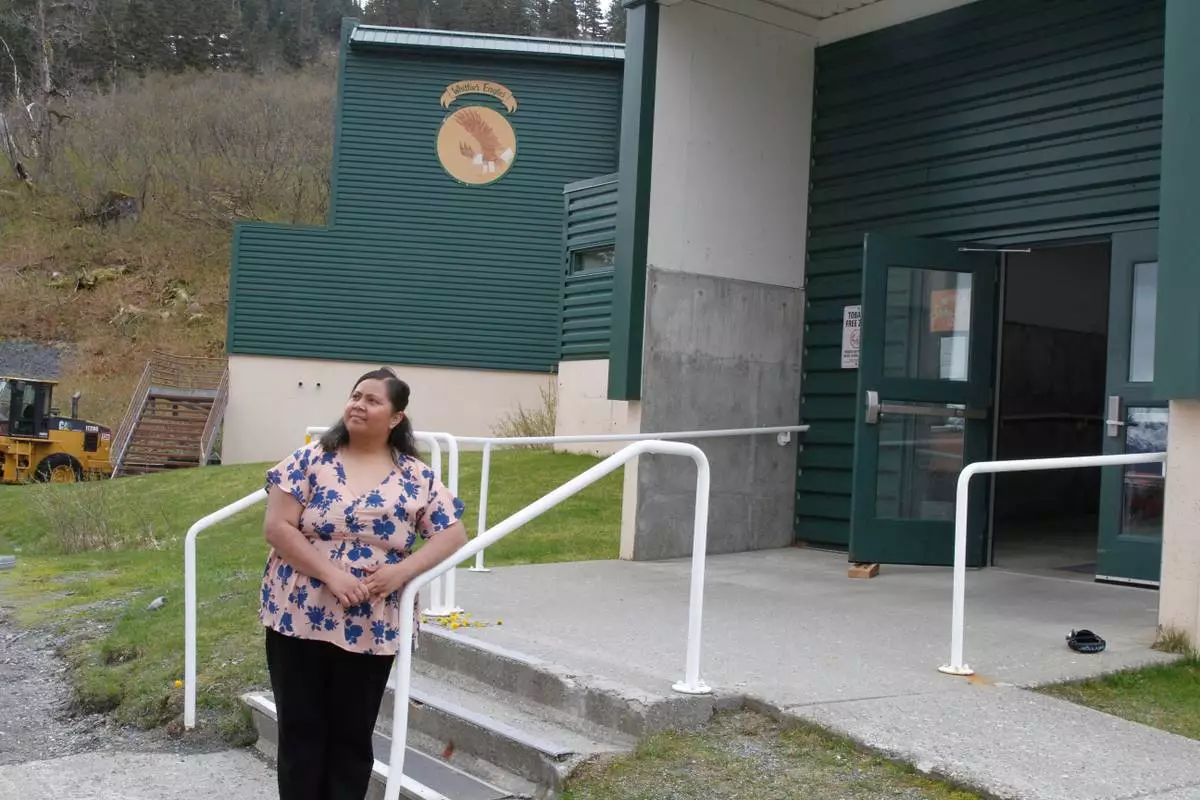
FILE - Tupe Smith poses for a photo outside the school in Whittier, Alaska, May 13, 2025. (AP Photo/Mark Thiessen, File)