A fierce battle fought in east China more than eight decades ago shattered any illusion Japan had of a quick conquest in China during the Chinese People's War of Resistance Against Japanese Aggression.
In 1938, after seizing Nanjing, the Japanese forces aimed for Wuhan, the temporary capital of the Nationalist Government. At this crucial juncture, Chinese troops fiercely resisted at Wanjialing in east China's Jiangxi Province, decimating over 10,000 Japanese soldiers from the 106th Division. This battle became known as the "Great Victory at Wanjialing".
The bullet holes in these walls are remnants from the Japanese invasion of Wanjialing in De'an County, Jiangxi, in 1938. Even survivors in their 90s today still vividly recall the scenes when they see these marks.
"I was only in my teens at the time. The entire Japanese force came with many soldiers. Those neighbors who didn’t flee were killed," said Xiong Jinxiang, a survivor of the war.
In December 1937, Nanjing fell. The Nationalist Government announced its relocation to Wuhan.
"To force the Nationalist Government to surrender, the Japanese wanted to quickly capture Wuhan to achieve their strategic goal," said Wu Jinhua, a researcher at Wanjialing Victory Cultural Research Institute.
In June 1938, the Japanese forces advanced towards Wuhan in five separate routes. Learning from the lesson of the "doomed defense of an isolated city" in the Battle of Nanjing, the Nationalist Government deployed its main forces in the vast areas surrounding Wuhan.
"De'an has many hills, making it easy to defend and hard to attack, with the orientation of the mountains forming an inverted figure-eight shape," said Wu.
On July 27, 1938, the Japanese forces advanced along the Jiujiang --Nanchang Railway and attacked De'an.
"The commander-in-chief of the 9th War Zone, Xue Yue, devised a flexible tactic: allowing the Japanese forces to advance first and then concentrating forces to encircle and attack them, like setting a pocket trap," said Zhou Yingwan, a government employee of Moxi Township.
Apart from the natural barrier of the terrain, the use of tactics also became a key factor.
"These trenches are about five to six meters deep. They were used to seize high ground, and they served as cover for transporting supplies, ammunition, and troops up the mountain," said Zhou.
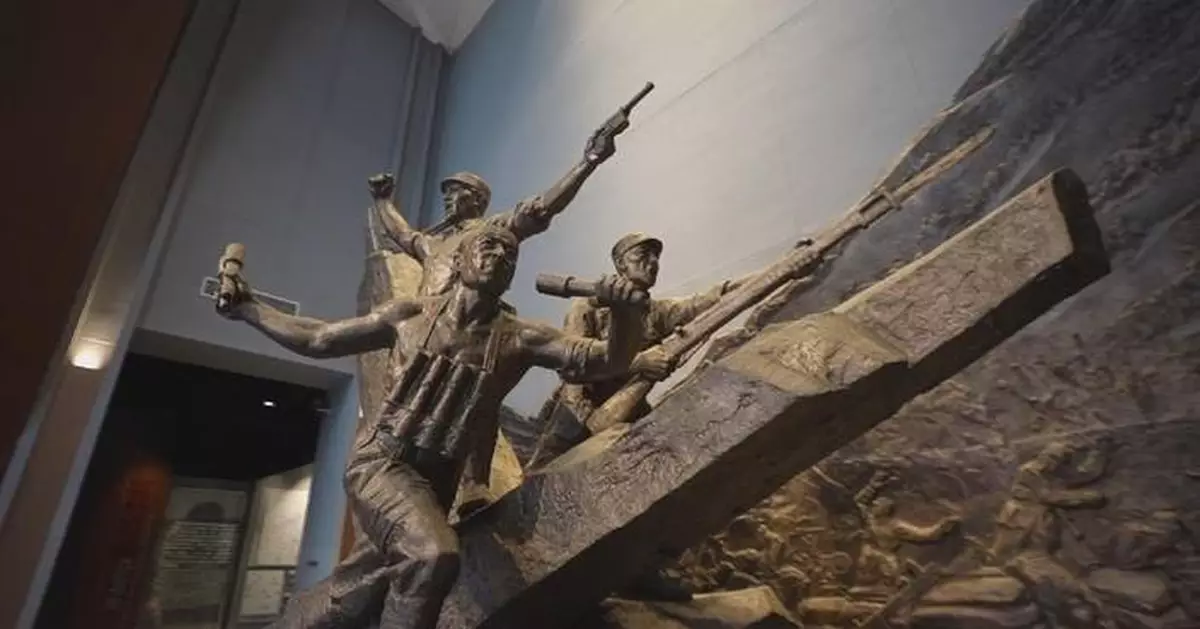
In the memorial hall, a large knife evokes memories of the night raid by the daredevil squad.
"Our brave fighters were bare-chested. When they reached the hilltop and felt someone wearing clothes, they would strike with a knife. The Chinese forces fought with their flesh and blood, repeatedly contesting the positions with the Japanese," said Wu.
What's more outrageous is that the Japanese forces used mustard gas on a large scale before their defeat.
"The glass display case here shows models of the poison gas aerial bombs and poison gas grenades used by the Japanese forces. During the Battle of Wuhan, Chinese soldiers injured by Japanese poison gas suffered extensive skin necrosis," said Zeng Qingqi, a docent.
By October 10, 1938, when the battle ended, the Japanese 106th Division was severely damaged, with over ten thousand enemy soldiers annihilated. This dealt a heavy blow to the Japanese forces, significantly slowed their advance towards Wuhan, and further shattered their illusion of a "quick victory" over China.
"The Chinese forces could achieve the Great Victory at Wanjialing because of the soldiers’ fearless resistance. The Chinese Communist Party’s support and the strong support from the local people were also crucial. After the war, letters were found in the pockets of the fallen soldiers, encouraging their children to be loyal to the country," said Wu.
As American historian John Toland pointed out in The Rising Sun, "The prolonged resistance on the Chinese battlefield pinned down 60 percent of the Japanese army in the East, completely disrupting the Axis powers' global strategy."
The Chinese People's War of Resistance Against Japanese Aggression was the first to break out and lasted the longest in the World Anti-Fascist War, resulting in over 35 million Chinese military and civilian casualties.
In the main Eastern battlefield in the global fight against fascism, China's resistance effort was decisive in defeating Japanese fascism and supporting other fronts in Europe and Asia, profoundly contributing to the final victory and world peace.
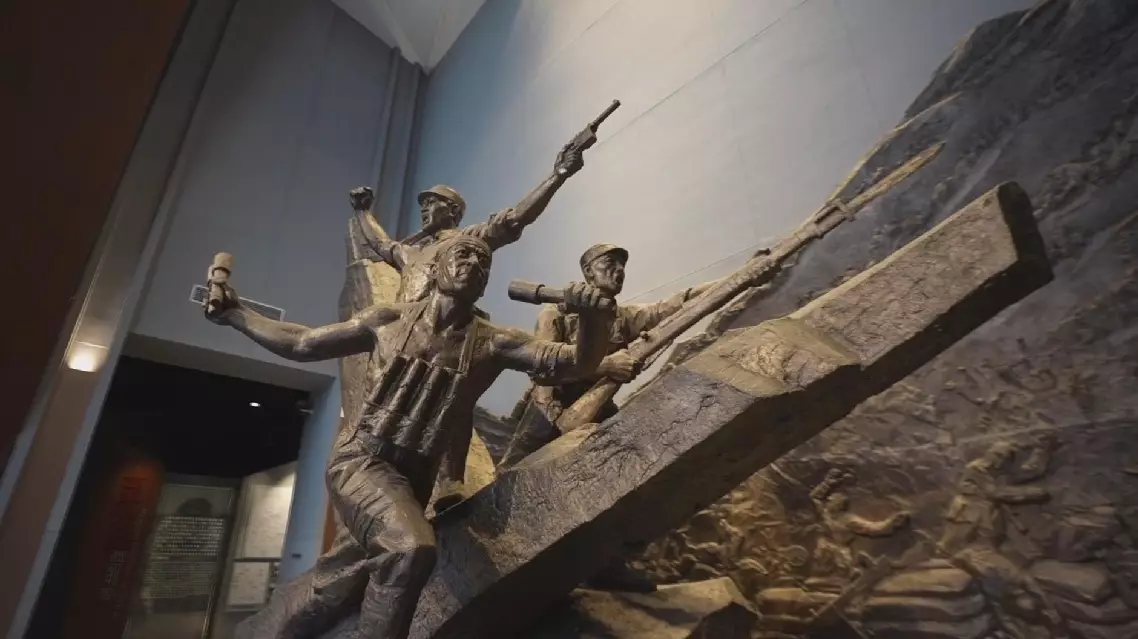
Chinese bravery remembered in repelling Japanese forces in pre-WWII battle