The younger generation in southwest China's Xizang Autonomous Region is breaking boundaries and embracing ambitious global perspectives, fueled by historic economic and social progress over the past six decades.
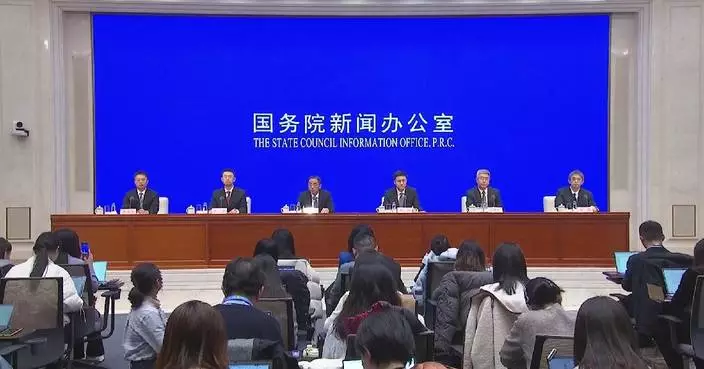
New data from the Communist Party of China (CPC) Xizang Autonomous Regional Committee reveals that, as of 2024, the region's GDP has soared to 276.5 billion yuan (38.5 billion U.S. dollars), an astonishing 155-fold increase from its 1965 level, with an average annual growth rate of 8.9 percent. Meanwhile,fiscal revenue has skyrocketed to reach 27.7 billion yuan.
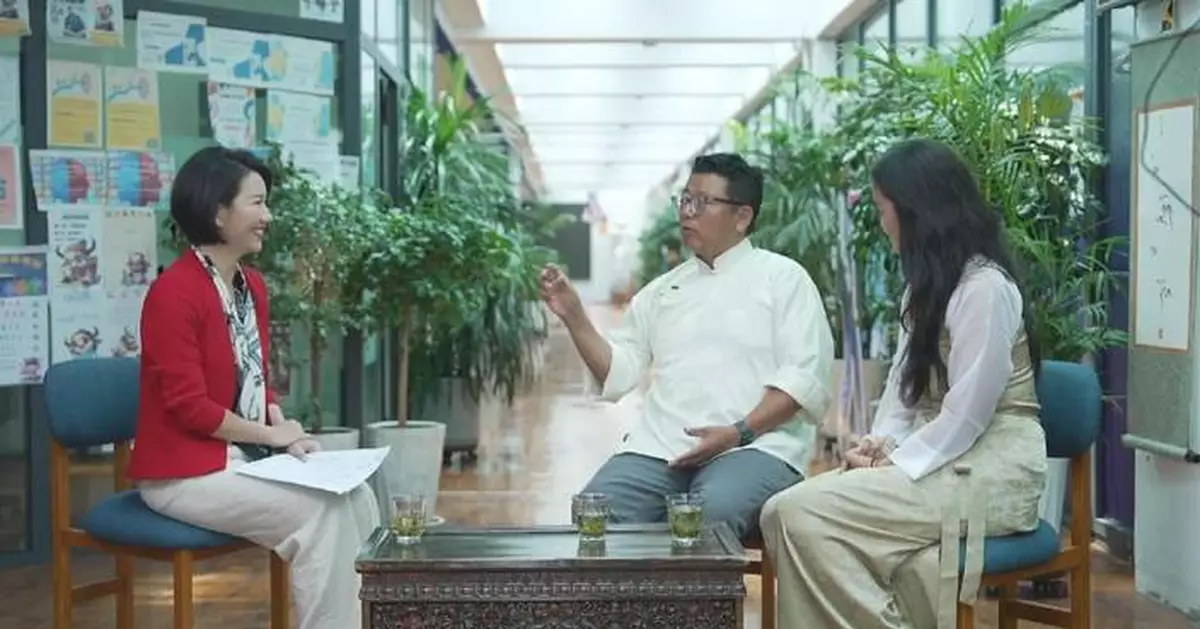
This economic leap has empowered residents of this once-remote plateau region to embrace modern global perspectives. Tibetan student Odser Dolma exemplifies this shift, having switched from the conventionally popular engineering major to pursue Russian language and literature.
"Actually my major was like engineering, and then I realized that oh, 'this is not what I want' and I decided to change my subject. Actually I wanted to choose English, but a lot of people choose English. And I thought that 'oh maybe Russian would be so fine.' So yes, I learned Russian language and literature," said Dolma.
Norbu Dramdu, Dolma's childhood teacher, vividly recalls how aspirations have expanded with Xizang's development.
"When I was little, I remember my teacher asked me a question like 'what's your dream?' She said, tell me the biggest, the biggest. Then I was like to travel. Actually I meant to say travel around the world and then I feel like when I said that I believed like all my class will laugh at me. And now I'm telling my mom about like I'm traveling around the world and she's like 'alright, so just be safe,' that's it, so this is becoming true. So like this kind of thing is not an exaggeration, without a fear of exaggeration, a lot of things are becoming possible. And I don't have to get embarrassed to add the last word 'world'," said Dramdu.
The aspirations of Xizang's youth are breaking conventional boundaries, observed Dramdu, recalling his astonishment at one student's unconventional choice.
"For example, like her age, there's the one girl, she shocked me because of the place that she wants to go. I think it's kind of popular for Tibetan college graduates, that they want to continue further their study in the U.S, Canada, England or somewhere. But there's the one girl she's said like 'hey, sir, I'm thinking of going to South Africa to go for my Master degree learning Anthropology.' I was like 'where?' She said 'South Africa!'" said Dramdu.
He believes the younger generation's attitude exemplifies the shifting mindset among Xizang's youth, a stark contrast to the limitations once faced by earlier generations.
"Then I was like pretty shocked. I have never met any Tibetan girl who wants to go to study in South Africa. When I say why, she replied me in a beautiful way. She said 'why not?' So like this generation is becoming a why not generation. So like her, she's going to go to Russia. So in my age, like in my time when I graduated from college, if I had said I want to go to Moscow to study in Russia,it would be like a joke. But now for them, they are the why not generation. So they're like why not Russia, why not Moscow, why not the Montreal, why not Ireland?" said Dramdu.
Xizang's youth expand global aspirations amid historic economic growth