China's foreign trade has shown steady growth this year despite global uncertainties, with a particularly strong performance in July dispelling concerns about the country's economic resilience.
China's total goods imports and exports in yuan-denominated terms rose to 25.7 trillion yuan (about 3.6 trillion U.S. dollars) in the first seven months of 2025, up 3.5 percent year on year, official data showed Thursday.
In the first half of this year, export of Hangzhou City in east China's Zhejiang Province, which is also home to the country's first cross-border e-commerce pilot zone, surpassed two trillion yuan (about 0.28 trillion U.S. dollars) for the first time.
Exports to four major emerging markets - ASEAN, the Middle East, Latin America, and Africa - achieved double-digit growth, while exports to the European Union, the largest market, saw a growth rate of 12.1 percent.
Since the beginning of this year, intelligent manufacturing brands in east China's Anhui Province have accelerated their efforts of "going abroad."
High-end notebooks, Chery's passenger cars, JAC's light trucks, and Sungrow's photovoltaic inverters have all achieved national export championship status. Notably, one in every five exported Chinese cars is produced by Chinese automaker Chery.
"Overseas consumers are increasingly recognizing our Chinese brands, particularly those companies like ours that continue to innovate in technology and intelligence. This growing acceptance indicates that our local research and development, domestic manufacturing, and global business strategy are beginning to bear fruit," said Xu Qingsong, deputy general manager of the International Business Department of Chery Automobile Co., Ltd.
In the first half of the year, foreign trade scale in east China's Jiangsu Province grew by 5.2 percent year-on-year.
During the summer season, a leisure goods company in Jiangsu, which primarily produces heat and sun protection products, saw nearly half of its overseas sales come from the U.S. market. The company has accelerated its expansion abroad, with export value reaching nearly 80 million yuan (about 11.14 million U.S. dollars) in the first half, a year-on-year increase of over 50 percent.
In order to provide more efficient rail-sea intermodal train service, Wuxi City in Jiangsu recently launched its first direct sea-rail intermodal train to Ecuador in South America.
"Calculations indicate that the transportation time for goods has been reduced by eight to 10 days, resulting in a 30 percent increase in transportation efficiency," said Wang Lei, head of freight operations department, Wuxi International Freight Train Co., Ltd.
The province has been diversifying its strategies to mitigate risks and challenges, consistently expanding its "circle of friends."
In the first half of the year, Jiangsu's foreign trade with countries participating in the Belt and Road Initiative (BRI) grew by 9.5 percent, with trade with ASEAN countries increasing by 21.8 percent.
"Trade with countries along the BRI continues to grow rapidly, not only offsetting the negative impacts of tariff game between China and the United States, but also further solidifying the role of Jiangsu's enterprises as key suppliers in the global market. This ensures that Jiangsu plays a strong supporting role in the overall growth of national foreign trade," said Fang Yong, associate professor of Department of International Economics and Trade, Nanjing University Business School.
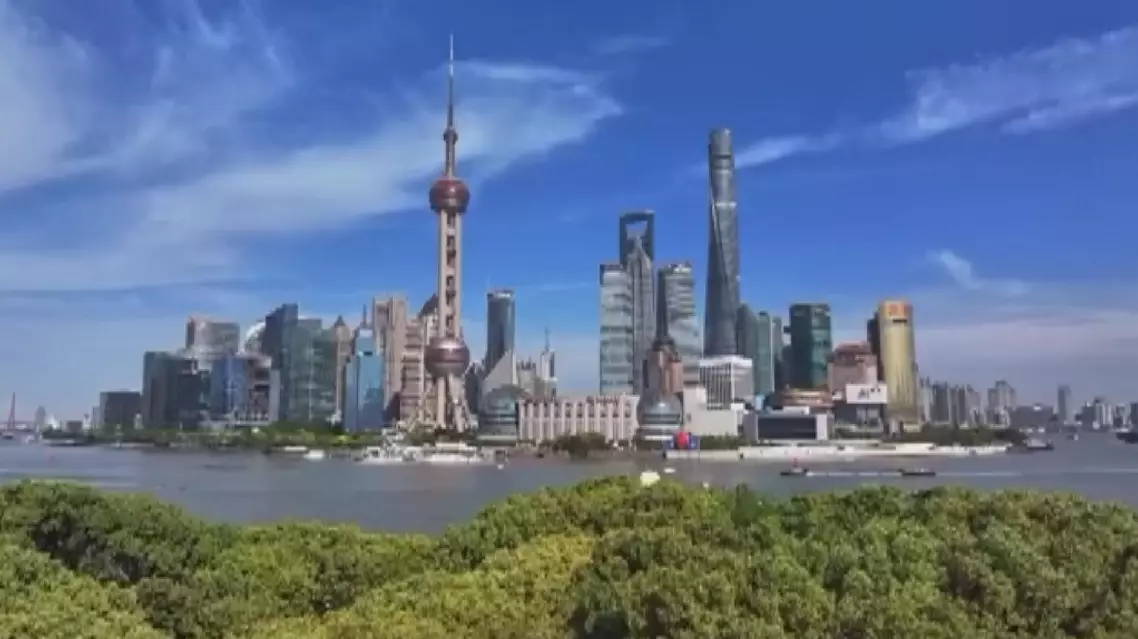
China's foreign trade maintains upward trajectory