Chinese scientists have uncovered evidence of a "super-reduced" state in the moon's mantle through analysis of samples collected by the Chang'e-6 mission from the lunar far side, according to the China National Space Administration's Lunar Exploration and Space Engineering Center.
Published in the journal Nature Communications, the study shows the mantle material beneath Chang'e-6's landing site is not only drier and more depleted than samples from the moon's near side, but also exists in a more chemically reduced state, meaning elements tend to exist in lower oxidation states.
"It either hasn't undergone oxidation, or may have become more reduced later, possibly due to some major impact event. The redox state of planetary bodies has always been a key indicator for understanding their internal processes and surface habitability," said Yang Wei, a researcher at the Institute of Geology and Geophysics of the Chinese Academy of Sciences. The moon's structure consists of a crust, mantle and core, with the 1,000-km-thick mantle accounting for over half its volume. As the source of lunar magma and volcanic activity, the mantle plays a key role in the moon's evolution.
The new findings confirm that significant differences between the lunar near side and far side extend deep into the mantle.
"Previously we could only observe the differences between the near side and far side through images. But were these differences just superficial or did they extend hundreds of kilometers deep into the mantle? At least our current results prove that even at depths of several hundred kilometers, differences between the near side and far side persist. This is our new discovery," Yang said.
The discovery provides new insights into the moon's formation and evolution while offering guidance for future lunar resource assessment and utilization. The research marks both a localized scientific breakthrough and has broader implications for planetary science, researchers said.
In 2024, Chang'e-6 made history by bringing 1,935.3 grams of lunar far-side samples back to Earth. These samples were collected from the South Pole-Aitken (SPA) Basin, the largest, deepest, and oldest basin on the moon, which provided a rare opportunity to clarify the compositional differences between the near and far sides and to unravel the long-standing mystery of their asymmetry.
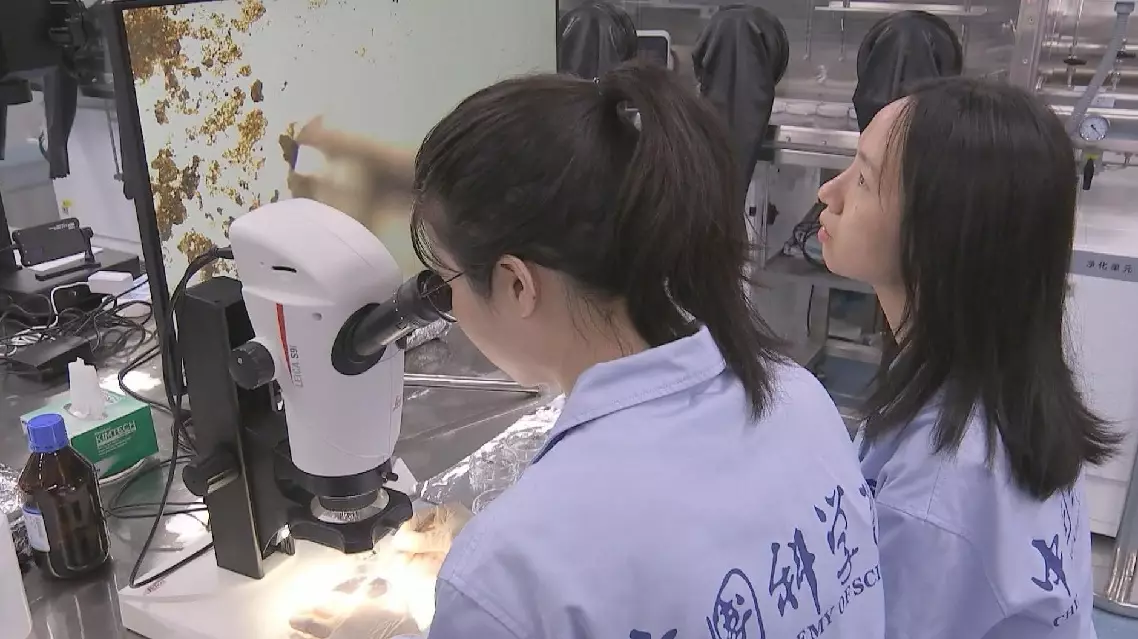
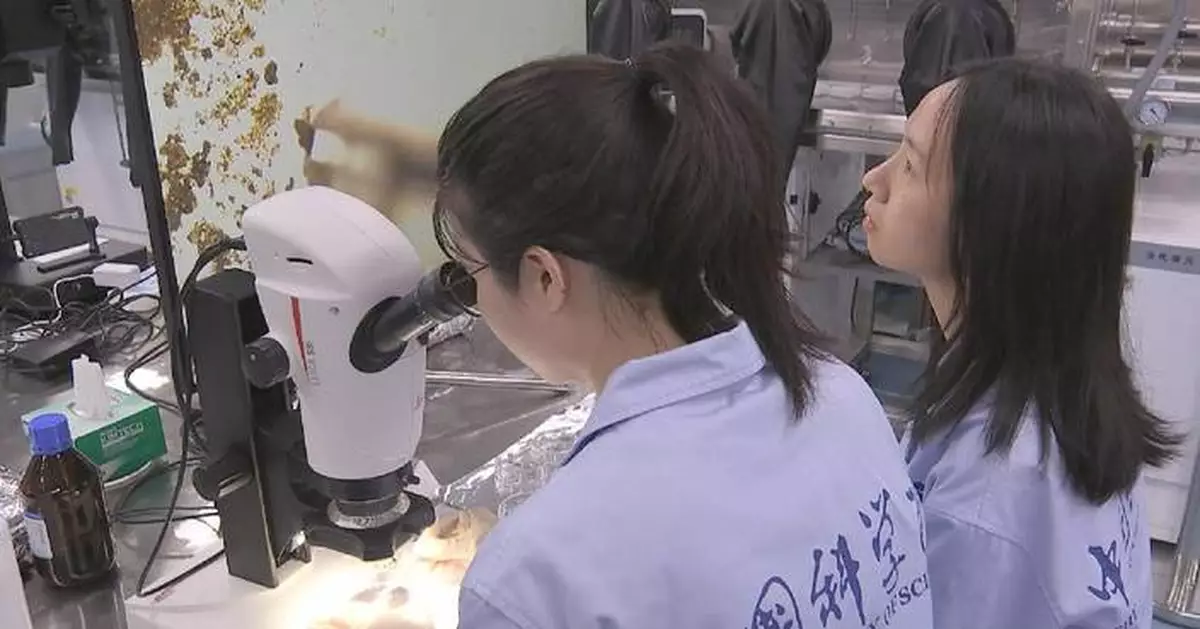
New findings from Chang'e-6 lunar samples reveal moon's "super-reduced" mantle
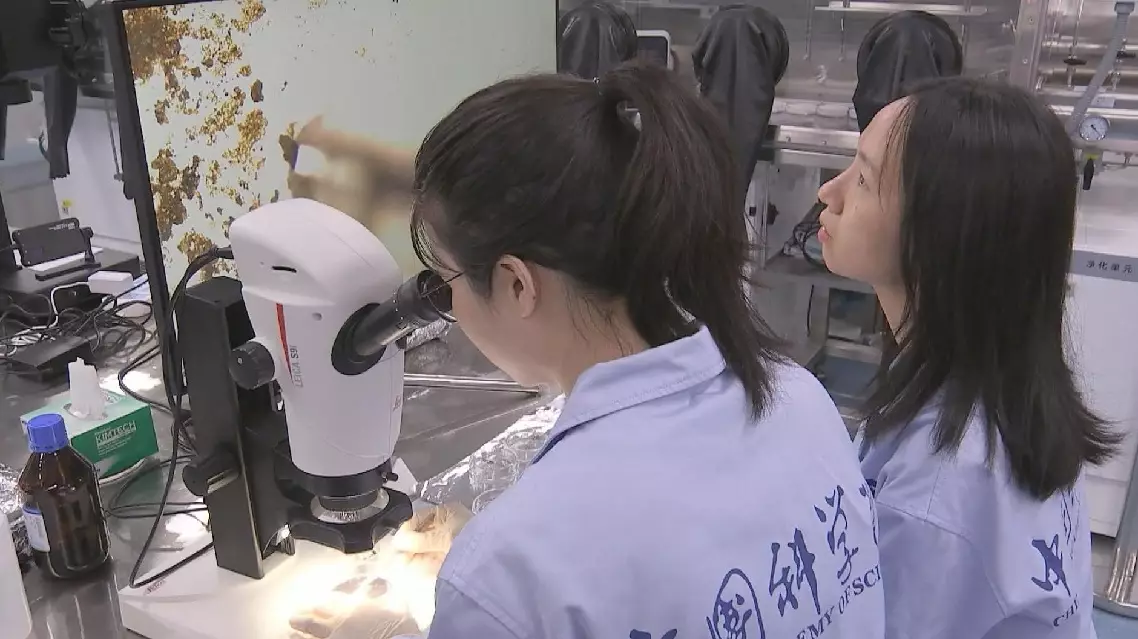
New findings from Chang'e-6 lunar samples reveal moon's "super-reduced" mantle