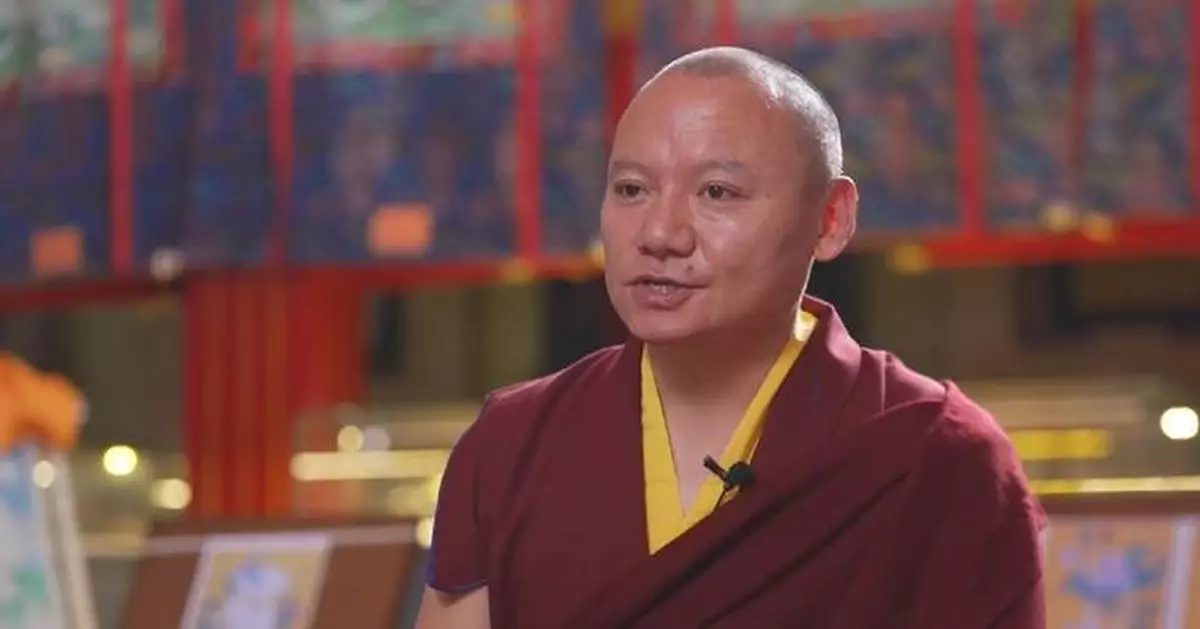
Balog Rinpoche, a multi-talented Living Buddha, has been forging his own paths to carry on Tibetan Buddhism and promote cultural exchange among ethnic groups.
Born in Lhasa in 1982, Balog Rinpoche was identified as the tulku -- a reincarnated Living Buddha -- of Yangrigar Monastery in Maizhokunggar County at the age of eight.
Growing up in Norbulingka, dubbed Lhasa's "Summer Palace," he not only studied Buddhist doctrines but also learned Mandarin, English, painting, music, and other subjects from a young age, as he recalled in a recent interview with China Global Television Network (CGTN).
"Unlike many tulkus who grew up in the monasteries, I benefited from a combination of family education and academic schooling. In addition to studying Buddhist scriptures, I also took language and painting classes and participated in many extracurricular activities so that my whole personality and mind are different from those of monks living in monasteries," he said.
As the 42nd-generation inheritor of the Songs of Milarepa, which was listed as a national-level intangible cultural heritage (ICH) in 2021, Balog Rinpoche began learning and preserving this item in 2004.
Milarepa was one of the most influential figures of the Kagyu School of Tibetan Buddhism. His oral teachings of Buddhist doctrines were passed down and collected by his followers as the Songs of Milarepa, serving as a valuable resource for understanding Buddhist philosophy.
With an aim to better introduce this ICH treasure to the world, Balog Rinpoche formed a band.
"In 2014, in an intangible cultural heritage report and performance was held at the Xizang Autonomous [Region] Mass Arts Venter, and because my solo singing seemed somewhat monotonous, the Dharma Band was temporarily formed. The performance was well received by attending officials, experts and audience. Seeing how people connected with our band version of Milarepa Song, I realized that this could be a good way to keep this tradition alive and share it widely," he said.
Balog Rinpoche also emphasized the flourishing development of Tibetan Buddhism under China's supportive religious policies.
"As we know, Master Atisha once traveled to Niedang, where the Xizang Buddhism University is located, and the glory of the post-dissemination period of Tibetan Buddhism began. A thousand years later, Niedang has ushered a brand-new dissemination, again guided by the Party's ethnic and religious policies. Over the past 14 years, with teachers from different Buddhist traditions and faculty members working hand in hand, the university has cultivated batches of outstanding monks and nuns," he said.
Noting the growing interest in Tibetan Buddhism among people from different ethnic groups, the tulku shared his plans to establish a new center for both cultural sharing and furthering Buddhist research.
"I've planned to establish Milarepa Han-Tibetan cultural exchange center which is being applied for and prepared. Under this center, my students and I can carry out projects such as the Milarepa museum, translation of ancient Buddhist scriptures, Tangka study trips, and the songs of Milarepa guru performances, so as to promote ethnic exchanges, communication integration and the protection of inheritance of intangible cultural heritage," he said.
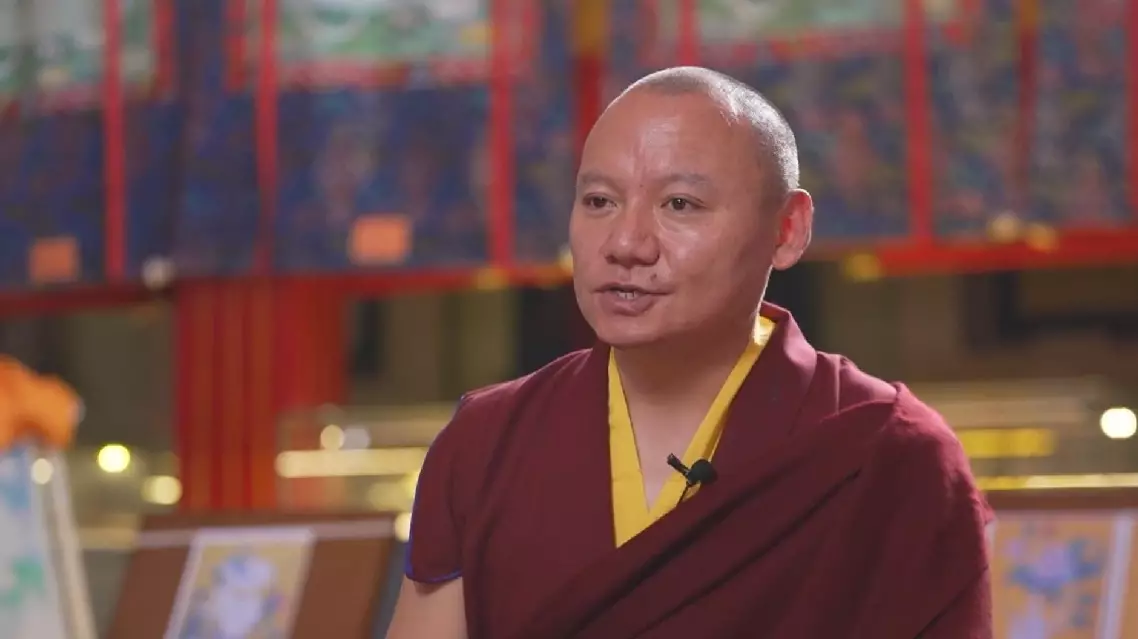
Living Buddha paves new paths to carry on Tibetan Buddhism, promote exchanges
Living Buddha paves new paths to carry on Tibetan Buddhism, promote exchanges