Local authorities in northwest China's Gansu Province have intensified efforts to reopen blocked road sections, resettle affected residents, and repair damaged infrastructure, following rain-triggered mountain torrents that hit parts of the provincial capital, Lanzhou.
Torrential rain began pounding Yuzhong, which is under the jurisdiction of Lanzhou, and other areas of Lanzhou on Thursday evening, with the maximum precipitation reaching 220.2 millimeters by noon on Friday. Several townships in Yuzhong have been seriously affected.
A total of eight local townships have been affected by the mountain torrents, with severe damage to roads, power supplies, telecommunications, and other facilities. The mountain torrents have also flooded farmlands and damaged houses, according to local authorities.
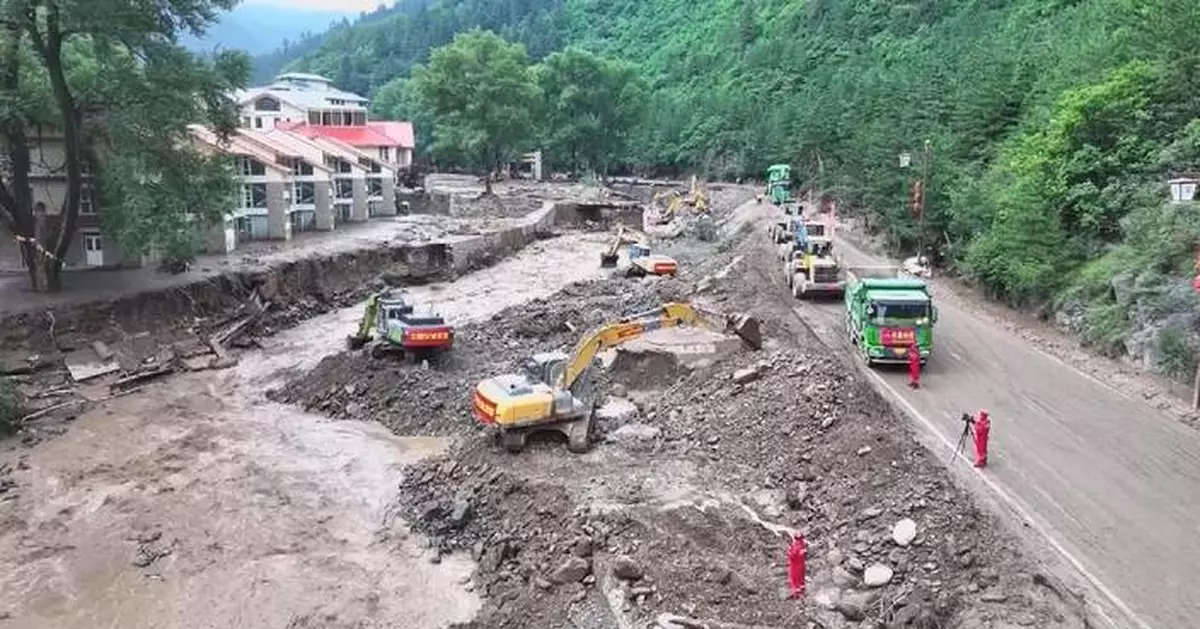
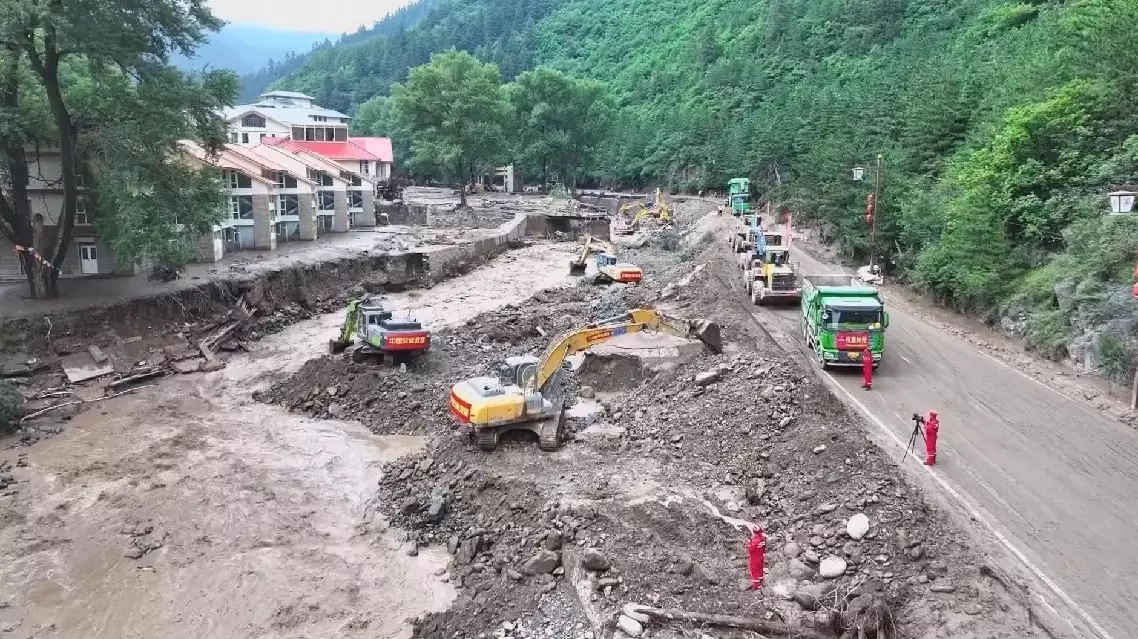
The rain-triggered mountain torrents had eroded the road surface, shaking the foundation of a nearly 200-meter section on the Yuzhong part of the provincial highway 104, which is the fastest route from the county seat of Yuzhong to Mapo Township, one of the most severely affected areas. Restoring this road section is crucial for improving the efficiency of subsequent rescue operations, so local authorities rolled out efforts to reopen the road as soon as possible.
Multiple excavators have been deployed to clear debris from the riverbed, preventing blockages from further rain, while also filling the ruined roadbed with gravel for reinforcement. As of around 10:00 on Saturday, 26 landslides have been cleared along the Yuzhong section, and 25,500 cubic meters of silt have been removed.
At the same time, the resettlement and relief efforts are provided to the affected residents. They can choose to stay with relatives or friends, or to settle down at the temporary relocation site provided by the government.
So far, local authorities have designated 54 hotels to accommodate evacuated residents, while setting up 14 temporary settlements at schools and village committees. A total of 9,828 people in Yuzhong have been relocated to safe areas, and 443 people trapped in the area have been rescued.
A total of 170 residents, including 20 children, have settled at the relocation site at Yuzhong No. 3 Middle School, which is located near the disaster-stricken Maliantan Village in Mapo.
The school is located directly opposite the Second Hospital of Yuzhong County, making it quite convenient for medical workers to assist the residents.
The local government has also arranged for over 70 volunteers to help residents' lives at the resettlement site. Their work includes hygiene maintenance, supply distribution, and personnel registration.
The Gansu Provincial Red Cross Society delivered 200 aid boxes to the resettlement site, which included blankets, chopsticks, spoons, soap, and toothpaste.
The Second Hospital has also dispatched four doctors to provide medical consultation services for residents at the resettlement site, offering common medications for conditions such as diarrhea and hypertension.
Relevant departments are also working around the clock to restore electricity and telecommunication services. As of 22:00 on Friday, two of the seven power supply lines that were damaged by the rainfall have been repaired.
"Through mutual power supply and transfer, three 10-kilovolt lines and 94 transformer stations have been brought into operation, restoring power supply to 9,500 households in 16 administrative villages," said Wang Shaolong, deputy manager of the State Grid Lanzhou Power Supply Company.
Local authorities said that they would strive to restore full power and telecommunication services by Sunday.
Local authorities strengthen relief efforts in Gansu after deadly mountain torrents