Skip to Content Facebook Feature Image

Chinese filmmakers reveal challenges in bringing heroic WWII story to screen

China

Chinese filmmakers reveal challenges in bringing heroic WWII story to screen
China

China

Chinese filmmakers reveal challenges in bringing heroic WWII story to screen

2025-08-10 02:05 Last Updated At:15:27

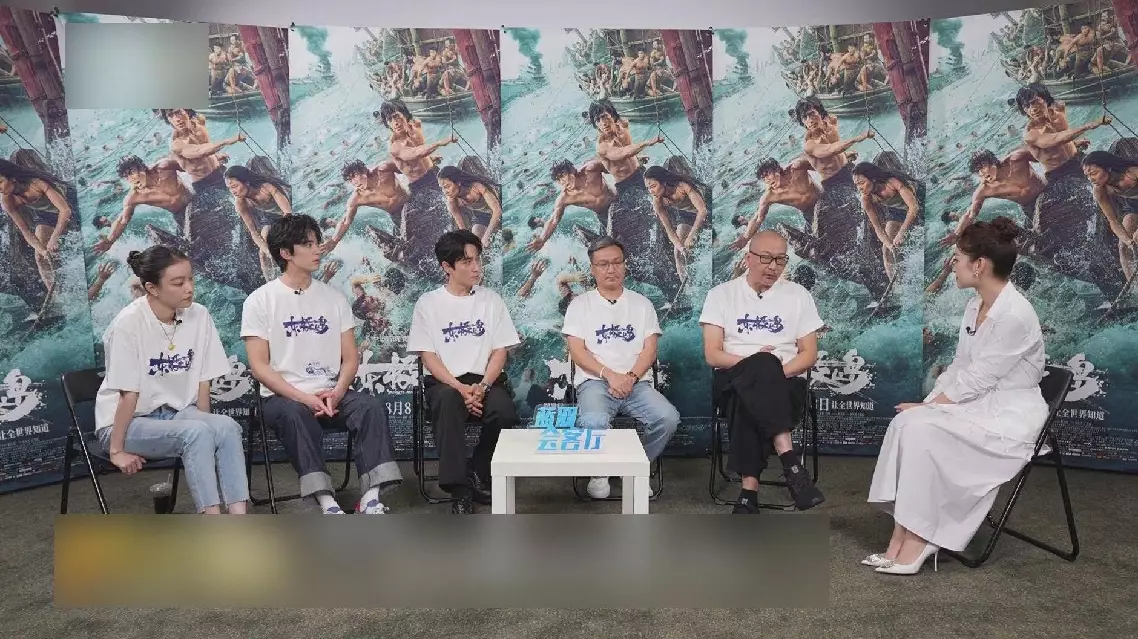
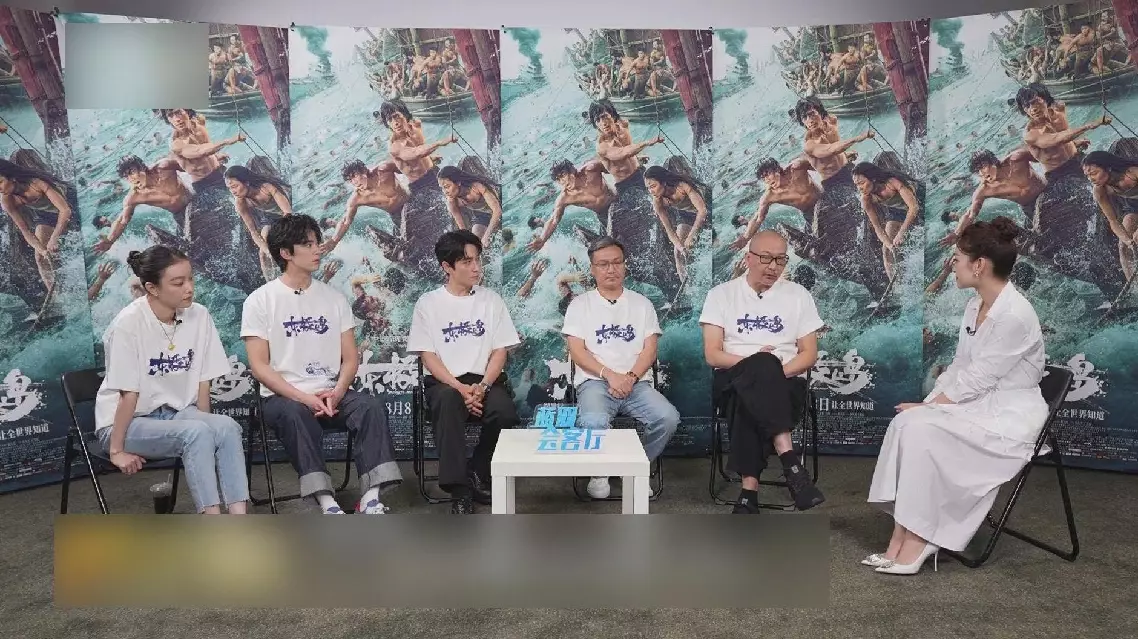
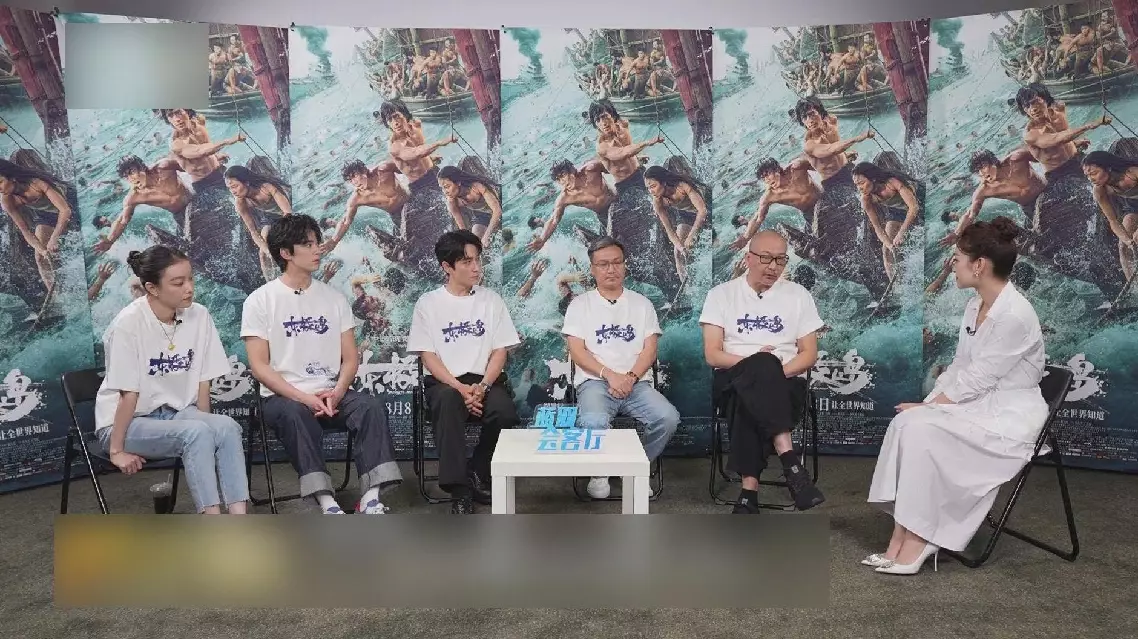
Guan Hu and Fei Zhenxiang, who co-directed a Chinese film based on the 1942 sinking of the Japanese ship Lisbon Maru, have revealed the extraordinary efforts behind bringing one of China's most daring wartime rescue stories, "Dongji Rescue," to the big screen.

The filmmakers faced unprecedented technical challenges while striving to preserve a little-known chapter of history that showcases Chinese courage and humanitarian spirit.

The war film, released on Friday, tells the story of how Chinese fishermen defied gunfire to rescue over 300 British captives from the Japanese ship Lisbon Maru in 1942. Its release also The film's release also commemorates the 80th anniversary of the victory in the Chinese People's War of Resistance Against Japanese Aggression and the World Anti-Fascist War.

The production's massive scale created unprecedented challenges in Chinese cinema, involving replica sets built on an actual island location, open-sea filming and a full-scale reconstruction of the Lisbon Maru. Directors Guan and Fei led the creative team through six years of preparation and 200 days of filming.

"Very few people actually know about this historical event. Film, as a medium, can help more people learn this - one that fully embodies the Chinese spirit of courage, compassion and our nation's sense of responsibility. At the same time, as this part of history is being rewritten by the Japanese side, we feel it's our duty to present this account to both Chinese and global audiences - to show the world this demonstration of Chinese bravery and moral responsibility," said Guan.

The directors detailed the painstaking process of balancing historical accuracy with cinematic storytelling.

"Historical accuracy was our foundation, but as a feature film, it demanded characters, narrative depth and dramatic tension - that's why we went through about 21 script revisions. Technically, the challenges were immense: recreating the fishermen's authentic lives, executing complex underwater and surface sequences, and rebuilding the island setting. But these very technical hurdles became my driving motivation - the challenge of maintaining historical truth while achieving cinematic excellence was irresistible. Ultimately, I wanted to create a film that feels contemporary and resonates with modern audiences," said Guan.

Fei described the production's logistical hurdles.

"We chose what seemed like an impossible place to build an entire fishing village and the final result is truly remarkable. It's a complete island, not a peninsula, meaning everything had to be transported by sea. This naturally tripled our costs and time requirements at minimum," said Fei.

"This has likely set a new benchmark in Chinese filmmaking, and nothing like it exists in our film history, with over 40 percent of the movie shot entirely underwater. When I consulted numerous senior, even top-tier international visual effects supervisors, they all admitted they'd never attempted such a project either. That's when my excitement truly ignited: Could we create a purely Chinese film that would leave the global audience in awe?" said Fei.
Chinese filmmakers reveal challenges in bringing heroic WWII story to screen
Chinese filmmakers reveal challenges in bringing heroic WWII story to screen
Chinese filmmakers reveal challenges in bringing heroic WWII story to screen

Chinese filmmakers reveal challenges in bringing heroic WWII story to screen

Chinese filmmakers reveal challenges in bringing heroic WWII story to screen

Chinese filmmakers reveal challenges in bringing heroic WWII story to screen

A former television host from Taiwan, Zhai Xuan, has made a pivotal decision to leave mainstream broadcasting in order to create content that provides a better understanding of the Chinese mainland and cross-strait relations.

Zhai, a seasoned television host with over a decade of experience in Taiwan's media landscape, recently addressed an audience at an event in Beijing, where she revealed her complete transition into independent online media.

In her remarks, she articulated her aspiration to bridge what she perceives as a significant information gap between audiences on both sides of the Strait, highlighting her commitment to fostering a deeper understanding and connection through her new endeavors.

"I was really surprised by all the fake news. There were stories saying people on the mainland can't afford tea eggs or that they live in mud houses and in Taiwan, this was the main information many people received," said Zhai.

Zhai said she initially began producing online videos to challenge such perceptions while continuing her work as a television host.

In April 2025, she travelled to the mainland with her father to fulfill her late grandfather's wish to return to his hometown. The trip, which reunited family members separated since 1949, was recorded in a video series titled "Journey to Find Our Roots", drawing attention from viewers in both Taiwan and the mainland.

"Many people in Taiwan told me that after watching, they wanted to apply for a mainland travel permit immediately and go looking for their relatives. Some had long forgotten these things, but after seeing my story, they began thinking about their hometowns and family members they had never met and decided to search for their roots," Zhai shared her story at the event.

By mid-2025, Zhai said she began to feel increasing pressure amid rising political tensions and a tightening atmosphere around cross-Strait exchanges in Taiwan.

After more than 12 years in the industry, Zhai resigned from her position, believing it was the right thing to do.

"At that moment, I felt this was a major issue,not just for me, but for Chinese people on both sides of the Strait. If I backed down then, I wouldn’t be standing on the right side," said Zhai.

Since leaving television, Zhai has broadened her online programming to encompass a range of daily-life topics, including practical guidance on applying for a mainland travel permit and using commonly employed mobile applications, in addition to content that delves into historical memory and cultural connections across the Strait.

As the debate over cross-Strait relations continues in Taiwan, Zhai said she remains committed to her current path.

Former Taiwan TV host bridges cross-Strait divide via online media

Former Taiwan TV host bridges cross-Strait divide via online media

Recommended Articles