Tongxiang, a county-level city in east China's Zhejiang Province, exemplifies the county's "lucid waters and lush mountains" vision, combining smart agriculture for higher yields and incentives for villagers to jointly build livable villages, delivering both economic and environmental gains.
Smart farming is taking root in Tongxiang. An example is the utilization of drones for fertilizing farmland, enhancing agricultural production efficiency while also reducing the labor intensity for farmers.
"The drones can finish one pack in just two minutes. If I do it manually, I have to carry the pack back and forth. I don't even want to think about it anymore," said Xia Mingdao, a farmer.
Meanwhile, a 24/7 smart irrigation system significantly boosts crop yields in the area.
"We're really grateful for the irrigation upgrade. It's so much easier and more efficient now," Xia said.
Since 2011, China has been working to modernize its agriculture, introducing smart technologies such as soil sensors and GPS-guided tractors to conserve water and enhance production. To date, these efforts have upgraded over 66 million hectares of farmland.
"In the past, we harvested about 450 to 550 kilos per mu (about 6,700 to 8,200 kilos per hectare). Now we can get up to 750 kilos," said Zhang Songqing, party secretary of Xiaoyuantou Village of Tongxiang.
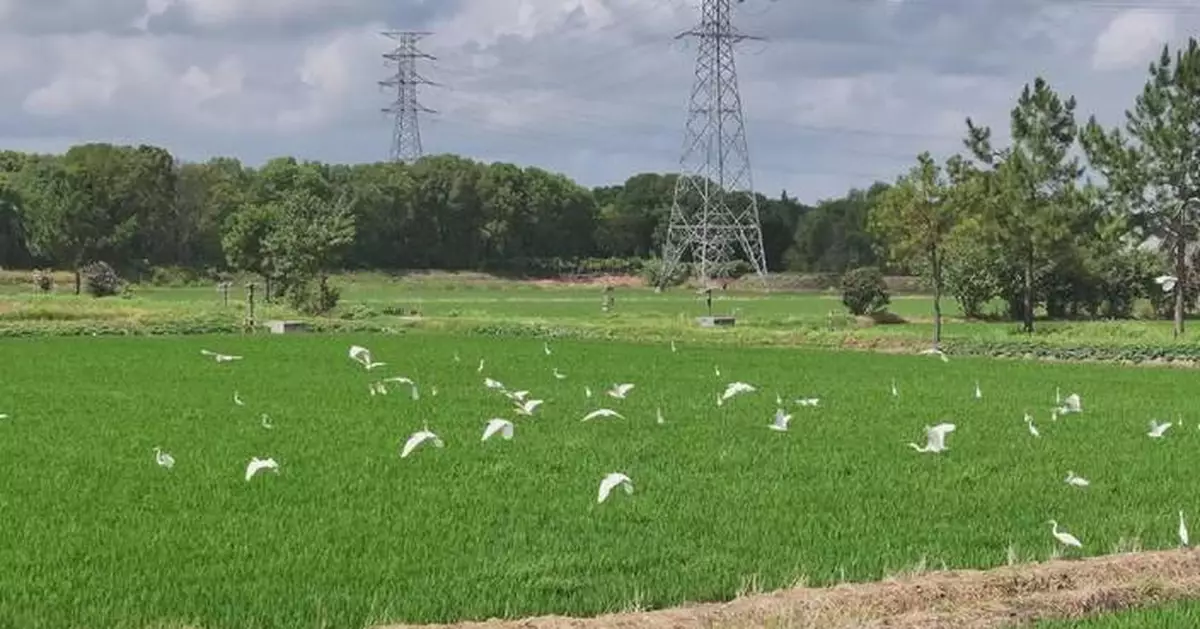
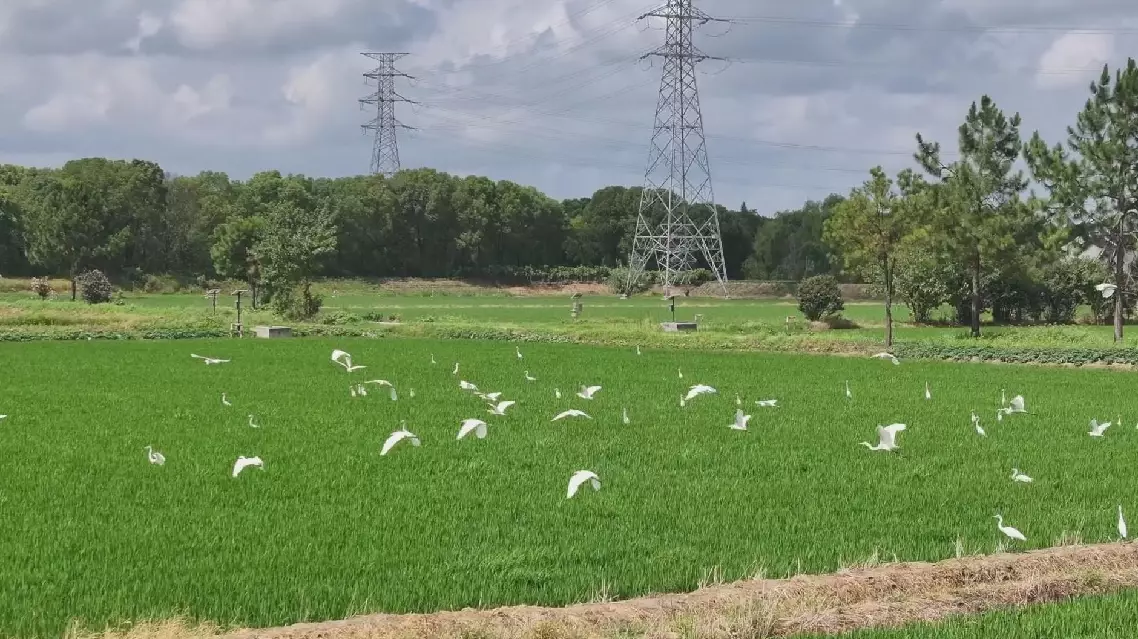
For local villagers, the environment matters as much as the harvest. Rice fields are not just for food anymore; they have become a part of daily life and a scenic backdrop.
"People say it's not just about getting richer -- it's about living better, too. So, while boosting yields, we also used spare land to build scenic rice fields, giving locals a nice place to unwind after dinner," Zhang said.
To maintain its green and clean environment, local authorities have implemented a points system that rewards villagers for everyday eco-friendly habits. These habits include garbage sorting, maintaining cleanliness around their homes, and properly treating water from daily usage.
This initiative is part of China's rural credit system, which incentivizes positive behavior.
"At first, nobody wanted to bother. But then, everyone started doing it on their own -- because if others want to be recognized as 'excellent,' so do I," said Ni Yinfa, points program coordinator of Yima Village.
The points are not just for show, as villagers can exchange them for daily essentials. Additionally, children who volunteer around the village can use their points to acquire toys.
The welcoming environment in Tongxiang has drawn many who had previously left for city work back to their hometown, including Lu Yueping, the owner of a cafe in a village.
"Live out there got too intense. I've always loved motorbikes. Riding with friends in nature feels freer than in the city. So, I decided to also start a business here. I can come back whenever I want. In the future, I hope our village becomes more diverse and full of life," Lu said.
The story of Tongxiang is featured in the special series "Discovering Green China," produced by China Global Television Network (CGTN) and set to air on Sunday.
Twenty years on, China's "lucid waters and lush mountains" vision continues to shape a greener future. In the series, CGTN reporters travel across China to see how the concept that "lucid waters and lush mountains are invaluable assets" has brought changes to landscapes and livelihoods, inspiring the world.
Zhejiang county pioneers China's green push with smart tech, rewarding mechanism