Skip to Content Facebook Feature Image

Experts push for global efforts to draw up unified robot safety standards

China

China

China

Experts push for global efforts to draw up unified robot safety standards

2025-08-11 17:06 Last Updated At:20:07

Experts attending the 2025 World Robot Conference (WRC) in Beijing have highlighted the need for a joint global endeavor to guarantee the safety of humanoid robots before they are broadly implemented across society and stressed enhanced collaboration in advancing innovation in the robotics sector.

The five-day conference, which kicked off in the Chinese capital on Friday, has shone the spotlight on future development trends of embodied intelligent robots, focusing on fields such as cognition, decision-making and safety.

During an interview with the China Global Television Network (CGTN), Jeff Burnstein, president of the Association for Advancing Automation, emphasized the importance of global cooperation on establishing clear safety standards for humanoid robots prior to their extensive deployment in homes and workplaces worldwide.

"Hopefully we can work together on agenda setting through organizations like the International Standards Organization (ISO). I think it's too important, safety is too important to let that kind of competition [have an] impact. Think about what a humanoid might be capable of if it's in your home and it falls down on your child or your grandmother, you want to make sure that they're safe before they're introduced into the home environment. The same is true in a factory or a warehouse, and whether it's in China or it's in the United States or in Europe or anywhere. So, I really believe that countries will have to come together to make sure that we safeguard these technologies," Burnstein said.

Other attendees have also called on the importance of partnering with other nations to push forward development in this fast-growing industry.

Mohammed Al Shamsi, secretary of the Robotics and Automation Society of the United Arab Emirates (UAE), underlined the country's focus on robotics innovation and said they are looking to work closely with China.

He said this commitment is demonstrated through ambitious targets in the UAE, such as an effort in the city of Dubai to transition 25 percent of vehicles to autonomous models by 2030, as well as fostering collaborations in research centers and educational initiatives with China.

"In 2030, [in Dubai] they're planning to transfer 25 percent of the vehicles should be moved to be autonomous vehicles. So, there is a lot of technology or a lot of area for development and to utilize robotics in this area. The UAE has a lot of investment, and I think China also is playing a big role in robotics and automation. Now, I think with the collaboration between China and the UAE, especially in the research centers and education, can help the knowledge transfer and transfer of the technology to the UAE, and to help the UAE to achieve this vision," he said.

Experts push for global efforts to draw up unified robot safety standards

Experts push for global efforts to draw up unified robot safety standards

Experts push for global efforts to draw up unified robot safety standards


Experts push for global efforts to draw up unified robot safety standards

Experts push for global efforts to draw up unified robot safety standards
Experts push for global efforts to draw up unified robot safety standards

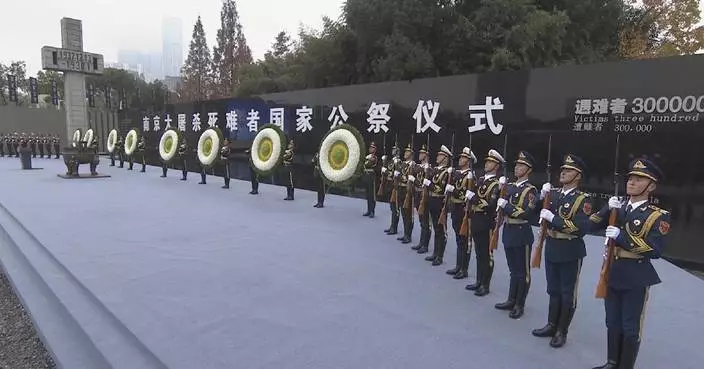
A Canadian historian has shed light on how the horrors of the Nanjing Massacre were largely forgotten in North America, making it susceptible for distortion and denial of crucial facts.

In an interview with China Media Group (CMG), David Wright, an associate professor at the Department of History in the University of Calgary's Faculty of Arts, emphasized that the truth of the massacre in Nanjing is beyond dispute, yet several generations later, the West has not adequately preserved the memories of this history.

"My mother's and father's generation, they were alive when the Rape of Nanking happened. They were horrified to listen to reports on radios. And especially after the war was over, when the Tokyo war crime trials began, a lot more detail about the Rape of Nanking came out. In North America, the wartime generation remembered it and remembered it well. But then the next generation, my generation, baby boomers, that abhorrence was not passed on to us adequately well," Wright said.

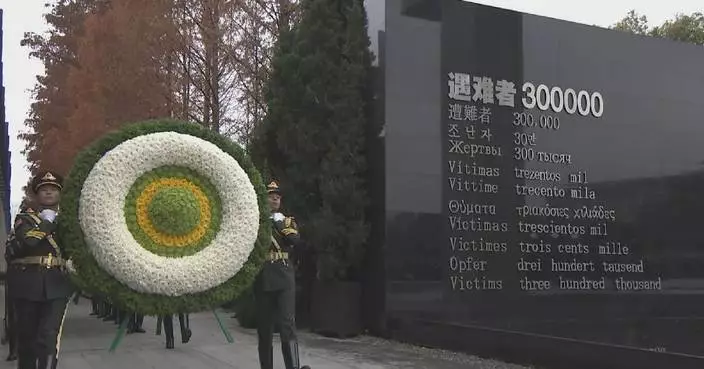
The notorious Nanjing Massacre by Japanese troops led to over 300,000 deaths in 1937. According to the historian, the accuracy of this figure is supported by a robust body of evidence, but Japan's right-wing forces have nonetheless attempted to deny the number of victims as well as the severity of the crimes. Often, these claims rely on the absence of physical remains of the victims.

"They're dumped into the river. They're burned, a lot of them. You cannot find the remains. So they think they can find one or two errors you've made about photographs and from that conclude that the entire Rape of Nanking never happened. It's just nonsense. There is abundant evidence that something very, very terrible did happen in Nanjing," Wright said.

"And the people who deny it, I mean, historically they are nihilists. For them, history is all about image, not about fact. And if that thing really did happen in Nanjing, that's an inconvenient fact and they want to try to erase it by denying it," he added.

The Nanjing Massacre occurred after Japanese troops captured the then-Chinese capital on Dec. 13, 1937. Over six weeks, they killed approximately 300,000 Chinese civilians and unarmed soldiers in one of the most barbaric episodes of World War II.

Truth of Nanjing Massacre allows no distortion: Canadian historian

Truth of Nanjing Massacre allows no distortion: Canadian historian

Truth of Nanjing Massacre allows no distortion: Canadian historian

Truth of Nanjing Massacre allows no distortion: Canadian historian

Recommended Articles