Skip to Content Facebook Feature Image

Soluna Expands Partnership with Galaxy Digital to Deploy 48 MW at Project Kati

News

Soluna Expands Partnership with Galaxy Digital to Deploy 48 MW at Project Kati
News

News

Soluna Expands Partnership with Galaxy Digital to Deploy 48 MW at Project Kati

2025-08-12 19:29 Last Updated At:19:51

ALBANY, N.Y.--(BUSINESS WIRE)--Aug 12, 2025--

Soluna Holdings, Inc. (“Soluna” or the “Company”), (NASDAQ: SLNH), a developer of green data centers for intensive computing applications, including Bitcoin mining and AI, announced today an expanded partnership with Galaxy Digital Inc. (“Galaxy”) (NASDAQ/TSX: GLXY), a global leader in digital assets and datacenter infrastructure. Under the new agreement, Galaxy will deploy proprietary bitcoin mining operations – previously housed at their Helios datacenter campus in the Texas panhandle – at a 48 MW expansion of Soluna’s Project Kati 1 in Texas. The expansion brings Project Kati 1 to its full capacity of 83 MW and, having cleared tax abatement approvals, construction is expected to launch before the end of August.

This press release features multimedia. View the full release here: https://www.businesswire.com/news/home/20250812900775/en/

Soluna previously entered into a $5 million loan facility with Galaxy in Q1 2025. With this new deployment, the partnership extends into an operational collaboration.

Project Kati 1 is currently expected to be operational in Q1 2026. This expansion marks Soluna’s largest deployment of a single partner to date, following a recent 30 MW rollout with another Top-Tier Bitcoin miner. Galaxy will be the first customer to begin mining operations at Project Kati 1 once construction is complete.

“As demand from hyperscaler miners continues to surge, Soluna is scaling to meet the moment,” said John Belizaire, CEO of Soluna. “This partnership with Galaxy represents our largest MW deployment to date and underscores how our modular approach allows us to deliver efficient, renewable-powered infrastructure at scale. We’re proud to deepen our relationship with Galaxy and help power the next wave of computing.”

Key Deal overview:

“As we transition our Helios campus to an AI and high-performance computing data center, we’re pleased to relocate a portion of our existing Bitcoin mining assets to Soluna to manage,” said Sam Kiernan, Business Development Lead at Galaxy.

The company expects that this expansion will bring Soluna’s operating capacity to 206 MW once fully deployed.

For more information, visit www.solunacomputing.com

Soluna’s glossary of terms can be found here.

Safe Harbor Statement

This announcement contains forward-looking statements. These statements are made under the “safe harbor” provisions of the U.S. Private Securities Litigation Reform Act of 1995. These forward-looking statements can be identified by terminology such as “will,” “expects,” “anticipates,” “future,” “intends,” “plans,” “believes,” “estimates,” “confident” and similar statements. Other examples of forward-looking statements may include, but are not limited to, statements of Soluna’s plans and objectives, including with respect to the development of Project Kati and our expectations with respect to the amount of renewable energy capacity Project Kati will deliver. Soluna may also make written or oral forward-looking statements in its periodic reports to the U.S. Securities and Exchange Commission (“SEC”), in its annual report to shareholders, in press releases and other written materials, and in oral statements made by its officers, directors, or employees to third parties. Statements that are not historical facts, including but not limited to statements about Soluna’s beliefs and expectations, are forward-looking statements. Forward-looking statements involve inherent risks and uncertainties, further information regarding which is included in the Company’s filings with the SEC. All information provided in this press release is as of the date of the press release, and Soluna Holdings, Inc. undertakes no duty to update such information, except as required under applicable law.

About Soluna Holdings, Inc. (Nasdaq: SLNH)

Soluna is on a mission to make renewable energy a global superpower, using computing as a catalyst. The company designs, develops, and operates digital infrastructure that transforms surplus renewable energy into global computing resources. Soluna’s pioneering data centers are strategically co-located with wind, solar, or hydroelectric power plants to support high-performance computing applications, including Bitcoin Mining, Generative AI, and other compute-intensive applications. Soluna’s proprietary software MaestroOS(™) helps energize a greener grid while delivering cost-effective and sustainable computing solutions and superior returns. To learn more, visit solunacomputing.com and follow us on:

LinkedIn: https://www.linkedin.com/company/solunaholdings/

X (formerly Twitter): x.com/solunaholdings

YouTube: youtube.com/c/solunacomputing

Newsletter: bit.ly/solunasubscribe

Resource Center: solunacomputing.com/resources

Soluna regularly posts important information on its website and encourages investors and potential investors to consult the Soluna investor relations and investor resources sections of its website regularly.

About Galaxy

Galaxy Digital Inc. (NASDAQ/TSX: GLXY) is a global leader in digital assets and data center infrastructure, delivering solutions that accelerate progress in finance and artificial intelligence. Galaxy’s digital assets platform offers institutional access to trading, advisory, asset management, staking, self-custody, and tokenization technology. In addition, Galaxy invests in and operates cutting-edge data center infrastructure to power AI and high-performance computing, meeting the growing demand for scalable energy and compute solutions in the U.S. Galaxy is headquartered in New York City, with offices across North America, Europe, the Middle East, and Asia.

Soluna Expands Partnership with Galaxy Digital to Deploy 48 MW at Project Kati
Soluna Expands Partnership with Galaxy Digital to Deploy 48 MW at Project Kati
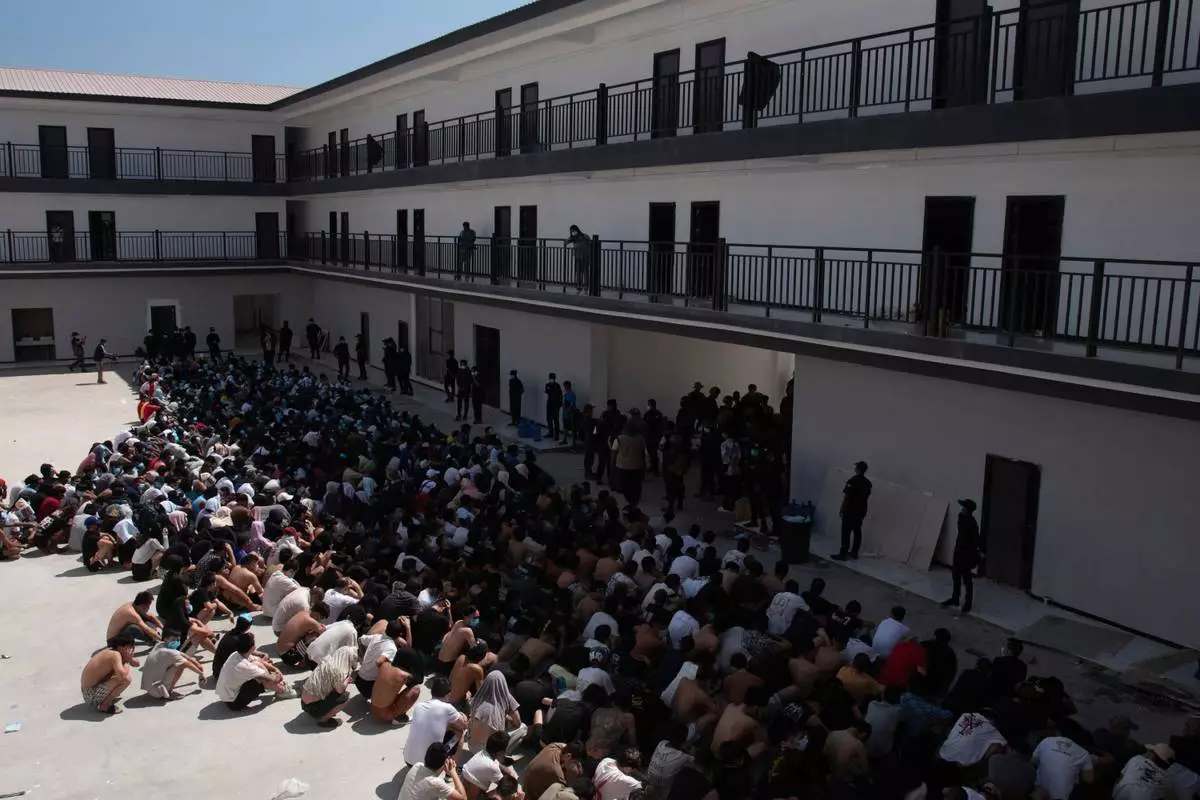
BANGKOK (AP) — Thailand on Thursday helped launch a global effort to fight the spread of online scams that include criminal enterprises based largely in Southeast Asia estimated to bilk billions of dollars annually from victims around the world.

Thailand's Ministry of Foreign Affairs and the United Nations Office on Drugs and Crime hosted a conference in Bangkok on Wednesday and Thursday culminating in the announcement of the new initiative called the Global Partnership Against Online Scams.

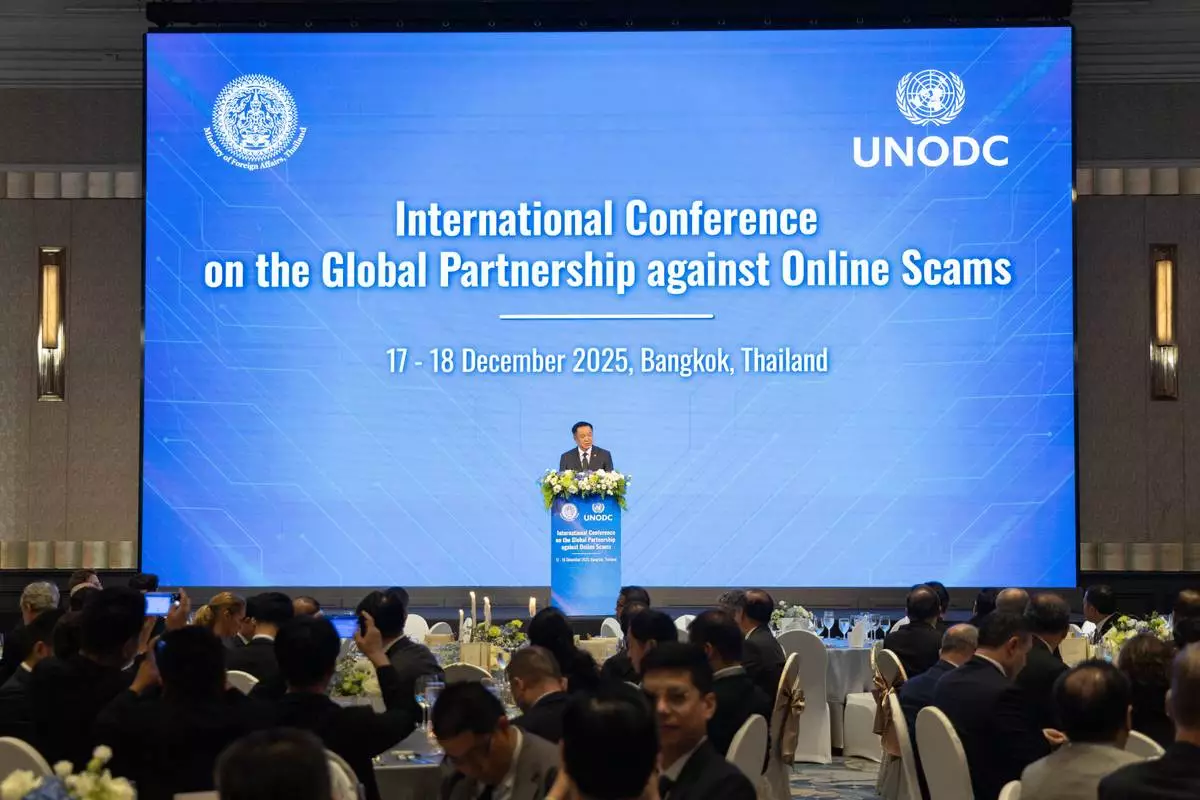
Thai Prime Minister Anutin Charnvirakul said in his keynote speech Wednesday that online scams “reveal a deeper problem — a collective vulnerability that no country can address alone.”

The partnership agreement signed by conference participants Thailand, Bangladesh, Nepal, Peru and the United Arab Emirates will include political commitment, law enforcement, victim protection and public awareness and cross-border collaboration, a statement said.

The conference received assistance from the private sector including internet giants Meta and TikTok.

Meta, the corporate owner of Facebook, Instagram and WhatsApp, presented a threat report underlining the increased use of artificial intelligence by scam networks and protocols the company is using in its attempts to stop scams on its social media platforms.

Social media application TikTok signed on to the conference's closing statement, becoming one of the first private sector members of the partnership. The company on Thursday also said it had signed agreements with major investors to form a new TikTok U.S. joint venture.

TikTok, which primarily focuses on short-form videos is one of the world's most popular social media platforms but has faced challenges from various governments including the U.S. over its Chinese ownership, the European Union over transparency breaches, Canada regarding child protection protocols and data sharing in Indonesia.

Scam centers, which extort money from victims online through bogus investment schemes and faked loved interests, have proliferated across Southeast Asia. Scam victims lost between $18 billion and $37 billion in 2023, the UNODC estimates.

The importance of private partnerships in anti-scam initiatives was stressed throughout the two-day conference in Thailand's capital, which was attended by more than 300 participants from nearly 60 countries.

Brian Hanley, Asia-Pacific director of the Global Anti-Scam Alliance, which TikTok joined this month, explained it will be harder to combat criminal networks without “all the major stakeholders at the table."

“Scams are exploiting, not only transnational boundaries, but also the seams across various platforms from banks, telcos, to social media platforms,” Hanley said.

The alliance describes itself as a collective effort to combat the scam problem by governments, law enforcement, consumer protection organizations and companies involved in social media, cybersecrity and other aspects of the internet.

“TikTok is the one that we’re talking about today, but hopefully tomorrow everyone’s joining,” Hanley said. “We’re starting to get critical mass and momentum as everyone realizes it’s affecting their bottom lines and consumer trust.”

Recent scam center raids in Myanmar, victim repatriation issues in Thailand and the death of a South Korean student forced into scam work in Cambodia have spurred demand for regional action.

Cambodia is known as a hub for scam compounds and has been criticized by its neighbor Thailand, but the two countries are engaged in an armed conflict and Cambodia was not represented at the conference.

Similar pledges to fight scam networks were made by members of the Association of Southeast Asian Nations in the months leading up to the Bangkok conference.

They include the United Nations Convention against Cybercrime, which more than 70 countries signed in October in Vietnam. U.N. Secretary-General António Guterres called the document “a vow that no country, no matter their level of development, will be left defenseless against cybercrime.”

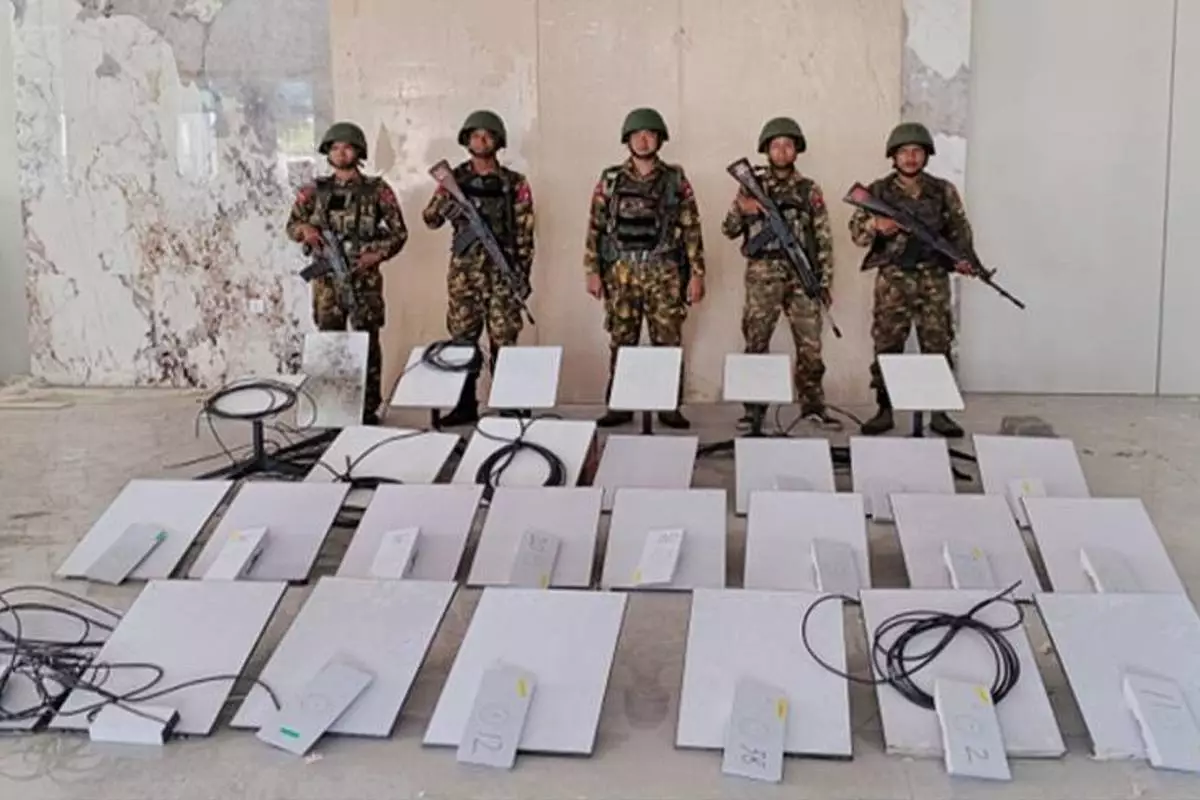
FILE - In this image provided by the Myanmar military on Oct. 19, 2025, soldiers stand next to Starlink satellite internet devices as they seize KK Park online scam center in Myawaddy township, Karen State, Myanmar. (The Myanmar Military True News Information Team via AP, File)

FILE - In this image provided by the Myanmar military on Oct. 19, 2025, soldiers stand next to Starlink satellite internet devices as they seize KK Park online scam center in Myawaddy township, Karen State, Myanmar. (The Myanmar Military True News Information Team via AP, File)

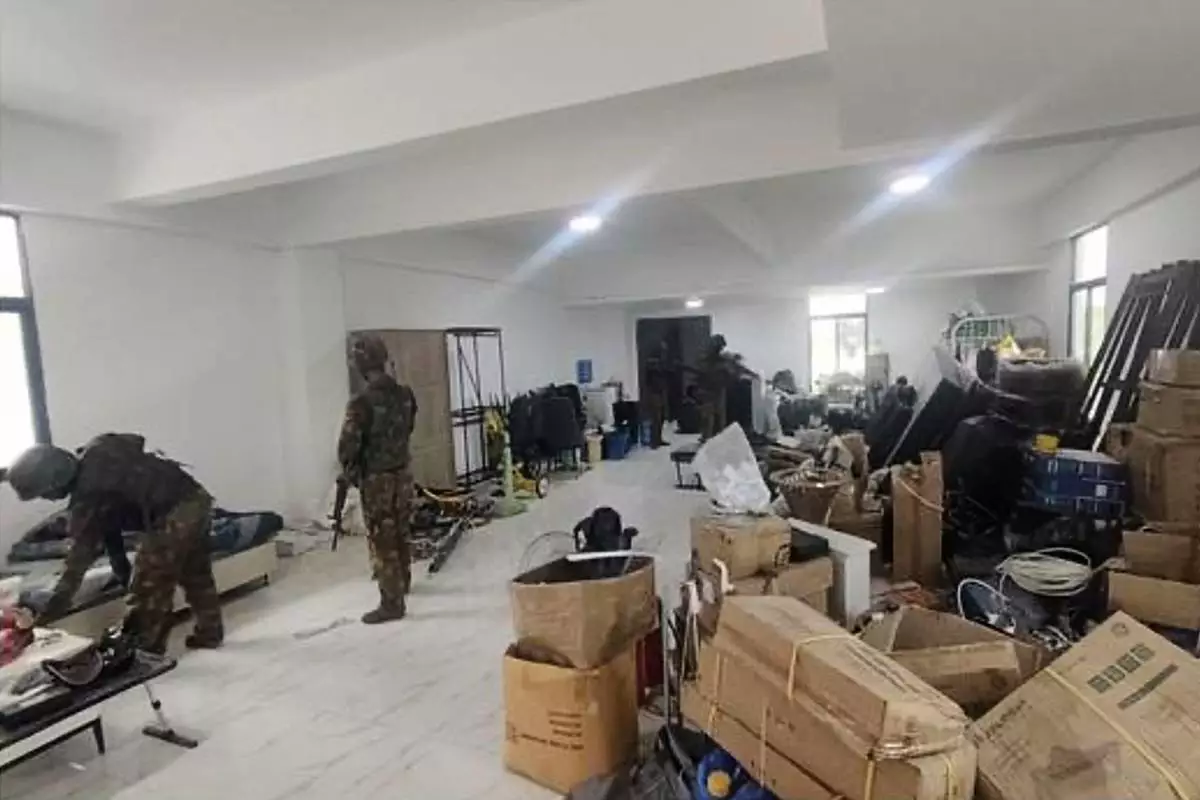
FILE - In this image provided by the Myanmar military on Oct. 19, 2025, soldiers raid the KK Park online scam center in Myawaddy township, Karen State, Myanmar. (The Myanmar Military True News Information Team via AP, File)

FILE - In this image provided by the Myanmar military on Oct. 19, 2025, soldiers raid the KK Park online scam center in Myawaddy township, Karen State, Myanmar. (The Myanmar Military True News Information Team via AP, File)

FILE - People from China, Vietnam and Ethiopia, believed to have been trafficked and forced to work in scam centers, sit with their faces masked while in detention after being released from the centers in Myawaddy district in eastern Myanmar, Wednesday, Feb. 26, 2025. (AP Photo/Thanaphon Wuttison, File)

FILE - People from China, Vietnam and Ethiopia, believed to have been trafficked and forced to work in scam centers, sit with their faces masked while in detention after being released from the centers in Myawaddy district in eastern Myanmar, Wednesday, Feb. 26, 2025. (AP Photo/Thanaphon Wuttison, File)

Thai Prime Minister Anutin Charnvirakul delivers his keynote speech during the International Conference on the Global Partnership against Online Scams in Bangkok, Thailand, on Wednesday, Dec. 17, 2025. (AP Photo/Anton L. Delgado)

Thai Prime Minister Anutin Charnvirakul delivers his keynote speech during the International Conference on the Global Partnership against Online Scams in Bangkok, Thailand, on Wednesday, Dec. 17, 2025. (AP Photo/Anton L. Delgado)

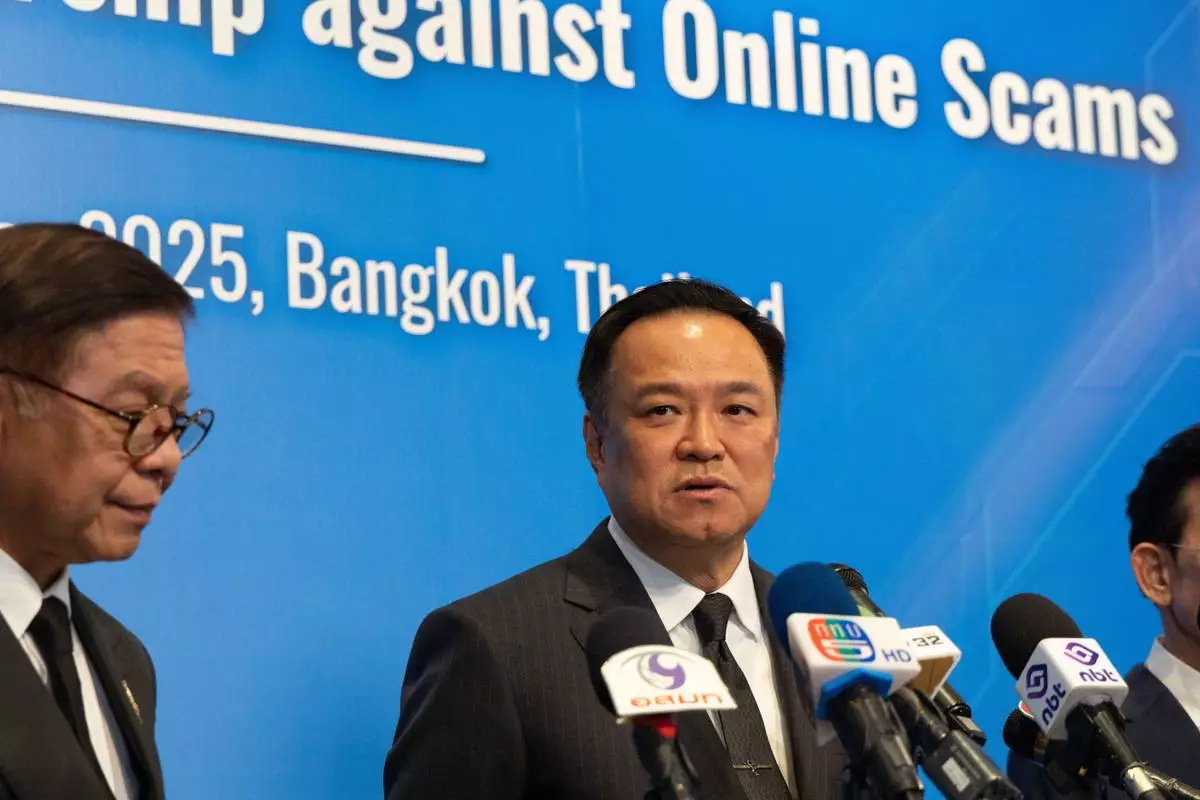
Thai Prime Minister Anutin Charnvirakul answers journalists' questions during the International Conference on the Global Partnership against Online Scams in Bangkok, Thailand, on Wednesday, Dec. 17, 2025. (AP Photo/Anton L. Delgado)

Thai Prime Minister Anutin Charnvirakul answers journalists' questions during the International Conference on the Global Partnership against Online Scams in Bangkok, Thailand, on Wednesday, Dec. 17, 2025. (AP Photo/Anton L. Delgado)

Recommended Articles