CALDONO, Colombia (AP) — When Patricia Elago Zetty's 13-year-old son went missing in Colombia's conflict-ridden southwest, she didn't hesitate. Elago and five fellow members of the Indigenous Guard trekked across mountainous terrain to confront the guerrillas they suspected of taking her son and another teenager to bolster their ranks.
When the unarmed Guard members reached the guerrillas' camp, about 30 fighters stopped them at gunpoint. After a tense wait, a tall commander stepped out from a gate, and Elago said she had come for her son. The commander said he would “verify” whether the boy was there.
Click to Gallery
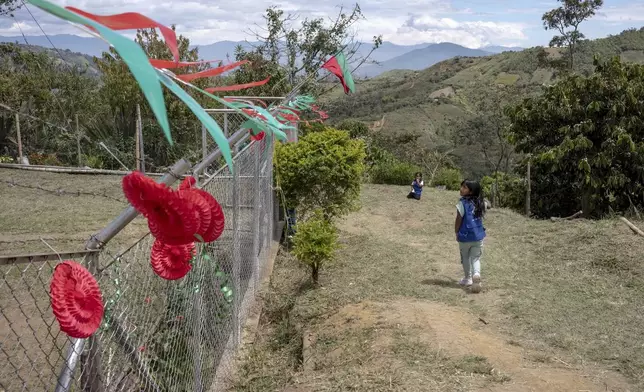
Children walk by decorations in the colors of red and green — which represent blood and earth, July 18, 2025, in Manuelico village, Caldono, Colombia. (AP Photo/Nadège Mazars)
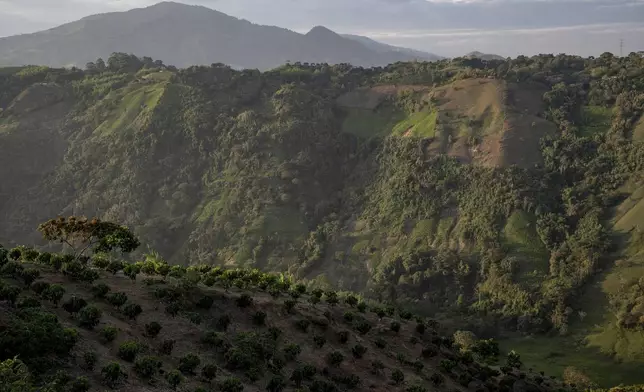
With the help of Indigenous Guards, residents make a living from protected coffee cultivation, front, while coca crops grow, back right, in an area controlled by an armed group of FARC dissidents July 16, 2025, in Piendamo reserve, Cauca, Colombia. (AP Photo/Nadège Mazars)
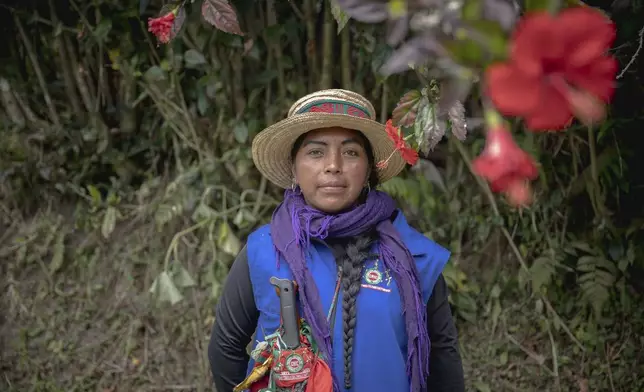
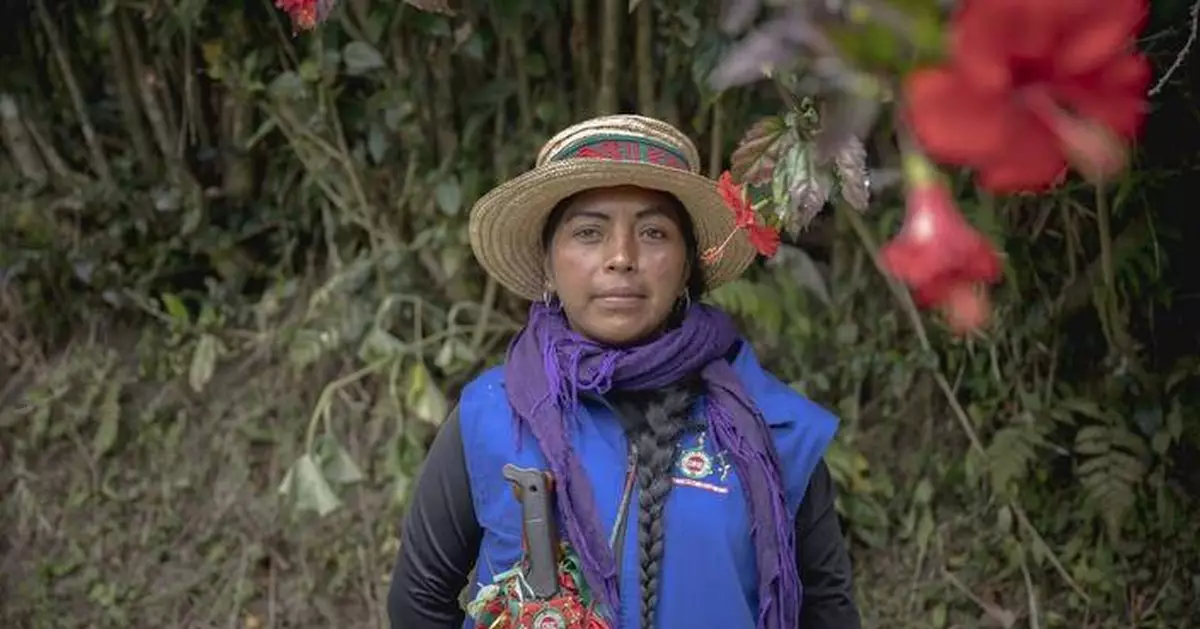
Patricia Elago Zetty, an Indigenous Guard, poses for a photo on July 16, 2025, in Caldono, Colombia. (AP Photo/Nadège Mazars)
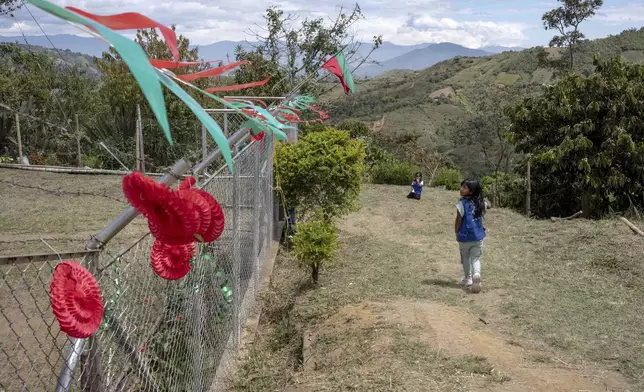
Children walk by decorations in the colors of red and green — which represent blood and earth, July 18, 2025, in Manuelico village, Caldono, Colombia. (AP Photo/Nadège Mazars)
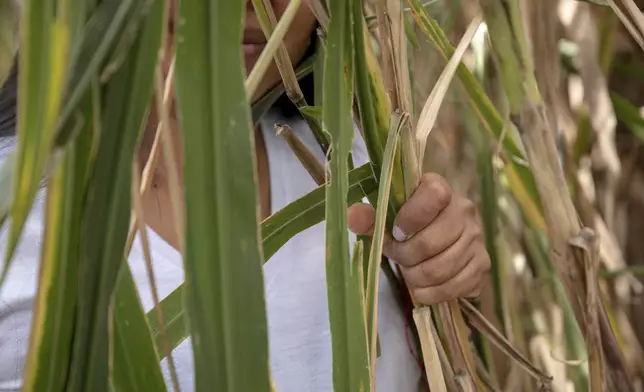
Fernández, a woman in her mid-30s who asked to be identified only by her last name for fear of reprisals, was 12 when armed men came looking for her in her rural Cauca community, poses for a photo on July 17, 2025, in Caldono, Colombia. She managed to escape after three years. (AP Photo/Nadège Mazars)
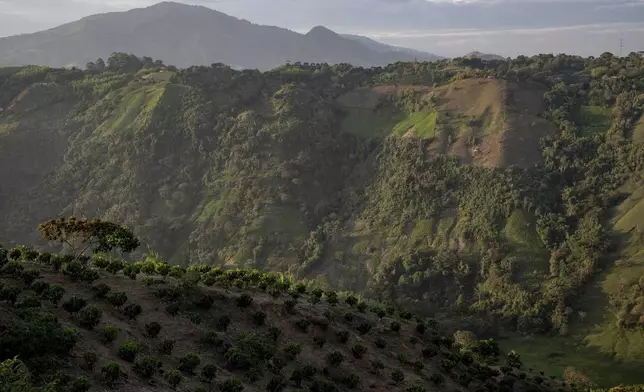
With the help of Indigenous Guards, residents make a living from protected coffee cultivation, front, while coca crops grow, back right, in an area controlled by an armed group of FARC dissidents July 16, 2025, in Piendamo reserve, Cauca, Colombia. (AP Photo/Nadège Mazars)
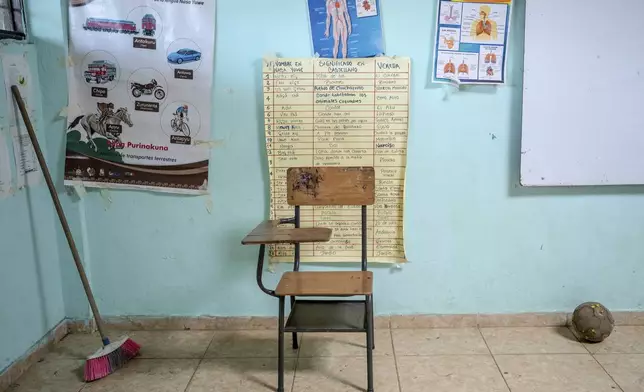
In a classroom at a school, a desk sits near posters displaying educational information, some in the Nasa Yuwe language, on July 18, 2025, in Manuelico village, Caldono, Colombia. (AP Photo/Nadège Mazars)
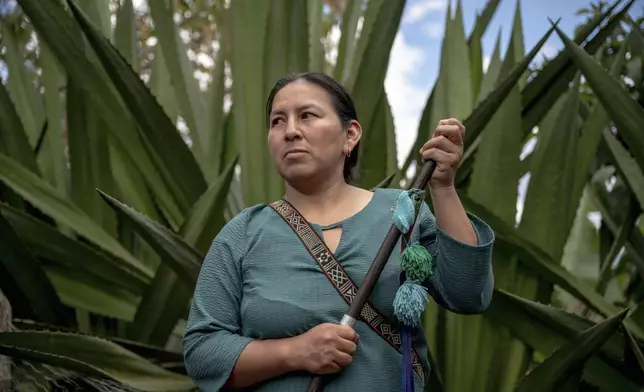
Luz Adriana Diaz, a teacher at a school in Manuelico village, poses for a photo on July 18, 2025, in Caldono, Colombia. (AP Photo/Nadège Mazars)
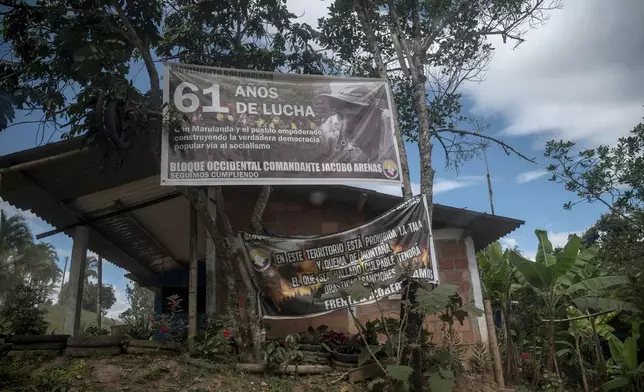
Banners on the side of the road for the Dagoberto Ramos armed group are displayed on July 18, 2025, in Caldono, Colombia. (AP Photo/Nadège Mazars)
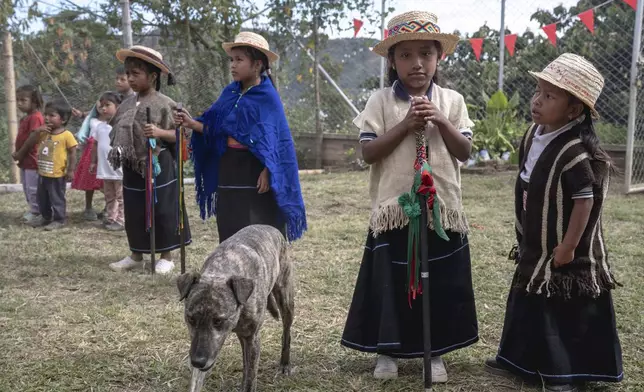
Young dancers, in traditional Indigenous clothes, wait for a graduation ceremony to begin at a school on July 18, 2025, in Manuelico village, Caldono, Colombia. (AP Photo/Nadège Mazars)
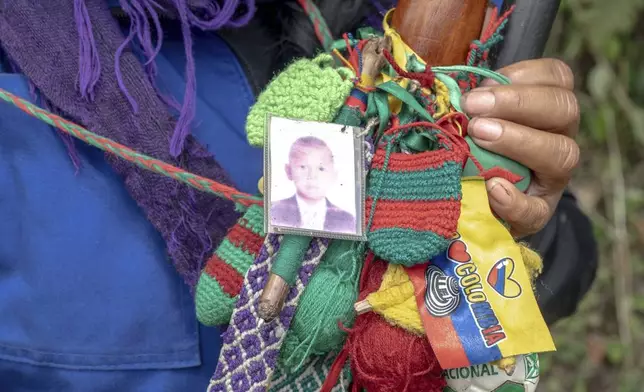
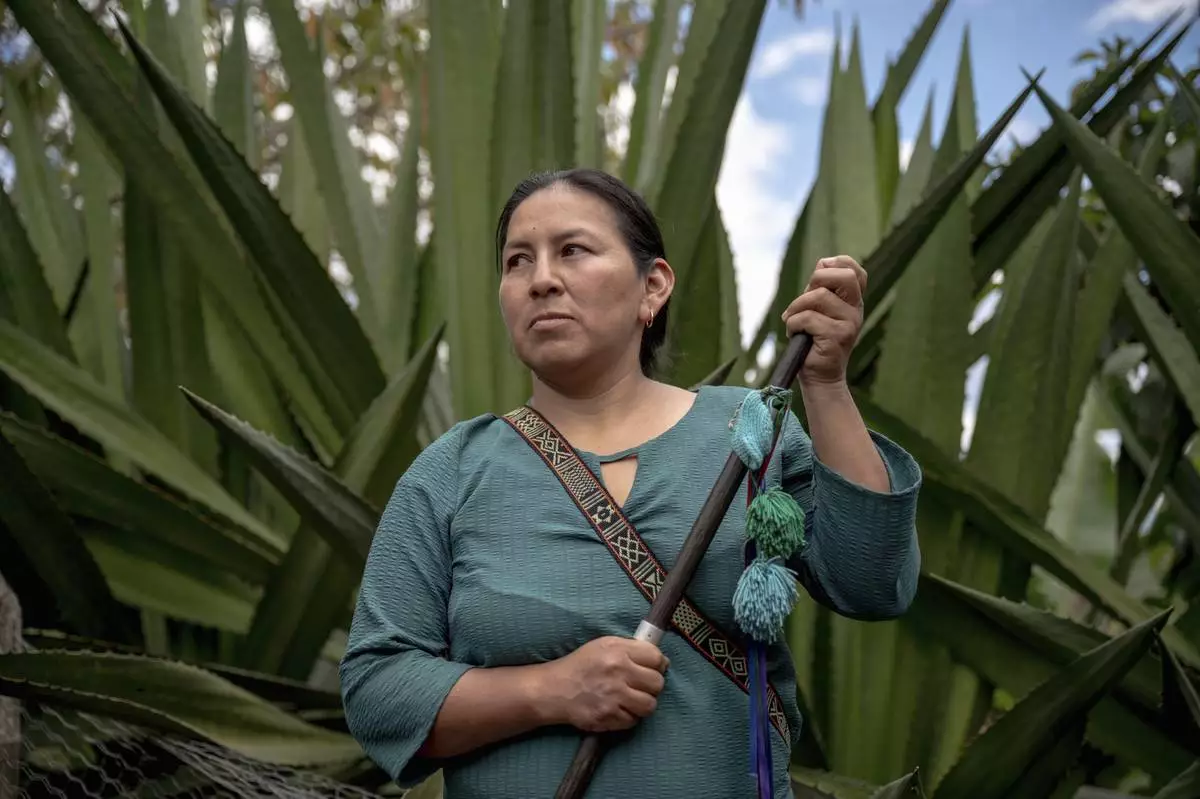
Patricia Elago Zetty, an Indigenous Guard, poses for a photo with her staff and a small photo of her son on it July 16, 2025, in Caldono, Colombia. (AP Photo/Nadège Mazars)
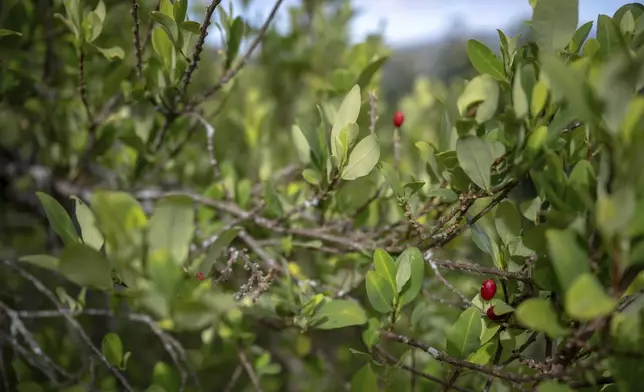
A few coca trees, used by Indigenous communities for ritual purposes, grow near a school on July 18, 2025, in Manuelico village, Caldono, Colombia. (AP Photo/Nadège Mazars)
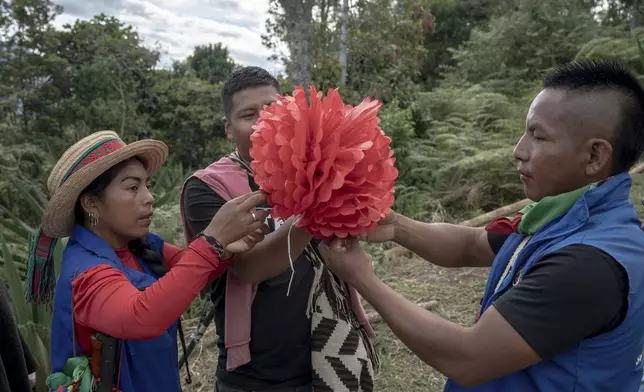
Indigenous Guards, including Patricia Elago Zetty, left, prepare decorations for a graduation ceremony on July 18, 2025, in Manuelico village, Caldono, Colombia. (AP Photo/Nadège Mazars)
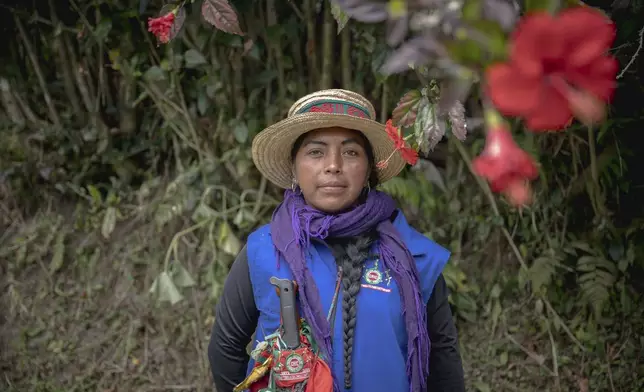
Patricia Elago Zetty, an Indigenous Guard, poses for a photo on July 16, 2025, in Caldono, Colombia. (AP Photo/Nadège Mazars)
After about an hour of negotiations and radio calls, five more guerrillas arrived with her son Stiven and the other boy. When she saw Stiven, Elago said, it felt like her soul returned to her body.
“He hugged me and said, ‘Mom, I never thought you’d risk so much,’” she said in an interview with The Associated Press. “It was a victory.”
Rescue missions like Elago's have intensified for the Indigenous Guard of the Nasa people, which formed in 2001 to protect Indigenous territories from armed groups and environmental destruction such as deforestation and illegal mining. Since 2020, as armed groups tightened their control of Nasa territory to expand illicit crops like marijuana and coca, those guerrillas have ramped up their recruitment of the region's children by dangling offers of cash and protection.
Over eight days reporting in the Cauca region, the AP spoke to more than 20 young people affected by the recruitment as well as several families grappling with the same threat. Some youths had escaped, others were rescued, and a few chose to remain with the groups.
Colombia has endured more than half a century of internal conflict fueled by inequality, land disputes and the drug trade. Leftist guerrillas, right-wing paramilitaries and criminal groups have fought for control of territory — with rural, Indigenous and Afro-Colombian communities caught in the crossfire. A 2016 peace deal ended the war with the country’s largest rebel group, the Revolutionary Armed Forces of Colombia, or FARC, but violence never fully stopped.
Since the accord, child recruitment has been driven mainly by FARC dissident groups who rejected the peace process. The ELN, a Marxist guerrilla force active since the 1960s, and the Clan del Golfo, Colombia’s largest drug-trafficking gang, also forcibly recruit minors.
Violence hangs heavy over the region. During AP’s visit, two former FARC combatants who laid down arms under the peace deal were gunned down near Caldono. At the same time, families reported the disappearance of several youths — believed to have been recruited.
This is the climate in which the Guard, known as Kiwe Thegnas in the Nasa Yuwe language, now works.
For the Nasa, coca holds deep cultural, spiritual, and medicinal significance. Its exploitation to produce cocaine is seen by many as a distortion of a sacred plant — one that fuels violence and environmental destruction.
Members of the Guard carry “bastones de autoridad” — sacred staffs symbolizing moral leadership and collective responsibility. The staffs are often adorned with the traditional Guard colors of red and green — which represent blood and earth — and emblems. Elago, 39, had a small photo of her son on hers.
Steeped in spirituality, the staff is believed to offer protection from harm, giving Guard members the courage to confront armed groups. Yet more than 40 Guard members have been slain since the peace deal, according to Colombia’s Indigenous Council of Cauca (CRIC), a longstanding organization representing Nasa and other Indigenous communities.
“They carry guns — we carry staffs. The staff represents our life, our courage,” Elago said. “They’ve aimed their rifles at us … pressed them to our chests, to our heads.”
Elago said the rebels her group confronted three years ago expressed respect for the Guard but claimed the boys had joined voluntarily, which infuriated her. She said Stiven had left home the day he went missing to collect wages he was owed for farm work near a coca-growing area controlled by FARC dissidents.
She said she challenged them: “You talk about respecting Indigenous people, but you’re killing our youth. What respect is that?”
One rebel told her he'd never seen a mother speak so boldly. But another warned: “Take care, mamma. You already smell like formaldehyde,” a chemical used to preserve dead bodies.
Not all rescues are successful.
Eduwin Calambas Fernandez, coordinator of Kiwe Thegnas in Canoas, an Indigenous reserve in northern Cauca, described leading a 2023 attempt to bring back two teenagers recruited through Facebook. They met with commanders, only to find the 15- and 16-year-old boys did not want to return and were considered by the armed groups to be old enough to decide for themselves. Calambas said that the main armed faction in his area has declared it will no longer return recruits 14 or older to their families.
Children are lured with promises of cash, cosmetic treatments, or food for their families, according to Indigenous Councils Association of Northern Cauca, or ACIN. Once inside the camps, many suffer physical abuse, political indoctrination and sexual violence — especially girls.
“Once in, it is very difficult to leave,” said Scott Campbell, the United Nations human rights chief in Colombia.
ACIN has documented 915 cases of Indigenous youth recruited there since 2016, some as young as 9. ACIN has warned of a sharp increase lately, with at least 79 children recruited between January and June.
Colombia’s Ombudsman’s Office confirmed 409 cases of child recruitment during 2024, up from 342 the year before, with over 300 cases alone in Cauca, one of Colombia’s poorest departments.
Campbell called the Colombian government’s response “ineffective and untimely,” noting a lack of consistent state presence and failure to partner with Indigenous authorities on prevention. ACIN said the government has left armed groups to fill the void by providing roads, food and other basic services in remote and neglected areas.
Colombia’s Family Welfare Institute, or ICBF — the main agency protecting children — told AP it funds community programs and Indigenous‑led initiatives that have contributed to 251 children leaving armed groups in the first half of 2025. The ICBF insists it is working with Indigenous authorities and pressing armed groups to uphold a ban on recruiting minors.
From her classroom high in the mountains, Luz Adriana Diaz watches children arrive each morning under the shadow of a conflict they’re too young to fully grasp. Her small school in the village of Manuelico — reachable only by a winding road from Caldono — is surrounded by dense forest and coca fields planted and patrolled by armed groups. Banners promoting the Dagoberto Ramos front of the FARC — one of the most violent factions in Cauca — hang along the roadside.
“Since 2020, it’s been very sad — threats, recruitment, killings … living in the middle of violence," Diaz said.
Diaz has spent 14 years teaching across the Caldono municipality, but says only in this village, surrounded by coca, has the presence of armed groups felt so constant. Teachers “work with them breathing down our necks,” she said.
The Indigenous Guard has stepped up patrols outside the school to discourage recruiting. Diaz says the armed group members have come to the school to buy food, borrow chairs and interact casually with staff.
“We can’t say no,” she said. “I’ve had to be very careful.”
Several former students, some as young as 11, are now in armed groups, she said. Some left quietly. Others were taken.
One young woman who recently fled FARC dissidents, speaking on condition of anonymity for fear of retaliation, said she joined the armed group at 16 not because she was forced but to escape family problems.
She said she mainly cooked, organized supplies and cleaned weapons. She was afraid at first but was not mistreated. She eventually fled after a change in commanders left her fearing harsher treatment or being moved to a faraway region with an increased threat of combat.
Now she works with a local initiative that supports families trying to prevent their children from being recruited. She warns teens about the risks of joining armed groups.
As for the parents, she said: “I tell families they need to build trust with their children."
Fernández, a woman in her mid-30s who asked to be identified only by her last name for fear of reprisals, was 12 when armed men came looking for her in her rural Cauca community. Terrified, and with no clear way to say no, she joined the ranks of the FARC. In the years that followed, she said she endured rape, psychological abuse and starvation and saw brutal punishments against those who tried to escape.
Her escape, three years after being taken, came by chance. One night, a commander sent her to charge a cell phone. Instead of returning, she hid for days in a nearby home, protected by civilians who risked their lives to shelter her, before fleeing the region.
Now, raising three children in a village near Caldono, she watches and worries about her eldest son, now 12.
“Young people are so easily fooled … they’re shown a bit of money or a cell phone, and they think that’s just how life works,” she said. “Then they’re sent into combat zones where so many children die.”
The Associated Press’ climate and environmental coverage receives financial support from multiple private foundations. AP is solely responsible for all content. Find AP’s standards for working with philanthropies, a list of supporters and funded coverage areas at AP.org.
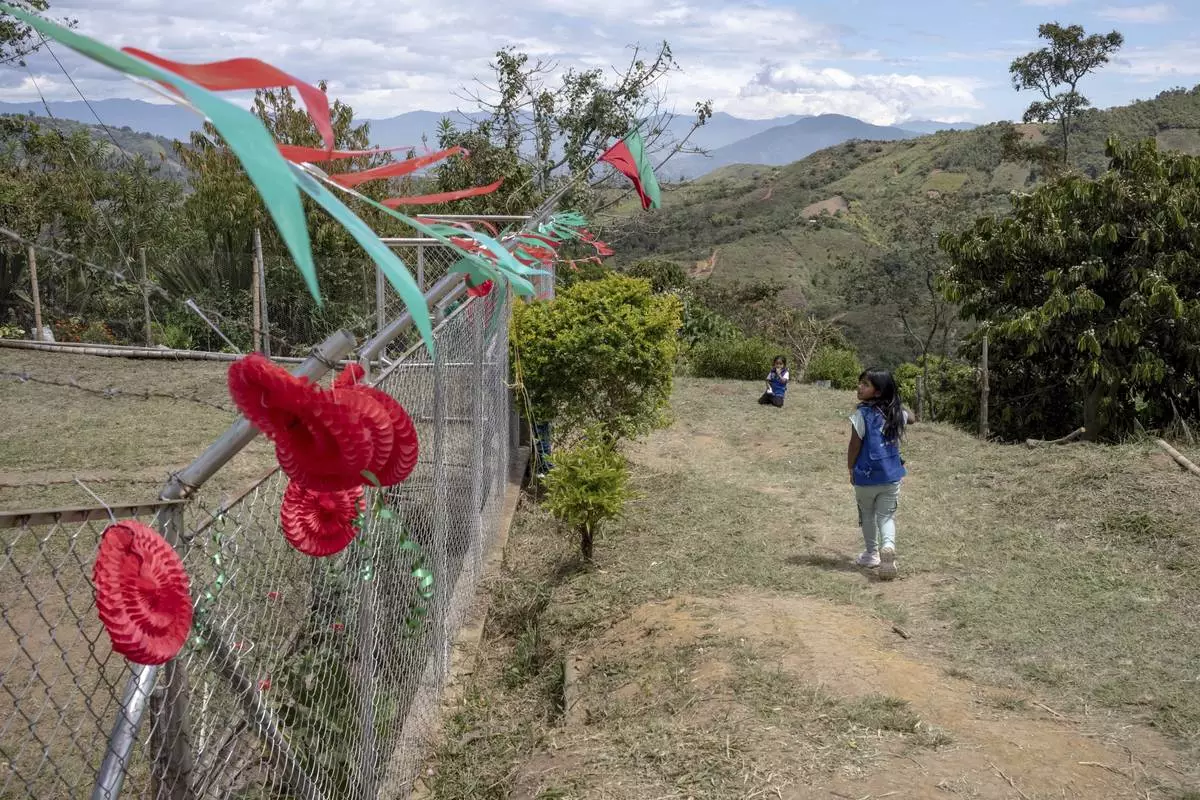
Children walk by decorations in the colors of red and green — which represent blood and earth, July 18, 2025, in Manuelico village, Caldono, Colombia. (AP Photo/Nadège Mazars)
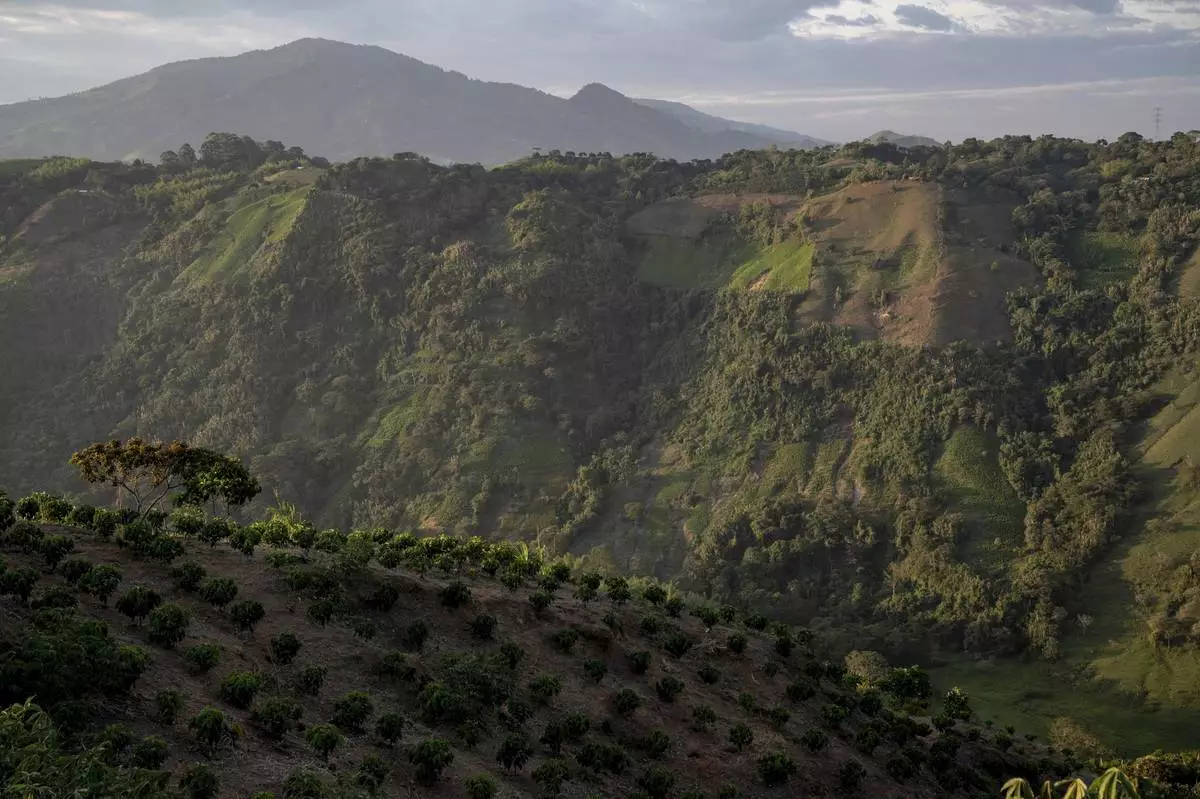
With the help of Indigenous Guards, residents make a living from protected coffee cultivation, front, while coca crops grow, back right, in an area controlled by an armed group of FARC dissidents July 16, 2025, in Piendamo reserve, Cauca, Colombia. (AP Photo/Nadège Mazars)
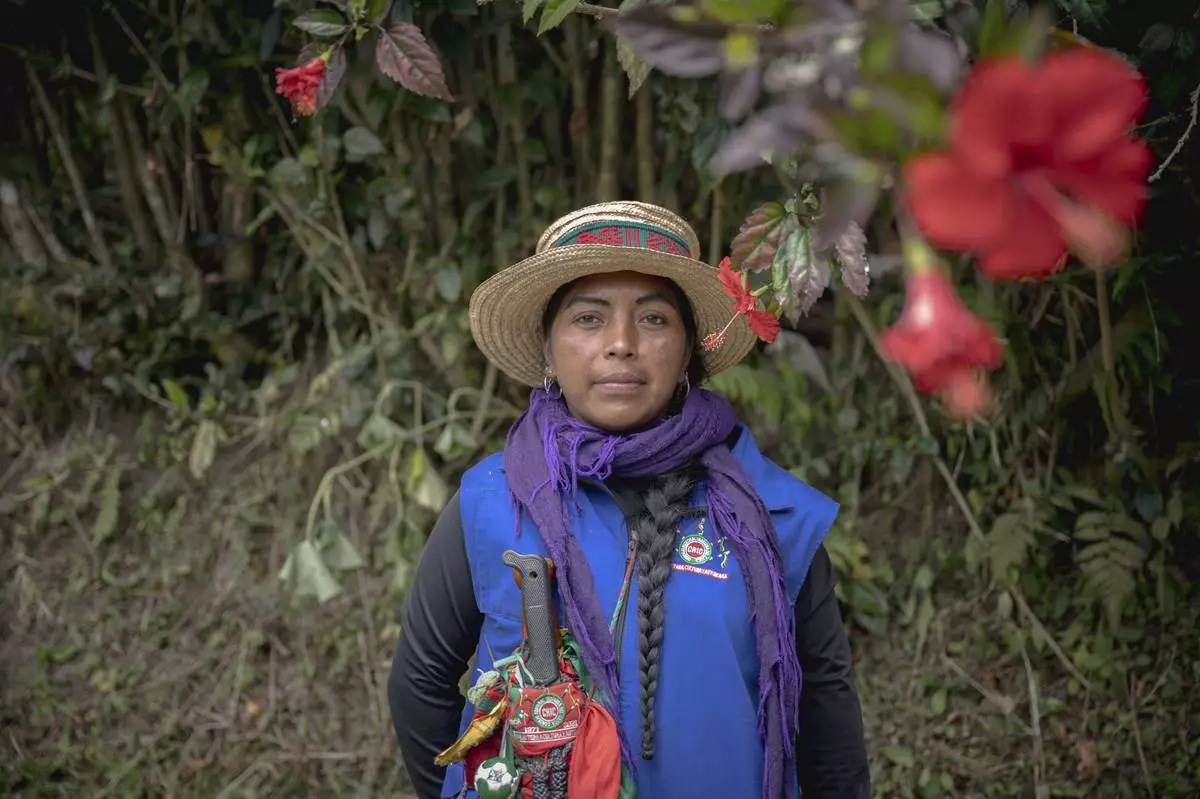
Patricia Elago Zetty, an Indigenous Guard, poses for a photo on July 16, 2025, in Caldono, Colombia. (AP Photo/Nadège Mazars)
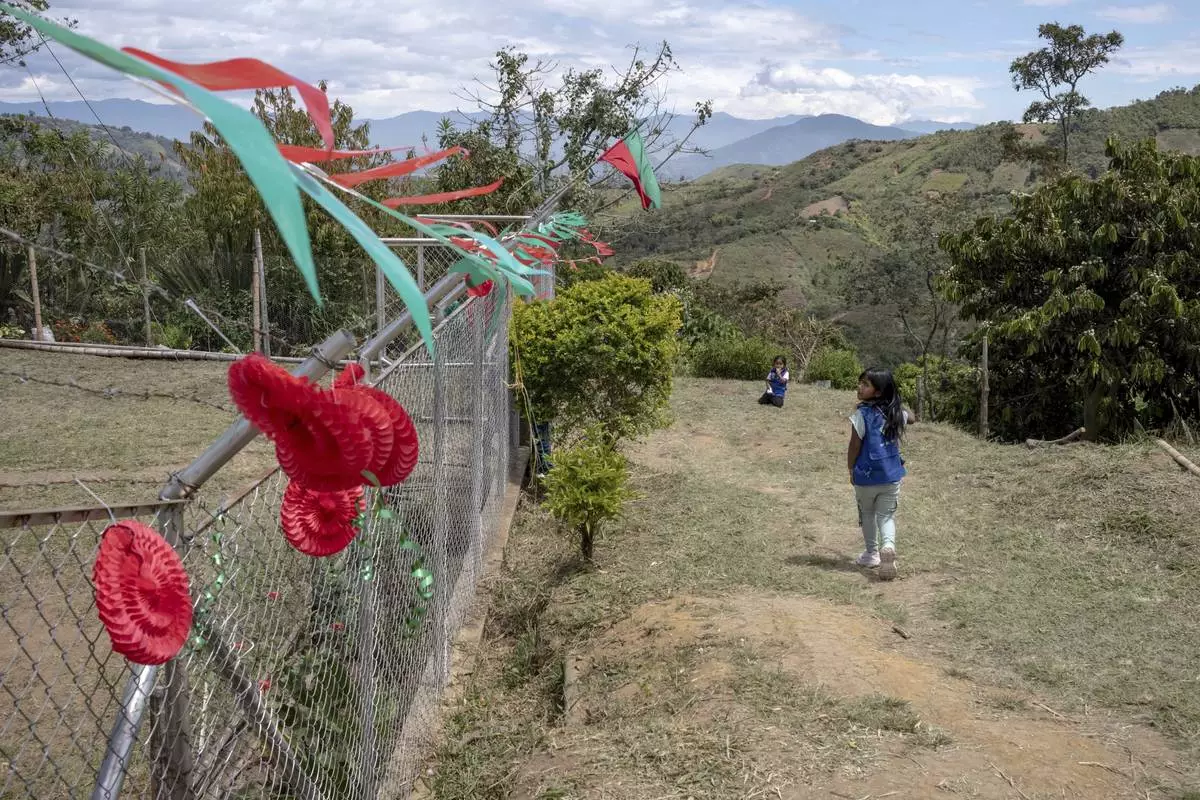
Children walk by decorations in the colors of red and green — which represent blood and earth, July 18, 2025, in Manuelico village, Caldono, Colombia. (AP Photo/Nadège Mazars)
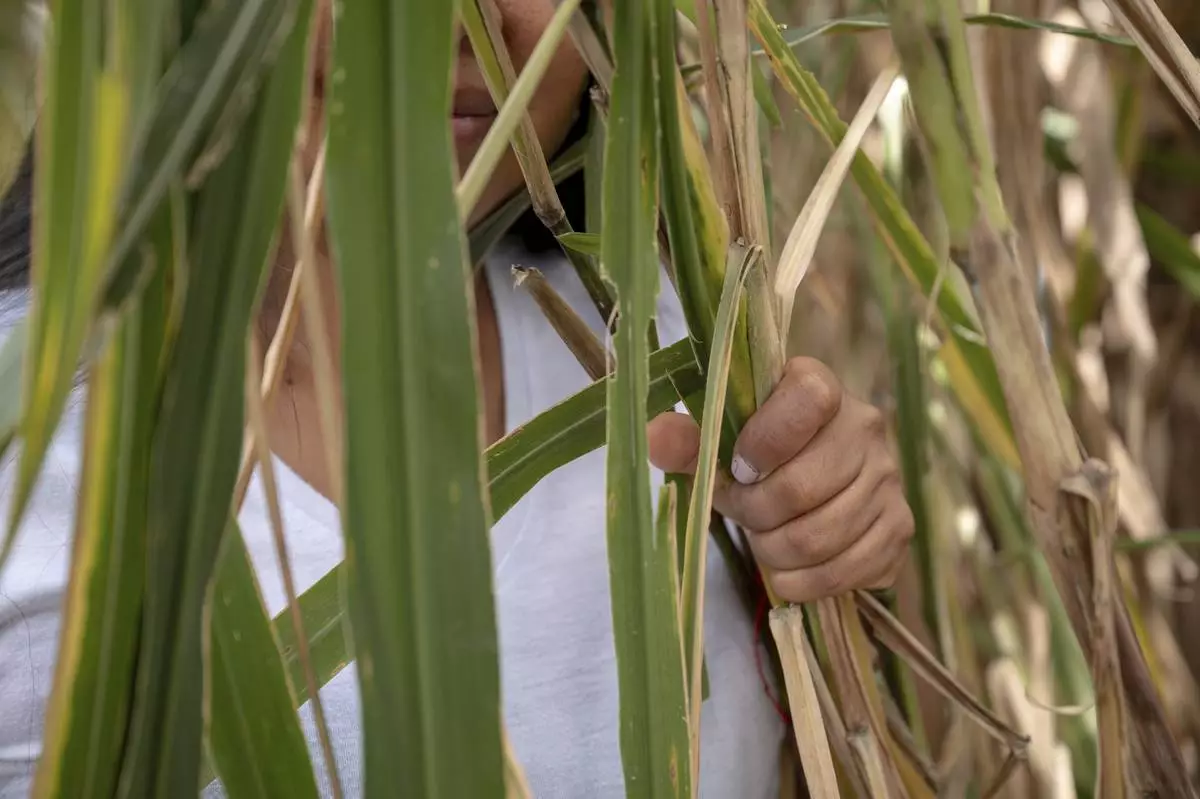
Fernández, a woman in her mid-30s who asked to be identified only by her last name for fear of reprisals, was 12 when armed men came looking for her in her rural Cauca community, poses for a photo on July 17, 2025, in Caldono, Colombia. She managed to escape after three years. (AP Photo/Nadège Mazars)
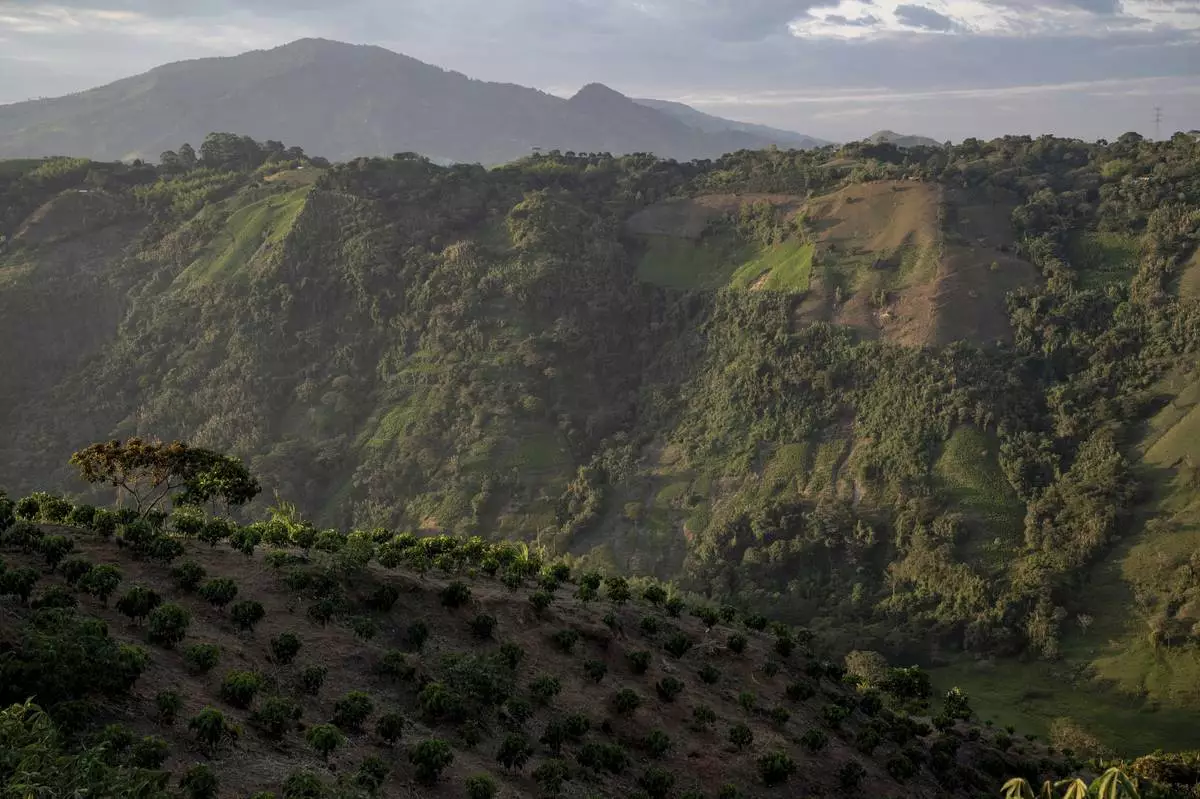
With the help of Indigenous Guards, residents make a living from protected coffee cultivation, front, while coca crops grow, back right, in an area controlled by an armed group of FARC dissidents July 16, 2025, in Piendamo reserve, Cauca, Colombia. (AP Photo/Nadège Mazars)
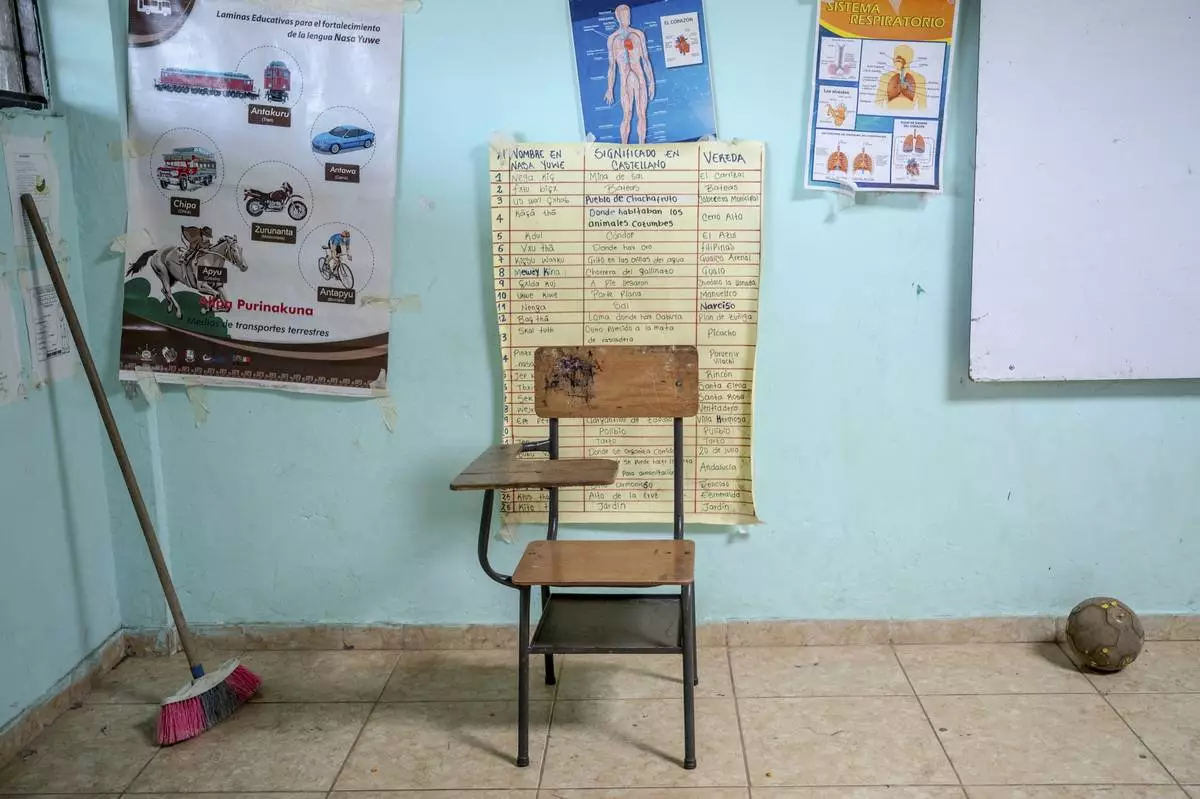
In a classroom at a school, a desk sits near posters displaying educational information, some in the Nasa Yuwe language, on July 18, 2025, in Manuelico village, Caldono, Colombia. (AP Photo/Nadège Mazars)
Luz Adriana Diaz, a teacher at a school in Manuelico village, poses for a photo on July 18, 2025, in Caldono, Colombia. (AP Photo/Nadège Mazars)
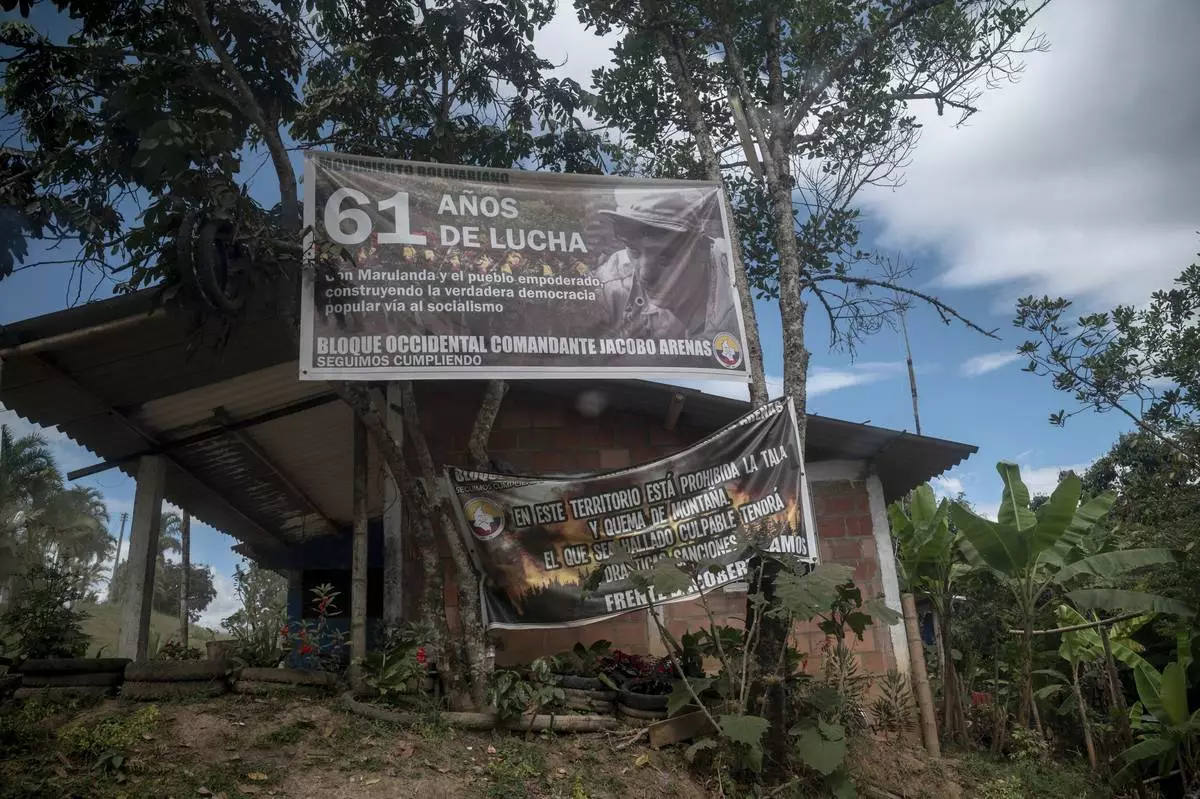
Banners on the side of the road for the Dagoberto Ramos armed group are displayed on July 18, 2025, in Caldono, Colombia. (AP Photo/Nadège Mazars)
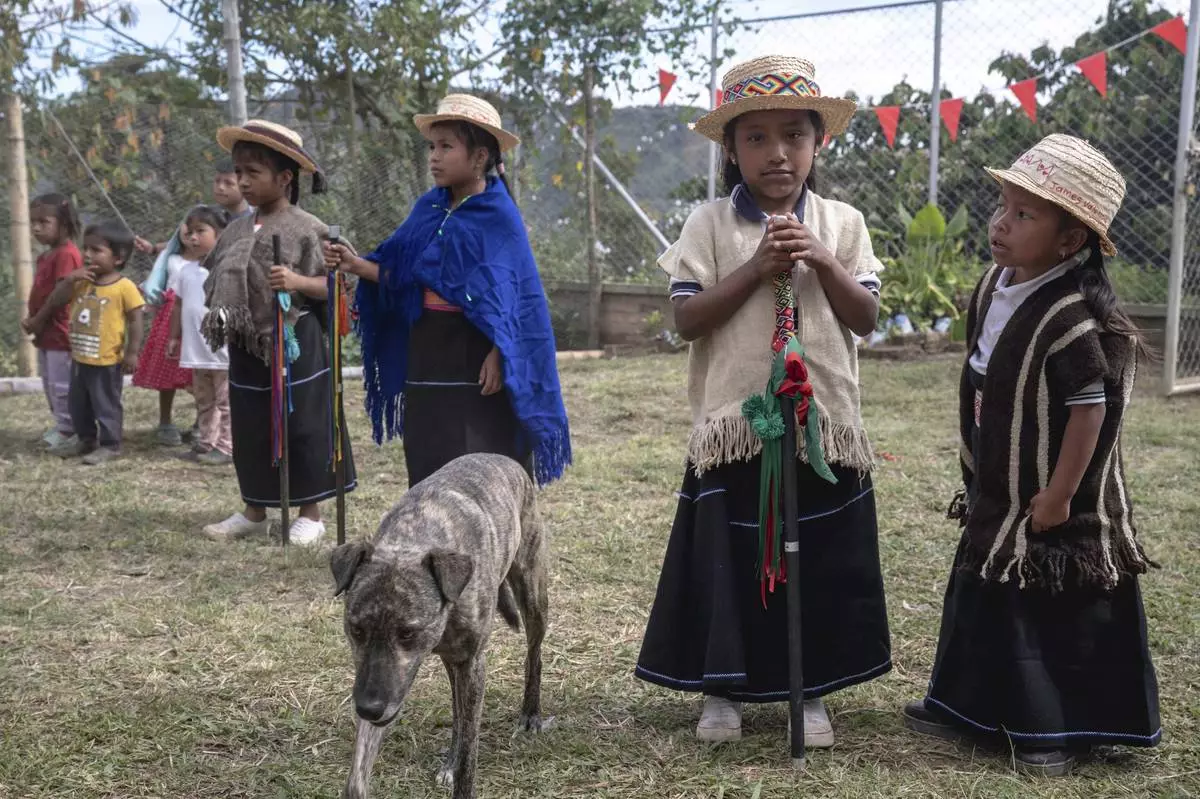
Young dancers, in traditional Indigenous clothes, wait for a graduation ceremony to begin at a school on July 18, 2025, in Manuelico village, Caldono, Colombia. (AP Photo/Nadège Mazars)
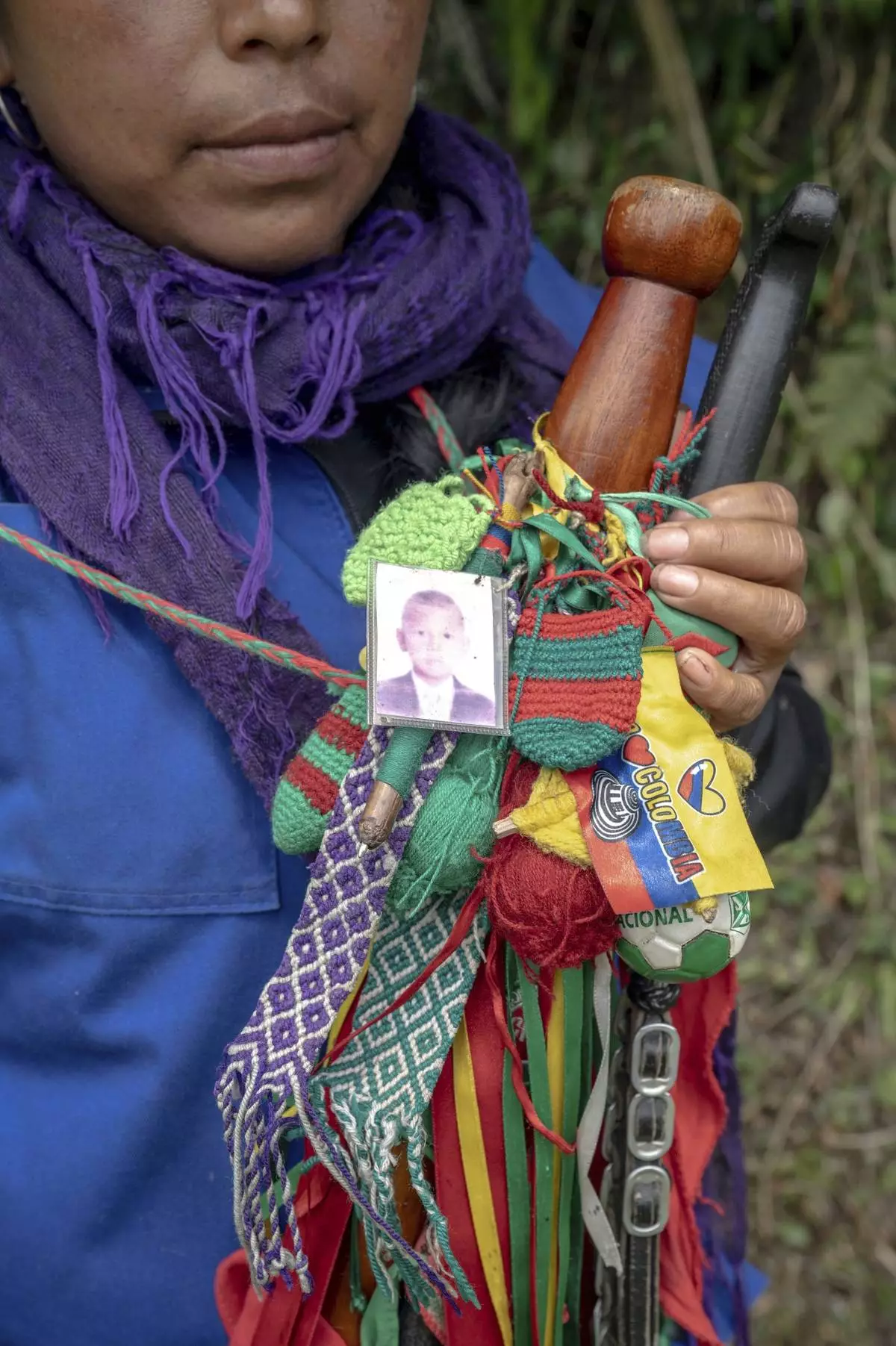
Patricia Elago Zetty, an Indigenous Guard, poses for a photo with her staff and a small photo of her son on it July 16, 2025, in Caldono, Colombia. (AP Photo/Nadège Mazars)
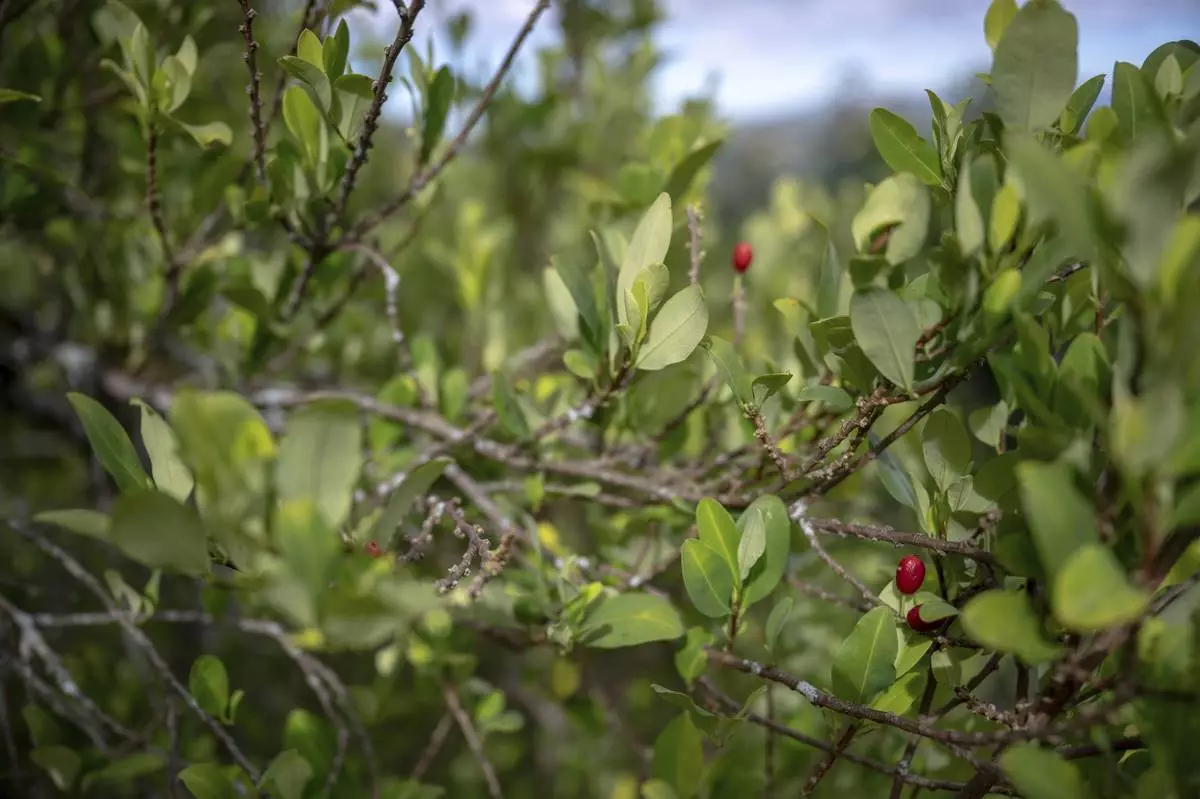
A few coca trees, used by Indigenous communities for ritual purposes, grow near a school on July 18, 2025, in Manuelico village, Caldono, Colombia. (AP Photo/Nadège Mazars)
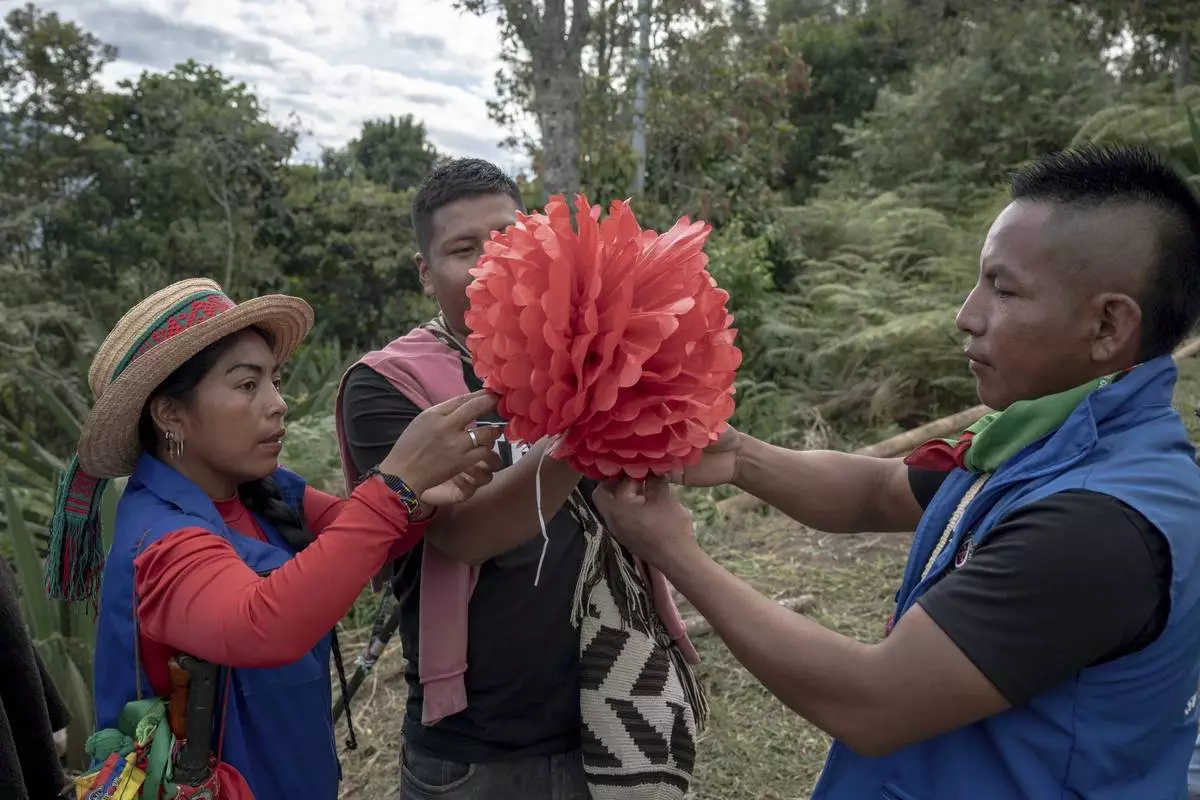
Indigenous Guards, including Patricia Elago Zetty, left, prepare decorations for a graduation ceremony on July 18, 2025, in Manuelico village, Caldono, Colombia. (AP Photo/Nadège Mazars)
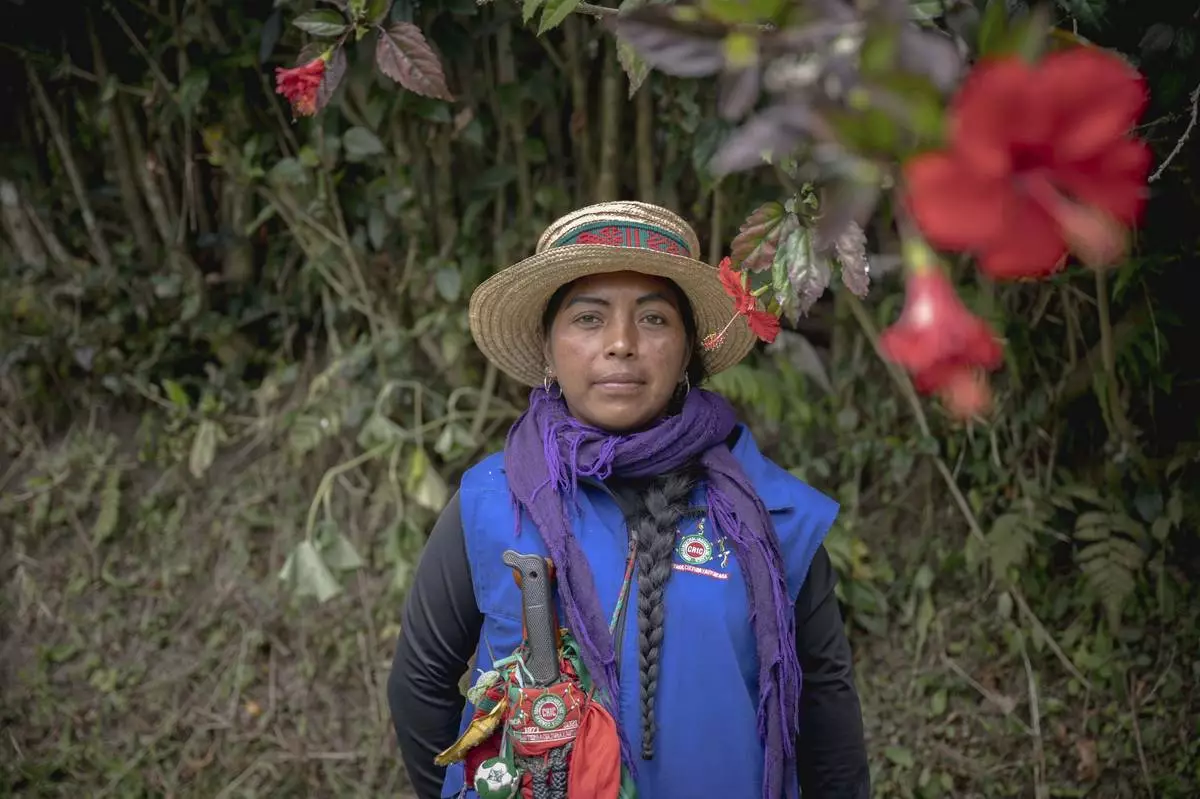
Patricia Elago Zetty, an Indigenous Guard, poses for a photo on July 16, 2025, in Caldono, Colombia. (AP Photo/Nadège Mazars)