WASHINGTON (AP) — The State Department said Wednesday it will suspend the processing of immigrant visas for citizens of 75 countries, including Afghanistan, Iran, Russia and Somalia, whose nationals the Trump administration has deemed likely to require public assistance while living in the United States.
The State Department, led by Secretary of State Marco Rubio, said it had instructed consular officers to halt immigrant visa applications from the countries affected in accordance with a broader order issued in November that tightened rules around potential immigrants who might become “public charges” in the U.S.
The step builds on earlier immigration and travel bans by the administration on nearly 40 countries and is part of President Donald Trump’s ongoing efforts to tighten U.S. entry standards for foreigners.
“The Trump administration is bringing an end to the abuse of America’s immigration system by those who would extract wealth from the American people,” the department said in a statement. “Immigrant visa processing from these 75 countries will be paused while the State Department reassess immigration processing procedures to prevent the entry of foreign nationals who would take welfare and public benefits.”
The suspension, which will begin Jan. 21, will not apply to applicants seeking non-immigrant visas, or temporary tourist or business visas, who make up the vast majority of visa seekers. Demand for non-immigrant visas is expected to rise dramatically in the coming months and years due to the upcoming 2026 World Cup and 2028 Olympics both of which the U.S. will host or co-host.
A separate notice sent to all U.S. embassies and consulates said that non-immigrant visa applicants should be screened for the possibility that they might seek public benefits in the United States.
“With the uncovering of massive public benefits fraud across the United States, the Trump administration is laser-focused on eliminating and preventing fraud in public benefits programs,” said the cable that referred specifically to most non-immigrant visa applications and was sent on Monday.
The cable, a copy of which was obtained by The Associated Press, urged consular officers to ensure that foreigners wanting to travel to the U.S. “have been fully vetted and screened” for whether they may rely on public services before they are issued a visa.
The cable noted several times that it is up to the applicant to prove that they would not apply for public benefits while in the U.S. and said consular officers who suspect the applicant might apply should require them to fill out a form proving their financial bona fides.
President Donald Trump's administration has already severely restricted immigrant and non-immigrant visa processing for citizens of dozens of countries, many of them in Africa, Asia and Latin America.
The November guidance on which Wednesday's decision is based directed U.S. Embassy and consulate officials to comprehensively and thoroughly vet visa applicants to demonstrate that they will not need to rely on public benefits from the government any time after their admission in the U.S.
While federal law already required those seeking permanent residency or legal status to prove they wouldn’t be a public charge, Trump in his first term widened the range of benefit programs that could disqualify applicants, and the guidelines in the cable appear to go further in scope.
Immigrants seeking entry into the U.S. already undergo a medical exam by a physician who’s been approved by a U.S. Embassy. They are screened for communicable diseases, like tuberculosis, and asked to disclose any history of drug or alcohol use, mental health conditions or violence. They’re also required to have a number of vaccinations.
The new directive expanded those with more specific requirements. It said consular officials must consider a range of specific details about people seeking visas, including their age, health, family status, finances, education, skills and any past use of public assistance regardless of the country. It also said they should assess applicants’ English proficiency and can do so by conducting interviews in English.
Experts said at the time it could further limit who gets to enter the country at a time when the Republican administration is already tightening those rules.
The countries affected by the suspension announced on Wednesday are:
Afghanistan, Albania, Algeria, Antigua and Barbuda, Armenia, Azerbaijan, Bahamas, Bangladesh, Barbados, Belarus, Belize, Bhutan, Bosnia, Brazil, Burma, Cambodia, Cameroon, Cape Verde, Colombia, Congo, Cuba, Dominica, Egypt, Eritrea, Ethiopia, Fiji, Gambia, Georgia, Ghana, Grenada, Guatemala, Guinea, Haiti, Iran, Iraq, Ivory Coast, Jamaica, Jordan, Kazakhstan, Kosovo, Kuwait, Kyrgyzstan, Laos, Lebanon, Liberia, Libya, Macedonia, Moldova, Mongolia, Montenegro, Morocco, Nepal, Nicaragua, Nigeria, Pakistan, Republic of the Congo, Russia, Rwanda, Saint Kitts and Nevis, Saint Lucia, Saint Vincent and the Grenadines, Senegal, Sierra Leone, Somalia, South Sudan, Sudan, Syria, Tanzania, Thailand, Togo, Tunisia, Uganda, Uruguay, Uzbekistan and Yemen.
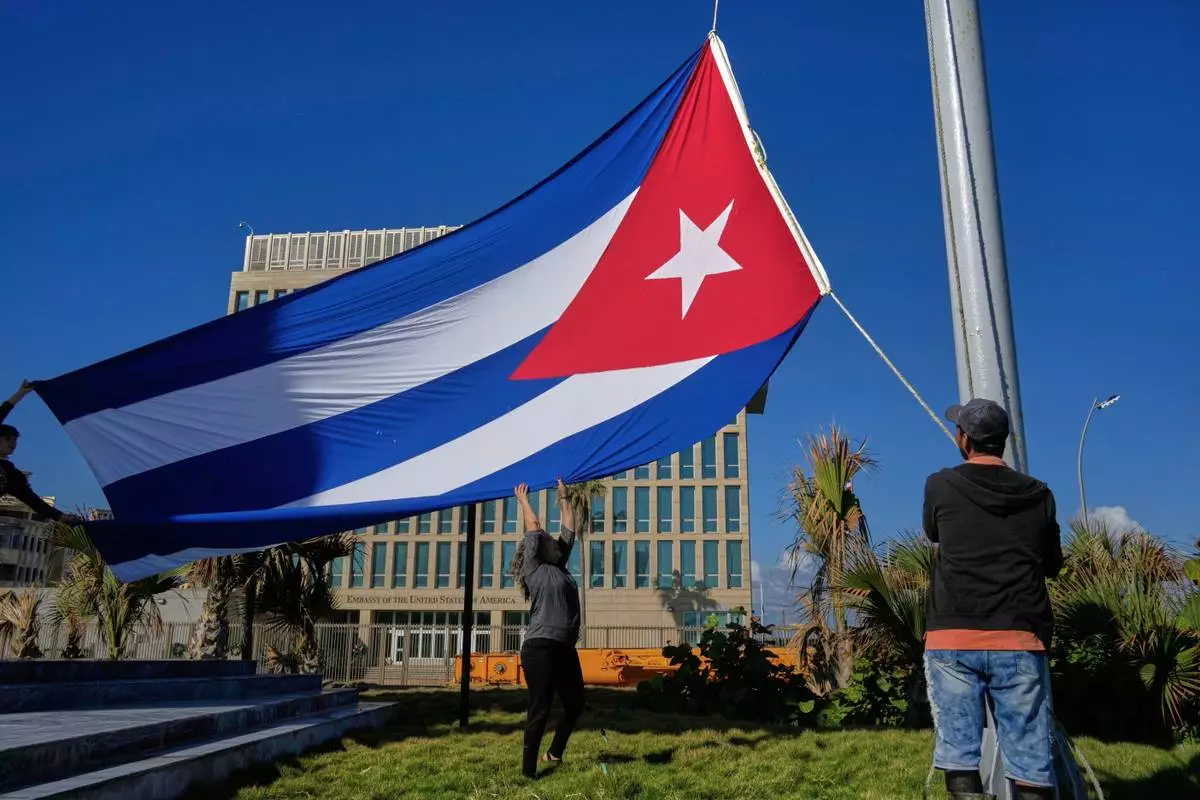
Workers fly the Cuban flag at half-mast at the Anti-Imperialist Tribune near the U.S. embassy in Havana, Cuba, Monday, Jan. 5, 2026, in memory of Cubans who died two days before in Caracas, Venezuela during the capture of Venezuelan President Nicolas Maduro by U.S. forces. (AP Photo/Ramon Espinosa)
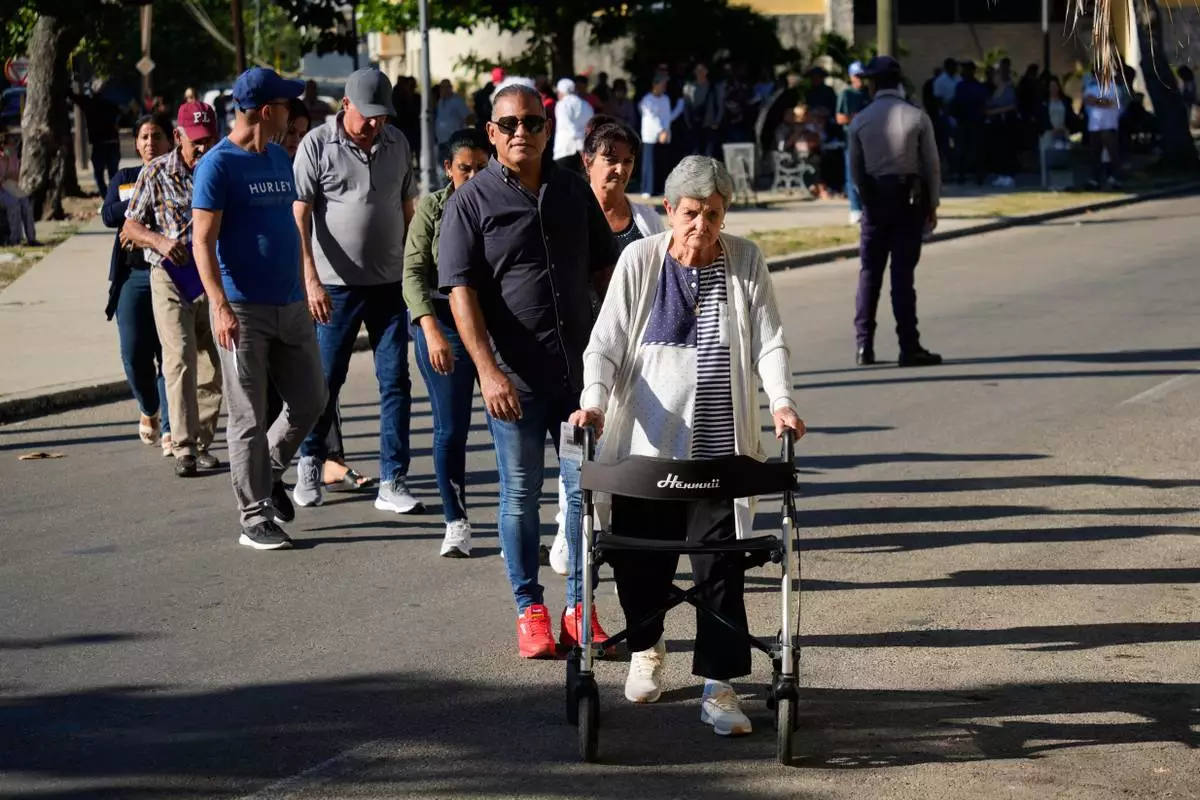
Cubans line up for appointments at the U.S. embassy in Havana, Cuba, Thursday, Jan. 8, 2026. (AP Photo/Ramon Espinosa)

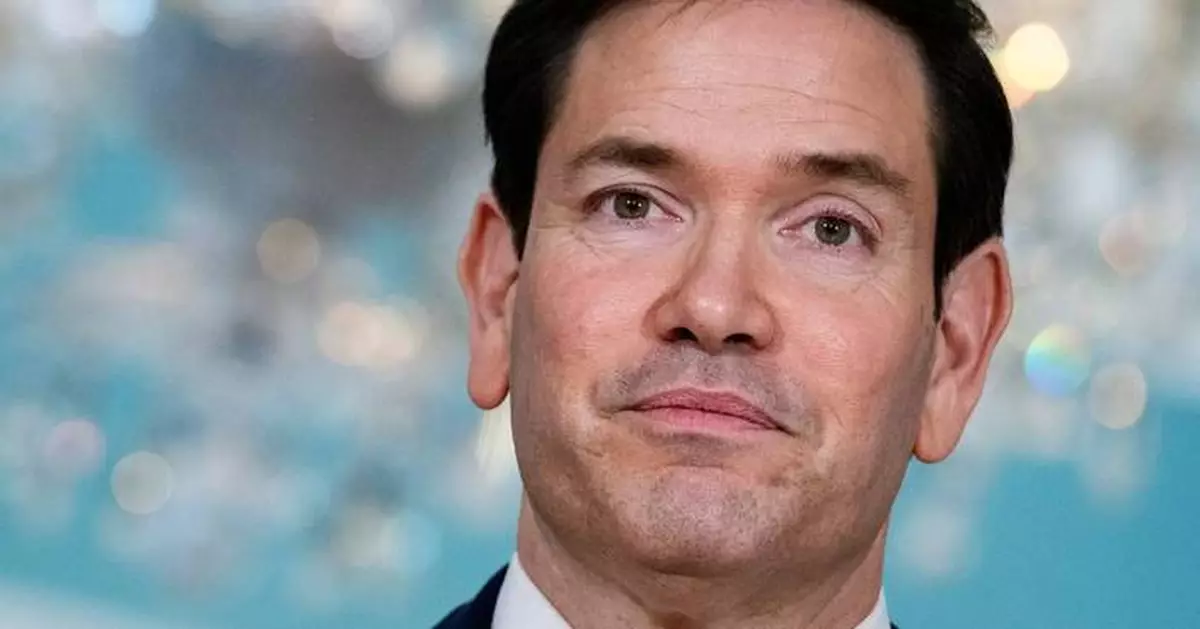
Secretary of State Marco Rubio makes a statement to reporters while meeting with Armenian Foreign Minister Ararat Mirzoyan at the State Department in Washington, Tuesday, Jan. 13, 2026. (AP Photo/Cliff Owen)
CAIRO (AP) — Yemen’s Iran-backed Houthi rebels have so far remained on the sidelines as the Iran war widens across the Middle East, raising questions about why — and when the battle-hardened group might join the fight.
Iran has retaliated against the United States and Israel with missiles and drones, targeting American military bases and other locations in Gulf Arab countries, disrupting trade routes, choking fuel supplies and threatening regional air traffic.
Iran’s new supreme leader, Ayatollah Mojtaba Khamenei, suggested on Thursday in his first written statement since succeeding his father, who was killed in the war's opening salvo, that Iran may open up new fronts in the conflict — a sign, analysts say, the Houthis may get involved soon.
Until now, the Houthis have been reluctant to fight, fearing assassinations of their leaders, internal divisions in Yemen and uncertainties over weapons supplies, the experts said.
But that may change as Iran seeks to increase pressure on global oil supply routes through potential attacks by the Houthis, who have had previous success targeting oil facilities in the region, the analysts said.
Iran has asserted its influence across the Middle East through its proxy forces in Gaza, Syria, Lebanon, Iraq and Yemen's Houthis.
Some of its closest allies have already joined the conflict, with Hezbollah resuming strikes on Israel within two days of the attack on Iran — and just 15 months after the last Israel-Hezbollah war ended in a November 2024 ceasefire. Militias linked to the Islamic Resistance in Iraq have claimed drone strikes on U.S. bases in Irbil.
Meanwhile, the Houthis have only held protests and issued declarations condemning the Iran war, in contrast to the waves of missile and drone attacks they launched on Israel and shipping in the Red Sea after the Oct. 7, 2023, Hamas attacks on Israel sparked the war in the Gaza Strip.
Here’s a look at the Houthis’ military capabilities and where they stand in the conflict.
Armed by Iran, the Houthis seized most of Yemen’s north and its capital, Sanaa, in 2014, pushing the country’s internationally recognized government into exile. A Saudi-led coalition backing Yemen’s government entered the conflict the following year, and the Houthis have since fought a long-running but largely stalemated civil war in Yemen.
While the Houthis share some political and religious ties with Iran, they follow a different doctrine of Shiite Islam and are independent of Iran’s supreme leader, unlike the Lebanese militant Hezbollah group and several Iran-backed Iraqi militias.
Still, they are key to Iran’s regional influence and the current war is unlikely to weaken that, according to Ahmed Nagi, a senior Yemen analyst at the International Crisis Group think tank.
“From Tehran’s perspective, the Houthis have proven themselves to be a capable and effective front, able to generate real pressure,” Nagi said.
He said the Houthi leaders' decision to distance themselves from the conflict is a calculated choice that has been fully coordinated with the Iranians.
Two Houthi members of the group's media and political offices told The Associated Press that the rebels' weapons stockpile is running low after its attacks during the Israel-Hamas war. The Iran war has further impeded the flow of weapons, said the officials, speaking on condition of anonymity because they weren’t authorized to talk to the media.
Still, the group has a large stockpile of drones, said another official, who spoke on condition of anonymity to discuss the weapons issue, about which he is well-informed.
Nagi said the Houthis appear to be building up their forces by recruiting more fighters, relying on local weapons production and sending reinforcements to Yemen’s western coastline on the Red Sea, signaling they are preparing for escalation.
“The decision is not about unwillingness to intervene, but about timing," Nagi said. "Iran’s broader strategy seems to be to avoid throwing all its cards on the table at once, instead using its partners and capabilities gradually as the confrontation evolves.”
The Houthis are likely to step in if the conflict widens, Nagi added, or if they perceive an existential threat to Iran, such as significant deterioration in military capabilities.
Houthi leader Abdulmalik al-Houthi has repeatedly emphasized the group is ready to intervene, claiming their “hands are on the trigger,” though its unclear what that involvement would entail.
″Houthis, of course, are always ready for any war,” said Farea al-Muslimi, a research fellow at the Chatham House think tank in London. “Some weaponry moved in different areas inside Yemen recently ... but it’s still not clear whether it's for a military escalation.”
If the Houthis enter the war, they will most likely resume attacks on shipping in the Red Sea and the Gulf of Aden, while also striking Israel, Nagi said. They could also join Iran's attacks on Gulf countries, targeting U.S. military assets and interests.
Attacks on vessels during the Israel-Hamas war upended shipping in the Red Sea, through which about $1 trillion worth of goods passed each year before the war. The rebels also fired drones at Israel.
Should the Houthis join the Iran war, their primary targets would likely be oil tankers, the analysts said, since shipping offers the most immediate pressure point and attacking it would signal escalation while impacting energy supply chains.
Attacks on oil installations could also be considered. The Houthis have previously struck oil facilities in Saudi Arabia during their long-running conflict against the Saudi-led coalition.
Meanwhile, U.S. military sites in the region might also become targets, Nagi said.
Abdel-Bari Taher, a political analyst and former head of the press syndicate in Yemen, said any decision to join the war is impacted by the internal situation in Yemen, including recent deadly clashes in south Yemen, public opposition in Sanaa to joining the war and heightened caution among Houthi leaders after high-profile assassinations.
The two Houthi officials from the group's media and political offices said the U.S. has sent warnings via Omani mediators against participating in the war. They said Houthi political and security leaders have also been alerted that their cellphones are under surveillance by the U.S. and Israel. Fearing potential Israeli assassinations, Houthi leaders have been instructed not to appear in public, the officials said.
″Despite these constraints and the complex domestic and regional dynamics, Houthi involvement in the conflict remains a possibility,” Taher said.
Al-Muslimi, the Chatham House analyst, said the Houthis don’t have the military capabilities or an internal Yemeni interest that would force them to join the war, and the group seems committed to a ceasefire with the U.S. that was brokered by Oman last year.
“They hope to fight, especially with Israel, but they can’t be the ones to fire the first shot,” al-Muslimi said.
He said the Houthis would likely need a local Yemeni cause to join the fighting — a reason that would strengthen support among their local base.
Notes al-Muslimi: The Houthis “are a local group that Iran uses and supports, but didn't create.”
Associated Press journalist Ahmed al-Haj in Aden, Yemen, contributed to this report.
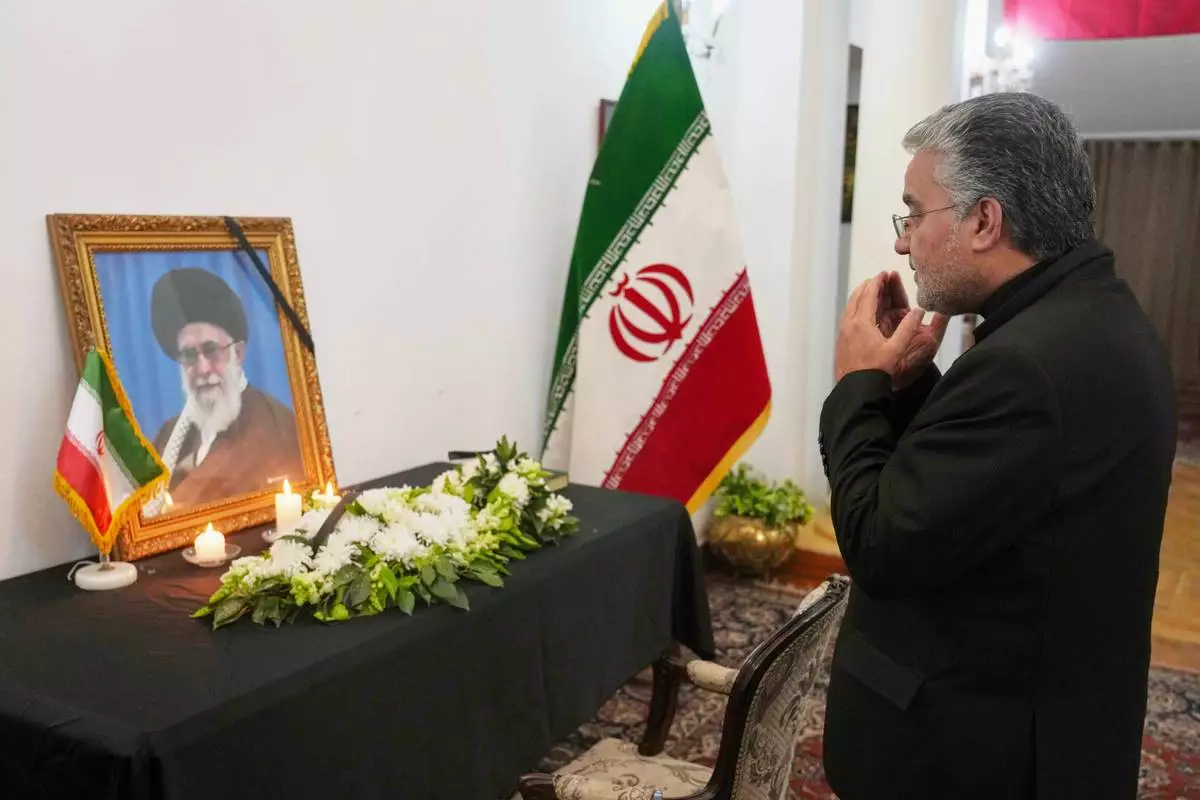
Mojtaba Ferdousi Pour, Iranian Ambassador to Egypt, prays in front of a a makeshift memorial for Iran's late Supreme Leader Ayatollah Ali Khamenei, who was killed in a major attack by Israel and the United States, at the Iranian embassy in Cairo, Thursday, March 5, 2026. (AP Photo/Amr Nabil)
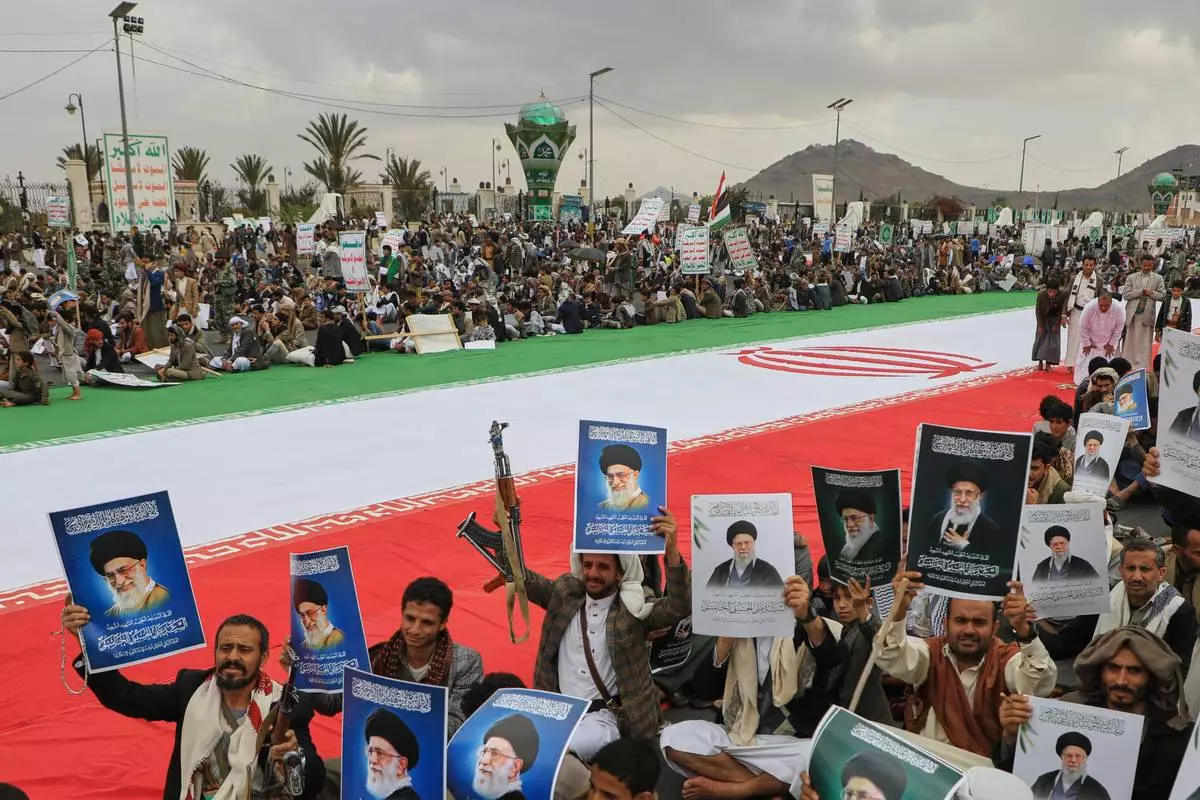
Houthi supporters hold posters of Iran's late Supreme Leader Ayatollah Ali Khamenei, who was killed in an attack by Israel and the U.S., next to a giant Iranian flag as they protest the war on Iran, in Sanaa, Yemen, Friday, March 6, 2026. (AP Photo/Osamah Abdulrahman)