A growing group of rangers in southwest China's Xizang Autonomous Region are making the wilderness their home, dedicating their lives to protecting the ecosystems and iconic species of the Qinghai-Xizang Plateau, known as the roof the world.
Among them is Tserang Tarchin, a wildlife ranger in the Xainza County section of the Siling Co (Lake) National Nature Reserve.
His relentless efforts are paying off. Populations of endangered species, once on the brink of collapse, are now rebounding.
"In the past, we had to use binoculars when patrolling and search everywhere to spot black-necked cranes. Now, they aren't afraid of people anymore," Tserang recently told a reporter from China Central Television.
The wetlands and alpine meadows of Siling Co provide a perfect sanctuary for these rare birds whose population is under pressure from habitat loss and other threats.
Every June, pairs of black-necked cranes return to breed here and, under the careful watch of rangers, the survival rate of chicks has reached an astonishing 98 percent.
In July, the landscape also becomes a vast natural nursery for another emblematic species -- the Tibetan antelope.
"This is the largest calving area for Tibetan antelopes in the Xainza section of the Siling Co National Nature Reserve. There are about 10,000 Tibetan antelopes in the area. It wasn't like this before. Ten years ago, there were only 3,000 to 4,000. Its population keeps growing now," said Tserang.
Once on the brink of extinction, the Tibetan antelope -- a first-class state-protected animal -- has made a remarkable recovery. Across Xizang, their population has surged to over 300,000, prompting the country to downgrade its status from "endangered" to "near threatened".
"We always carry milk with us. Whenever we find a lost baby antelope, we need to feed it. After feeding, we'll release it back to nature. As long as it can run and eat grass on its own, it'll be fine," said Tserang.
Over the past 16 years, Tserang and his fellow rangers estimate they have trekked more than 1 million kilometers across rugged terrain -- enduring freezing temperatures, thin air, and months away from family. Their efforts are yielding results.
According to monitoring data from last year, Xainza County now hosts over 1,000 black-necked cranes, more than 40,000 Tibetan antelopes, around 150 snow leopards, and growing populations of argali sheep, bears, and foxes.
"Look, fox. Wolf, that's a wolf. And snow leopards, there are two together," Tserang said while showing the reporter the footage of wild animals caught by surveillance cameras.
Technology is now supporting their efforts. In addition to foot patrols, rangers use drones, thermal imaging cameras, and the BeiDou navigation satellite system to monitor and track endangered species in this remote region.
To ensure harmony between people and wildlife, the regional government of Xizang has implemented a robust compensation program for herders who lose livestock to wild predators.
Since 2021, over 476 million yuan (about 66.26 million U.S. dollars) has been paid out, helping local communities coexist with the very animals they once saw as threats.
Today, being a wildlife ranger is no longer just a job -- it's a source of pride. Since 2016, Xizang has employed more than 500,000 ecological protection workers every year, providing local residents with an average increase in their annual income of over 3,500 yuan (about 487.2 U.S. dollars).
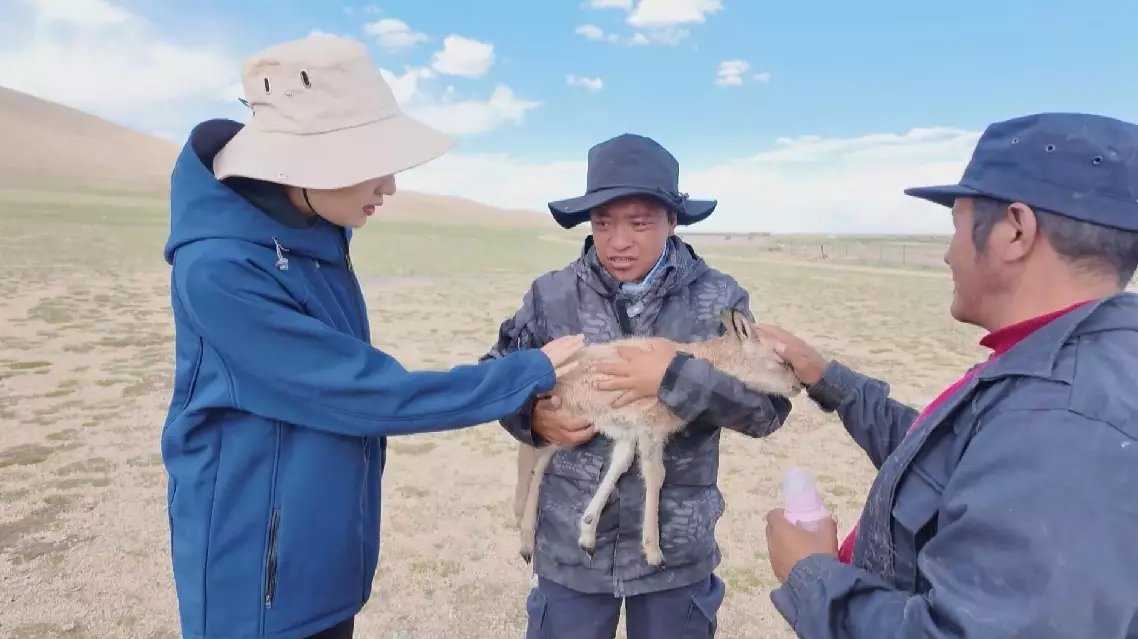
Wildlife ranger makes wilderness his home to protect rare species in Xizang