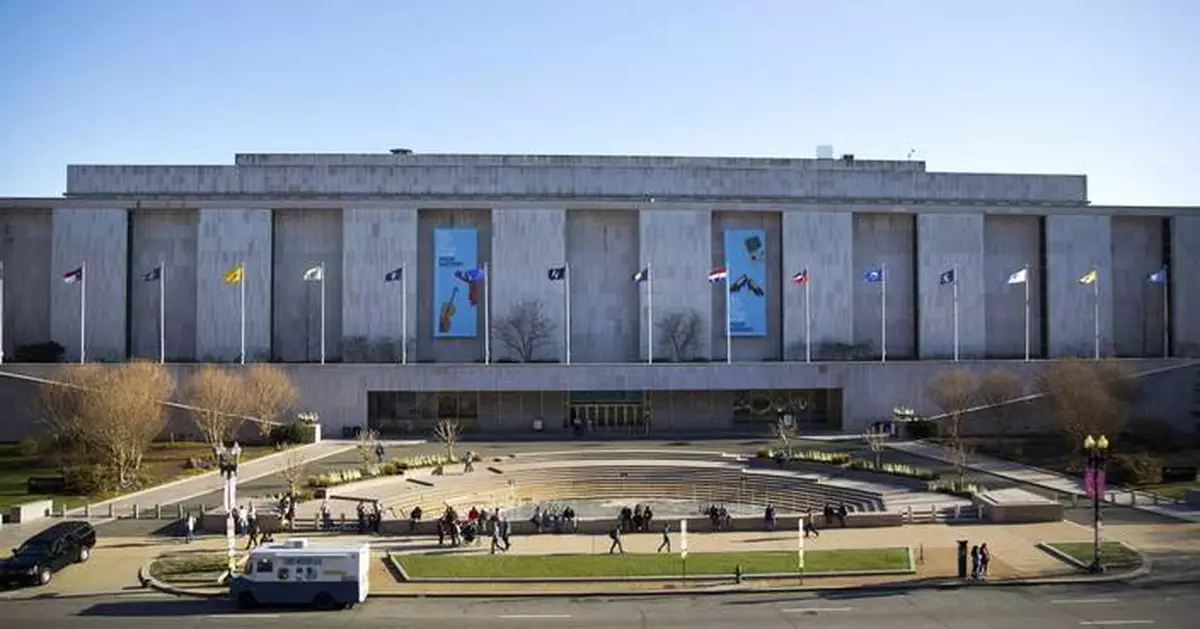
WASHINGTON (AP) — The White House is ordering a wide-ranging review of the Smithsonian museums and exhibitions ahead of the country's 250th birthday with a goal of aligning the institution's content with President Donald Trump's interpretation of American history.
In a letter sent Tuesday to Smithsonian Institution Secretary Lonnie Bunch III, the White House laid out in detail the steps it expects the organization to take as part of the announced review. The examination will look at all public-facing content, such as social media, exhibition text and educational materials, to “assess tone, historical framing, and alignment with American ideals,” according to the letter.
“This initiative aims to ensure alignment with the President’s directive to celebrate American exceptionalism, remove divisive or partisan narratives, and restore confidence in our shared cultural institutions,” the letter said.
The Smithsonian said it remained committed to “scholarly excellence, rigorous research, and the accurate, factual presentation of history."
“We are reviewing the letter with this commitment in mind and will continue to collaborate constructively with the White House, Congress, and our governing Board of Regents,” it said in a statement.
The review, first reported by The Wall Street Journal, is the latest attempt by the president to bring the country's cultural institutions in line with his vision. In March, Trump signed an executive order titled “Restoring Truth and Sanity to American History,” which accused the Smithsonian of coming under the influence of a “divisive, race-centered ideology” and called upon it to “remove improper ideology” from the institution's museums.
In February, Trump removed the Kennedy Center's Board of Trustees, replaced them with his supporters and named himself chairman. He vowed to end events featuring performers in drag, indicating he would take on a larger role in dictating the institution's programming schedule.
The review of the Smithsonian will initially focus on eight museums — the National Museum of American History, the National Museum of Natural History, the National Museum of African American History and Culture, the National Museum of the American Indian, the National Air and Space Museum, the Smithsonian American Art Museum, the National Portrait Gallery and the Hirshhorn Museum and Sculpture Garden.
The letter said additional museums would be reviewed in subsequent phases.
Civil rights leaders have criticized the administration's particular focus on the National Museum of African American History and Culture as efforts to minimize Black Americans' contributions to the country and to recast the obstacles they faced throughout history.
The Smithsonian has repeatedly denied allegations that it has changed or removed exhibit details in response to pressure from the administration. Recently, the institution removed references to Trump's two impeachments from an exhibit on the American presidency.
A spokesman for the museum said the references, which were added in 2021, were intended to be a temporary measure and said a future exhibit would include details on all presidential impeachments.
The review ordered by the White House directs the museums to submit materials from exhibits and drafts for upcoming events within 30 days. Within 120 days, the letter said, museums will be expected to take corrective action, “replacing divisive or ideologically driven language with unifying, historically accurate, and constructive descriptions."
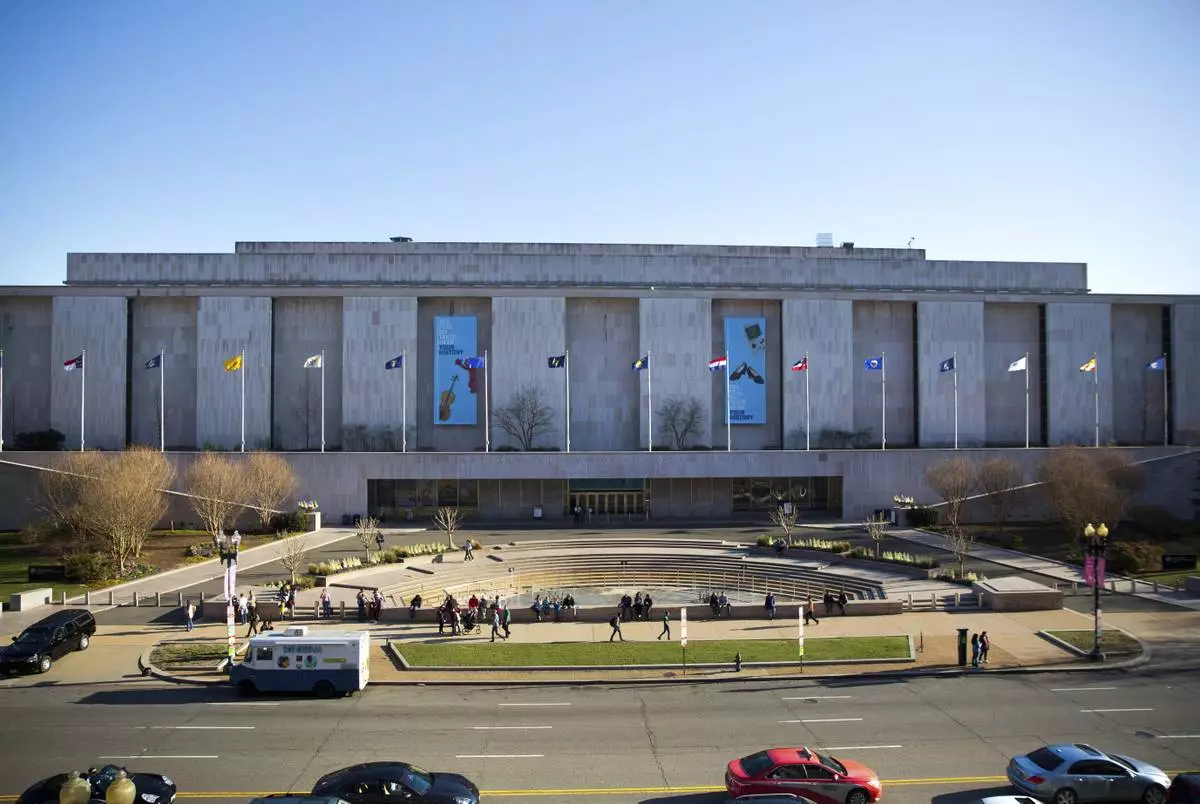
FILE - People visit the Smithsonian Museum of American History on the National Mall in Washington, April 3, 2019. (AP Photo/Pablo Martinez Monsivais, File)
THE HAGUE, Netherlands (AP) — Myanmar insisted Friday that its deadly military campaign against the Rohingya ethnic minority was a legitimate counter-terrorism operation and did not amount to genocide, as it defended itself at the top United Nations court against an allegation of breaching the genocide convention.
Myanmar launched the campaign in Rakhine state in 2017 after an attack by a Rohingya insurgent group. Security forces were accused of mass rapes, killings and torching thousands of homes as more than 700,000 Rohingya fled into neighboring Bangladesh.
“Myanmar was not obliged to remain idle and allow terrorists to have free reign of northern Rakhine state,” the country’s representative Ko Ko Hlaing told black-robed judges at the International Court of Justice.
African nation Gambia brought a case at the court in 2019 alleging that Myanmar's military actions amount to a breach of the Genocide Convention that was drawn up in the aftermath of World War II and the Holocaust.
Some 1.2 million members of the Rohingya minority are still languishing in chaotic, overcrowded camps in Bangladesh, where armed groups recruit children and girls as young as 12 are forced into prostitution. The sudden and severe foreign aid cuts imposed last year by U.S. President Donald Trump shuttered thousands of the camps’ schools and have caused children to starve to death.
Buddhist-majority Myanmar has long considered the Rohingya Muslim minority to be “Bengalis” from Bangladesh even though their families have lived in the country for generations. Nearly all have been denied citizenship since 1982.
As hearings opened Monday, Gambian Justice Minister Dawda Jallow said his nation filed the case after the Rohingya “endured decades of appalling persecution, and years of dehumanizing propaganda. This culminated in the savage, genocidal ‘clearance operations’ of 2016 and 2017, which were followed by continued genocidal policies meant to erase their existence in Myanmar.”
Hlaing disputed the evidence Gambia cited in its case, including the findings of an international fact-finding mission set up by the U.N.'s Human Rights Council.
“Myanmar’s position is that the Gambia has failed to meet its burden of proof," he said. "This case will be decided on the basis of proven facts, not unsubstantiated allegations. Emotional anguish and blurry factual pictures are not a substitute for rigorous presentation of facts.”
Nobel Peace Prize winner Aung San Suu Kyi represented her country at jurisdiction hearings in the case in 2019, denying that Myanmar armed forces committed genocide and instead casting the mass exodus of Rohingya people from the country she led as an unfortunate result of a battle with insurgents.
The pro-democracy icon is now in prison after being convicted of what her supporters call trumped-up charges after a military takeover of power.
Myanmar contested the court’s jurisdiction, saying Gambia was not directly involved in the conflict and therefore could not initiate a case. Both countries are signatories to the genocide convention, and in 2022, judges rejected the argument, allowing the case to move forward.
Gambia rejects Myanmar's claims that it was combating terrorism, with Jallow telling judges on Monday that “genocidal intent is the only reasonable inference that can be drawn from Myanmar’s pattern of conduct.”
In late 2024, prosecutors at another Hague-based tribunal, the International Criminal Court, requested an arrest warrant for the head of Myanmar’s military regime for crimes committed against the country’s Rohingya Muslim minority. Senior Gen. Min Aung Hlaing, who seized power from Suu Kyi in 2021, is accused of crimes against humanity for the persecution of the Rohingya. The request is still pending.

FILE - In this Sept. 7, 2017, file photo, smoke rises from a burned house in Gawdu Zara village, northern Rakhine state, where the vast majority of the country's 1.1 million Rohingya lived, Myanmar. (AP Photo, File)