ANCHORAGE, Alaska (AP) — When U.S. President Donald Trump and Russian President Vladimir Putin meet in Alaska on Friday, it will be the latest chapter in the 49th state's long history with Russia — and with international tensions.
Siberian fur traders arrived from across the Bering Sea in the first part of the 18th century, and the imprint of Russian settlement in Alaska remains. The oldest building in Anchorage is a Russian Orthodox church, and many Alaska Natives have Russian surnames.
Click to Gallery
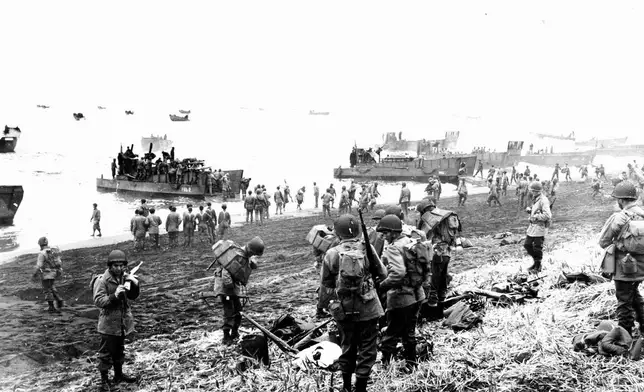
FILE - In this May 26, 1943 file photo released by the U.S. Navy, American soldiers and equipment land on the black volcanic beach during World War II at Massacre Bay on Attu Island, part of the Aleutian Islands of Alaska. (U.S. Navy via AP, File)
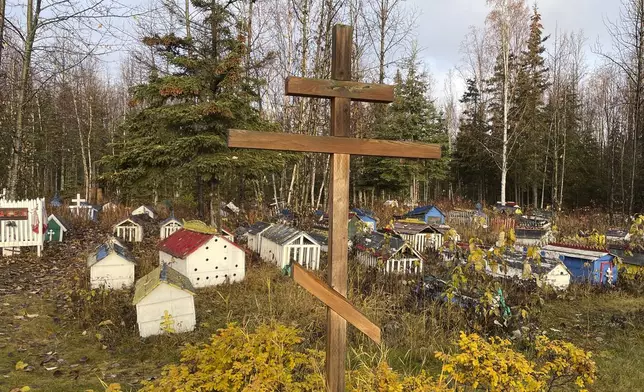
FILE - The cemetery at St. Nicholas Church in Eklutna, Alaska, features a mixture of Russian Orthodox conventions like crosses featuring three cross beams and the Dena'ina Athabascan tradition of erecting spirit homes above the graves, on Oct. 13, 2023. (AP Photo/Mark Thiessen, File)
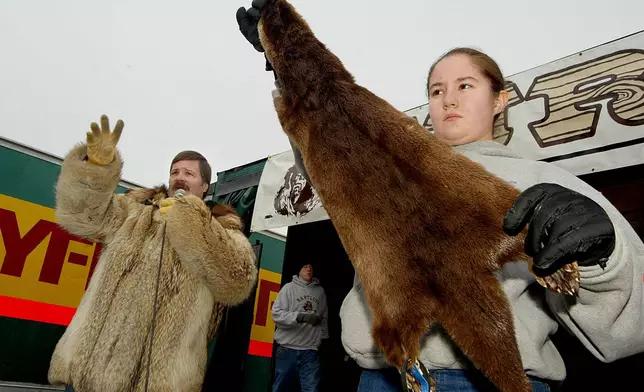
FILE - Gloriella Curtis holds up a river otter hide as Steve Childs calls off the bids during the Fur Rendezvous annual auction in Anchorage, Alaska, Feb. 29, 2004. (AP Photo/Al Grillo, File)
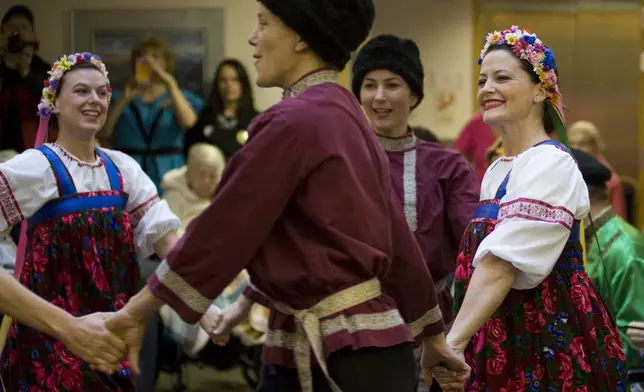
FILE - New Archangel Russian Dancers perform as part of the Alaska Day Festival celebrations on Oct. 18, 2012, in Sitka, the site of the transfer ceremony conveying Alaska from Russia to the United States in 1867. (James Poulson/Daily Sitka Sentinel via AP File)
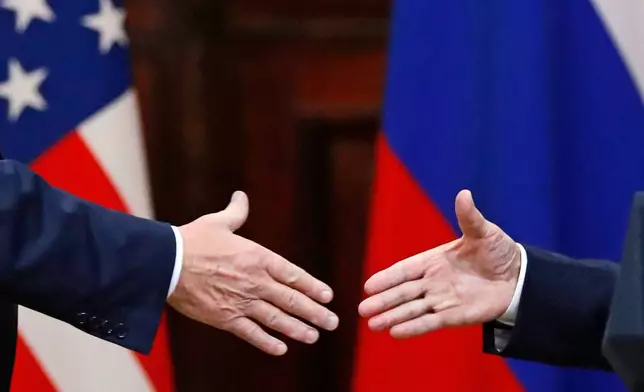
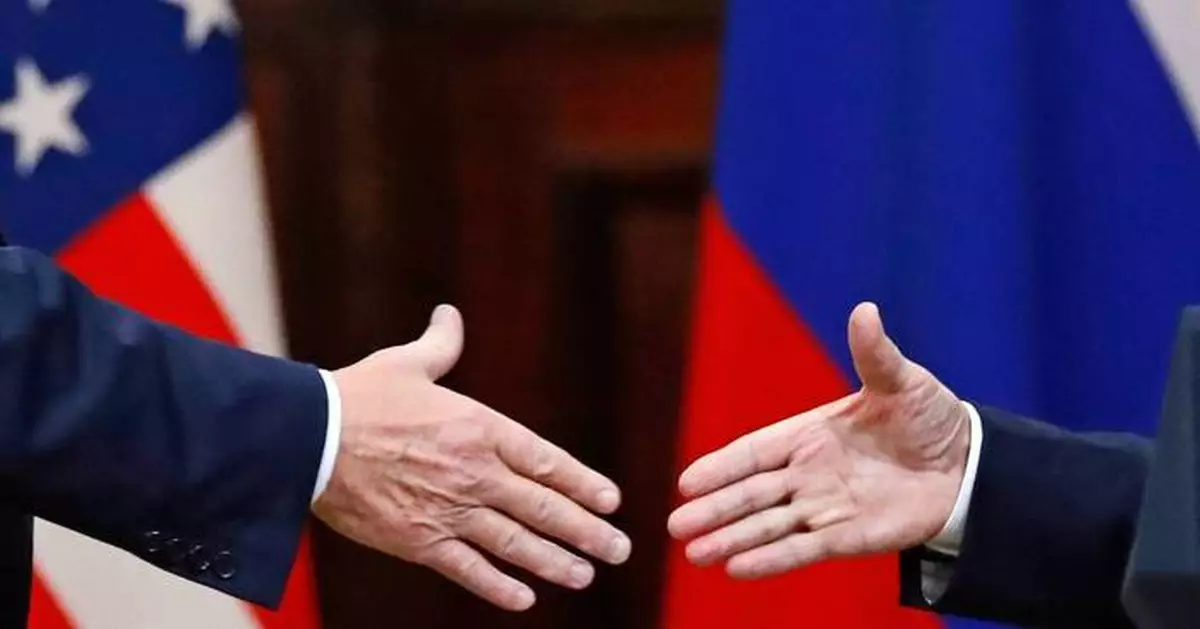
FILE - U.S. President Donald Trump shakes hand with Russian President Vladimir Putin at the end of the press conference after their meeting at the Presidential Palace in Helsinki, Finland, July 16, 2018. (AP Photo/Alexander Zemlianichenko, File)
The nations are so close — Alaska’s Little Diomede Island in the Bering Strait is less than 3 miles (5 kilometers) from Russia’s Big Diomede — that former Gov. Sarah Palin was right during the 2008 presidential race when she said, “You can actually see Russia from land here in Alaska,” though the comment prompted jokes that that was the extent of her foreign policy experience.
Alaska has been U.S. territory since 1867, and it has since been the location of the only World War II battle on North American soil, a focus of Cold War tensions and the site of occasional meetings between U.S. and world leaders.
Here's a look at Alaska's history with Russia and on the international stage:
The fur traders established hubs in Sitka and on Kodiak Island. The Russian population in Alaska never surpassed about 400 permanent settlers, according to the Office of the Historian of the U.S. State Department.
Russian settlers brutally coerced Alaska Natives to harvest sea otters and other marine mammals for their pelts, said Ian Hartman, a University of Alaska Anchorage history professor.
“It was a relationship that the Russians made clear quite early on was not really about kind of a longer-term pattern of settlement, but it was much more about a short-term pattern of extraction,” Hartman said.
Meanwhile, Russian Orthodox missionaries baptized an estimated 18,000 Alaska Natives.
By 1867 the otters had been hunted nearly to extinction and Russia was broke from the Crimean War. Czar Alexander II sold Alaska to the U.S. for the low price of $7.2 million — knowing Russia couldn't defend its interests in Alaska if the U.S. or Great Britain tried to seize it.
Skeptics referred to the purchase as “Seward's Folly,” after U.S. Secretary of State William H. Seward. That changed when gold was discovered in the Klondike in 1896.
The U.S. realized Alaska's strategic importance in the 20th century. During World War II the island of Attu — the westernmost in the Aleutian chain and closer to Russia than to mainland North America — was captured by Japanese forces. The effort to reclaim it in 1943 became known as the war's “forgotten battle.”
During the Cold War, military leaders worried Soviets might attack via Alaska, flying planes over the North Pole to drop nuclear weapons. They built a chain of radar systems connected to an anti-aircraft missile system.
Friday's summit will be at Joint Base Elmendorf-Richardson in Anchorage. The base was crucial to countering the Soviet Union during the Cold War, and it still hosts key aircraft squadrons that intercept Russian aircraft when they fly into U.S. airspace.
The military constructed much of the infrastructure in Alaska, including roads and some communities, and its experience building on permafrost later informed the private companies that would drill for oil and construct the trans-Alaska pipeline.
Last year the Pentagon said the U.S. must invest more to upgrade sensors, communications and space-based technologies in the Arctic to keep pace with China and Russia, and it sent about 130 soldiers to a desolate Aleutian island amid an increase in Russian military planes and vessels approaching U.S. territory.
Putin will be the first Russian leader to visit, but other prominent figures have come before him.
Japanese Emperor Hirohito stopped in Anchorage before heading to Europe in 1971 to meet President Richard Nixon, and in 1984 thousands turned out to see President Ronald Reagan and Pope John Paul II meet at the airport in Fairbanks.
President Barack Obama visited in 2015, becoming the first sitting U.S. president to set foot north of the Arctic Circle, on a trip to highlight the dangers of climate change.
Gov. Bill Walker welcomed Chinese President Xi Jinping at the airport in Anchorage in 2017 and then took him on a short tour of the state’s largest city.
Four years later Anchorage was the setting for a less cordial meeting as top U.S. and Chinese officials held two days of contentious talks in their first face-to-face meeting since President Joe Biden took office two months earlier.
Sentiment toward Russia in Alaska has cooled since Putin invaded Ukraine in 2022. The Anchorage Assembly voted unanimously to suspend its three-decade-long sister city relationship with Magadan, Russia, and the Juneau Assembly sent its sister city of Vladivostok a letter expressing concern.
The group Stand Up Alaska has organized rallies against Putin on Thursday and Friday.
Dimitry Shein, who ran unsuccessfully for Alaska’s lone seat in the U.S. House in 2018, fled from the Soviet Union to Anchorage with his mother in the early 1990s.
Russia and the U.S. “are just starting to look more and more alike,” he said.
Many observers have suggested that holding the summit in Alaska sends a bad symbolic message.
“It’s easy to imagine Putin making the argument during his meetings with Trump that, ‘Well, look, territories can change hands,’” said Nigel Gould-Davies, former British Ambassador to Belarus and senior fellow at the International Institute of Strategic Studies in London. “'We gave you Alaska. Why can’t Ukraine give us a part of its territory?'”
The story has been updated to correct the spelling of Vladivostok.
Johnson reported from Seattle. Associated Press writers Ed White in Detroit and Emma Burrows in London contributed.
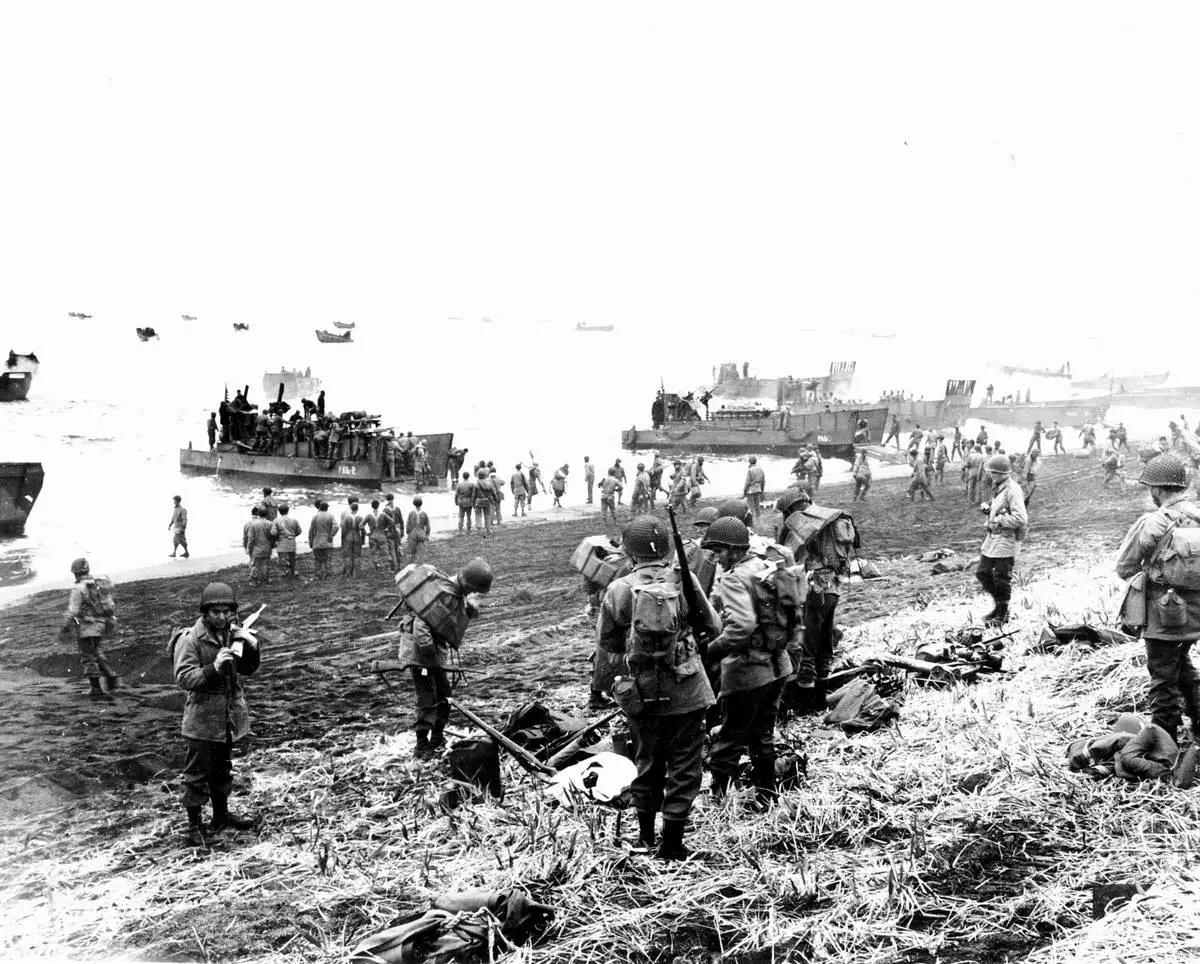
FILE - In this May 26, 1943 file photo released by the U.S. Navy, American soldiers and equipment land on the black volcanic beach during World War II at Massacre Bay on Attu Island, part of the Aleutian Islands of Alaska. (U.S. Navy via AP, File)
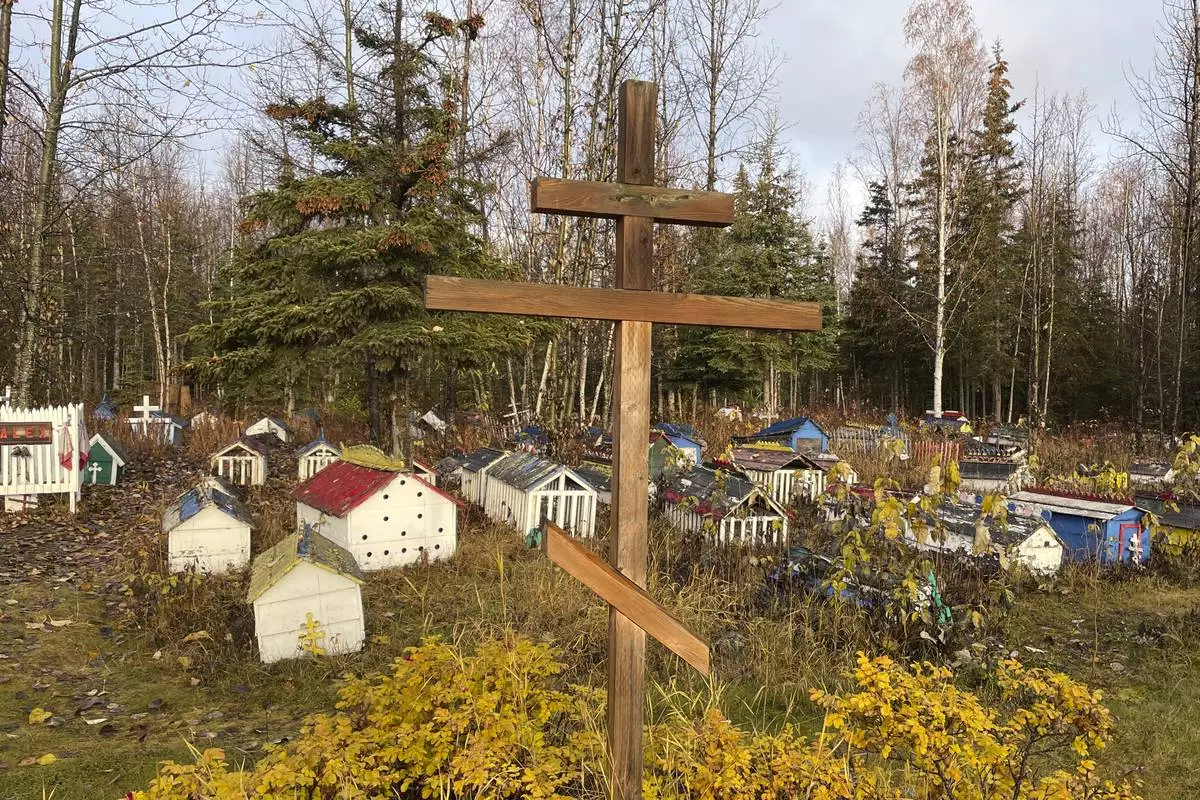
FILE - The cemetery at St. Nicholas Church in Eklutna, Alaska, features a mixture of Russian Orthodox conventions like crosses featuring three cross beams and the Dena'ina Athabascan tradition of erecting spirit homes above the graves, on Oct. 13, 2023. (AP Photo/Mark Thiessen, File)
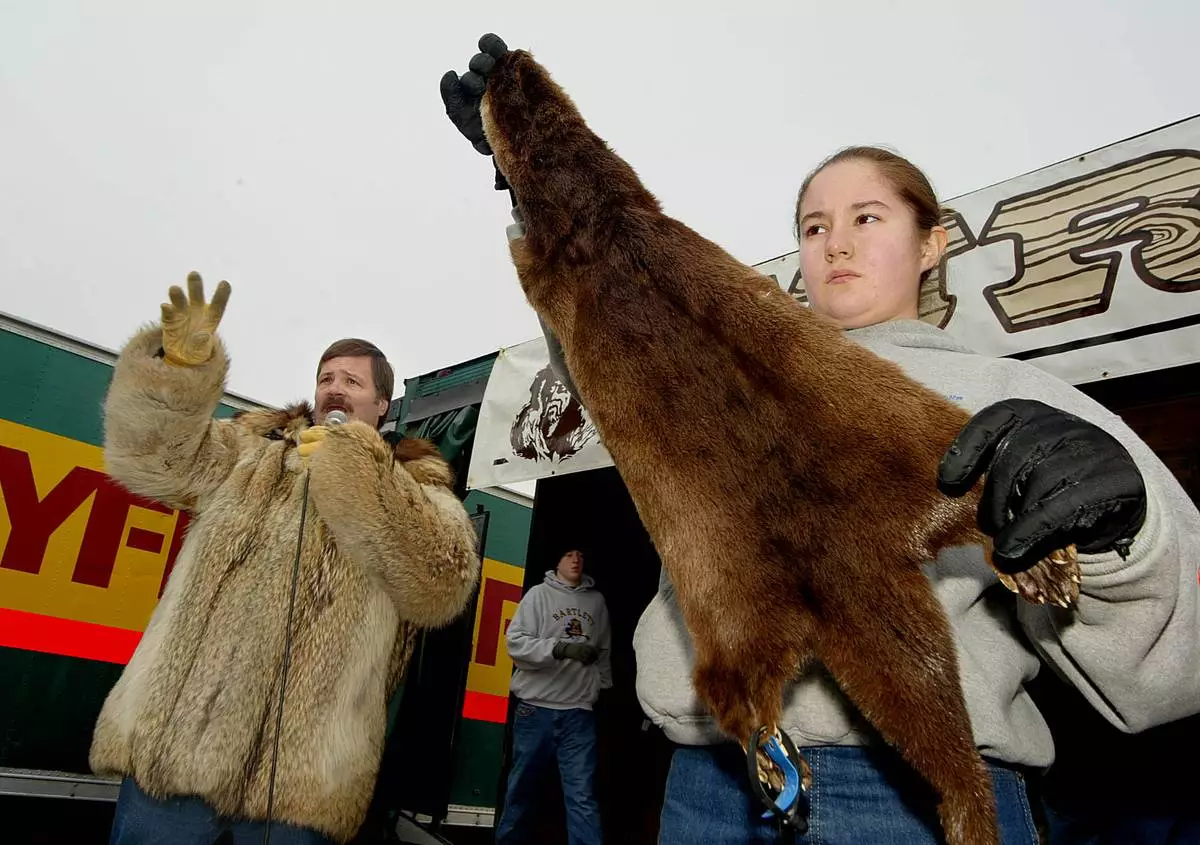
FILE - Gloriella Curtis holds up a river otter hide as Steve Childs calls off the bids during the Fur Rendezvous annual auction in Anchorage, Alaska, Feb. 29, 2004. (AP Photo/Al Grillo, File)
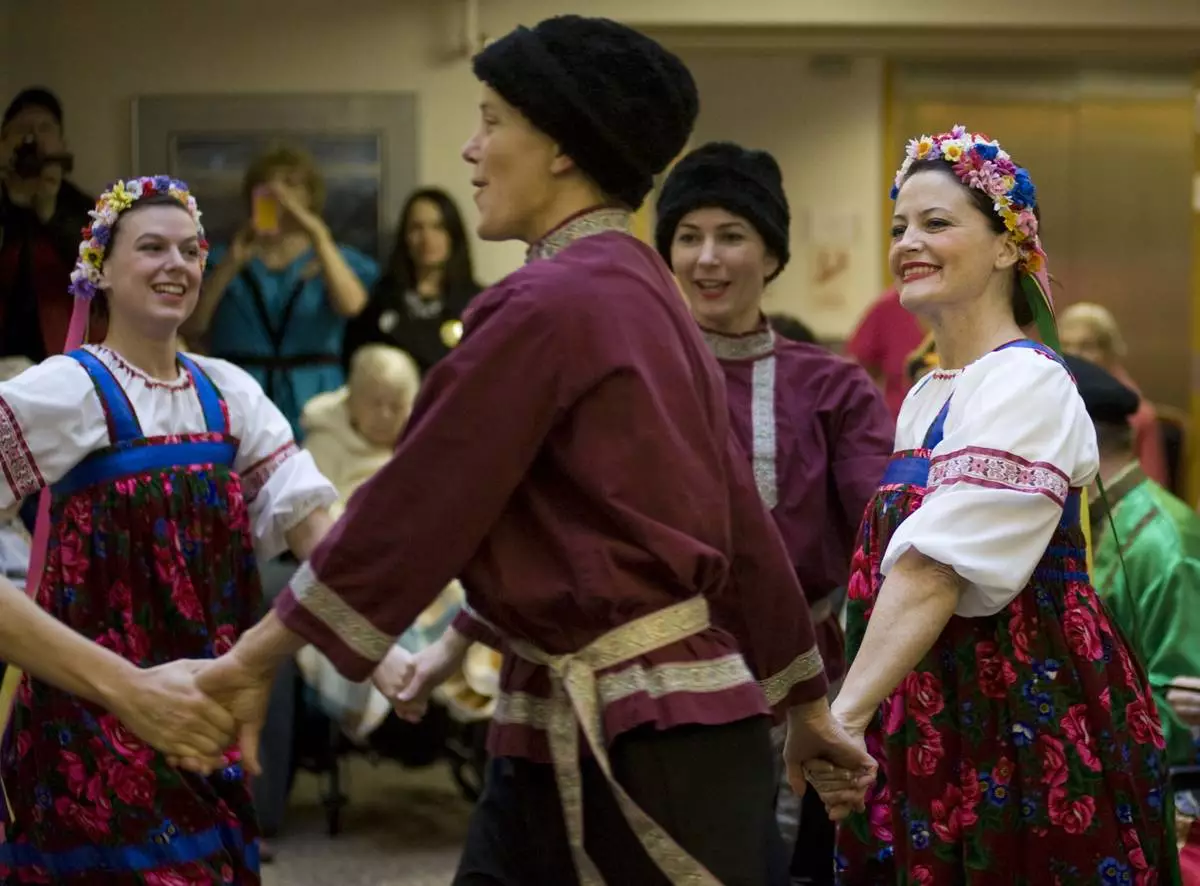
FILE - New Archangel Russian Dancers perform as part of the Alaska Day Festival celebrations on Oct. 18, 2012, in Sitka, the site of the transfer ceremony conveying Alaska from Russia to the United States in 1867. (James Poulson/Daily Sitka Sentinel via AP File)
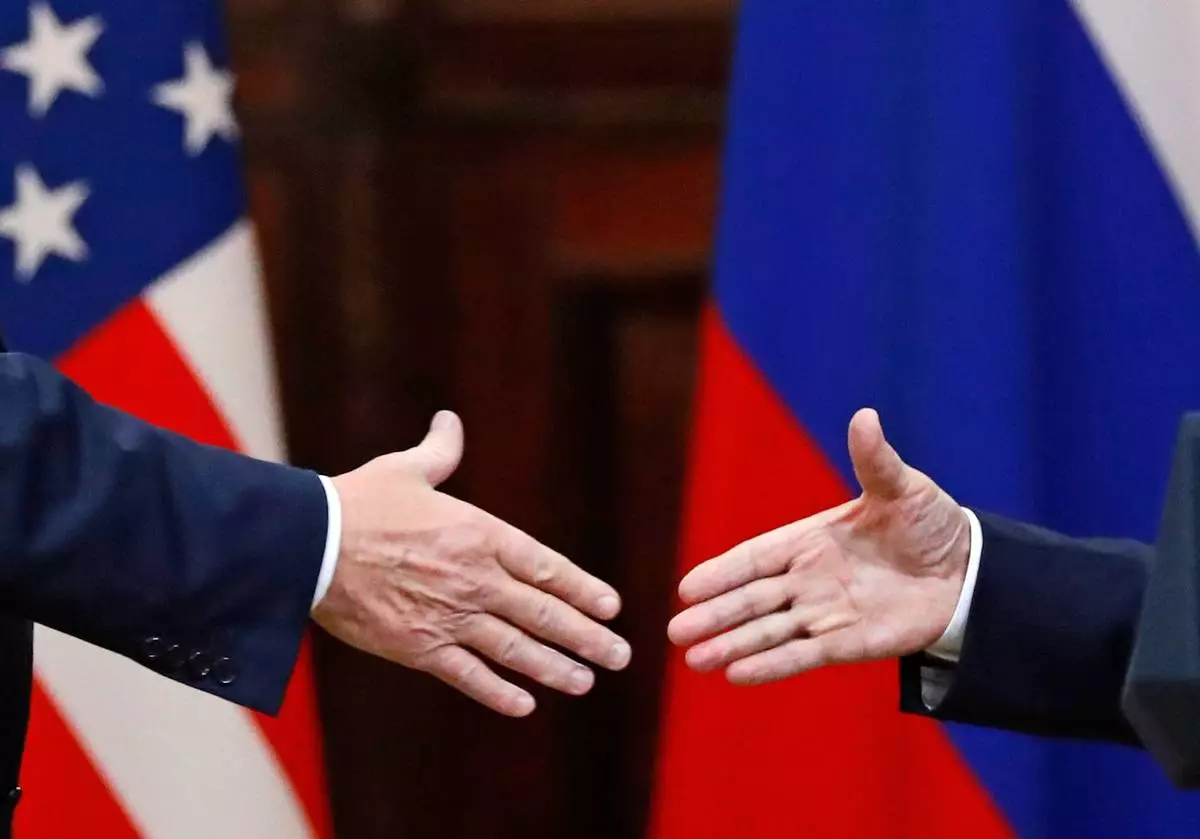
FILE - U.S. President Donald Trump shakes hand with Russian President Vladimir Putin at the end of the press conference after their meeting at the Presidential Palace in Helsinki, Finland, July 16, 2018. (AP Photo/Alexander Zemlianichenko, File)