Skip to Content Facebook Feature Image

Shopping for school supplies becomes a summer activity as families juggle technology and tariffs

News

Shopping for school supplies becomes a summer activity as families juggle technology and tariffs
News

News

Shopping for school supplies becomes a summer activity as families juggle technology and tariffs

2025-08-14 03:38 Last Updated At:15:22

NEW YORK (AP) — Feeling nostalgic for the days when going back to school meant picking out fresh notebooks, pencils and colored markers at a local drugstore or stationary shop? The annual ritual is both easier and more complicated for today’s students.

Big retail chains generate online lists of school supplies for customers who type in their zip codes, then choose a school and a grade level. One click and they are ready to check out. Some schools also offer busy parents a one-stop shop by partnering with vendors that sell premade kits with binders, index cards, pens and other needed items.

More Images
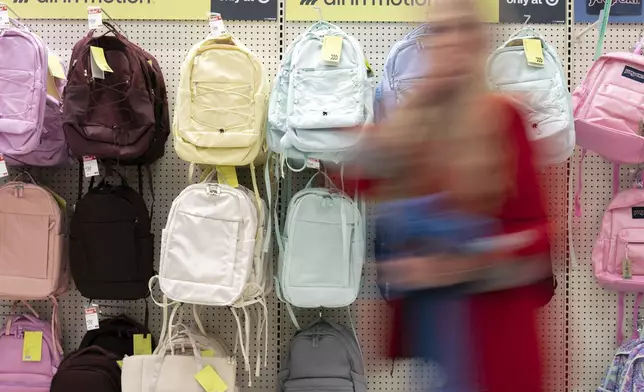
A person walks by backpacks displayed for sale in the back-to-school supplies section of a Target in Sherwood, Ore., Friday, Aug. 8, 2025. (AP Photo/Jenny Kane)

A person walks by backpacks displayed for sale in the back-to-school supplies section of a Target in Sherwood, Ore., Friday, Aug. 8, 2025. (AP Photo/Jenny Kane)
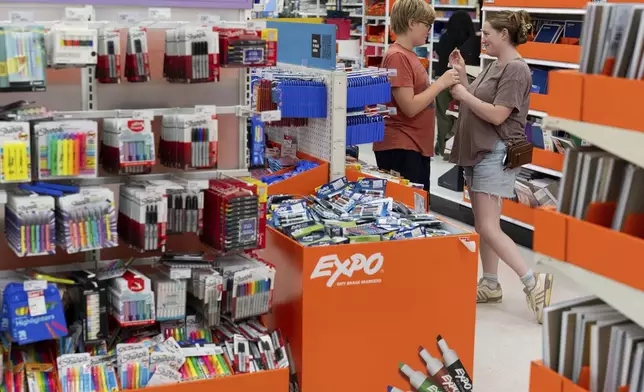
Glue is seen in a back-to-school supplies section of a Target in Sherwood, Ore., Friday, Aug. 8, 2025. (AP Photo/Jenny Kane)
Glue is seen in a back-to-school supplies section of a Target in Sherwood, Ore., Friday, Aug. 8, 2025. (AP Photo/Jenny Kane)
Kylie and Cash Zimmerman shop in the back-to-school supplies section of a Target in Sherwood, Ore., Friday, Aug. 8, 2025. (AP Photo/Jenny Kane)

Kylie and Cash Zimmerman shop in the back-to-school supplies section of a Target in Sherwood, Ore., Friday, Aug. 8, 2025. (AP Photo/Jenny Kane)

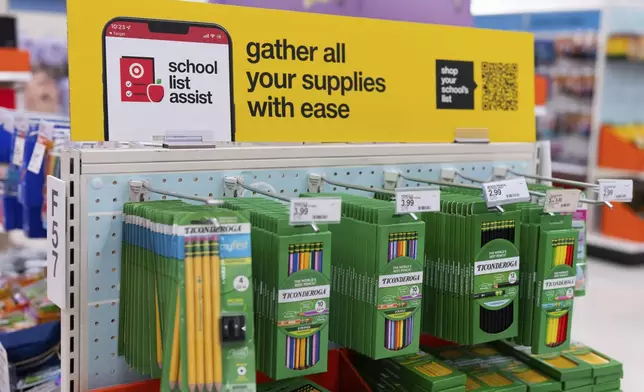
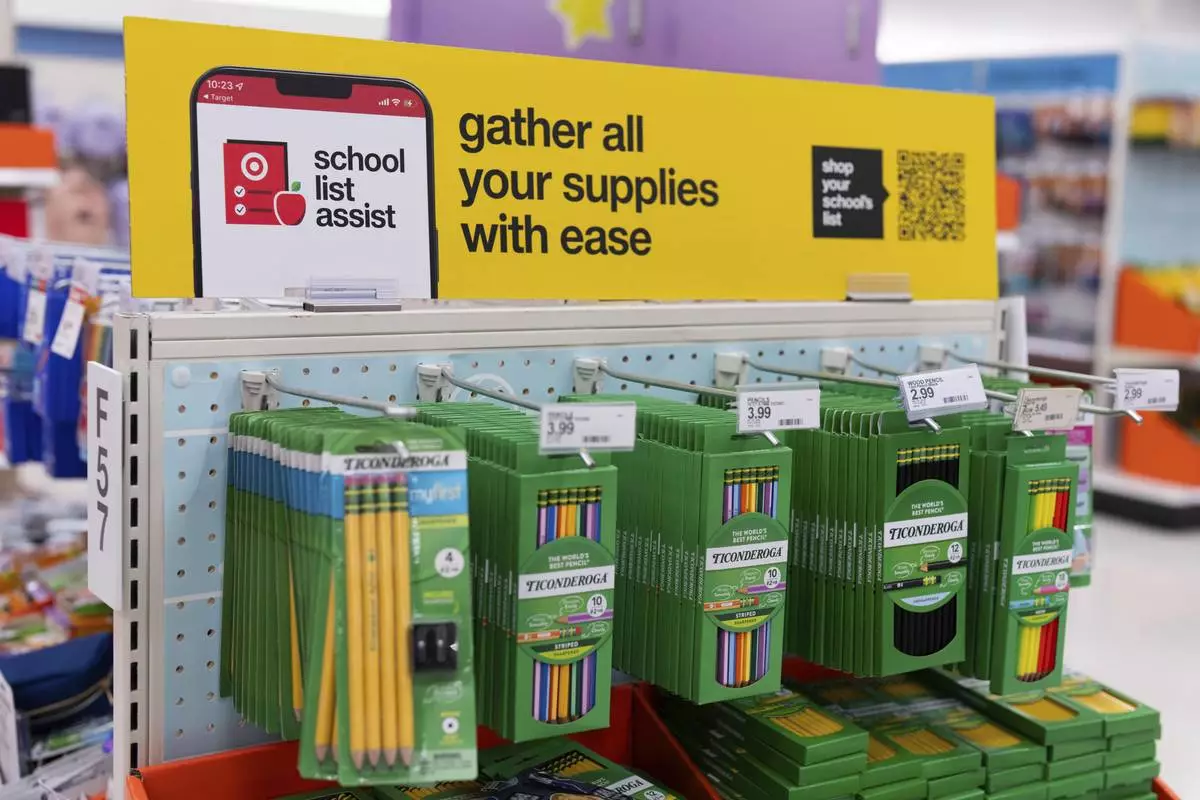
Information on a school list assist and a QR code is displayed above pencils for sale in the back-to-school supplies section of a Target in Sherwood, Ore., Friday, Aug. 8, 2025. (AP Photo/Jenny Kane)

Information on a school list assist and a QR code is displayed above pencils for sale in the back-to-school supplies section of a Target in Sherwood, Ore., Friday, Aug. 8, 2025. (AP Photo/Jenny Kane)

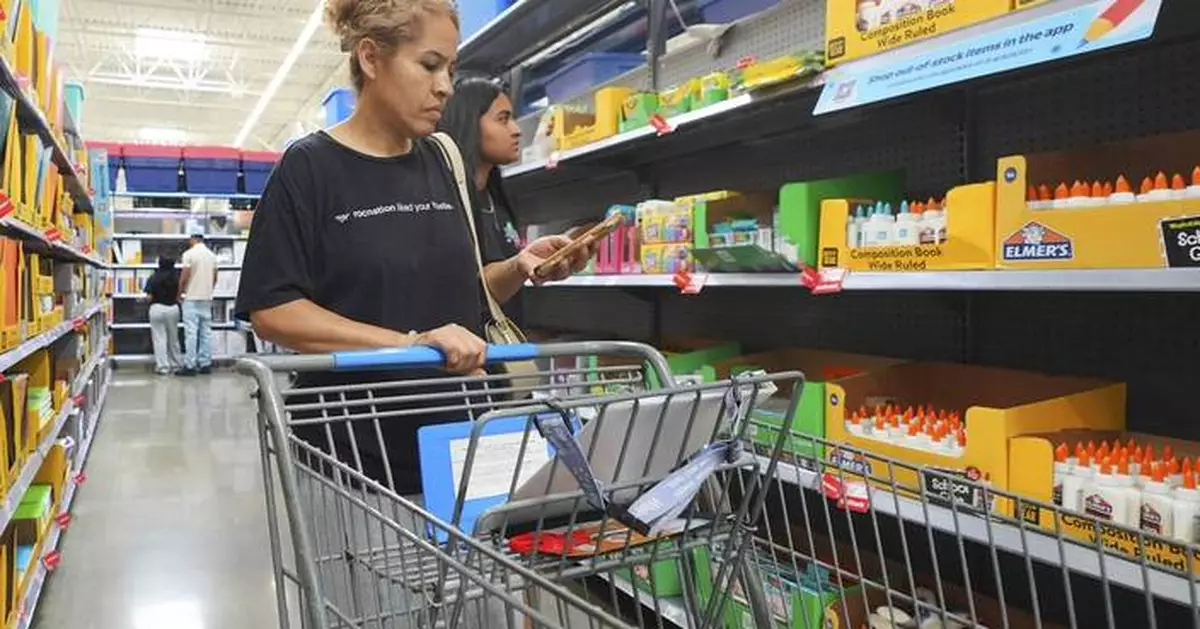
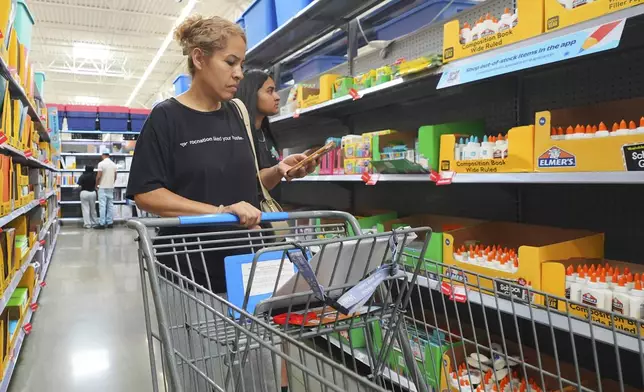
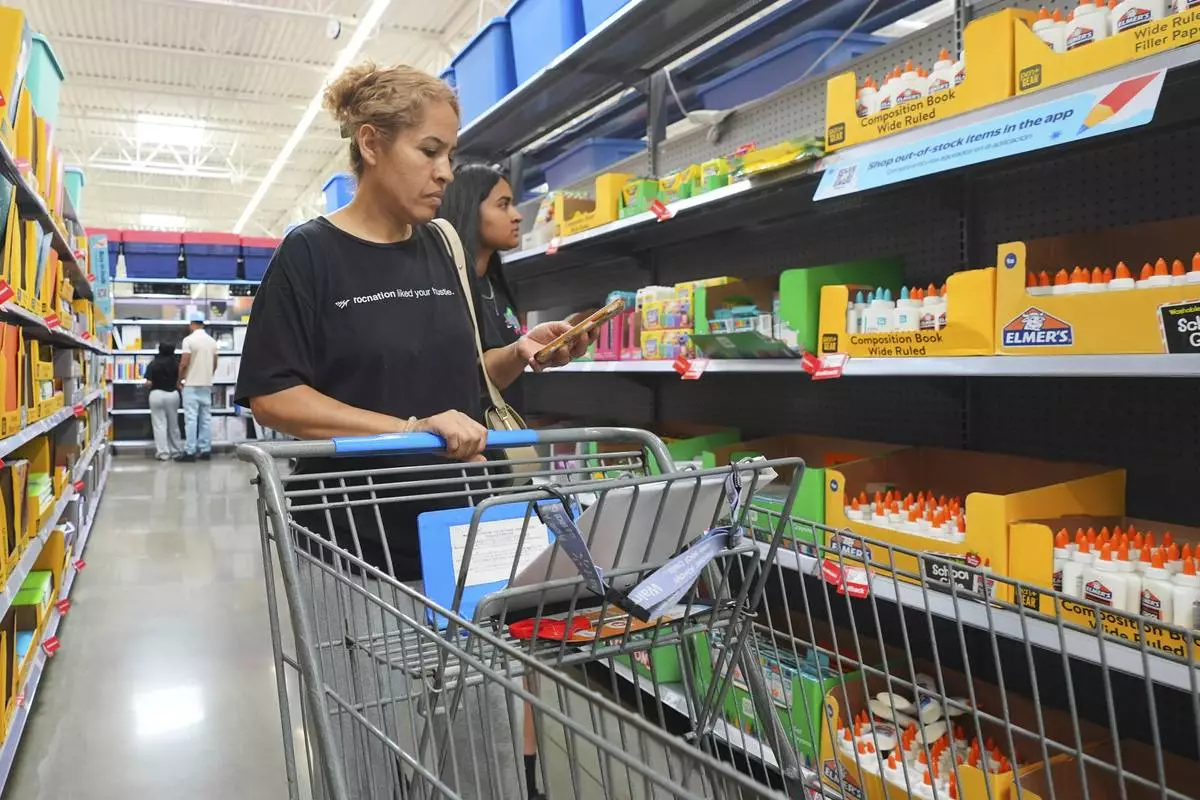
Dora Diaz, left, and her daughter Fernanda Diaz, 14, shops for school supplies at a Walmart in Dallas, Texas, Tuesday, Aug. 12, 2025. (AP Photo/LM Otero)

Dora Diaz, left, and her daughter Fernanda Diaz, 14, shops for school supplies at a Walmart in Dallas, Texas, Tuesday, Aug. 12, 2025. (AP Photo/LM Otero)

Yet for all the time-saving options, many families begin their back-to-school shopping months before Labor Day, searching around for the best deals and making purchases tied to summer sales. This year, the possibility of price increases from new U.S. tariffs on imports motivated more shoppers to get a jump start on replacing and refilling school backpacks, according to retail analysts.

Retail and technology consulting company Coresight Research estimates that back-to-school spending from June through August will reach $33.3 billion in the U.S., a 3.3% increase from the same three-month period a year ago. The company predicted families would complete about 60% of their shopping before August to avoid extra costs from tariffs.

“Consumers are of the mindset where they're being very strategic and conscientious around price fluctuations, so for back to school, it prompts them to shop even earlier,” said Vivek Pandya, lead analyst at Adobe Digital Insights, the research division of software company Adobe Inc.

Miami resident Jacqueline Agudelo, 39, was one of the early birds who started shopping for school supplies in June because she wanted to get ahead of possible price increases from new U.S. tariffs on imported products.

The teacher's supply list for her 5-year-old son, who started kindergarten earlier this month, mandated specific classroom items in big quantities. Agudelo said her shopping list included 15 boxes of Crayola crayons, Lysol wipes and five boxes of Ticonderoga brand pencils, all sharpened.

Agudelo said she spent $160 after finding plenty of bargains online and in stores, including the crayons at half off, but found the experience stressful.

“I am overwhelmed by the need to stay on top of where the deals are as shopping has become more expensive over the years,” she said.

A lot of the backpacks, lined paper, glue sticks — and Ticonderoga pencils — sold in the U.S. are made in China, whose products were subjected to a 145% tariff in the spring. Under the latest agreement between the countries, general merchandise from China is taxed at a 30% rate when it enters the U.S.

Many companies accelerated shipments from China early in the year, stockpiling inventory at pre-tariff prices. Some predicted consumers would encounter higher prices just in time for back-to-school shopping. Although government data showed consumer prices rose 2.7% last month from a year earlier, strategic discounting by major retailers may have muted any sticker shock for customers seeking school supplies.

Backpacks and lunchboxes, for example, had discounts as deep as 12.1% during Amazon's Prime Day sales and competing online sales at Target and Walmart in early July, Adobe Insights said. Throughout the summer, some of the biggest chains have advertised selective price freezes to hold onto customers.

Walmart is promoting a back-to-school deal that includes 14 supplies plus a backpack for $16, the lowest price in six years, company spokesperson Leigh Stidham said. Target said in June that it would maintain its 2024 prices on 20 key back-to-school items that together cost less than $20.

An analysis consumer data provider Numerator prepared for The Associated Press showed the retail cost of 48 products a family with two school age children might need — two lunchboxes, two scientific calculators, a pair of boy’s shoes — averaged $272 in July, or $3 less than the same month last year.

Numerator, which tracks U.S. retail prices through sales receipts, online account activity and other information from 200,000 shoppers, reported last year that households were buying fewer notebooks, book covers, writing instruments and other familiar staples as students did more of their work on computers.

The transition does not mean students no longer have to stock up on plastic folders, highlighters and erasers, or that parents are spending less to equip their children for class. Accounting and consulting firm Deloitte estimates that traditional school supplies will account for more than $7 billion of the $31 billion it expects U.S. parents to put toward back-to-school shopping.

Shopping habits also are evolving. TeacherLists, an online platform where individual schools and teachers can upload their recommended supply lists and parents can search for them, was launched in 2012 to reduce the need for paper lists. It now has more than 2 million lists from 70,000 schools.

Users have the option of clicking on an icon that populates an online shopping cart at participating retail chains. Some retailers also license the data for use on their websites and in their stores, said Dyanne Griffin, the architect and vice president of TeacherLists.

The typical number of items teacher request has remained fairly steady at around 17 since the end of the coronavirus pandemic, Griffin said. “The new items that had come on the list, you know, in the last four or five years are more the tech side. Everybody needs headphones or earbuds, that type of thing, maybe a mouse,” she said.

She's also noticed a lot of schools requiring clear backpacks and pencil pouches so the gear can't be used to stow guns.

For consumers who like to research their options before they buy, technology and retail companies have introduced generative AI tools to help them find and compare products. Rufus, the AI-powered shopping assistant that Amazon launched last year, is now joined by Sparky, an app-only feature that Walmart shoppers can use to get age-specific product recommendations and other information in response to their questions.

Just over a quarter of U.S. adults say they use AI for shopping, which is considerably lower than the number who say they use AI for tasks such as searching for information or brainstorming, according to an Associated Press-NORC Center for Public Affairs Research poll in July.

Before the pandemic turned a lot more people into online shoppers, schools and local Parent Teacher Associations embraced the idea of making back-to-school shopping easier by ordering ready-made bundles of teacher-recommended supplies. An extra fee on the price helped raise money for the school.

Market data from Edukit, a supplier of school supply kits owned by TeachersList parent company School Family Media, shows that about 40% of parents end up buying the boxes, meaning the other 60% need to shop on their own, Griffin said. She noted that parents typically must commit no later than June to secure a bundle, which focus on essentials like notebooks and crayons.

Agudelo said her son's school offered a box for $190 that focused on basics like crayons and notebooks but didn't include a backpack. She decided to pass and shop around for the best prices. She also liked bringing her son along for the shopping trips.

“There’s that sense of getting him mentally prepared for the school year,” Agudelo said. “The box takes away from that.”
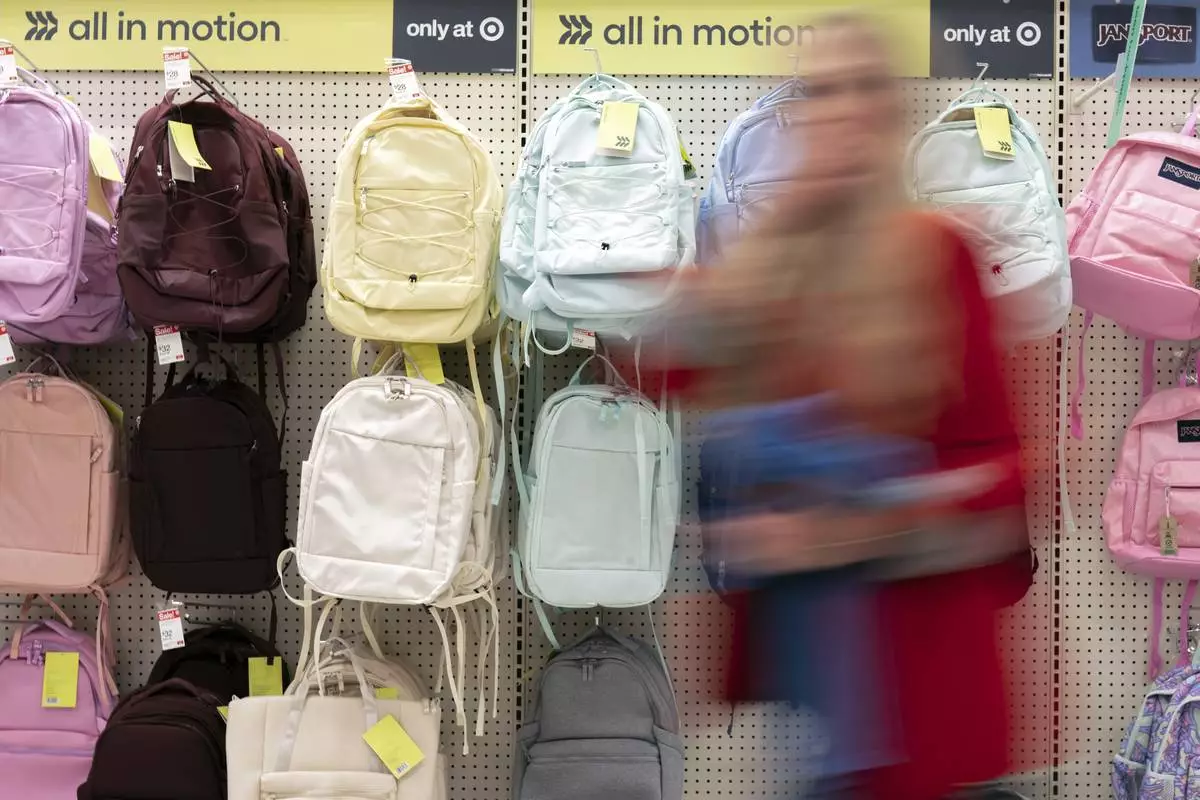
A person walks by backpacks displayed for sale in the back-to-school supplies section of a Target in Sherwood, Ore., Friday, Aug. 8, 2025. (AP Photo/Jenny Kane)

A person walks by backpacks displayed for sale in the back-to-school supplies section of a Target in Sherwood, Ore., Friday, Aug. 8, 2025. (AP Photo/Jenny Kane)
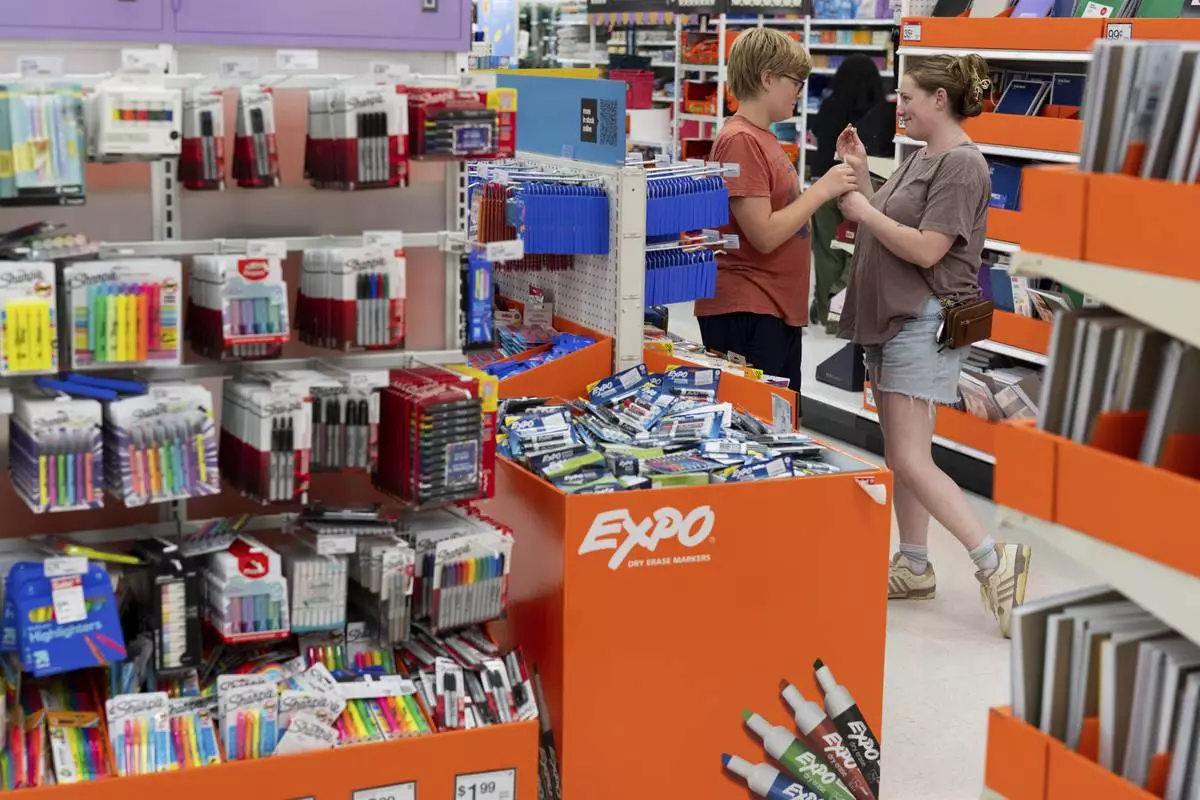
Glue is seen in a back-to-school supplies section of a Target in Sherwood, Ore., Friday, Aug. 8, 2025. (AP Photo/Jenny Kane)
Glue is seen in a back-to-school supplies section of a Target in Sherwood, Ore., Friday, Aug. 8, 2025. (AP Photo/Jenny Kane)
Kylie and Cash Zimmerman shop in the back-to-school supplies section of a Target in Sherwood, Ore., Friday, Aug. 8, 2025. (AP Photo/Jenny Kane)

Kylie and Cash Zimmerman shop in the back-to-school supplies section of a Target in Sherwood, Ore., Friday, Aug. 8, 2025. (AP Photo/Jenny Kane)

Information on a school list assist and a QR code is displayed above pencils for sale in the back-to-school supplies section of a Target in Sherwood, Ore., Friday, Aug. 8, 2025. (AP Photo/Jenny Kane)

Information on a school list assist and a QR code is displayed above pencils for sale in the back-to-school supplies section of a Target in Sherwood, Ore., Friday, Aug. 8, 2025. (AP Photo/Jenny Kane)

Dora Diaz, left, and her daughter Fernanda Diaz, 14, shops for school supplies at a Walmart in Dallas, Texas, Tuesday, Aug. 12, 2025. (AP Photo/LM Otero)

Dora Diaz, left, and her daughter Fernanda Diaz, 14, shops for school supplies at a Walmart in Dallas, Texas, Tuesday, Aug. 12, 2025. (AP Photo/LM Otero)
The U.N. Security Council scheduled an emergency meeting Thursday to discuss Iran's deadly protests at the request of the United States, even as President Donald Trump left unclear what actions he would take against the Islamic state.

Tehran appeared to make conciliatory statements in an effort to defuse the situation after Trump threatened to take action to stop further killing of protesters, including the execution of anyone detained in Tehran’s bloody crackdown on nationwide protests.

Iran’s crackdown on the demonstrations has killed at least 2,615, the U.S.-based Human Rights Activists News Agency reported. The death toll exceeds any other round of protest or unrest in Iran in decades and recalls the chaos surrounding the country’s 1979 Islamic Revolution.

Iran closed its airspace to commercial flights for hours without explanation early Thursday and some personnel at a key U.S. military base in Qatar were advised to evacuate. The U.S. Embassy in Kuwait also ordered its personnel to “temporary halt” travel to the multiple military bases in the small Gulf Arab country.

Iran previously closed its airspace during the 12-day war against Israel in June.

Here is the latest:

In a joint statement, the foreign ministers of Canada, France, Germany, Italy, Japan, the United Kingdom, the United States and the European Union’s main foreign policy chief said the G7 members were “gravely concerned” by the developments surrounding the protests, and that they “strongly oppose the intensification of the Iranian authorities’ brutal repression of the Iranian people.”

The statement, published on the EU’s website Thursday, said the G7 were “deeply alarmed at the high level of reported deaths and injuries” and condemned “the deliberate use of violence” by Iranian security forces against protesters.

The G7 members “remain prepared to impose additional restrictive measures if Iran continues to crack down on protests and dissent in violation of international human rights obligations,” the statement said.

China’s Foreign Minister Wang Yi has spoken with his counterpart in Iran, who said the situation was “now stable,” China’s Ministry of Foreign Affairs said.

Abbas Araghchi said “he hoped China will play a greater role in regional peace and stability” during the talks, according to the statement from the ministry.

“China opposes imposing its will on other countries, and opposes a return to the ‘law of the jungle’,” Wang said.

“China believes that the Iranian government and people will unite, overcome difficulties, maintain national stability, and safeguard their legitimate rights and interests,” he added. “China hopes all parties will cherish peace, exercise restraint, and resolve differences through dialogue. China is willing to play a constructive role in this regard.”

“We are against military intervention in Iran,” Turkish Foreign Minister Hakan Fidan told journalists in Istanbul on Thursday. “Iran must address its own internal problems… They must address their problems with the region and in global terms through diplomacy so that certain structural problems that cause economic problems can be addressed.”

Ankara and Tehran enjoy warm relations despite often holding divergent interests in the region.

Fidan said the unrest in Iran was rooted in economic conditions caused by sanctions, rather than ideological opposition to the government.

Iranians have been largely absent from an annual pilgrimage to Baghdad, Iraq, to commemorate the death of Imam Musa al-Kadhim, one of the twelve Shiite imams.

Many Iranian pilgrims typically make the journey every year for the annual religious rituals.

Streets across Baghdad were crowded with pilgrims Thursday. Most had arrived on foot from central and southern provinces of Iraq, heading toward the shrine of Imam al-Kadhim in the Kadhimiya district in northern Baghdad,

Adel Zaidan, who owns a hotel near the shrine, said the number of Iranian visitors this year compared to previous years was very small. Other residents agreed.

“This visit is different from previous ones. It lacks the large numbers of Iranian pilgrims, especially in terms of providing food and accommodation,” said Haider Al-Obaidi.

Europe’s largest airline group said Thursday it would halt night flights to and from Tel Aviv and Jordan's capital Amman for five days, citing security concerns as fears grow that unrest in Iran could spiral into wider regional violence.

Lufthansa — which operates Swiss, Austrian Airlines, Brussels Airlines and Eurowings — said flights would run only during daytime hours from Thursday through Monday “due to the current situation in the Middle East.” It said the change would ensure its staff — which includes unionized cabin crews and pilots -- would not be required to stay overnight in the region.

The airline group also said its planes would bypass Iranian and Iraqi airspace, key corridors for air travel between the Middle East and Asia.

Iran closed its airspace to commercial flights for several hours early Thursday without explanation.

A spokesperson for Israel’s Airport Authority, which oversees Tel Aviv’s Ben Gurion Airport, said the airport was operating as usual.

Iranian state media has denied claims that a young man arrested during Iran’s recent protests was condemned to death. The statement from Iran’s judicial authorities on Thursday contradicted what it said were “opposition media abroad” which claimed the young man had been quickly sentenced to death during a violent crackdown on anti-government protests in the country.

State television didn’t immediately give any details beyond his name, Erfan Soltani. Iranian judicial authorities said Soltani was being held in a detention facility outside of the capital. Alongside other protesters, he has been accused of “propaganda activities against the regime,” state media said.

New Zealand’s Foreign Minister Winston Peters said Thursday that his government was “appalled by the escalation of violence and repression” in Iran.

“We condemn the brutal crackdown being carried out by Iran’s security forces, including the killing of protesters,” Peters posted on X.

“Iranians have the right to peaceful protest, freedom of expression, and access to information – and that right is currently being brutally repressed,” he said.

Peters said his government had expressed serious concerns to the Iranian Embassy in Wellington.

A demonstrator lights a cigarette with a burning poster depicting Supreme Leader Ayatollah Ali Khamenei during a rally in support of Iran's anti-government protests, in Holon, Israel, Wednesday, Jan. 14, 2026. (AP Photo/Ohad Zwigenberg)

A demonstrator lights a cigarette with a burning poster depicting Supreme Leader Ayatollah Ali Khamenei during a rally in support of Iran's anti-government protests, in Holon, Israel, Wednesday, Jan. 14, 2026. (AP Photo/Ohad Zwigenberg)

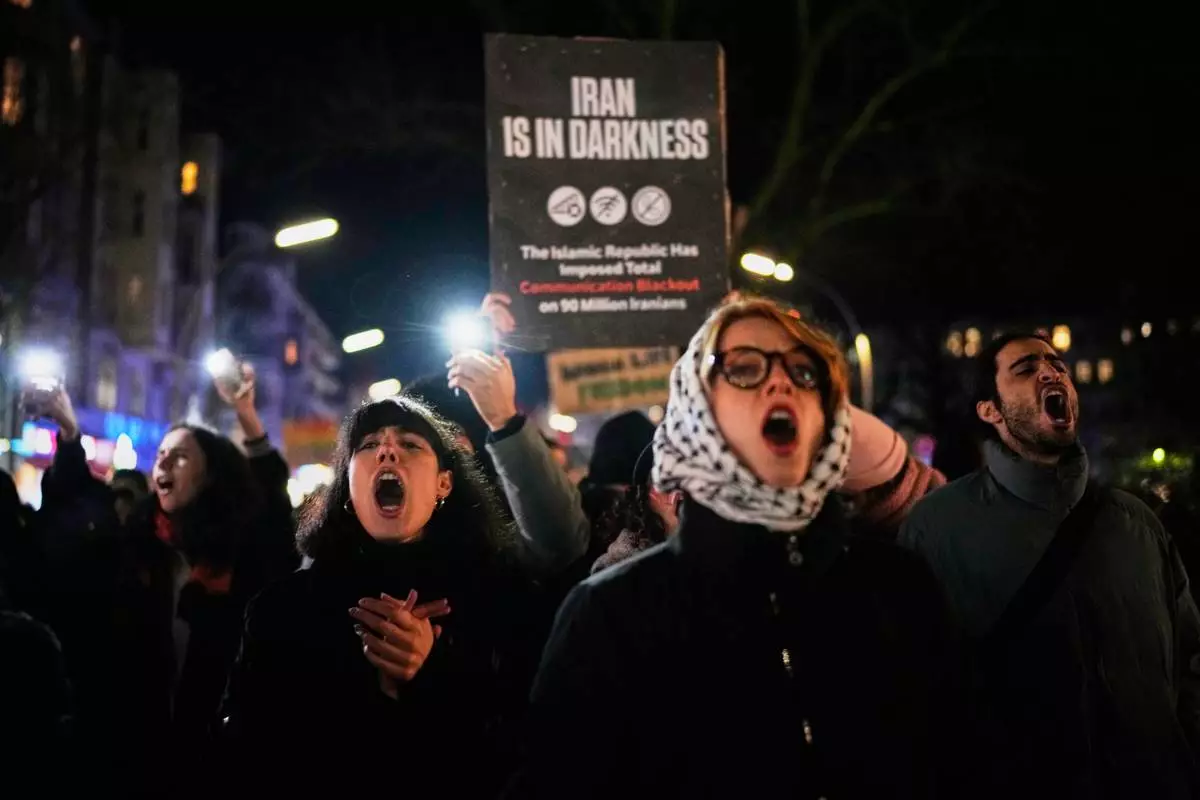
Protesters participate in a demonstration in support of the nationwide mass protests in Iran against the government, in Berlin, Germany, Wednesday, Jan. 14, 2026. (AP Photo/Ebrahim Noroozi)

Protesters participate in a demonstration in support of the nationwide mass protests in Iran against the government, in Berlin, Germany, Wednesday, Jan. 14, 2026. (AP Photo/Ebrahim Noroozi)

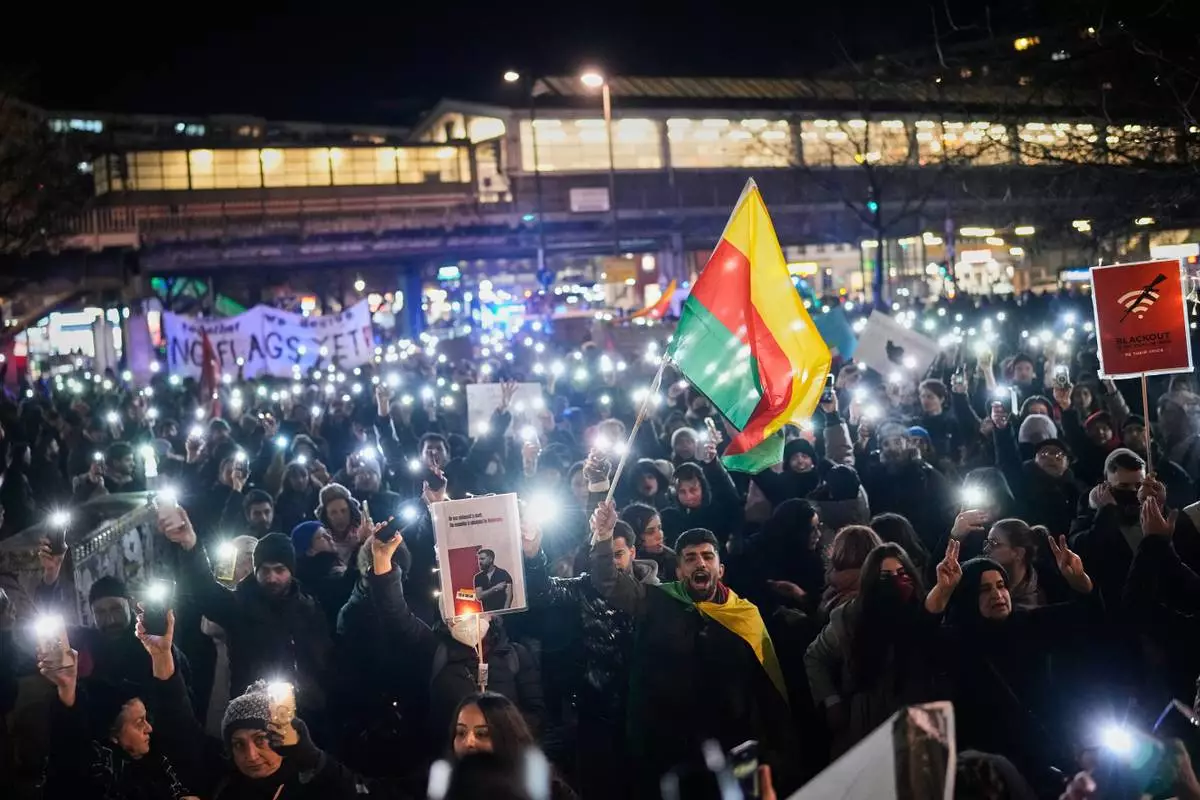
Protesters participate in a demonstration in support of the nationwide mass protests in Iran against the government, in Berlin, Germany, Wednesday, Jan. 14, 2026. (AP Photo/Ebrahim Noroozi)

Protesters participate in a demonstration in support of the nationwide mass protests in Iran against the government, in Berlin, Germany, Wednesday, Jan. 14, 2026. (AP Photo/Ebrahim Noroozi)

Recommended Articles