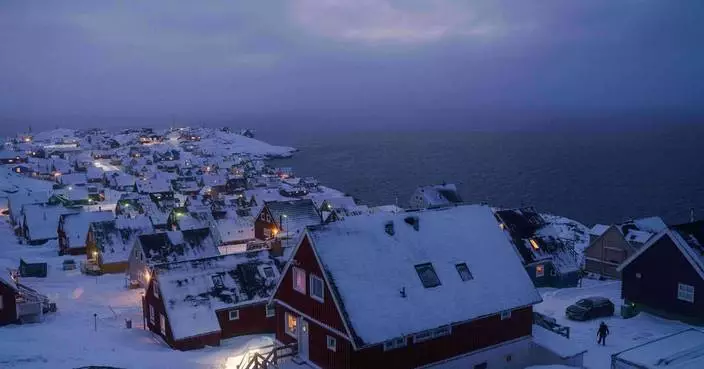
DAMASCUS, Syria (AP) — A U.N.-backed commission that investigated sectarian violence on Syria’s coast earlier this year found that there was “widespread and systematic” violence against civilians perpetrated by some government-affiliated factions, but found no evidence that it was directed by the central government.
An extensive report released Thursday by the Independent International Commission of Inquiry on Syria examined the violence that began with clashes between armed groups aligned with former Syrian President Bashar Assad and the new government’s security forces in March. It spiraled into sectarian revenge attacks and massacres that killed hundreds of civilians from the Alawite religious minority to which Assad belongs.
The violence came months after Assad was ousted in a lightning rebel offensive in December, and at a time when the country's new rulers were attempting to forge a new national army out of a patchwork of former insurgent factions.
The commission named several government-affiliated factions whose members allegedly took part in “extrajudicial killings and torture and ill-treatment" of civilians in Alawite-majority areas “in a manner that was both widespread and systematic.”
They include the 62nd and 76th divisions of the new Syrian army, also known as the Sultan Suleiman Shah Brigade and the Hamza Division — both of them formerly part of a coalition made up of Turkish-backed armed factions in northwest Syria. The report also singled out the 400th Division, made up of former brigades of Hayat Tahrir al-Sham, an Islamist rebel group that was formerly led by Syria's current interim President Ahmad al-Sharaa.
However, the report said the commission "found no evidence of a governmental policy or plan to carry out such attacks." It also found that pro-Assad armed groups had committed “acts that likely amount to crimes, including war crimes."
A separate investigation into the coastal violence ordered by the government released its findings last month. It concluded that some members of the new Syrian military had committed “widespread, serious violations against civilians,” but said there was no evidence that military leaders had ordered those attacks. The government investigation found that more than 1,400 people, most of them civilians, were killed.
In a letter in response to Thursday's U.N. report, Syrian Foreign Minister Asaad al-Shibani said the government takes “serious note of the alleged violations” and that the recommendations — which included increased screening of recruits to the security forces and recruiting from minority communities — “will serve as a roadmap for Syria's continued progress.”
When asked how the government would deal with the divisions that allegedly carried out attacks on civilians, Ibrahim Olabi, legal advisor to the Foreign Ministry, said it was “too early” to speak in detail but that “we are seeking accountability within our capabilities... in order to achieve civil peace and to ensure that these violations are not repeated.”
The U.N. commission's report noted that in the leadup to the coastal violence in March there had been scattered clashes between pro-Assad and new government forces as well as increasing incidents of “harassment and violations" against Alawite communities, "including killings, abductions, looting or occupation of property.”
In early March, pro-Assad armed groups launched a series of attacks on the General Security forces of the new government along the coast. During the clashes that followed, pro-Assad fighters also overran hospitals, shot at and abducted journalists coming to cover the conflict, and in at least one case shot and killed women and children, the report said.
With the General Security forces overwhelmed, tens of thousands of fighters from allied factions, as well as armed civilians, converged on the coast. Many began raiding houses in Alawite-majority areas, where in a large number of cases they “asked civilians whether they were Sunni or Alawi” and ”Alawi men and boys were then taken away to be executed,” the report found.
“Most victims were men of Alawi background, aged between 20 to 50 years, though women and children as young as one year old were also killed during house raids,” the report said. In some cases, the bodies were desecrated and family members were prevented from burying their dead.
The report also found that there had been widespread cases of robbery and looting by armed groups.
The commission also investigated reports of kidnapping of Alawite women and found “credible information” of at least six cases in the weeks preceding and following the main outbreak of violence in March. It is investigating “dozens” of other reports. In at least two of the confirmed cases, the victims were “abducted for the purpose of forced marriage,” while in other cases the kidnappers demanded ransoms from the victims' families.
In one particularly disturbing case prior to the coastal clashes, the report said masked men dressed in black and wearing black headbands inscribed with “There is no god but God” abducted a woman from the street and gang-raped her, then sold her to an older man to whom she was forcibly married.
“The Commission is not aware of any individuals being arrested or prosecuted yet in connection with these abductions,” the report said.
Olabi said the allegations are “criminal matters under investigation by the security authorities” and are separate from the investigation into the March coastal violence.
The report comes as Syria is reeling from another outbreak of sectarian violence last month that has again threatened the country's fragile political transition after nearly 14 years of civil war.
This time, clashes broke out in the southern Sweida province between government forces and local Bedouin tribesmen on one side, and fighters from the country’s Druze minority on the other. Hundreds were killed and tens of thousands displaced, and allegations have surfaced of government fighters executing Druze civilians and looting and burning houses.
The government has again launched an investigation into the allegations, but minority communities have become increasingly wary of the Sunni Muslim-led authorities. Last week, representatives of Syria’s various ethnic and religious groups held a conference in Kurdish-controlled northeastern Syrian city and called for the formation of a decentralized state and the drafting of a new constitution that guarantees religious, cultural and ethnic pluralism.
——
Sewell reported from Beirut.

FILE - Red Crescent workers carry a wounded man outside the Russian air base in Hmeimim, near Latakia in Syria's coastal region on March 11, 2025, as they evacuate wounded members of the Alawite sect who have sought refuge there following recent violence and revenge killings. (AP Photo/Omar Albam, File)
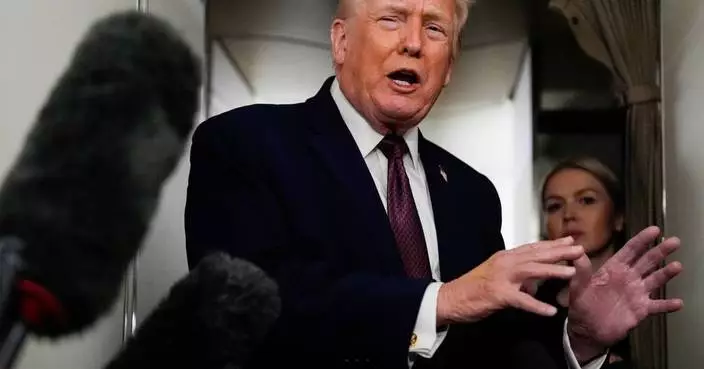
President Donald Trump is in Michigan to promote his efforts to boost U.S. manufacturing, as he tries to counter fears about a weakening job market and worries that still-rising prices are taking a toll on Americans’ pocketbooks. The day trip includes a tour of a Ford factory in Dearborn that makes best-selling F-150 pickups, and an address to the Detroit Economic Club.
It comes as the Trump administration’s criminal investigation of Federal Reserve Chair Jerome Powell has sparked an outcry, with defenders of the U.S. central bank pushing back against Trump’s efforts to exert more control over it. Federal data from December released before the president left Washington showed Inflation declined a bit last month as prices for gas and used cars fell — a sign that cost pressures are slowly easing.
In their wake of off-year election losses for the GOP, the White House said Trump would put a greater emphasis on talking directly to the public about his economic policies after doing relatively few events around the country earlier in his term.
The Latest:
The president opened with introductions and a few jokes, then immediately shifted to talking about his elections and voter ID laws, instead of the economy.
He then resumed recognizing some of the more notable people in the audience in Detroit.
The president stopped to speak to reporters while touring the auto factory and was indifferent to the idea of renegotiating the United States-Mexico-Canada trade pact, or USMCA, which is up for review this year.
“I think they want it,” he said of the other nations. “I don’t really care.”
Trump said the U.S. doesn’t need cars made in Canada or Mexico, but he wants to see them made in the U.S.
Beijing on Tuesday criticized President Donald Trump’s plan to impose an additional 25% tariff on Iran’s trading partners, which includes China, Iran’s largest trading partner.
“Tariff wars have no winners,” said Mao Ning, a spokesperson for the Chinese foreign ministry. “China will firmly protect its legitimate and lawful rights and interests.”
It’s not immediately clear if the tariff on Chinese goods will go up, because the two governments have agreed to a yearlong truce in their trade war following a summit between Trump and Chinese President Xi Jinping in October in South Korea.
On Tuesday, the Chinese commerce ministry extended anti-dumping tariffs on U.S. solar polysilicon imports. The rates are 53.3% to 57%.
U.S. Health Secretary has added two more members to his controversial vaccine advisory panel.
Dr. Kimberly Biss and Dr. Adam Urato on Tuesday were named to the Advisory Committee on Immunization Practices. The committee recommends how vaccines should be used.
Kennedy — a leading antivaccine activist before becoming the nation’s top health official — last year fired all 17 of the panel’s previous members, replacing them now with 13 that includes several anti-vaccine voices.
Biss, based in Florida, has urged pregnant women not to get the COVID-19 vaccine. Urato, based in Massachusetts, has warned about medications taken during pregnancy — particularly antidepressants.
The Clintons, in a letter released on social media, are slamming a subpoena for their testimony as “legally invalid” even as Republican lawmakers prepared contempt of Congress proceedings against them.
The Clintons wrote that the chair of the House Oversight Committee, Republican Rep. James Comer, is on the cusp of a process “literally designed to result in our imprisonment” and vowed to “forcefully defend” ourselves.
After Bill Clinton failed to show up for scheduled deposition Tuesday morning, Comer says he will being contempt of Congress proceedings next week. That would start a complicated and politically messy process that Congress has rarely reached for and could result in prosecution from the Justice Department.
The change means EPA rules for fine particulate matter and ozone will focus only on the cost to industry.
It’s part of a broader realignment under Trump toward a business-friendly approach that has included the rollback of multiple policies meant to safeguard human health and the environment and slow climate change.
The agency said in a statement that it “absolutely remains committed to our core mission of protecting human health and the environment” but “will not be monetizing the impacts at this time.”
Environmental and public health advocates called the action a dangerous abdication of one of EPA’s core missions, to protect public health. They said the change could lead to more asthma attacks, heart disease and premature deaths.
Sen. Rand Paul, a Republican who has been outspoken against the Trump administration’s overseas military pursuits, said an attack on Iran would likely harm U.S. interests and could backfire.
“I hope they are able to rise up in sufficient force to actually topple the regime,” he said about the Iranian people protesting.
“But once we start dropping bombs on their government, I mean, it can create the opposite of the intended effect, because when people — no matter who they are, whether they’re pro or against the regime — tend to be unhappy when foreign bombs are dropping on them.”
“Temporary means temporary,” Homeland Security Secretary Kristi Noem said in a statement to The Associated Press.
DHS told Fox News separately that Somalis with Temporary Protected Status must leave the U.S. by March 17, when existing protections expire. The TPS move comes amid Trump’s immigration crackdown in Minneapolis, where many Somalis have U.S. citizenship. Trump has targeted Somali immigrants with racist rhetoric and accused them of defrauding federal programs.
A congressional report last year estimated the Somali TPS population at 705 people. Noem insisted that circumstances in Somalia “have improved to the point that it no longer meets the law’s requirement for Temporary Protected Status.”
Located in the horn of Africa, Somalia is one of the world’s poorest nations and has for decades been beset by chronic strife and insecurity exacerbated by multiple natural disasters, including severe droughts.
A bill introduced by Sen. Ed Markey and Rep. Ayanna Pressley of Massachusetts would allow people to sue federal law enforcement officers for civil rights violations and remove their qualified immunity protections in such cases.
“When masked ICE agents are allowed to kill and harm people with impunity, we have crossed a dangerous threshold in our nation,” Markey said in a statement.
The bill “sends a powerful message to everyone in America — citizen or not — that when ICE agents break the law, they should and will be held accountable” Pressley said.
The bill stands little chance of passage in the GOP-controlled Congress.
Qualified immunity protects government agents from lawsuits unless they violate “clearly established” constitutional or statutory protections. Debates over the scope of the legal doctrine have held up bipartisan negotiations over policing reforms.
The Democratic National Committee will spend millions of dollars to cement control of voter registration efforts that have traditionally been entrusted to nonprofit advocacy groups and individual political campaigns. Party leaders hope the shift will increase their chances this year and cement successes for many elections to come.
The initiative being announced on Tuesday in Arizona and Nevada could become the DNC’s largest-ever push to sign up new voters. The focus is on young people, voters of color and people without college educations — demographics that drifted away from Democrats in the last presidential race, which returned Trump to the White House.
“It’s a crisis. And for our party to actually win elections, we have to actually create more Democrats,” DNC Chair Ken Martin said in an interview with The Associated Press. Party leaders want a more explicitly partisan approach like the one used by Republicans, who have relied less on outside groups to register and mobilize their voter base.
Trump said Tuesday he’s canceled talks with Iranian officials amid their protest crackdown and promised help to protesters in the country after human rights monitors said Tuesday that the death toll spiked to 2,000.
Trump did not offer any details about what the help would entail, but it comes after Trump said Iran wants to negotiate with Washington after his threat to strike the Islamic Republic. Trump’s latest message on social media appeared to make an abrupt shift about his willingness to engage with the Iranian government.
“Iranian Patriots, KEEP PROTESTING - TAKE OVER YOUR INSTITUTIONS!!!” Trump wrote in morning post on Truth Socia. “Save the names of the killers and abusers. They will pay a big price. I have cancelled all meetings with Iranian Officials until the senseless killing of protesters STOPS. HELP IS ON ITS WAY.”
The Danish government official who confirmed the support on Tuesday was not authorized to comment publicly on the sensitive matter and spoke on the condition of anonymity.
The official didn’t provide details about the support, which comes at a moment of tension between the NATO allies as Trump repeatedly calls for the U.S. to take over Greenland, a self-governing Danish territory. Vice President JD Vance and Secretary of State Marco Rubio are set to meet Wednesday in Washington with Danish Foreign Minister Lars Løkke Rasmussen and his Greenlandic counterpart Vivian Motzfeldt to discuss the matter.
Officials with Denmark and Greenland have repeatedly said the island is not for sale and expressed frustration that Trump isn’t ruling out military force to take the territory.
The White House and Pentagon did not immediately respond to requests for comment.
Danish support for the U.S. operation was first reported by Newsmax.
— By Aamer Madhani
In a social media post, Trump defended the aggressive immigration enforcement actions being carried out across Minneapolis as part of his deportation agenda.
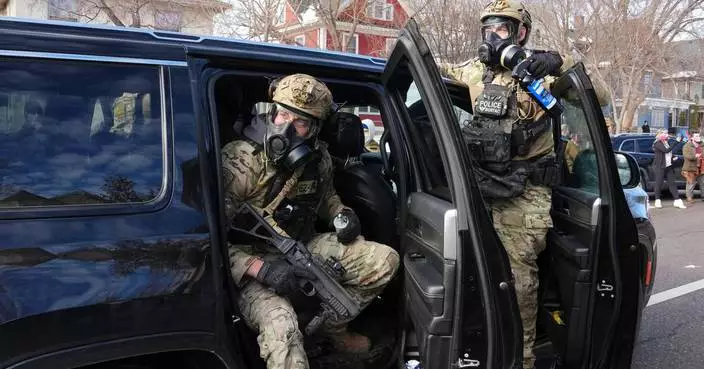
Throngs of people have taken to the streets of Minneapolis to protest the presence of Immigration and Customs Enforcement officers after a woman was shot and killed during an operation last Wednesday.
The president asserted in the post that the anti-ICE activity is also shifting the spotlight away from alleged fraud in the state and said, “FEAR NOT, GREAT PEOPLE OF MINNESOTA, THE DAY OF RECKONING & RETRIBUTION IS COMING!”
Trump blames what he calls “professional agitators” for the protests. He has not provided evidence to support his claims.
“Michiganders are feeling the effects of Trump’s economy every day,” Michigan Democratic Party chair Curtis Hertel said in a statement, singling out Republican opposition to extending health care subsidies.
“After spending months claiming that affordability was a ‘hoax’ and creating a health care crisis for Michiganders, Donald Trump is now coming to Detroit — a city he hates — to tout his billionaire-first agenda while working families suffer,” Hertel said.
It won’t be easy for Big Tech companies to win the hearts and minds of Americans who are angry about massive artificial intelligence data centers sprouting up in their neighborhoods, straining electricity grids and drawing on local reservoirs.
Microsoft is trying anyway. The software giant’s president, Brad Smith, is meeting with federal lawmakers Tuesday, pushing for the industry, not taxpayers, to pay the full costs of the vast network of computing warehouses needed to power AI chatbots like ChatGPT, Google’s Gemini and Microsoft’s own Copilot. Trump gave the effort a nod with a Truth Social post saying he doesn’t want Americans to “pick up the tab” for data centers and pay higher utility costs.
“Local communities naturally want to see new jobs but not at the expense of higher electricity prices or the diversion of their water,” Smith said in an interview with The Associated Press.
▶ Read more from the AP’s interview with Microsoft’s president
Central bankers from around the world said Tuesday they “stand in full solidarity” with U.S. Federal Reserve Chair Jerome Powell, after Trump dramatically escalated his confrontation with the Fed with the Justice Department investigating and threatening criminal charges.
Powell “has served with integrity, focused on his mandate and an unwavering commitment to the public interest,” read the statement signed by nine national central bank heads including European Central Bank President Christine Lagarde and Bank of England Governor Andrew Bailey.
They added that “the independence of central banks is a cornerstone of price, financial and economic stability in the interest of the citizens that we serve. It is therefore critical to preserve that independence, with full respect for the rule of law and democratic accountability.”
▶ Read more about the central bankers supporting Federal Reserve independence
Inflation declined a bit last month as prices for gas and used cars fell, a sign that cost pressures are slowly easing.
Consumer prices rose 0.3% in December from the prior month, the Labor Department said Tuesday, the same as in November. Excluding the volatile food and energy categories, core prices rose 0.2%, also matching November’s figure.
Even as inflation has eased, the large price increases for necessities such as groceries, rent, and health care have left many American households feeling squeezed, turning “affordability” issues into high-profile political concerns.
▶ Read more about the latest data on U.S. consumer prices
Trump’s administration has made good on its pledge to label the Lebanese, Jordanian and Egyptian chapters of the Muslim Brotherhood as terrorist organizations, imposing sanctions on them and their members. The decision could please the United Arab Emirates and Egypt, but complicate U.S. relations with allies Qatar and Turkey.
The State Department designated the Lebanese branch a foreign terrorist organization, the most severe of the labels, which makes it a criminal offense to provide material support to the group. Treasury listed the Jordanian and Egyptian branches as specially designated global terrorists for providing support to Hamas.
Nathan Brown, a professor of political science and international affairs at George Washington University, said the sanctions may impact visa and asylum claims for people entering not just the U.S. but also Western European countries and Canada.
▶ Read more about the terrorist designations
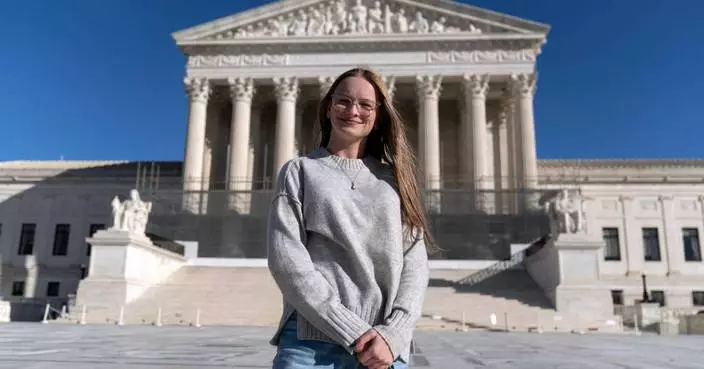
The Supreme Court is hearing arguments Tuesday over state laws barring transgender girls and women from playing on school athletic teams. Lower courts ruled for the transgender athletes in Idaho and West Virginia who challenged the state bans, but the conservative-dominated Supreme Court might not follow suit.
In just the past year, the justices ruled in favor of state bans on gender-affirming care for transgender youths and allowed multiple restrictions on transgender people to be enforced.
The legal fight is playing out amid a broad effort by Trump to target transgender Americans, beginning on the first day of his second term and including the ouster of transgender people from the military and declaring that gender is immutable and determined at birth.
Defense Secretary Pete Hegseth said Monday that Elon Musk’s artificial intelligence chatbot Grok will join Google’s generative AI engine in operating inside the Pentagon network, as part of a broader push to feed as much of the military’s data as possible into the developing technology.
“Very soon we will have the world’s leading AI models on every unclassified and classified network throughout our department,” Hegseth said in a speech at Musk’s space flight company, SpaceX, in South Texas.
The announcement comes just days after Grok — which is embedded into X, the social media network owned by Musk — drew global outcry and scrutiny for generating highly sexualized deepfake images of people without their consent.
Malaysia and Indonesia have blocked Grok, while the U.K.’s independent online safety watchdog announced an investigation Monday. Grok has limited image generation and editing to paying users.
Hegseth said Grok will go live inside the Defense Department later this month and announced that he would “make all appropriate data” from the military’s IT systems available for “AI exploitation.” He also said data from intelligence databases would be fed into AI systems.
▶ Read more about Grok’s new role in the Defense Department
Trump has arrived at a delicate moment as he weighs whether to order a U.S. military response against the Iranian government as it continues a violent crackdown on protests.
He has repeatedly threatened Tehran with military action if his administration found the Islamic Republic was using deadly force against antigovernment protesters. It’s a red line that Trump has said he believes Iran is “starting to cross” and has left him and his national security team weighing “very strong options.”
But the U.S. military — which Trump has warned Tehran is “locked and loaded” — appears, at least for the moment, to have been placed on standby mode as Trump ponders next steps, saying that Iranian officials want to have talks with the White House.
Trump announced Monday on social media that he would slap 25% tariffs on countries doing business with Tehran “effective immediately” — his first action aimed at penalizing Iran for the protest crackdown, and his latest example of using tariffs as a tool to force friends and foes on the global stage to bend to his will.
▶ Read more about Trump and Iran
The BBC plans to ask a court to throw out U.S. President Donald Trump’s $10 billion lawsuit against the British broadcaster, court papers show.
Trump filed a lawsuit in December over the way the BBC edited a speech he gave on Jan. 6, 2021. The claim, filed in a Florida federal court, seeks $5 billion in damages for defamation and $5 billion for unfair trade practices.
The broadcaster has apologized to Trump over the edit of the Jan. 6 speech. But the publicly funded BBC rejects claims it defamed him. The furor triggered the resignations of the BBC’s top executive and its head of news.
Papers filed Monday in U.S. District Court in Miami say the BBC will file a motion to dismiss the case on March 17 on the basis that the court lacks jurisdiction and Trump failed to state a claim.
The broadcaster’s lawyers will argue that the BBC did not create, produce or broadcast the documentary in Florida and that Trump’s claim the documentary was available in the U.S. on streaming service BritBox is not true.
▶ Read more about the lawsuit
Trump will travel to Michigan on Tuesday to promote his efforts to boost U.S. manufacturing, trying to counter fears about a weakening job market and worries that still-rising prices are taking a toll on Americans’ pocketbooks.
The day trip will include a tour of a Ford factory in Dearborn that makes F-150 pickups, the bestselling domestic vehicle in the U.S. The Republican president is also set to address the Detroit Economic Club at the MotorCity Casino.
November’s off-year elections showed a shift away from Republicans as public concerns about kitchen table issues persist. In their wake, the White House said Trump would put a greater emphasis on talking directly to the public about his economic policies after doing relatively few events around the country earlier in his term.
Trump’s Michigan swing follows economy-focused speeches he gave last month in Pennsylvania — where his gripes about immigrants arriving to the U.S. from “filthy” countries got more attention than his pledges to fight inflation — and North Carolina, where he insisted his tariffs have spurred the economy, despite residents noting the squeeze of higher prices.
▶ Read more about Trump’s trip to Michigan
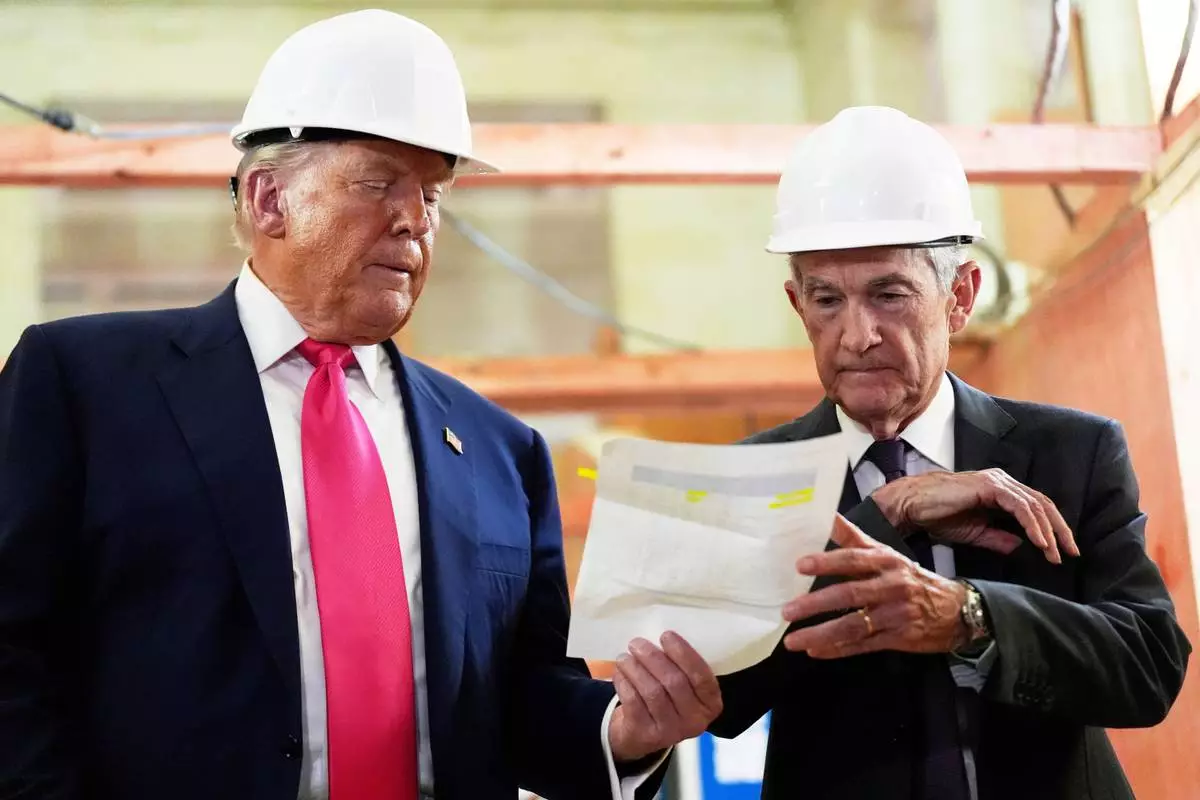
FILE - Federal Reserve Chairman Jerome Powell, right, and President Donald Trump look over a document of cost figures during a visit to the Federal Reserve, July 24, 2025, in Washington. (AP Photo/Julia Demaree Nikhinson, File)
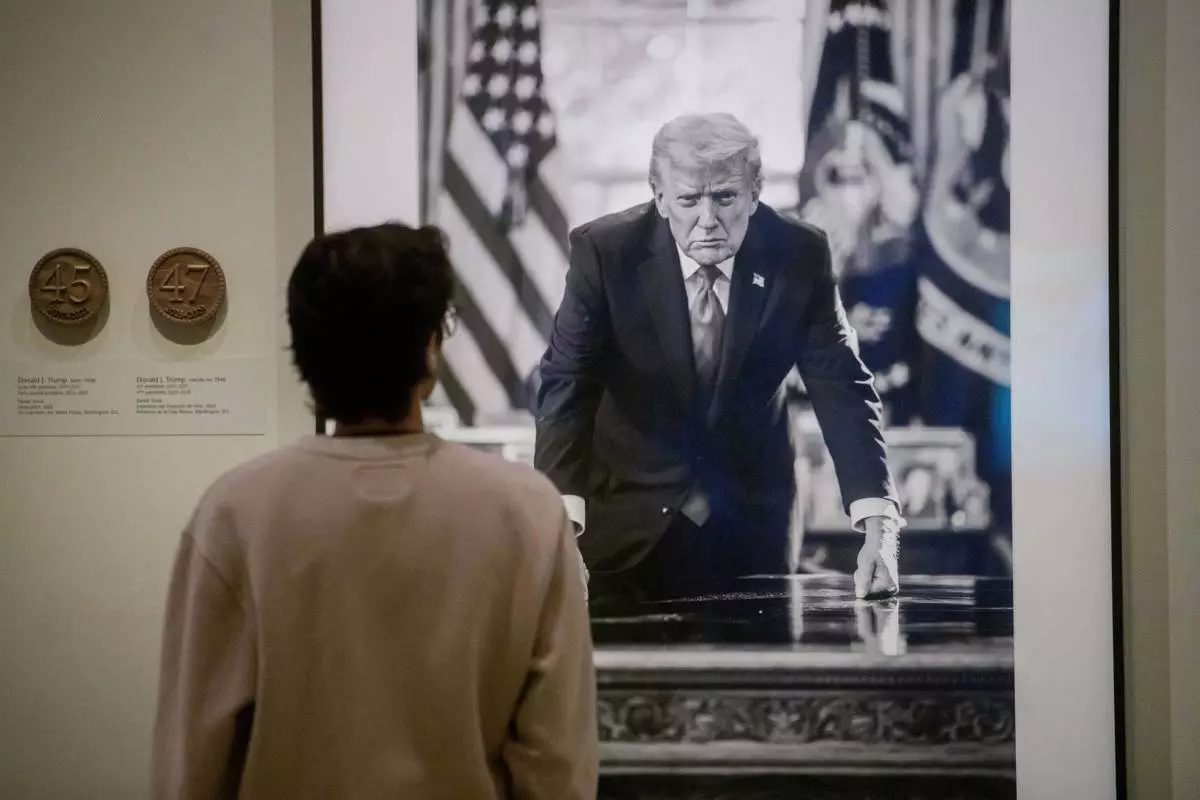
A visitor stops to look at a photograph of President Donald Trump and a short plaque next to it are on display at the Smithsonian's National Portrait Gallery's "American Presidents" exhibit on Sunday, Jan. 11, 2026 in Washington. (AP Photo/Rod Lamkey, Jr.)