Shanghai's Fengxian District has undergone a remarkable transformation from its agricultural roots to become China's undisputed "Capital of Cosmetics," with its Oriental Beauty Valley now standing as the nation's premier beauty industry cluster.
This specialized zone, established in 2015, has attracted over 700 companies and generates nearly 100 billion yuan (about 13.93 billion U.S. dollars) in annual output, representing about 40 percent of Shanghai's entire cosmetics industry.
The valley's comprehensive ecosystem spans the full supply chain, from cutting-edge research and development facilities and raw material suppliers to smart manufacturing plants and global marketing operations.
For leading players in the industry like Shanghai-based skincare and cosmetics solution provider Chando, setting up its presence in the valley enables easier access to local resources, professionals, research capabilities and links with upstream and downstream service providers.
"There are more than 700 cosmetics companies operating in the Valley, covering the whole industrial chain, from innovation, raw materials, intelligent manufacturing to brand marketing. Domestic companies like us can take advantage of the resources here to make partnerships easily with upstream and downstream firms, which largely helps us cut costs. We now run a 130,000-square-meter production plant there. And this October, our exhibition center there will be open to the public," said Jenny Chen, Chando's general manager of public affairs.
Looking beyond domestic success, the Oriental Beauty Valley is actively expanding its global markets. More prominent international names are joining in and many events focusing on the global trends of the beauty and cosmetics industry are also held there to build bridges between big cosmetics makers and beauty projects.
"We've held an annual international cosmetics conference since 2018. The event will always bring together experts, scholars, and industry leaders to discuss the trend and development of the beauty and health industry. Also, we have set up our center in the Republic of Korea this year. We hope we can help the companies registered in our Valley to make a mark on the global stage," said Zhu Liang, deputy general manager of Oriental Beauty Valley Group.
Local authorities have implemented robust support measures, including 11 specialized trade facilitation policies introduced since June, with more expected in the coming months. The Fengxian Customs has established direct communication channels to quickly address industry needs.
"We have sent officials to the General Administration of Customs to let them know the needs of the companies in the Beauty Valley. We also hold talks between the Valley, Shanghai Industry Comprehensive Development Zone as well as the General Administration of Customs, to explore more solutions for those companies. With more problems solved, those cosmetics companies will have more confidence in expanding their businesses here," said Qiu Shuhong, deputy director of Fengxian Customs.
During the first five months of the year, Shanghai Customs reported an import and export value exceeding 25 billion yuan in cosmetics and toiletries, accounting for 35 percent of the country's total. With more supportive policies launched, the number is expected to further grow in the second half of 2025.
Nationwide retail sales of cosmetics reached a five-year high during the first six months of 2025. Domestic brands captured 55 percent of the market share, maintaining their lead over international competitors. The market has achieved another historic high in retail sales. Total online and offline retail sales reached around 550 billion yuan, or about 76.6 billion U.S. dollars, during the first half of this year, while emerging segments like men's skincare and fragrances showed particularly strong growth.
In 2024, China maintained its position as the world's largest cosmetics market for the second consecutive year, with annual sales surpassing 1 trillion yuan.
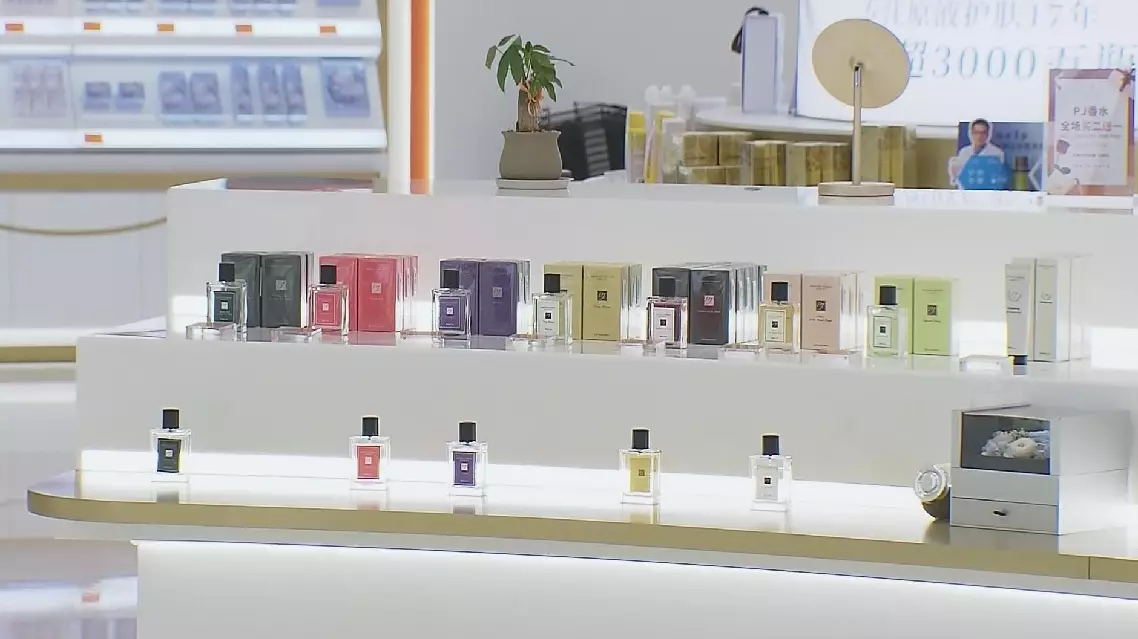
Shanghai's Oriental Beauty Valley emerges as China's cosmetics powerhouse