VILLARS-SUR-OLLON, Switzerland (AP) — Five teams and 30 of the world's top cyclists have been removed from the women's Tour de Romandie in a dispute over GPS trackers on riders, the sport's governing body said as the race began Friday.
The excluded riders made up nearly a third of the field for the three-day race in Switzerland and included 2024 Tour de France winner Katarzyna Niewiadoma.
The International Cycling Union said the teams had been asked to each pick one rider to wear a GPS tracker ahead of a wider rollout of the device to all riders at the world championships in Rwanda next month. They refused to nominate riders and were excluded from the race, the UCI said. All 30 riders were listed as non-starters on the race website.
“It is deplorable to witness the refusal of certain teams to move forward together to protect the safety of riders, and the UCI condemns their non-cooperation,” the UCI said. It also claimed that some of the teams were part of an organization developing a rival tracking system.
The exclusions may not be the end of the matter. The UCI said it “shall consider if other measures are warranted” under its regulations.
In a joint statement, the five teams said they supported measures to make cycling safer but disagreed with how the UCI went about it. Forcing teams to pick one rider to wear the UCI-mandated device meant they had to “discriminate one rider against other riders,” they said.
“This action disregards the rights of teams and riders, applies the measure in a discriminatory manner, and contradicts the UCI’s own stated commitment to dialogue with stakeholders,” the teams said.
“We are always at the forefront to make cycling a safer sport, but it should be achieved through collaboration, not coercion.”
The UCI says it wants to introduce the trackers to ensure a quick response to crashes.
At last year’s world championships in Switzerland, 18-year-old cyclist Muriel Furrer died after sustaining a head injury in a crash.
She was competing in the junior women’s event on rain-slicked roads when she crashed in a forest area south of Zurich. She reportedly lay alone for almost an hour and a half before she was discovered at the side of the road and airlifted by helicopter to the hospital.
AP sports: https://apnews.com/sports

FILE - Tour de France Women's winner Katarzyna Niewiadoma of Poland, wearing the overall leader's yellow jersey, celebrates on the podium after the eighth stage of the Tour de France Women cycling race with start in Le Grand-Bornand and finish in Alpe d'Huez, France, Sunday, Aug. 18, 2024. (AP Photo/Peter Dejong, file)
Moderator:
• Dr Eric Chee-hang Yip, Executive Director, Intermediaries Division, Securities and Futures Commission (“SFC”)
Speakers:
• Mr George Gaffney, Chief Operating Officer, Bullish Group
• Mr Christopher Hui, Secretary for Financial Services and the Treasury, the Government of the HKSAR
• Dr Hon Johnny Kit-chong Ng, Member of the Legislative Council of the HKSAR
Mr Christopher Hui
• On Traditional Finance (TradFi) and the rise of Defi, Chris Hui acknowledged that there will be eventual convergence between the two. He shared that “For the innovators, they now increasingly come to realize that they need applications for technology to be utilized and for the benefits to be seen. At the same time, the conventional banking financial market people also feel there’s pressure externally from their customers and internally for them to innovate. In terms of the conflict… it is easier to reconcile than before, as the two sides now know that they need each other.”
• On other jurisdictions’ dedicated regulatory approach towards digital assets, Chris Hui shared that Hong Kong considered taking a similar approach but foresaw “the convergence” between TradFi and DeFi, noting that “if you have a separate regulator which is detached from daily regulation of conventional market, synergy will be very difficult.” He noted that “in terms of leading implementation of digital asset-related initiatives…what we have done is to ensure that this convergence can happen at the same time, smoothly.”
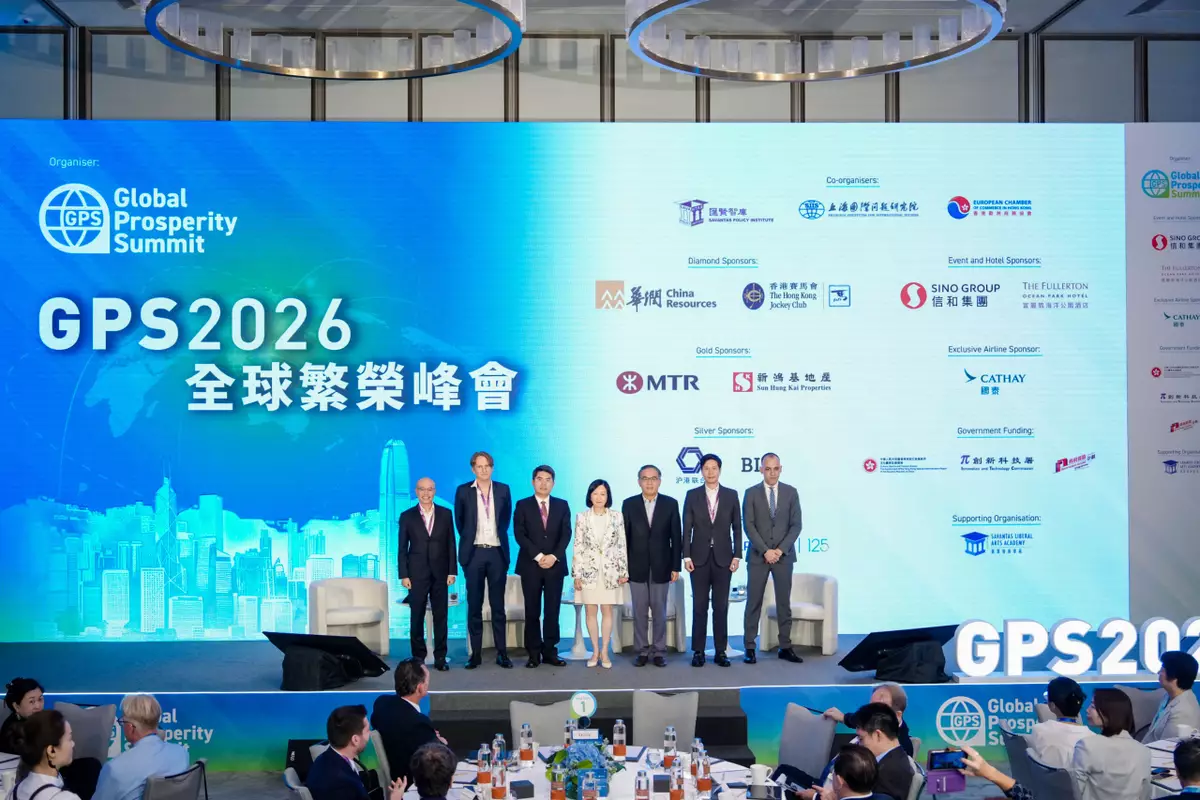
Discussion highlights of the second day of panel discussions at GPS2026 Panel 3: The Good, the Bad and the Ugly in the Crypto World .
Dr Hon Johnny Kit-chong Ng
• Johnny Ng mentioned that jurisdictions like UAE and Korea are very active in trading digital assets and cryptos. He shared that “unlike the practice in Hong Kong, these places have dedicated? crypto or digital assets regulators. To attract talents and investors from all over the world to Hong Kong, we should learn from the good practices from other jurisdictions, and to take precautions against the unpredictable.”
• Eric Yip shared that "regulators have to balance between their contradictory mandates.Markets will always evolve faster than any regulator can promulgate new rules and regulations. Contradictions in the industry are: fast vs slow’ innovation versus traditions;TradFi versus crypto…. But, it seems that the conflicting concepts are converging." He asked Johnny Ng, "how Hong Kong should balance [these] conflicting forces."
• Johnny Ng advised that "regulators should use advanced technologies to combat against technological challenges - blockchain data are available online, and with the most critical risks being anti-money laundering (AML), know-your-customer (KYC). While Hong Kong is a small and open economy, we have to observe the regulatory requirements, both from Hong Kong and other parts of the world. Our government and also regulators should use state of the art technologies to tackle all these problems so that the industry can develop quickly but at the same time operates in a safe environment, hence balancing development and security."
Mr George Gaffney
• Regarding blockchain, George Gaffney emphasized that “the technology is publicly visible,” where “you can see every transaction that’s ever occurred. They can never be deleted. You can build things like KYC into the blockchain itself.” He noted that “we need more cross pollination [between] the regulators… and the businesses, we need more blockchain expertise… Blockchain doesn’t just apply to a single asset class, it applies to multiple asset classes… Hence, a way has to be worked out to simplify connections and communications of both sides.”
• When asked "what mistakes the industry should avoid at all costs," George Gaffney mentioned the "large hacks in the DeFi part of the [digital assets] ecosystem." He noted that "it was just basic security hygiene that was missing from the platforms," and added that "this is where regulators can add value very quickly. References should be made to practices in places like Hong Kong where can you have a layer of regulation across DeFi platforms, minimum standards that could give confidence in platforms that are more progressive than traditional centralized exchanges."