Talks aimed at a global treaty to cut plastic pollution fizzled in Geneva this week, with no agreement to meaningfully reduce the harms to human health and the environment that come with the millions of tons of plastic water bottles, food containers and packaging produced today.
Though as many as 100 countries sought caps on production, powerful oil-producing nations like Saudi Arabia and the United States stood against them. They argued the caps were unnecessary and a threat to their economies and industries.
Click to Gallery
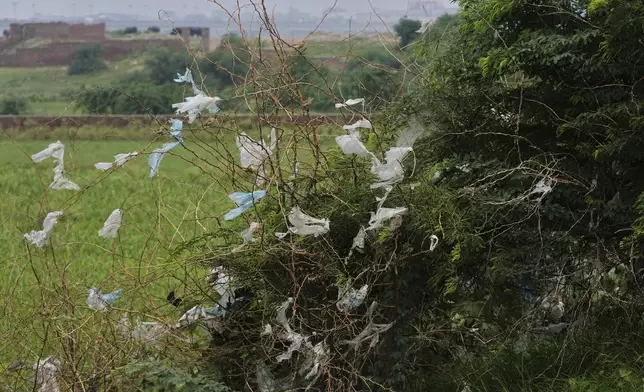
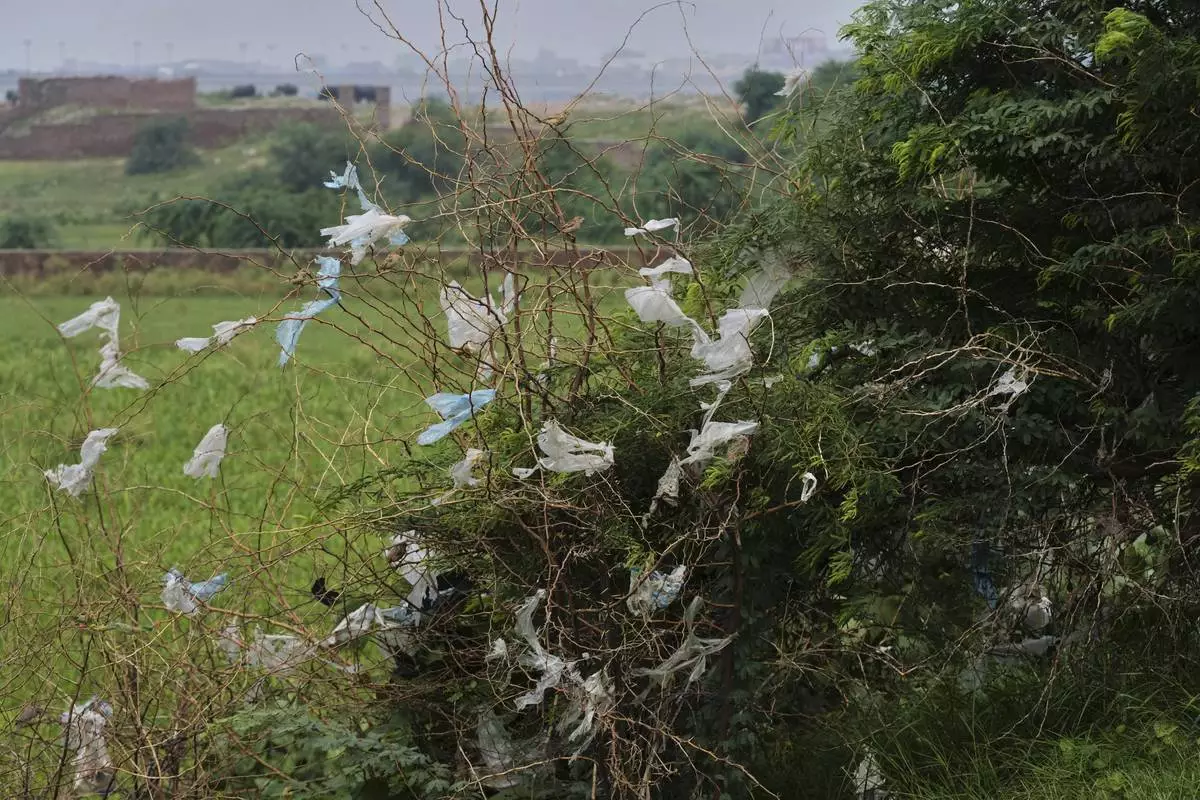
Torn plastic sheets hang over the dry branches of a tree at a field, in Lahore, Pakistan, Thursday, Aug. 7, 2025. (AP Photo/K.M. Chaudary)
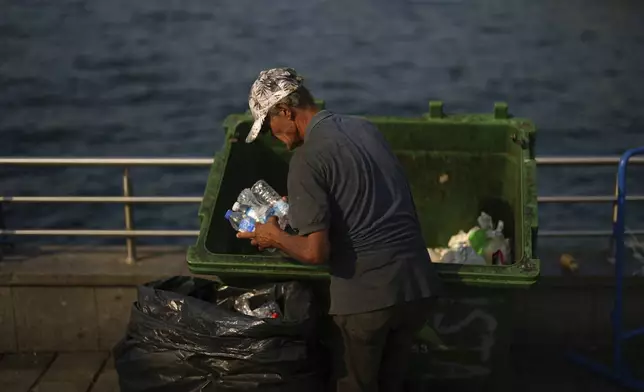
A garbage collector takes discarded plastic bottles from a street trash bin at Eminonu, in Istanbul, Turkey, Friday, Aug. 8, 2025. (AP Photo/Francisco Seco)
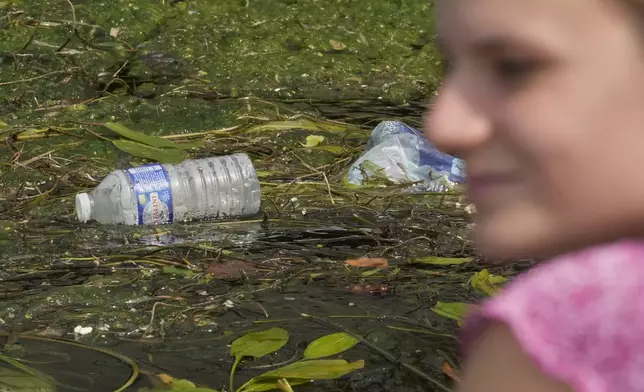
Dumped plastic garbages on the Seine river near Eiffel Tower in Paris, France, Wednesday, Aug. 6, 2025. (AP Photo/Michel Euler)
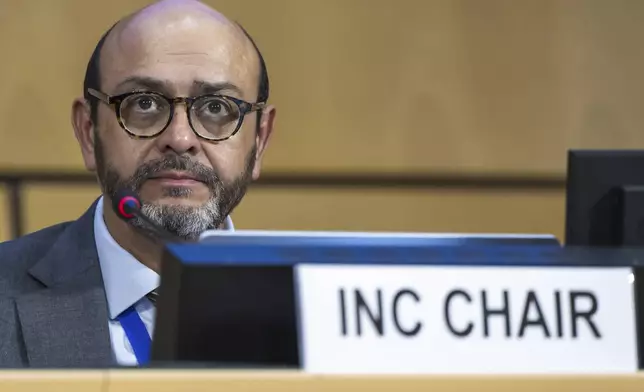
Chair of the International Negotiating Committee Luis Vayas Valdivieso speaks during a plenary session of Second Part of the Fifth Session of the Intergovernmental Negotiating Committee on Plastic Pollution (INC-5.2), at the European headquarters of the United Nations in Geneva, Switzerland, Thursday, Aug. 14, 2025. (Martial Trezzini/Keystone via AP)
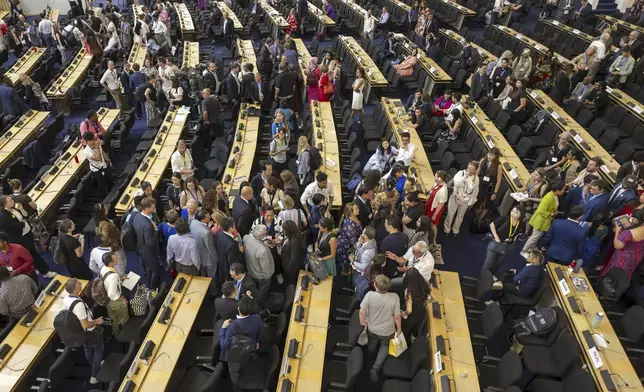
Delegates reacts during a plenary session of Second Part of the Fifth Session of the Intergovernmental Negotiating Committee on Plastic Pollution (INC-5.2), at the European headquarters of the United Nations in Geneva, Switzerland, Thursday, Aug. 14, 2025. (Martial Trezzini/Keystone via AP)
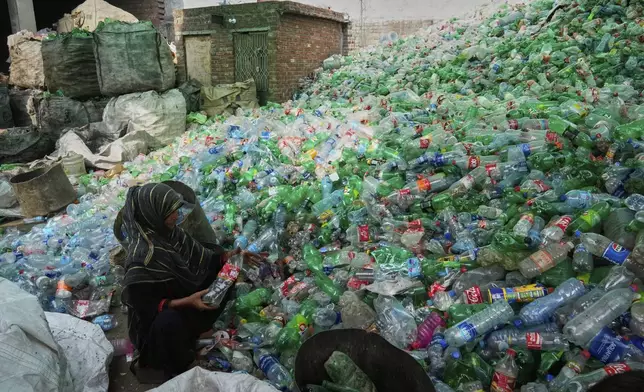
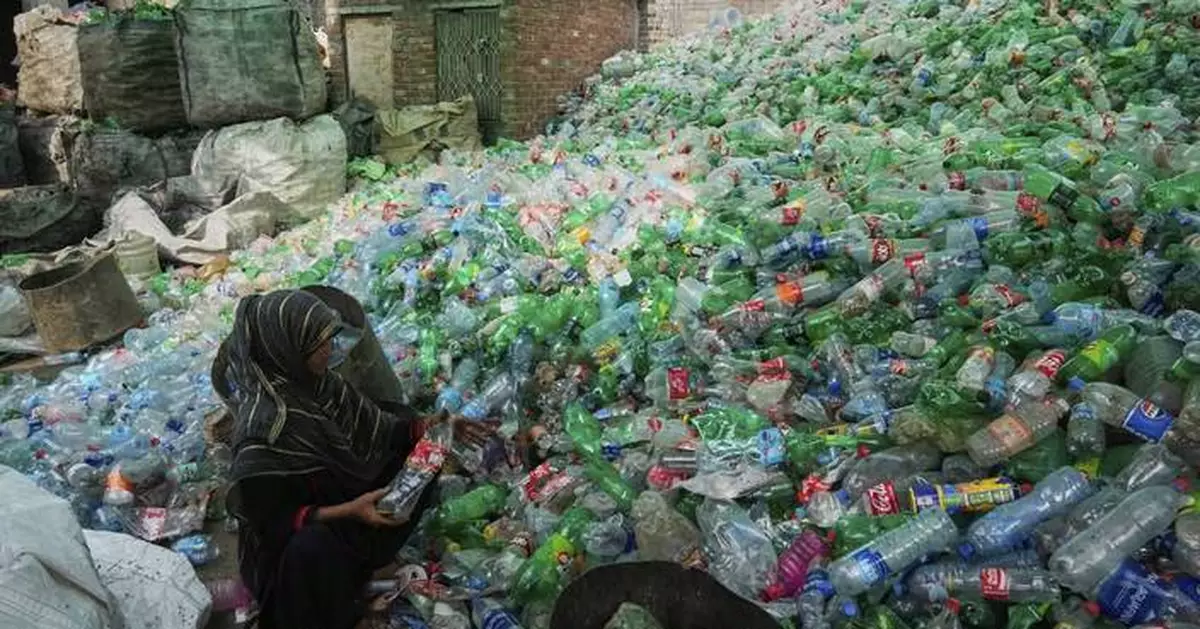
A female worker sorts through empty bottles at a plastic recycling factory in Lahore, Pakistan, Thursday, Aug. 7, 2025. (AP Photo/K.M. Chaudary)
That means any progress continues to depend on efforts to improve recycling, reuse and product design — the very things that powerful nations argued were sufficient to address the problem without resorting to production cuts.
Here’s what to know about how successful those efforts have been.
The world makes more than 400 million tons of new plastic each year, and the Organisation for Economic Co-operation and Development estimates that could increase by about 70% by 2040 without meaningful change. A great deal of that ends up in landfills or, worse, the environment.
Pollution isn't the only problem. Plastics, made almost entirely from fossil fuels, are a major contributor to greenhouse gas emissions. Plastics generated 3.4% — or 1.8 billion tons — of planet-warming emissions across the globe in 2019, the United Nations says.
Not very.
It's notoriously difficult to recycle plastics; only 6% of what's made gets recycled, according to the OECD. That's largely because different kinds of plastic cannot be recycled together. They have different chemical compositions, making it costly and time-consuming, and requiring a lot of manual sorting.
“There are many different colors of plastics, many different types of plastics called polymers, and 16,000 to 17,000 different chemicals used to make plastics, so by design, plastics are not easily recyclable," said Judith Enck, president of Beyond Plastics, an organization that works to cut plastic pollution.
Experts say plastic is different from materials like paper, cardboard, metal and glass, which all get reused at much higher rates. The Environmental Protection Agency estimates glass recycling at about 31%, and things like steel cans at about 71%. As much as 64% of paper and 74% of cardboard get recycled, according to the American Forest & Paper Association.
But “If you just think of your own home or apartment, you might have a bright orange hard plastic detergent container on top of your washing machine, and then you might have a plastic bag,” Enck said. “Those two things cannot get recycled together."
The plastics industry says innovations in material science are helping to incorporate more recycled plastics into products and enable more plastic products to be recyclable. Ross Eisenberg, president of America’s Plastic Makers, noted the need for an “all-of-the-above approach.”
He said this also includes upgrading recycling infrastructure or improving sorting to capture more used plastics. This also means making recycling more accessible and helping consumers know what can and can’t go in the recycling bin.
But there are a lot of limitations to this.
Depending on consumers for accurate pre-sorting is a lot to ask. And cities may hesitate to make costly infrastructure improvements to their recycling programs if there is little financial incentive or market for the recycled material.
"Local recycling facilities, or markets for the recycled material, don’t always exist. Where the collection and processing infrastructure does exist, the recycling plants are essentially plastic production facilities, with the same air, water, and soil pollution problems that are harmful to local residents," said Holly Kaufman, director of The Plastics & Climate Project and senior fellow at World Resources Institute.
Further, mechanical recycling mixes used plastic with new plastic, and the addition of more chemicals. It also requires other steps that shed much smaller plasticparticles into the environment.
Plastics recycling also usually requires plastic that's never been recycled before — called virgin plastic — as used plastic is weak, Kaufman said. “It does not make much of a dent.”
California is currently suing oil and gas giant Exxon Mobil, alleging deception about the possibilities of plastic recycling.
Because of this, Kaufman says, “The aim should be to significantly reduce plastic production, use, and waste, not recycle more.”
“Reuse means creating packaging or products designed to be used multiple times, like refillable containers, or more durable zippered bags that can be washed and refilled many times, extending their lifespan and reducing waste,” Eisenberg, of America's Plastic Makers, said.
Experts say reuse is extremely important, but reusable products shouldn’t necessarily be used for consumables because of the risk of microplastics.
Redesigning plastic often means making it easier to recycle. That can be using one material in packaging instead of several, or printing labels directly onto a container rather than using a separate one that is glued on, but that is more complex.
Alternatives to plastics could also be made out of sustainable, less harmful and even regenerative materials, such as seaweed, Kaufman said. There has been progress on this front, but most solutions have not scaled up yet.
Alexa St. John is an Associated Press climate reporter. Follow her on X: @alexa_stjohn. Reach her at ast.john@ap.org.
Read more of AP’s climate coverage.
The Associated Press’ climate and environmental coverage receives financial support from multiple private foundations. AP is solely responsible for all content. Find AP’s standards for working with philanthropies, a list of supporters and funded coverage areas at AP.org.
Torn plastic sheets hang over the dry branches of a tree at a field, in Lahore, Pakistan, Thursday, Aug. 7, 2025. (AP Photo/K.M. Chaudary)
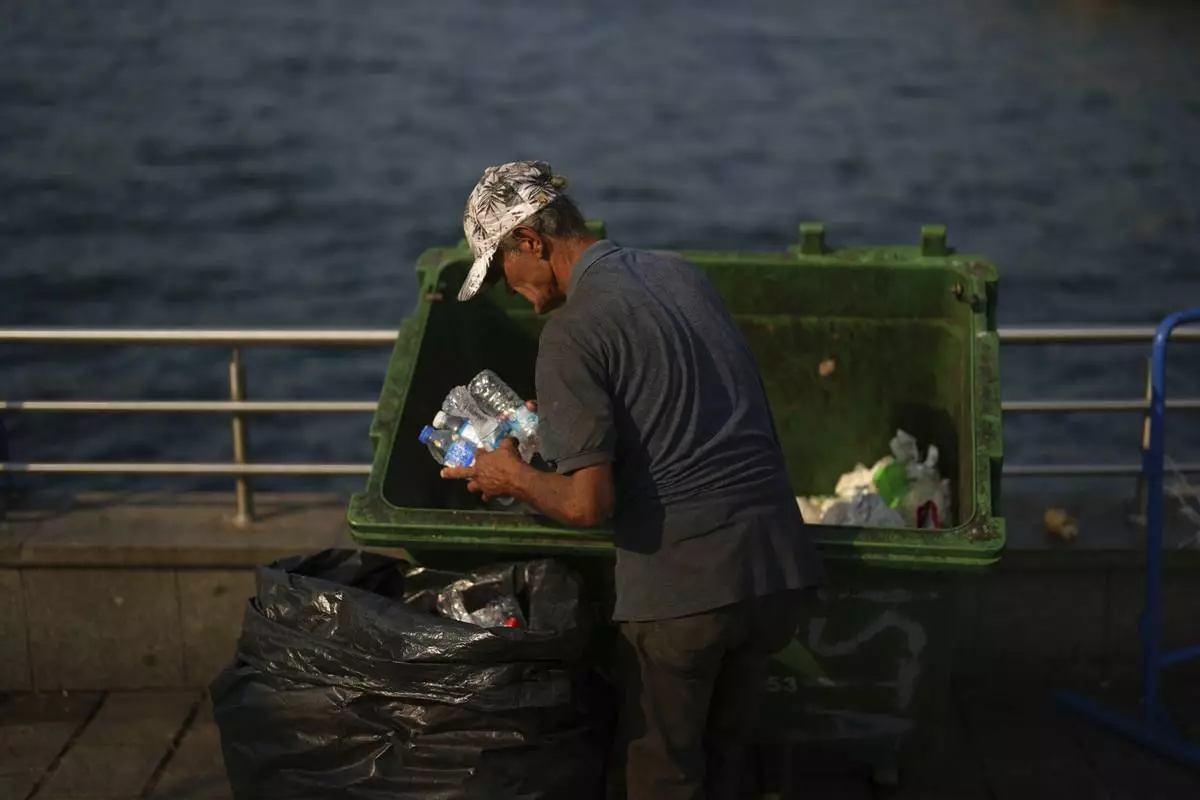
A garbage collector takes discarded plastic bottles from a street trash bin at Eminonu, in Istanbul, Turkey, Friday, Aug. 8, 2025. (AP Photo/Francisco Seco)
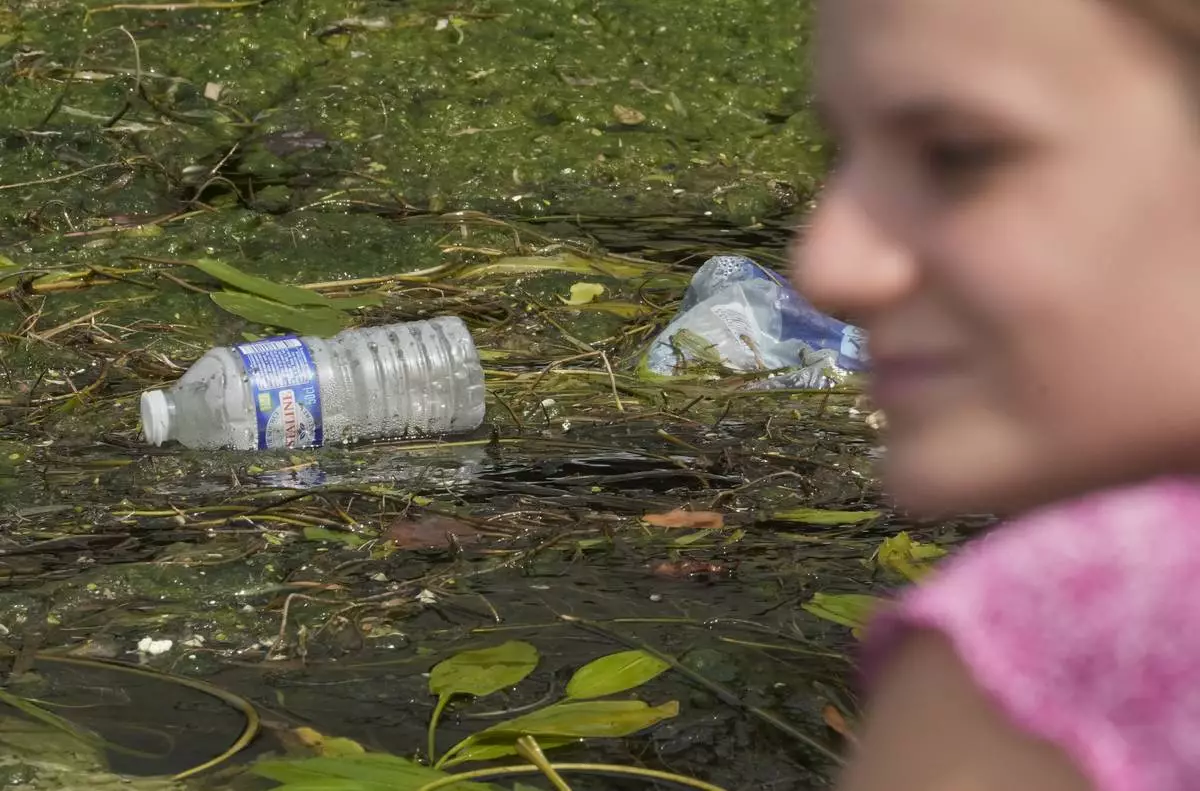
Dumped plastic garbages on the Seine river near Eiffel Tower in Paris, France, Wednesday, Aug. 6, 2025. (AP Photo/Michel Euler)
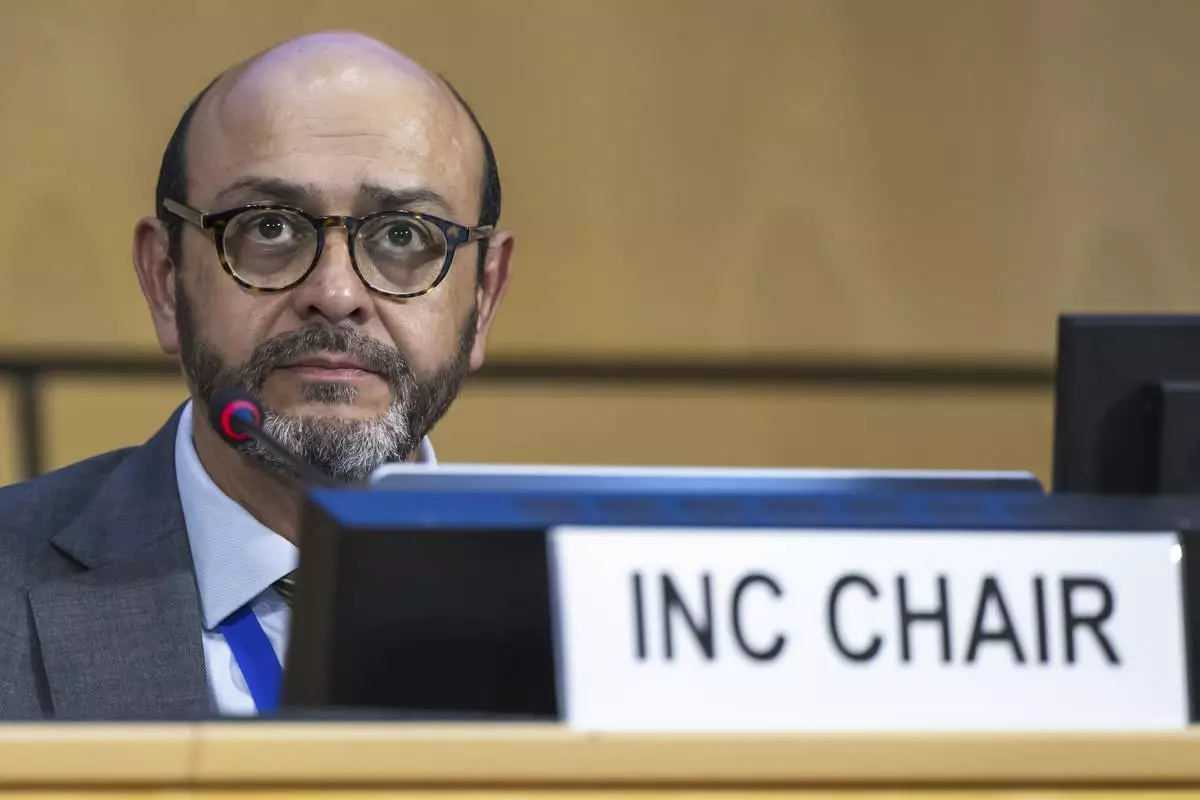
Chair of the International Negotiating Committee Luis Vayas Valdivieso speaks during a plenary session of Second Part of the Fifth Session of the Intergovernmental Negotiating Committee on Plastic Pollution (INC-5.2), at the European headquarters of the United Nations in Geneva, Switzerland, Thursday, Aug. 14, 2025. (Martial Trezzini/Keystone via AP)
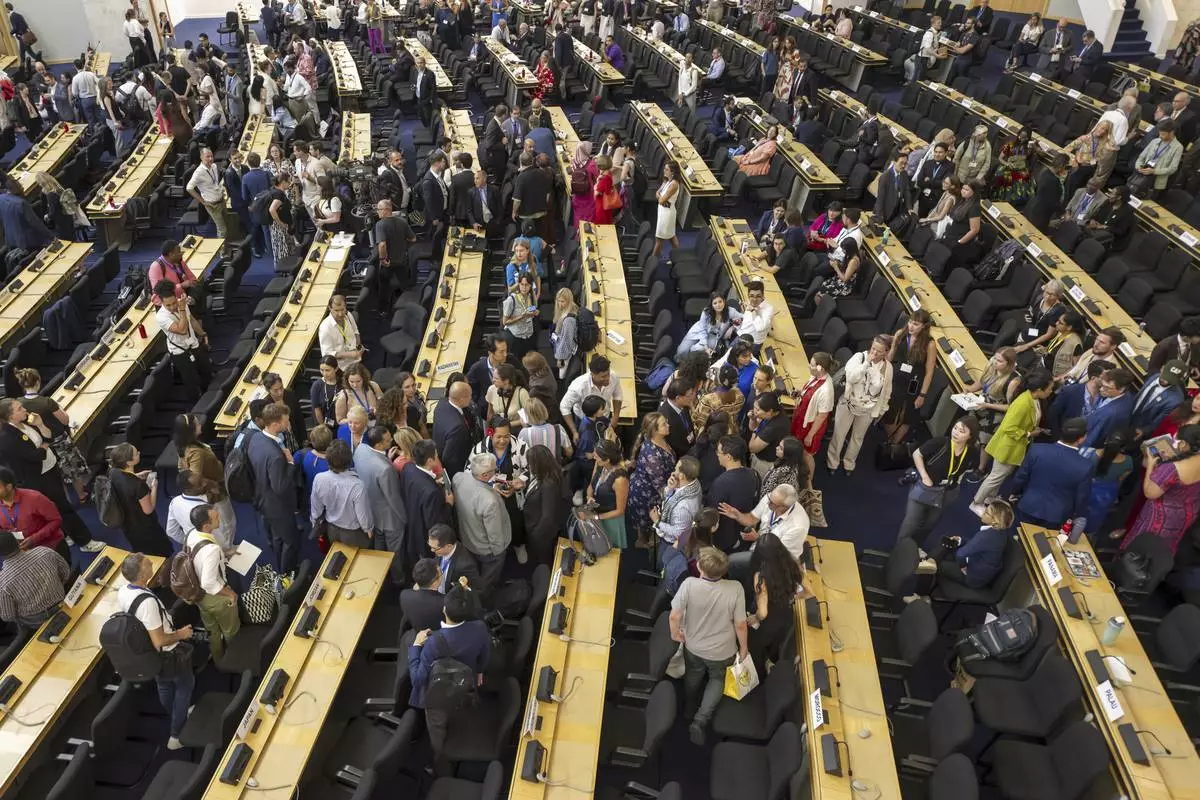
Delegates reacts during a plenary session of Second Part of the Fifth Session of the Intergovernmental Negotiating Committee on Plastic Pollution (INC-5.2), at the European headquarters of the United Nations in Geneva, Switzerland, Thursday, Aug. 14, 2025. (Martial Trezzini/Keystone via AP)
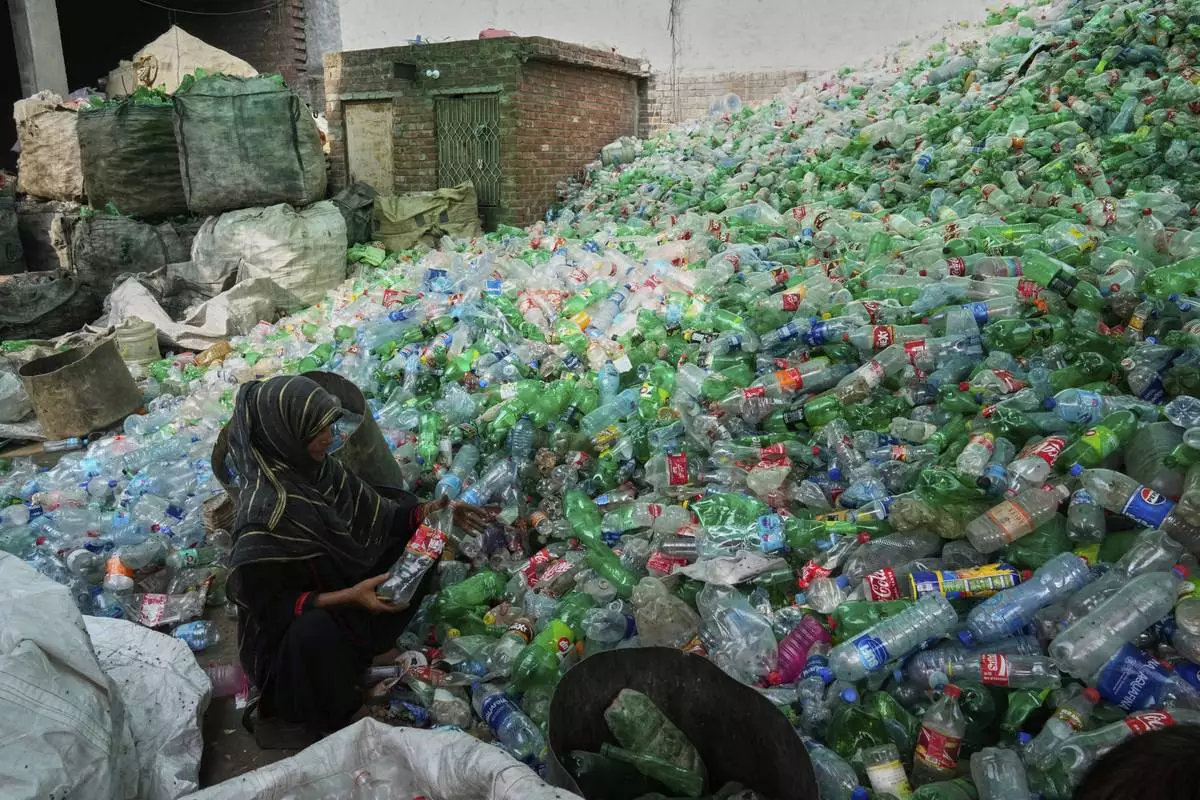
A female worker sorts through empty bottles at a plastic recycling factory in Lahore, Pakistan, Thursday, Aug. 7, 2025. (AP Photo/K.M. Chaudary)