WASHINGTON (AP) — The Air Force says in a new memo that transgender airmen ousted under a recent Trump administration directive will no longer have the chance to argue before a board of their peers for the right to continue serving their country.
The memo dated Tuesday says military separation boards cannot independently decide whether to keep or discharge transgender airmen and instead “must recommend separation of the member” if the airman has a diagnosis of gender dysphoria — when a person’s biological sex does not match up with their gender identity.
Military legal experts who have been advising transgender troops told The Associated Press that the new policy is unlawful, and while they were not aware of the other services releasing similar memos, they fear it could serve as a blueprint across the military. Advocacy groups say the change threatens to weaken trust in the military's leadership.
It is the second policy change the Air Force has taken in recent weeks to crack down on transgender service members. The Associated Press reported last week that the Air Force would deny transgender troops early retirement benefits and was moving to revoke requests already approved.
The Air Force declined to answer questions about the policy and its legal implications.
The service provided a statement saying the new guidance “is consistent with and responsive to Department of Defense policy regarding Service members with a diagnosis of, or history of, or exhibiting symptoms consistent with, gender dysphoria.”
The boards traditionally offer a quasi-legal hearing to determine if a service member set to depart is still of value to the military and should stay on. Fellow service members hear evidence of whatever wrongdoing occurred and about the person's character, fitness and performance.
The hearings are not a formal court, but they have much the same structure. Service members are often represented by lawyers, they can present evidence in their defense and they can appeal the board’s findings to federal court.
The Pentagon’s policy on separating officers notes that they are entitled to “fair and impartial” hearings that should be “a forum for the officer concerned to present reasons the contemplated action should not be taken.”
This impartial nature means that the boards can sometimes reach surprising conclusions.
For example, the three active-duty Marines who were part of the mob that stormed the Capitol on Jan. 6, 2021, were retained.
The commanding officer of the USS McCain, a destroyer that collided with an oil tanker in the Pacific in 2017, killing 10, was not recommended for separation in 2019.
Priya Rashid, a military lawyer who has represented service members before hundreds of separation boards, said she “has never seen an order like this.”
“I’ve seen people with three DUIs retained, I’ve seen people that beat their wives retained, I’ve seen all kinds of people retained because the board is empowered to retain anyone for any reason if they feel it's in the best interest of the service,” she said.
Rashid said she and other lawyers working with transgender troops view the guidance as telling the boards to automatically order separation based solely on a diagnosis or symptoms of gender dysphoria.
She said that constitutes an unlawful command by the Air Force and upends impartiality.
“This instruction is essentially saying you will not make a determination of whether somebody has future potential in the service,” Rashid said.
The new Air Force guidance also prohibits recording the proceedings.
Rashid said the lack of an independent transcript would not only prevent Air Force leaders from reviewing the hearings to ensure they were conducted appropriately but would undercut any meaningful chance to appeal.
Pentagon officials say 4,240 troops have been diagnosed with gender dysphoria, which the military is using as an identifier of being transgender.
The Pentagon got the green light from Supreme Court in May to move forward with a ban on all transgender troops. It offered two options: volunteer to leave and take a one-time separation payout or be discharged at a later date without pay.
Some transgender troops decided to fight to stay by turning to the boards.
Senior Master Sgt. Jamie Hash, who has served in the Air Force since 2011, said she “wanted to face an objective board to be evaluated on my years of proven capability.”
“I wanted the board to see the assignments overseas and at the Pentagon, the deployments to different Combatant Commands, the service medals and the sustained operational and mission effectiveness,” she said in an interview.
But now, she said, that “the path ahead feels more uncertain than it ever has.”
Logan Ireland, a master sergeant in the Air Force with 15 years of service that includes a deployment to Afghanistan, was planning to retire early until his request was denied last week.
After that, he decided he would take a stand at the separation board.
“I chose the involuntary route because I believed in the promise of a fair hearing — judged on my service, my record and the facts,” he said.
“Now that promise is being ripped away, replaced with a process designed to decide my fate before I even walk in the room,” he said, adding that “all I’m asking for is the same fairness and justice every service member deserves.”
Both Ireland and Hash said they have yet to hear from their immediate superiors on what the new policy will mean for them.
Lawyers are worried it will set a precedent that will spread throughout the military.
Rashid said both the Army and Navy are “going to look at what the Air Force is doing as a standard of law … is this the minimum standard of law that we will afford our service members.”
Col. Bree Fram, a transgender officer in the Space Force who has long been seen as a leader among transgender troops, argued that the policy is a threat to other service members.
In an online post, Fram said it “swaps judgment for automation.”
”Today it’s gender dysphoria; tomorrow it can be any condition or class the politics of the moment calls for,” she argued.
If the new policy is allowed to sideline “evidence of fitness, deployment history, awards, and commander input — the very material boards were built to evaluate,” Fram said, it sends a message that performance is no longer relevant to staying in the military.
Cathy Marcello, interim director for Modern Military Association of America, said the change adds to a “growing loss of trust” because outcomes are determined by politics, not performance. The organization advocates for LGBTQ+ service members, military spouses, veterans, their families and allies.
“It’s a signal that identity, not ability or achievement, determines who stays in uniform and who gets a fair shot,” she said.
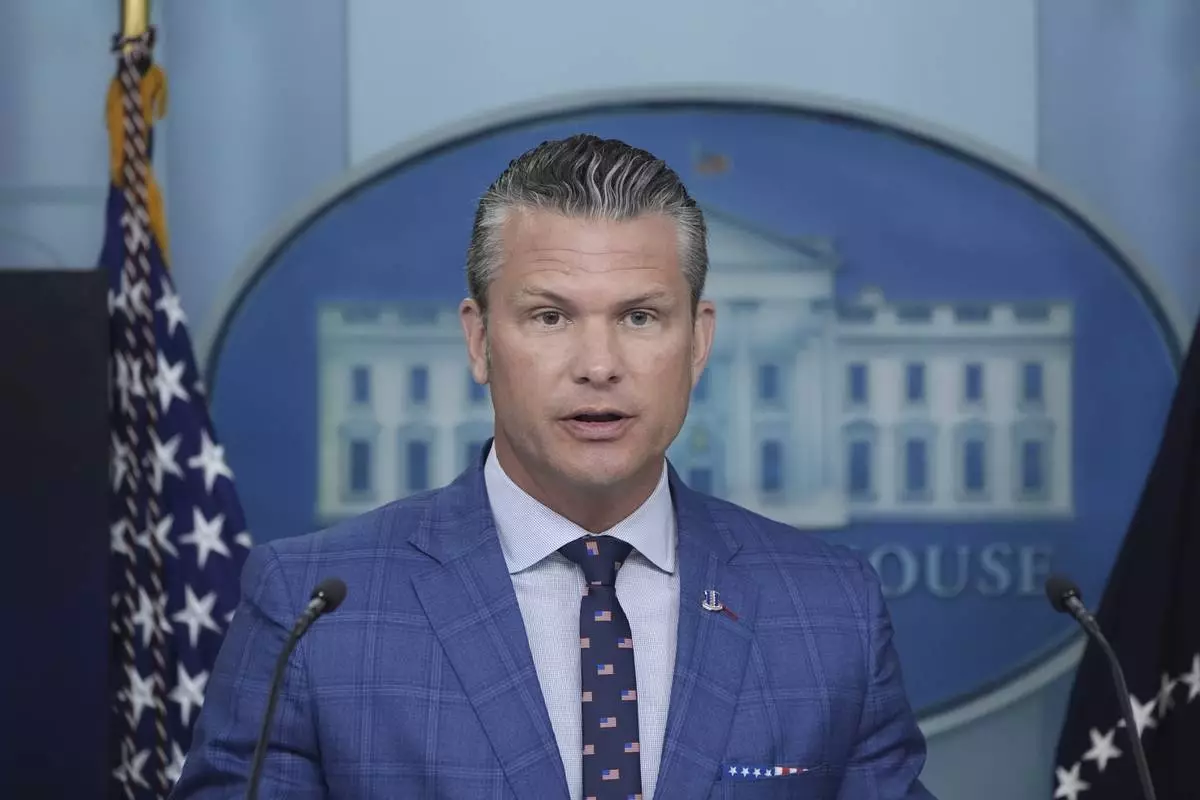
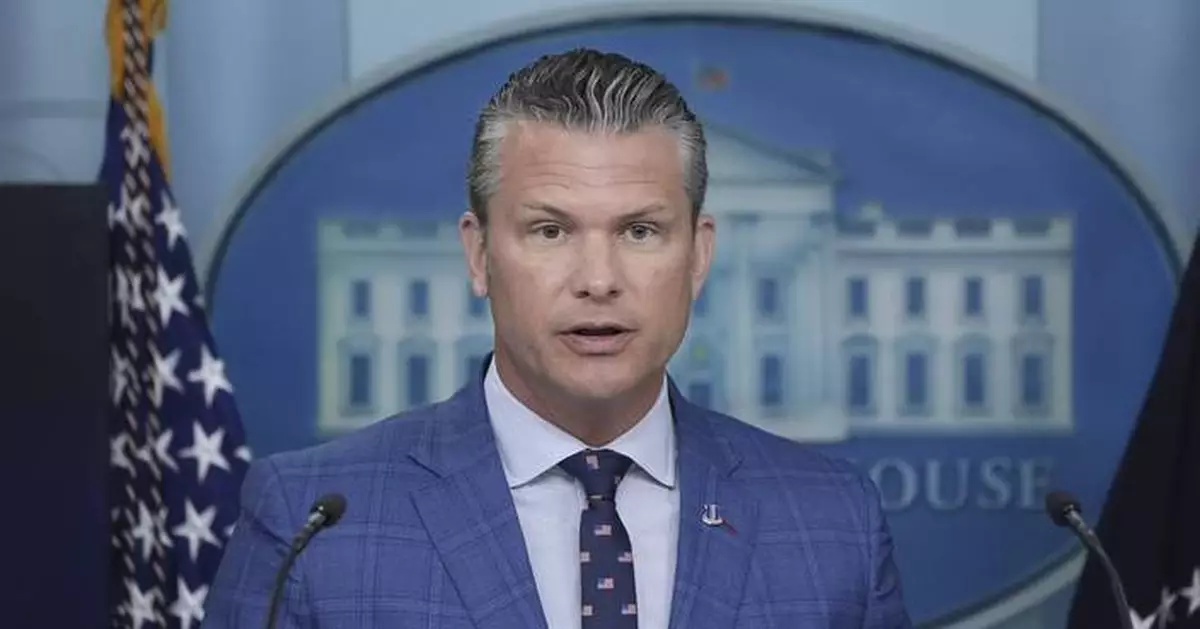
Secretary of Defense Pete Hegseth speaks during a press briefing with President Donald Trump in the James Brady Press Briefing Room at the White House, Monday, Aug. 11, 2025, in Washington. (AP Photo/Alex Brandon)
MINNEAPOLIS (AP) — President Donald Trump on Thursday threatened to invoke an 1807 law and deploy troops to quell persistent protests against the federal officers sent to Minneapolis to enforce his administration's massive immigration crackdown.
The threat comes a day after a man was shot and wounded by an immigration officer who had been attacked with a shovel and broom handle. That shooting further heightened the fear and anger that has radiated across the city since an Immigration and Customs Enforcement agent fatally shot Renee Good in the head.
Trump has repeatedly threatened to invoke the Insurrection Act, a rarely used federal law, to deploy the U.S. military or federalize the National Guard for domestic law enforcement, over the objections of state governors.
“If the corrupt politicians of Minnesota don’t obey the law and stop the professional agitators and insurrectionists from attacking the Patriots of I.C.E., who are only trying to do their job, I will institute the INSURRECTION ACT, which many Presidents have done before me, and quickly put an end to the travesty that is taking place in that once great State,” Trump said in social media post.
Presidents have invoked the law more than two dozen times, most recently in 1992 by President George H.W. Bush to end unrest in Los Angeles. In that instance, local authorities had asked for the assistance.
“I’m making a direct appeal to the President: Let’s turn the temperature down. Stop this campaign of retribution. This is not who we are,” Gov. Tim Walz, a Democrat, said on X.
Minnesota Attorney General Keith Ellison said he would challenge any such action in court. He's already suing to try to stop the surge by the Department of Homeland Security, which says officers have arrested more than 2,500 people since Nov. 29 as part of an immigration operation in the Twin Cities called Metro Surge.
The operation grew when ICE sent 2,000 officers and agents to the area early in January. ICE is a DHS agency.
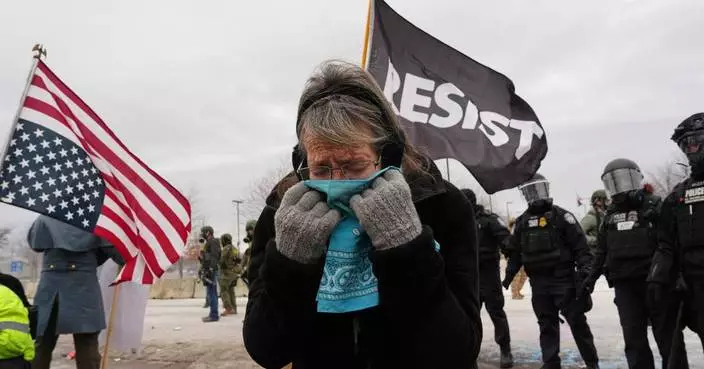
In Minneapolis, smoke filled the streets Wednesday night near the site of the latest shooting as federal officers wearing gas masks and helmets fired tear gas into a small crowd. Protesters responded by throwing rocks and shooting fireworks.
Demonstrations have become common in Minneapolis since Good was fatally shot on Jan. 7. Agents who have yanked people from their cars and homes have been confronted by angry bystanders demanding they leave.
“This is an impossible situation that our city is presently being put in and at the same time we are trying to find a way forward to keep people safe, to protect our neighbors, to maintain order,” Minneapolis Mayor Jacob Frey said.
The American Civil Liberties Union of Minnesota filed a class-action lawsuit on behalf of three people who said they were questioned or detained in recent days. The lawsuit says two are Somali and one is Hispanic; all three are U.S. citizens. The lawsuit seeks an end to what the ACLU describes as a practice of racial profiling and warrantless arrests. The government did not immediately comment.
Homeland Security said in a statement that federal law enforcement officers on Wednesday stopped a driver from Venezuela who is in the U.S. illegally. The person drove off then crashed into a parked car before fleeing on foot, DHS said.
Officers caught up, then two other people arrived and the three started attacking the officer, according to DHS.
“Fearing for his life and safety as he was being ambushed by three individuals, the officer fired a defensive shot to defend his life,” DHS said. The confrontation took place about 4.5 miles (7.2 kilometers) from where Good was killed.
Police chief Brian O’Hara said the man who was shot did not have a life-threatening injury. O’Hara's account of what happened largely echoed that of Homeland Security, which later said the other two men were also in the U.S. illegally from Venezuela.
The FBI said several government vehicles were damaged and property inside was stolen when agents responded to the shooting. Photos show broken windows and insults made with paint. A reward of up to $100,000 is being offered for information. The FBI’s Minneapolis office did not immediately reply to messages seeking more details.
St. Paul Public Schools, with more than 30,000 students, said it would begin offering an online learning option for students who do not feel comfortable coming to school. Schools will be closed next week until Thursday to prepare for those accommodations.
Minneapolis Public Schools, which has a similar enrollment, is also offering temporary remote learning. The University of Minnesota will start a new term next week with different options depending on the class.
Madhani reported from Washington, D.C. Associated Press reporters Sophia Tareen in Chicago; Bill Barrow in Atlanta; Rebecca Santana in Washington; and Ed White in Detroit contributed.
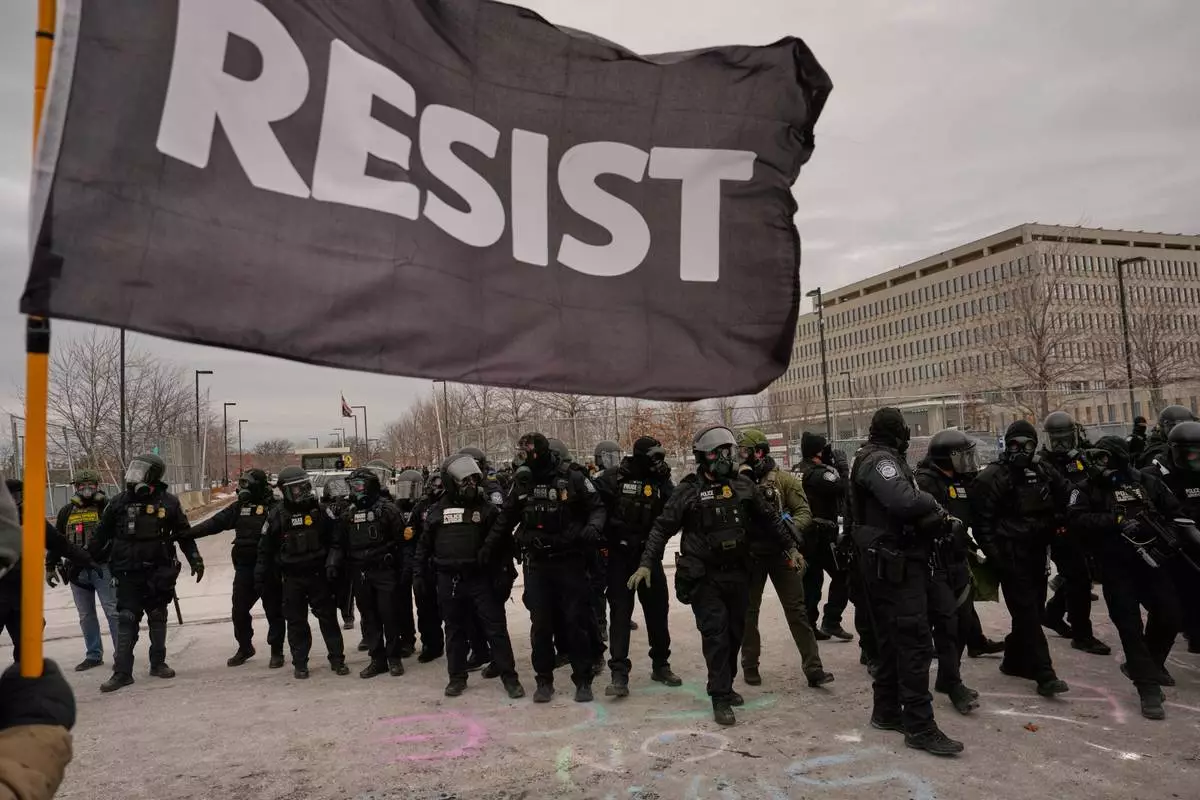
Federal immigration officers confront protesters outside Bishop Henry Whipple Federal Building, Thursday, Jan. 15, 2026, in Minneapolis. (AP Photo/John Locher)
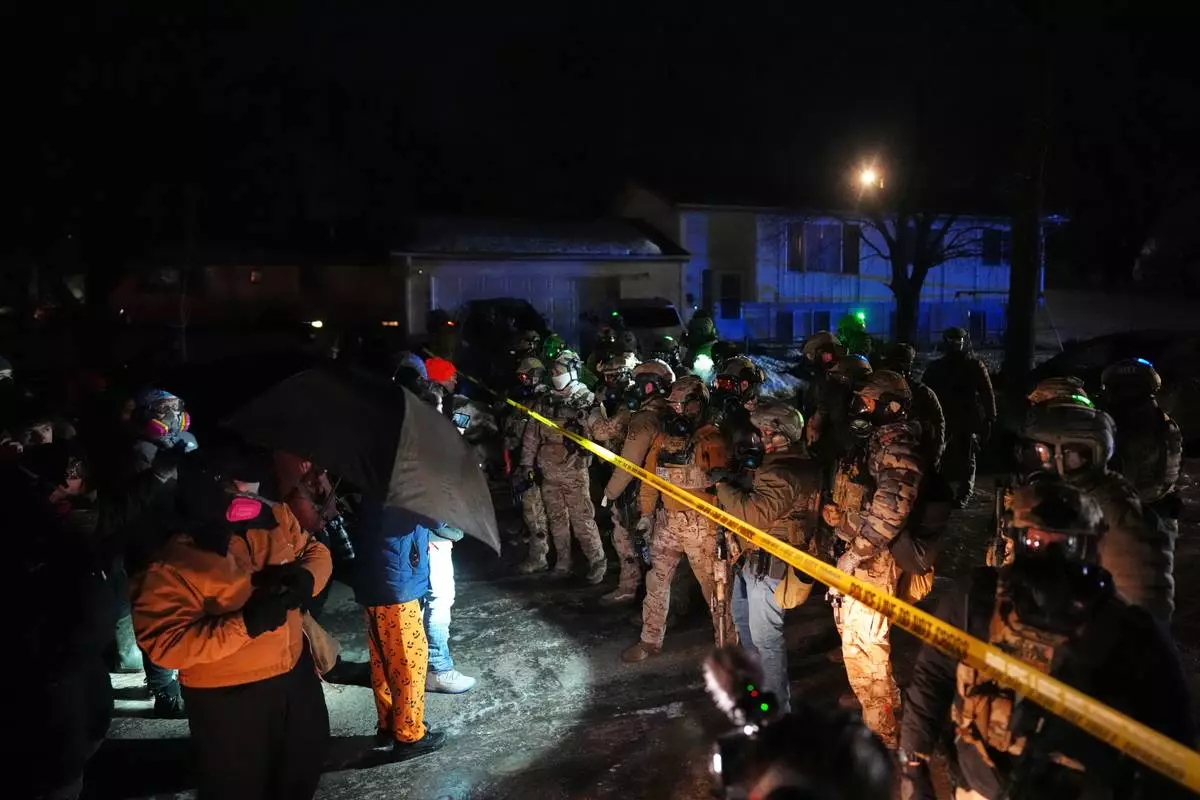
Law enforcement officers at the scene of a reported shooting Wednesday, Jan. 14, 2026, in Minneapolis. (AP Photo/Adam Gray)
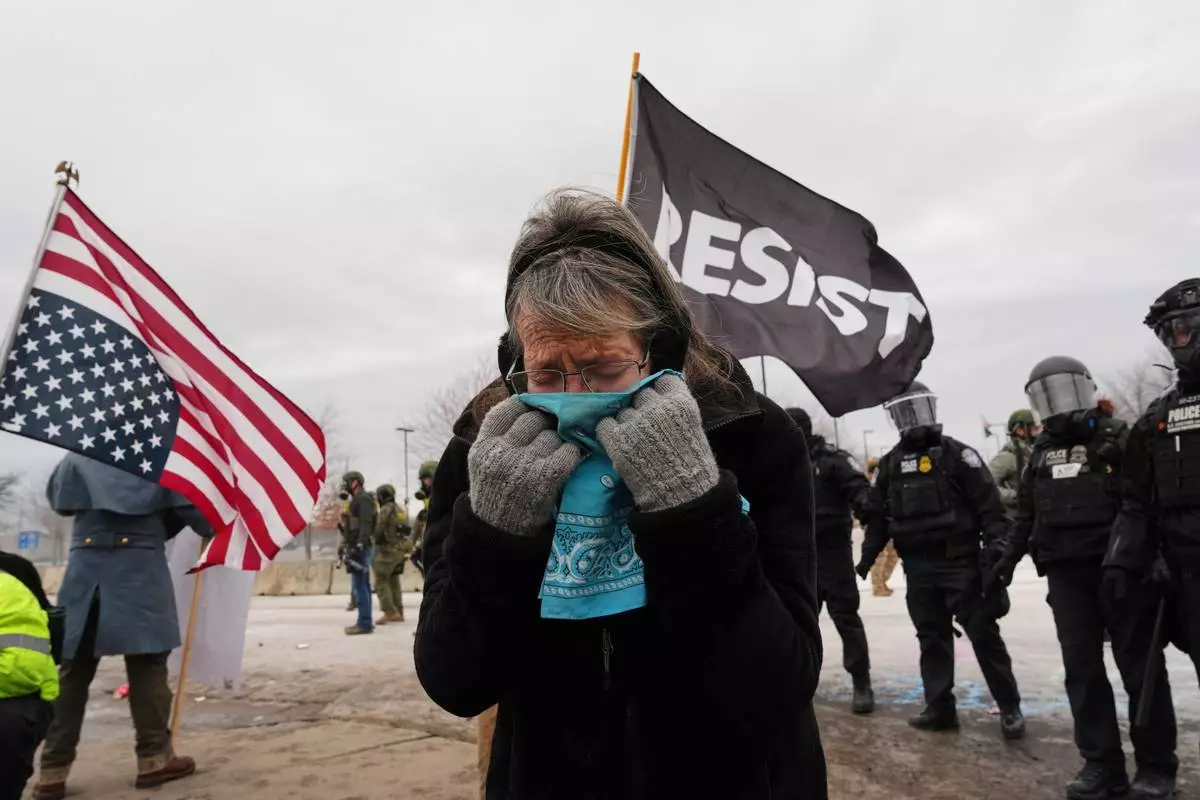
A woman covers her face from tear gas as federal immigration officers confront protesters outside Bishop Henry Whipple Federal Building, Thursday, Jan. 15, 2026, in Minneapolis. (AP Photo/Adam Gray)
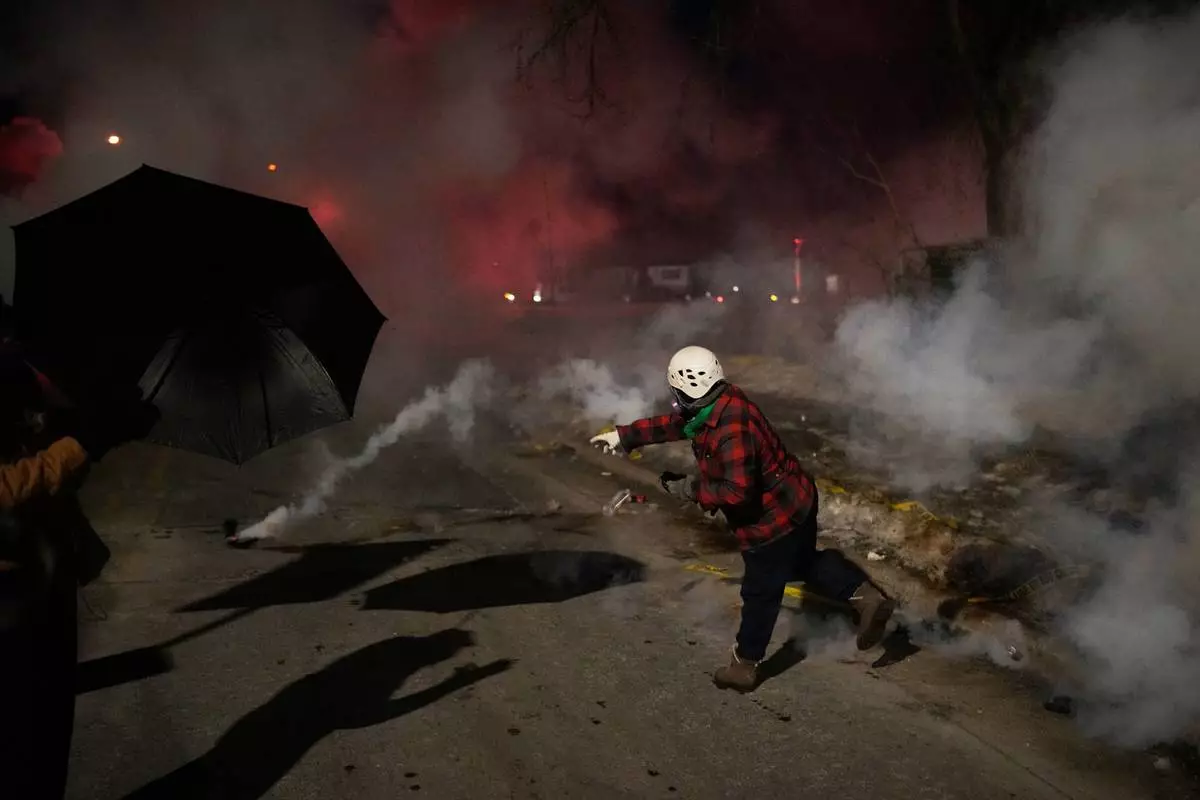
A protester throws back a tear gas canister during a protest after a shooting on Wednesday, Jan. 14, 2026, in Minneapolis. (AP Photo/John Locher)
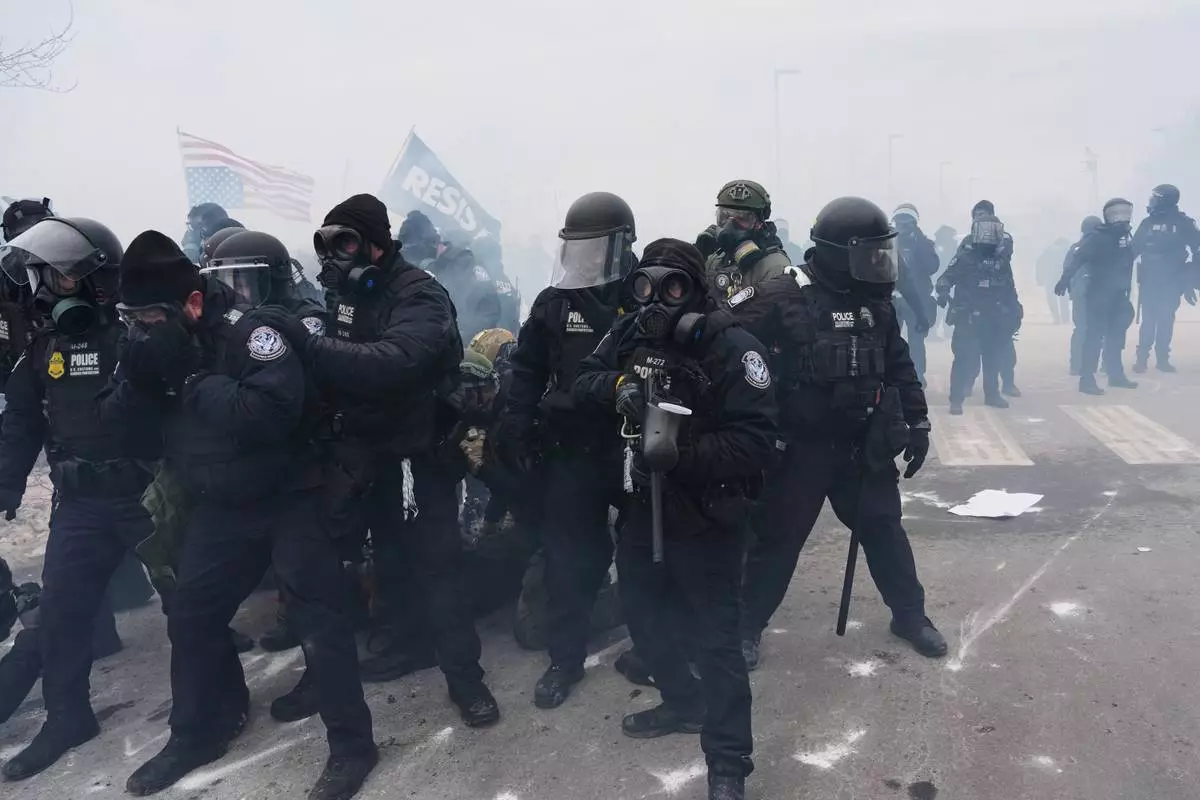
Federal immigration officers confront protesters outside Bishop Henry Whipple Federal Building, Thursday, Jan. 15, 2026, in Minneapolis. (AP Photo/Adam Gray)
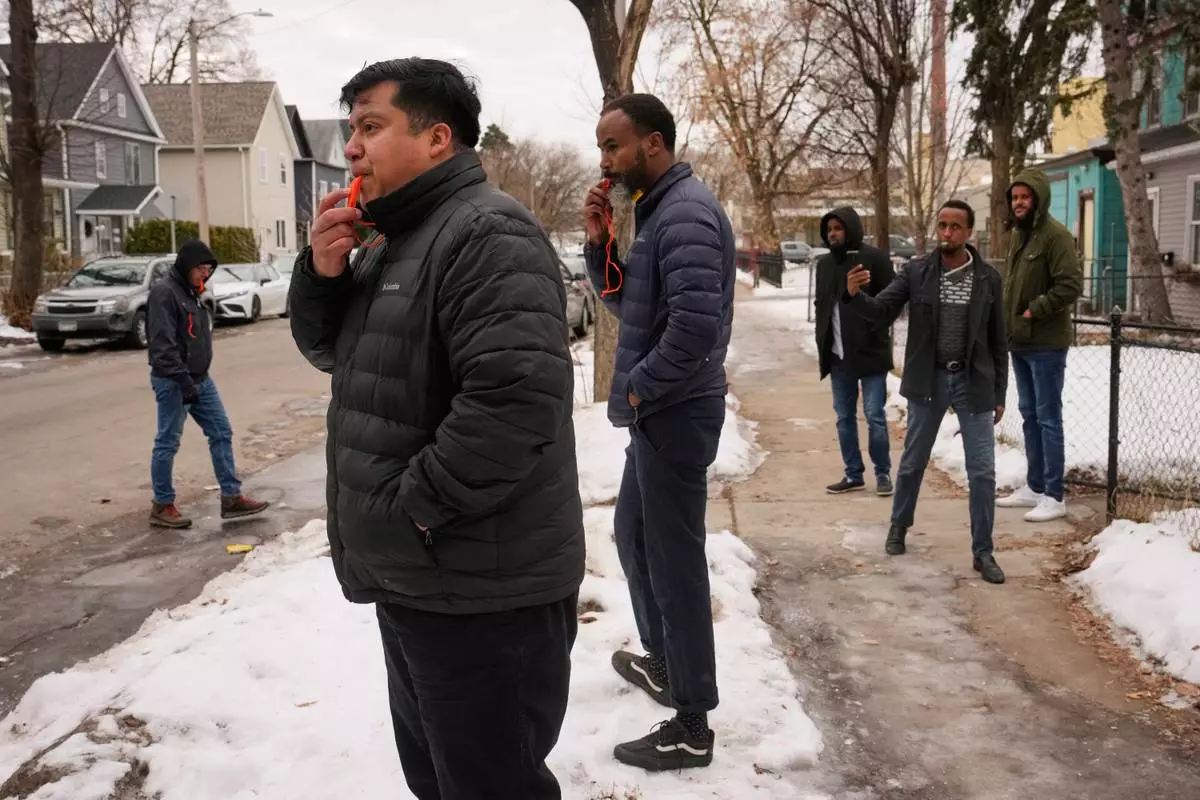
Minneapolis City Council Member Jason Chavez, second from left, blows a whistle with other activists to warn people of federal immigration officers Thursday, Jan. 15, 2026, in Minneapolis. (AP Photo/John Locher)
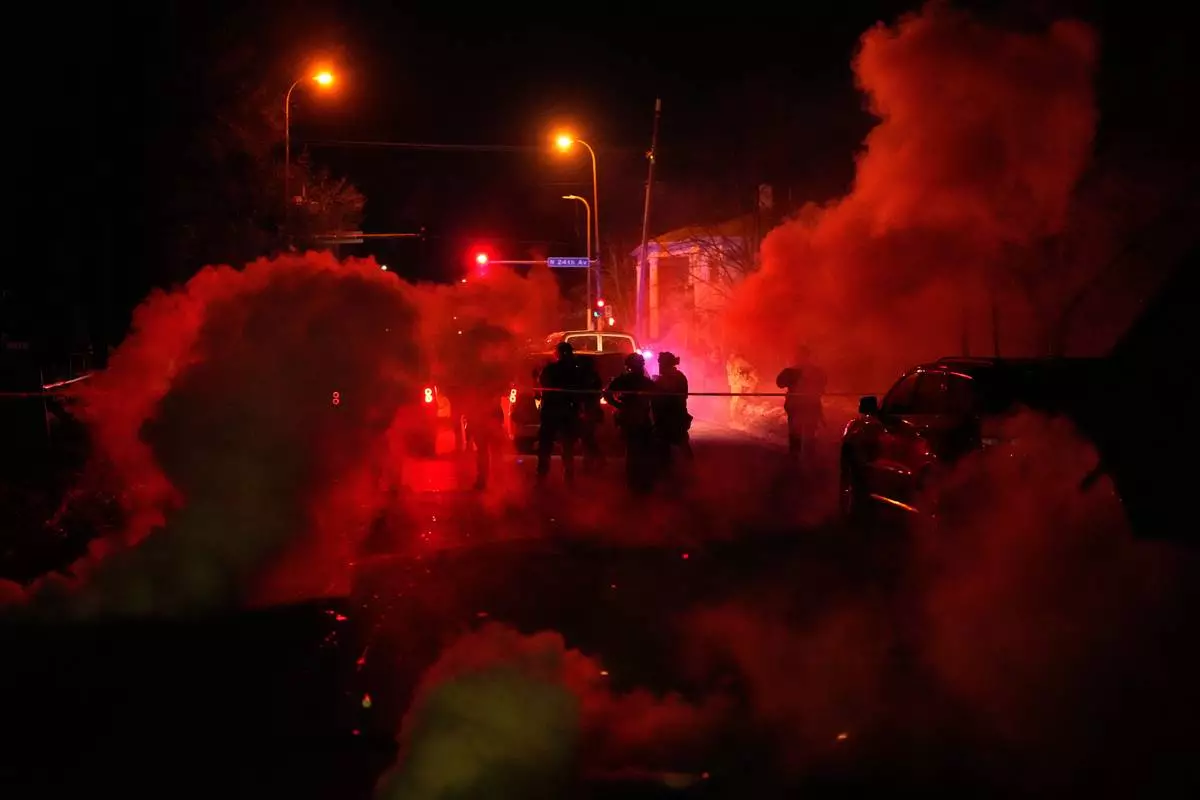
Tear gas surrounds federal law enforcement officers as they leave a scene after a shooting on Wednesday, Jan. 14, 2026, in Minneapolis. (AP Photo/John Locher)
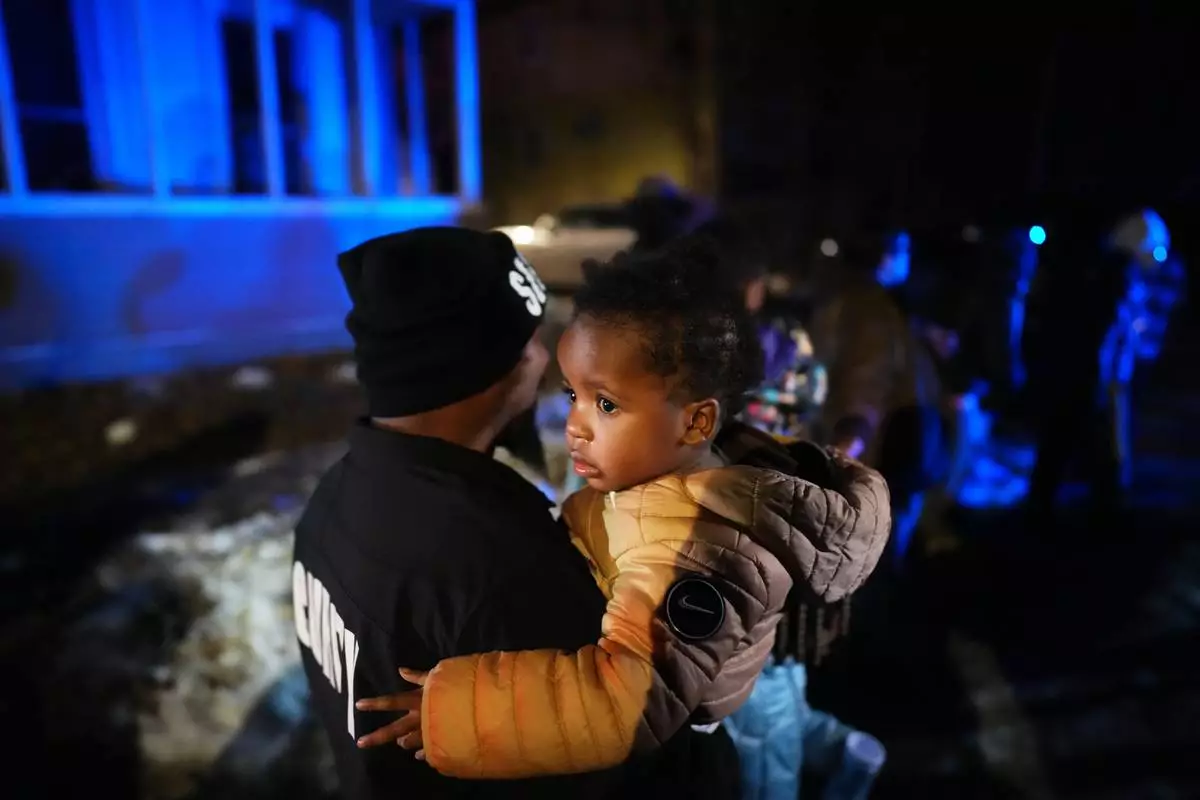
A child and family are escorted away after federal law enforcement deployed tear gas in a neighborhood during protests on Wednesday, Jan. 14, 2026, in Minneapolis. (AP Photo/Adam Gray)
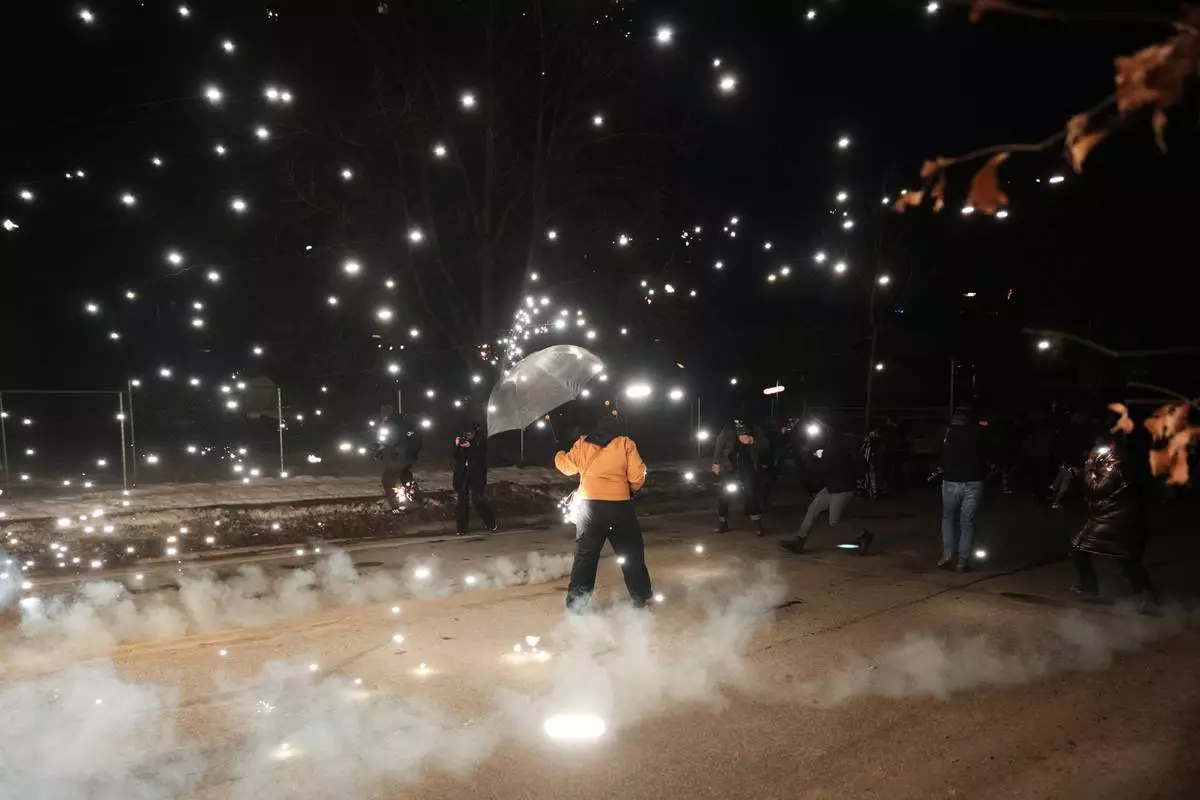
A protester holds an umbrella as sparks fly from a flash bang deployed by law enforcement on Wednesday, Jan. 14, 2026, in Minneapolis. (AP Photo/Adam Gray)
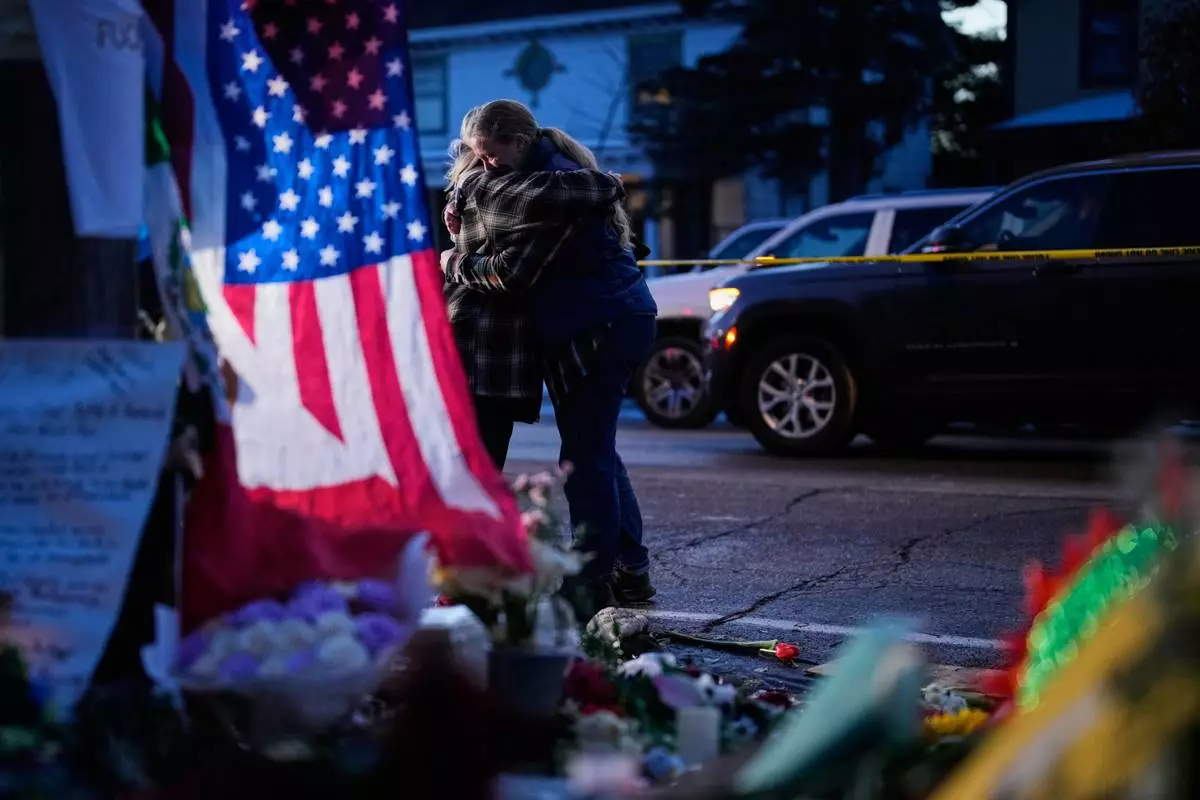
Monica Travis shares an embrace while visiting a makeshift memorial for Renee Good, who was fatally shot by an ICE officer last week, Monday, Jan. 12, 2026, in Minneapolis. (AP Photo/John Locher)
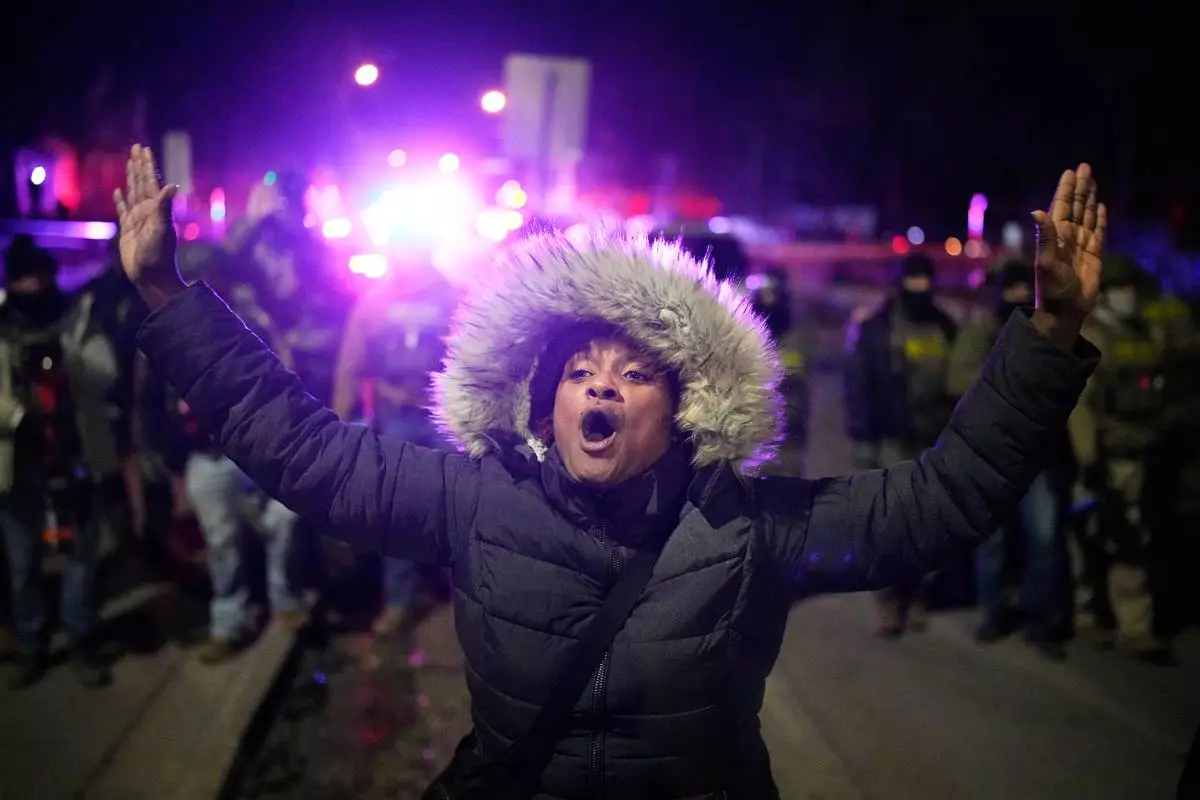
A protester yells in front of law enforcement after a shooting on Wednesday, Jan. 14, 2026, in Minneapolis. (AP Photo/John Locher)
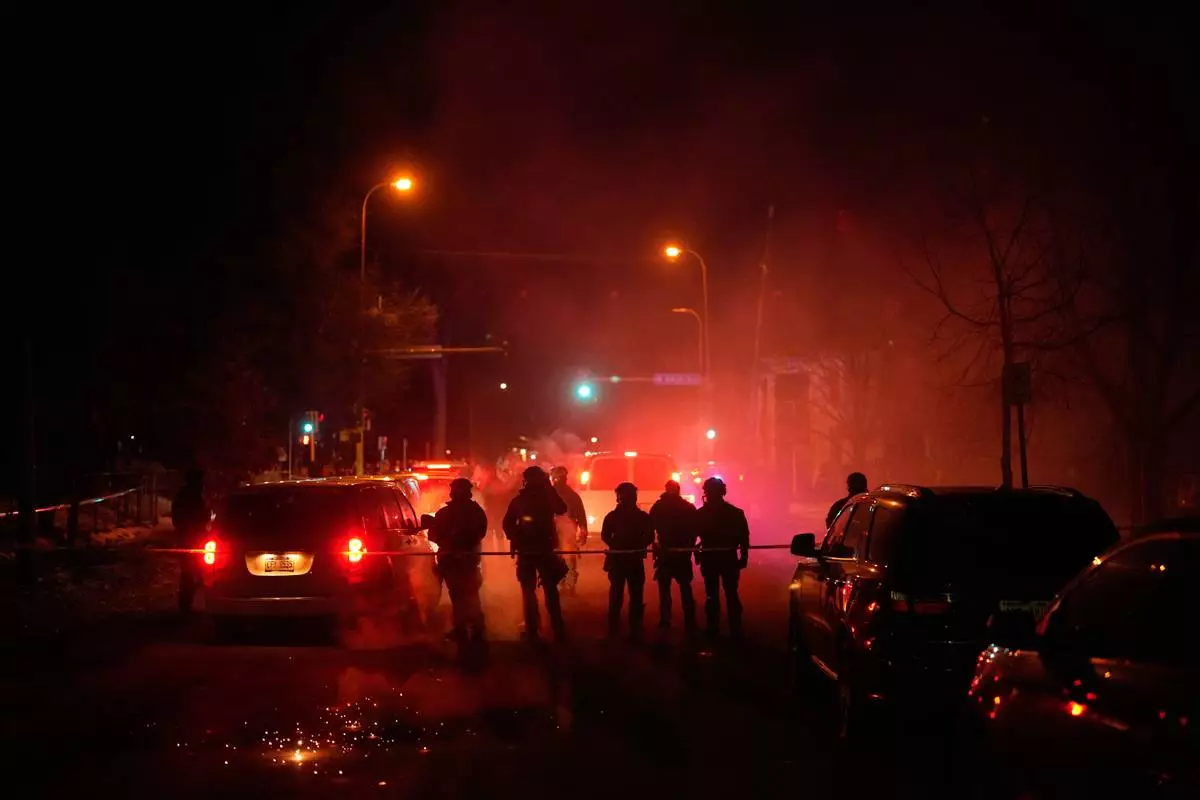
Tear gas surrounds federal law enforcement officers as they leave a scene after a shooting on Wednesday, Jan. 14, 2026, in Minneapolis. (AP Photo/John Locher)
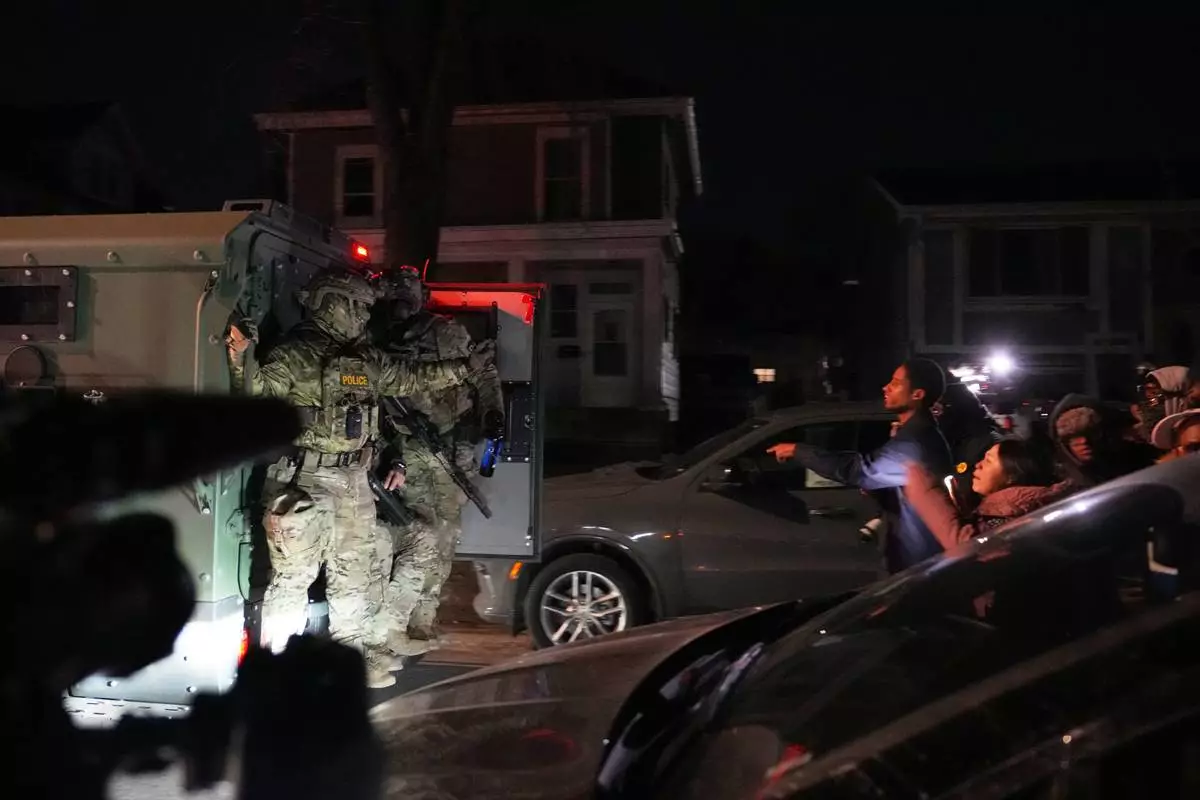
Protesters shout at law enforcement officers after a shooting on Wednesday, Jan. 14, 2026, in Minneapolis. (AP Photo/Abbie Parr)
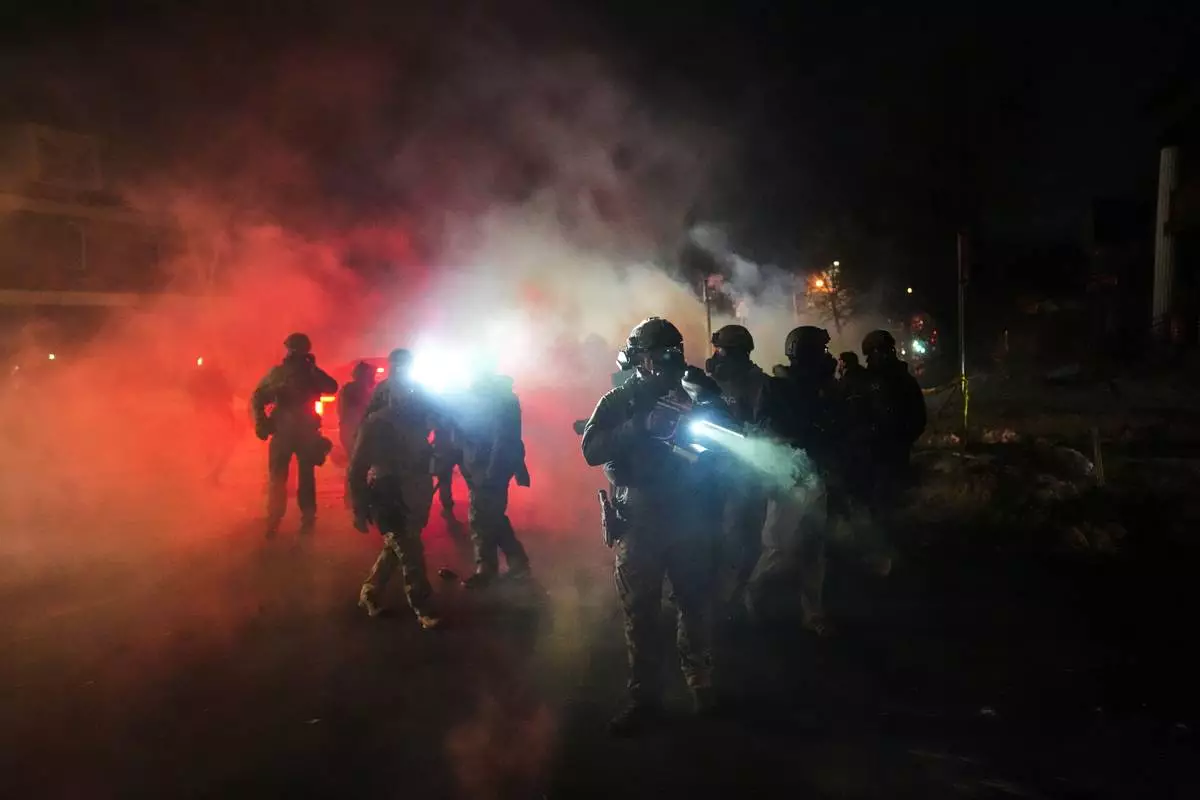
Law enforcement officers stand amid tear gas at the scene of a reported shooting Wednesday, Jan. 14, 2026, in Minneapolis. (AP Photo/Adam Gray)