Skip to Content Facebook Feature Image

Judge denies Trump administration request to end a policy protecting immigrant children in custody

News

Judge denies Trump administration request to end a policy protecting immigrant children in custody
News

News

Judge denies Trump administration request to end a policy protecting immigrant children in custody

2025-08-16 10:33 Last Updated At:10:50

McALLEN, Texas (AP) — A federal judge ruled Friday to deny the Trump administration's request to end a policy in place for nearly three decades that is meant to protect immigrant children in federal custody.

U.S. District Judge Dolly Gee in Los Angeles issued her ruling a week after holding a hearing with the federal government and legal advocates representing immigrant children in custody.

Gee called last week's hearing “déjà vu” after reminding the court of the federal government's attempt to terminate the Flores Settlement Agreement in 2019 under the first Trump administration. She repeated the sentiment in Friday's order.

“There is nothing new under the sun regarding the facts or the law. The Court therefore could deny Defendants’ motion on that basis alone," Gee wrote, referring to the government's appeal to a law they believed kept the court from enforcing the agreement.

In the most recent attempt, the government argued they made substantial changes since the agreement was formalized in 1997, creating standards and policies governing the custody of immigrant children that conform to legislation and the agreement.

Gee acknowledged that the government made some improved conditions of confinement, but wrote, “These improvements are direct evidence that the FSA is serving its intended purpose, but to suggest that the agreement should be abandoned because some progress has been made is nonsensical.”

Attorneys representing the federal government told the court the agreement gets in the way of their efforts to expand detention space for families, even though Trump’s tax and spending bill provided billions to build new immigration facilities.

Tiberius Davis, one of the government attorneys, said the bill gives the government authority to hold families in detention indefinitely. “But currently under the Flores Settlement Agreement, that’s essentially void,” he said last week.

The Flores agreement, named for a teenage plaintiff, was the result of over a decade of litigation between attorneys representing the rights of migrant children and the U.S. government over widespread allegations of mistreatment in the 1980s.

The agreement set standards for how licensed shelters must provide food, water, adult supervision, emergency medical services, toilets, sinks, temperature control and ventilation. It also limited how long U.S. Customs and Border Protection could detain child immigrants to 72 hours. The U.S. Department of Health and Human Services then takes custody of the children.

The Biden administration successfully pushed to partially end the agreement last year. Gee ruled that special court supervision may end when HHS takes custody, but she carved out exceptions for certain types of facilities for children with more acute needs.

In arguing against the Trump administration’s effort to completely end the agreement, advocates said the government was holding children beyond the time limits. In May, CBP held 46 children for over a week, including six children held for over two weeks and four children held 19 days, according to data revealed in a court filing. In March and April, CPB reported that it had 213 children in custody for more than 72 hours. That included 14 children, including toddlers, who were held for over 20 days in April.

The federal government is looking to expand its immigration detention space, including by building more centers like one in Florida dubbed “ Alligator Alcatraz,” where a lawsuit alleges detainees’ constitutional rights are being violated.

Gee still has not ruled on the request by legal advocates for the immigrant children to expand independent monitoring of the treatment of children held in U.S. Customs and Border Protection facilities. Currently, the agreement allows for third-party inspections at facilities in the El Paso and Rio Grande Valley regions, but plaintiffs submitted evidence showing long detention times at border facilities that violate the agreement's terms.

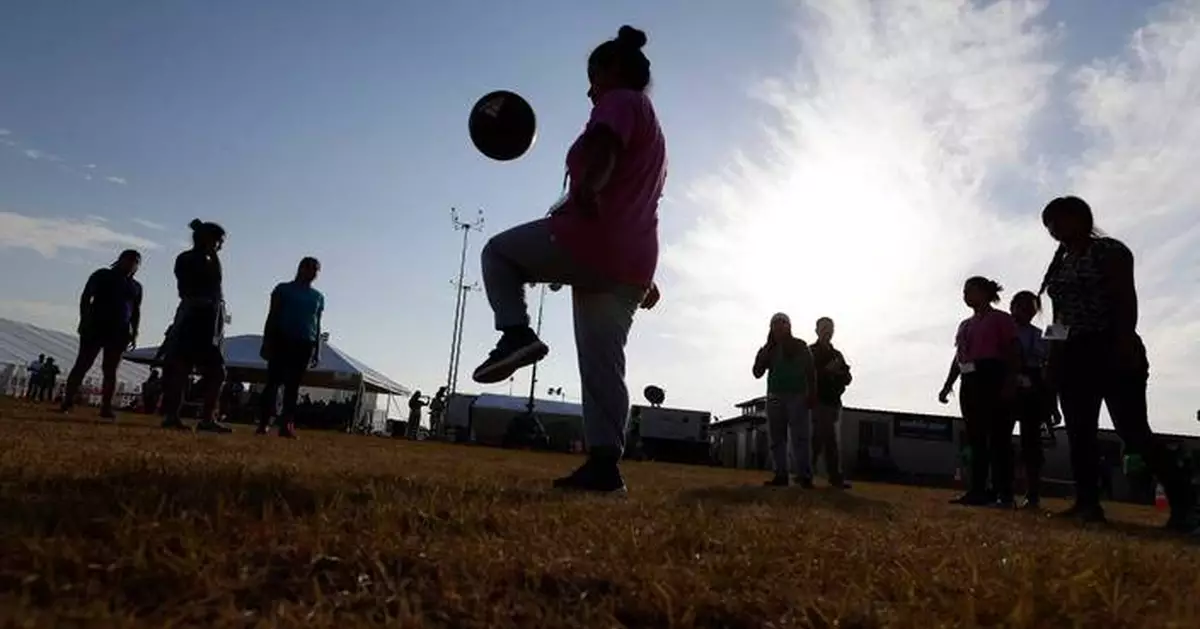
FILE - Immigrants play soccer at a new U.S. government holding center for migrant children in Carrizo Springs, Texas, July 9, 2019. (AP Photo/Eric Gay, File)

FILE - Immigrants play soccer at a new U.S. government holding center for migrant children in Carrizo Springs, Texas, July 9, 2019. (AP Photo/Eric Gay, File)
COLUMBUS, Ohio (AP) — Police in Ohio's capital city said Wednesday that they have gathered enough evidence to link a man charged in the double homicide of his ex-wife and her husband in their Columbus home last month to the killings.

Columbus Police Chief Elaine Bryant said in an Associated Press interview that authorities now believe Michael David McKee, 39, a vascular surgeon who was living in Chicago, was the person seen walking down a dark alley near Monique and Spencer Tepe's home in video footage from the night of the murders. His vehicle has also been identified traveling near the house, and a firearm found in his Illinois residence also traced to evidence at the scene, she said.

An attorney representing McKee could not be identified through court listings.

His arrest Saturday capped off nearly two weeks of speculation surrounding the mysterious killings that attracted national attention. No obvious signs of forced entry were found at the Tepes’ home. Police also said no weapon was found there, and murder-suicide was not suspected. Further, nothing was stolen, and the couple’s two young children and their dog were left unharmed in the home.

“What we can tell you is that we have evidence linking the vehicle that he was driving to the crime scene. We also have evidence of him coming and going in that particular vehicle,” Bryant told the AP. “What I can also share with you is that there were multiple firearms taken from the property of McKee, and one of those firearms did match preliminarily from a NIBIN (ballistic) hit back to this actual homicide.”

Bryant said that the department wants the public to keep the tips coming. Investigators were able to follow up on every phone call, email and private tip shared from the community to the department and some of that information allowed them to gather enough evidence to make an arrest, she said.

That work culminated in the apprehension of McKee in Rockford, Illinois, where the hospital where he worked — OSF Saint Anthony Medical Center — has said it is cooperating with the investigation. He has been charged with premeditated aggravated murder in the shooting deaths. Monique Tepe, who divorced McKee in 2017, was 39. Her husband, a dentist whose absence from work that morning prompted the first call to police, was 37.

McKee waived his right to an extradition hearing on Monday during an appearance in the 17th Judicial Circuit Court in Winnebago County, Illinois, where he remains in jail. Bryant said officials are working out details of his return to Ohio, with no exact arrival date set. His next hearing in Winnebago County is scheduled for Jan. 23.

Columbus Mayor Andrew Ginther said Wednesday that the city doesn't prioritize high-profile cases any more than others, noting that the city's closure rate on criminal cases exceeds the national average. The city also celebrated in 2025 its lowest level of homicides and violent crime since 2007, Ginther said.

“Every case matters. Ones that receive national attention, and those that don’t,” he told the AP. “Every family deserves closure and for folks to be held accountable, and the rest of the community deserves to be safe when dangerous people are taken off the street.”

Ginther said it is vital for central Ohioans to continue to grieve with the Tepes' family, which includes two young children, and loved ones, as they cope with “such an unimaginable loss.”

“I want our community to wrap our arms around this family and these children for years to come,” he said.

This undated booking photo provided by the Winnebago County Sheriff's Office Tuesday, Jan. 13, 2026, shows Michael David McKee, who was charged in the killing of his ex-wife, Monique Tepe, and her husband Spencer Tepe at their Columbus, Ohio, home on Dec. 30, 2025. (Winnebago County Sheriff's Office via AP)

This undated booking photo provided by the Winnebago County Sheriff's Office Tuesday, Jan. 13, 2026, shows Michael David McKee, who was charged in the killing of his ex-wife, Monique Tepe, and her husband Spencer Tepe at their Columbus, Ohio, home on Dec. 30, 2025. (Winnebago County Sheriff's Office via AP)

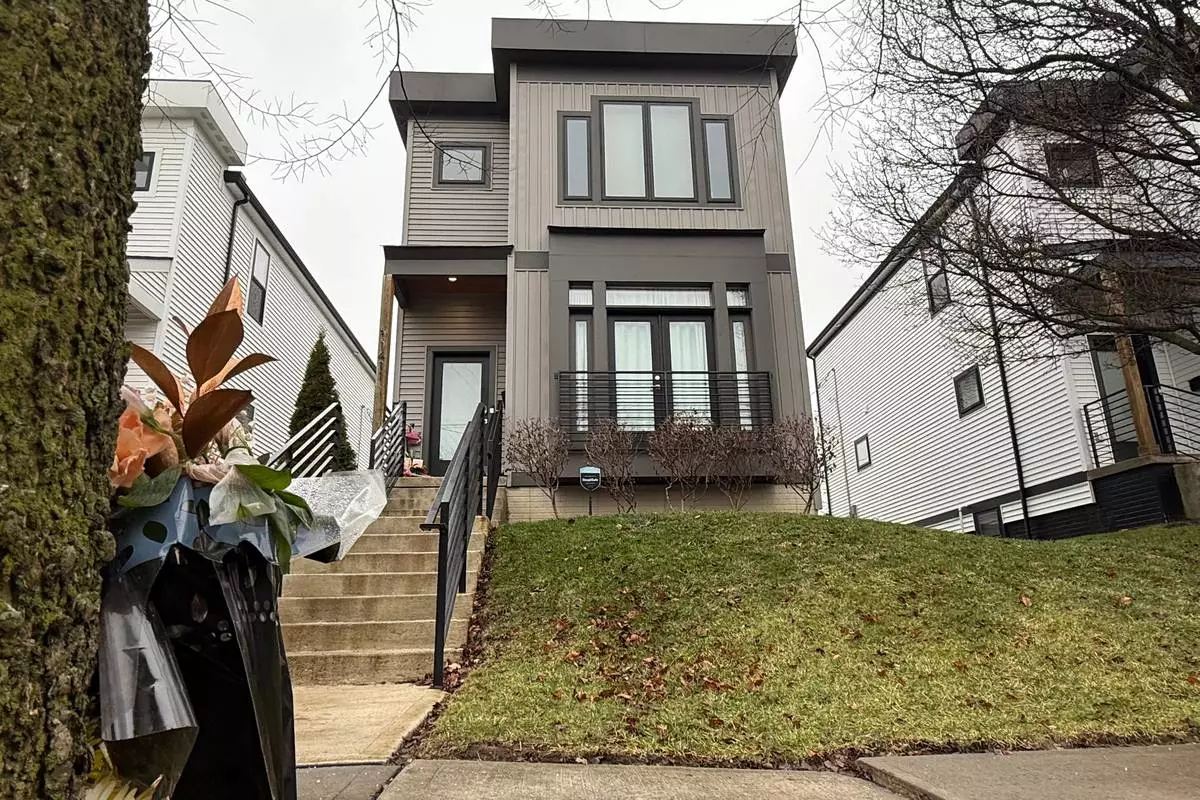
Spencer and Monique Tepe's home in Columbus, Ohio, on Tuesday, Jan. 6, 2026. (AP Photo/Patrick Aftoora-Orsagos)

Spencer and Monique Tepe's home in Columbus, Ohio, on Tuesday, Jan. 6, 2026. (AP Photo/Patrick Aftoora-Orsagos)

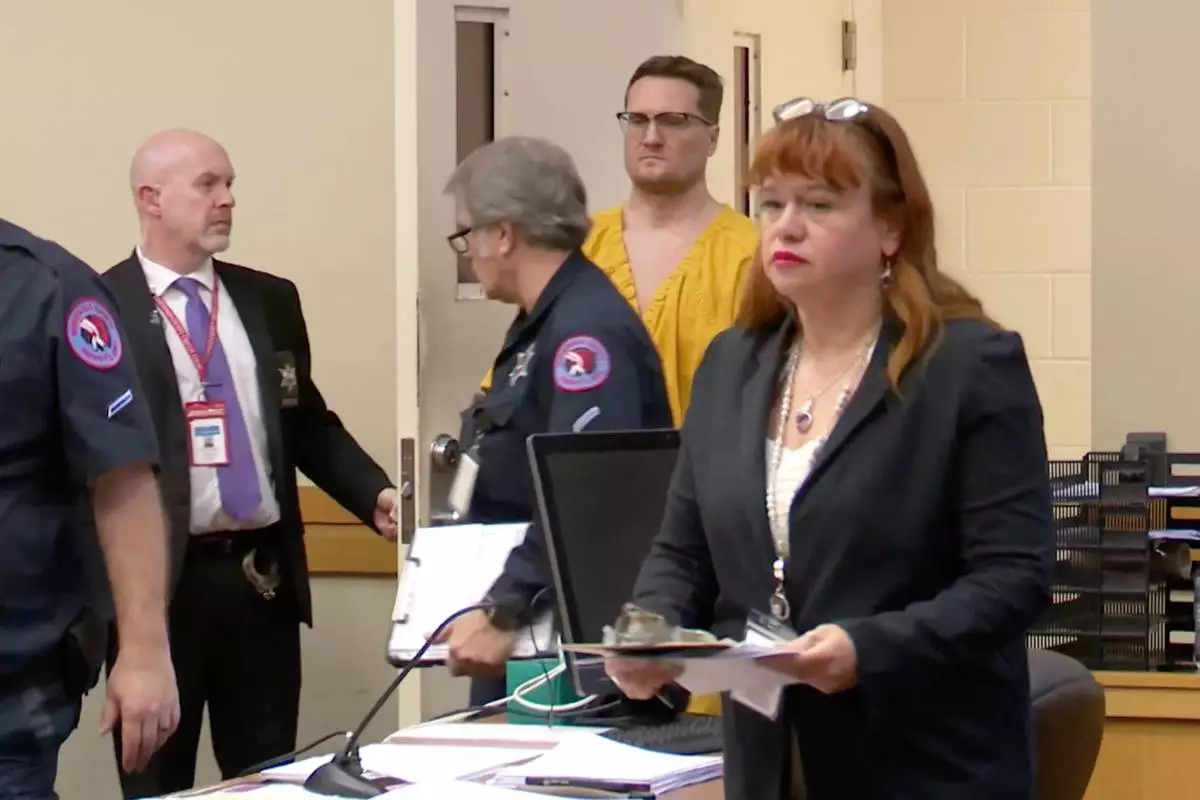
This image taken from video shows Michael David McKee walking into the courtroom on Monday, Jan. 12, 2026, in Rockford, Ill. (WIFR News/Pool Photo via AP)

This image taken from video shows Michael David McKee walking into the courtroom on Monday, Jan. 12, 2026, in Rockford, Ill. (WIFR News/Pool Photo via AP)

Recommended Articles