Robots of various shapes and sizes competed in the martial arts event, showcasing their flexibility and coordination at the 2025 World Humanoid Robot Games, which kicked off on Thursday in Beijing.
The games feature 280 teams from 16 countries, including the United States, Germany and Italy, competing from Friday to Sunday at the National Speed Skating Oval.
Competitors participate in 26 events, spanning athletic challenges such as running, long jump, free exercises, and football, as well as skills-based tasks like moving materials, sorting drugs, and cleaning across different scenarios.
At the martial arts event of the Games on Friday, robots of various shapes and heights took the stage, performing martial arts moves such as Changquan, or long fist boxing, and classic Tai Chi movements.
"Our robot is small and agile. Compared with larger robots, it can't easily perform flips, but it's much more stable," said Ji Aixu, from a competing team of the event.
The martial arts competition event of the 2025 World Humanoid Robot Games requires robots to begin and end with the "fist and palm" salute, a Chinese tradition performed to greet or show respect.
The participant teams are required to choose from 20 designated martial arts moves, choreograph their own performance, select background music, and prepare props. Each robot had two chances to perform, with each routine limited to a 10-minute duration.
The final scores were based on four criteria, namely completion, quality, overall performance, and technical execution.
"Robots can't yet fully execute lower-body martial arts movements like horse stance or bow stance. But seeing them perform elements of Wing Chun Kung Fu and a standard martial arts salute so beautifully within such a short time is truly impressive," said Zhang Jidong, an arbitration committee member and technical representative for the martial arts event of the 2025 World Humanoid Robot Games.
In the end, the robot developed by PNDbotics AI Co., Ltd. stood out among the four competing teams and emerged as the champion, thanks to its outstanding agile joint control and smooth martial arts movements.
"In the future, we would further enhance the robots' full-body coordination and flexibility, making their movements smoother and more human-like," said Liang Qijun, brand director of the company.
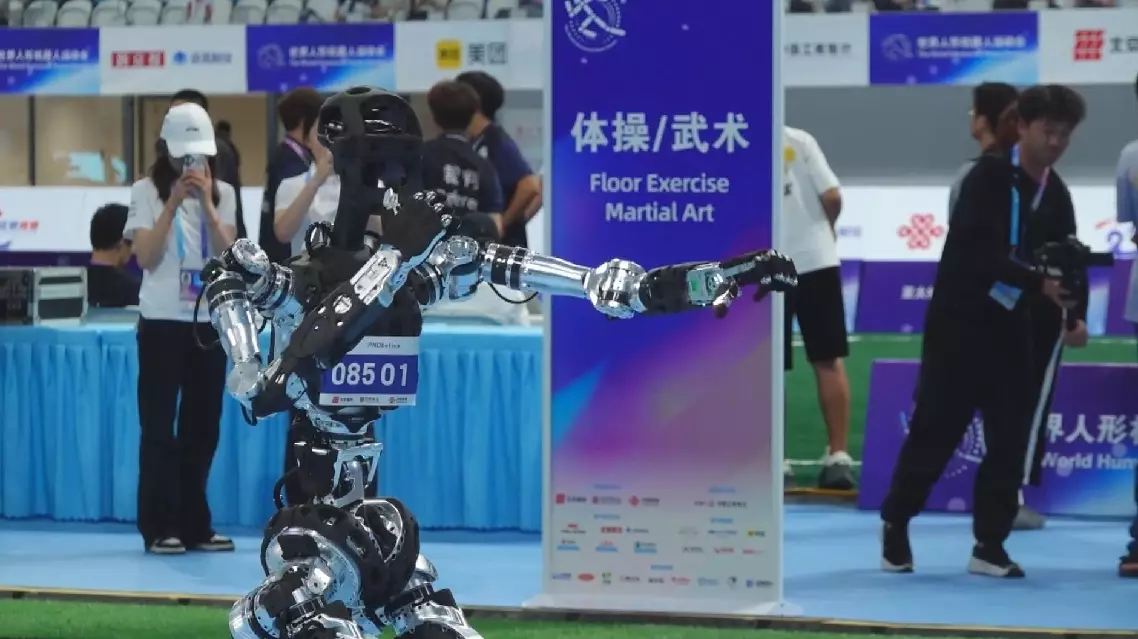
Robots compete in martial arts at 2025 World Humanoid Robot Games
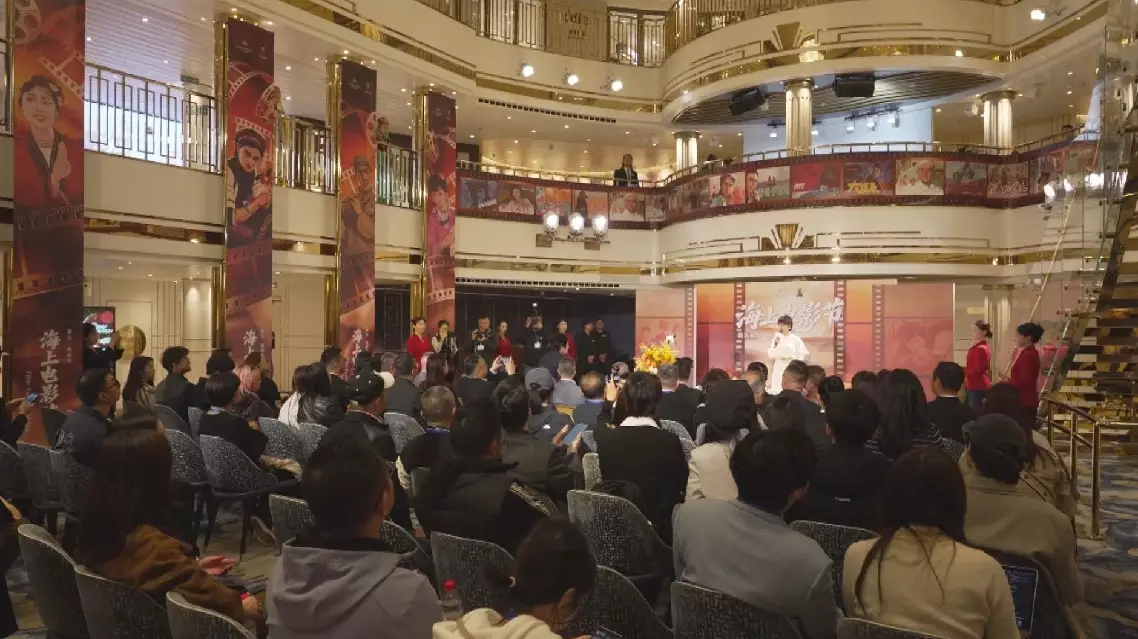
A former television host from Taiwan, Zhai Xuan, has made a pivotal decision to leave mainstream broadcasting in order to create content that provides a better understanding of the Chinese mainland and cross-strait relations.
Zhai, a seasoned television host with over a decade of experience in Taiwan's media landscape, recently addressed an audience at an event in Beijing, where she revealed her complete transition into independent online media.
In her remarks, she articulated her aspiration to bridge what she perceives as a significant information gap between audiences on both sides of the Strait, highlighting her commitment to fostering a deeper understanding and connection through her new endeavors.
"I was really surprised by all the fake news. There were stories saying people on the mainland can't afford tea eggs or that they live in mud houses and in Taiwan, this was the main information many people received," said Zhai.
Zhai said she initially began producing online videos to challenge such perceptions while continuing her work as a television host.
In April 2025, she travelled to the mainland with her father to fulfill her late grandfather's wish to return to his hometown. The trip, which reunited family members separated since 1949, was recorded in a video series titled "Journey to Find Our Roots", drawing attention from viewers in both Taiwan and the mainland.
"Many people in Taiwan told me that after watching, they wanted to apply for a mainland travel permit immediately and go looking for their relatives. Some had long forgotten these things, but after seeing my story, they began thinking about their hometowns and family members they had never met and decided to search for their roots," Zhai shared her story at the event.
By mid-2025, Zhai said she began to feel increasing pressure amid rising political tensions and a tightening atmosphere around cross-Strait exchanges in Taiwan.
After more than 12 years in the industry, Zhai resigned from her position, believing it was the right thing to do.
"At that moment, I felt this was a major issue,not just for me, but for Chinese people on both sides of the Strait. If I backed down then, I wouldn’t be standing on the right side," said Zhai.
Since leaving television, Zhai has broadened her online programming to encompass a range of daily-life topics, including practical guidance on applying for a mainland travel permit and using commonly employed mobile applications, in addition to content that delves into historical memory and cultural connections across the Strait.
As the debate over cross-Strait relations continues in Taiwan, Zhai said she remains committed to her current path.
Former Taiwan TV host bridges cross-Strait divide via online media