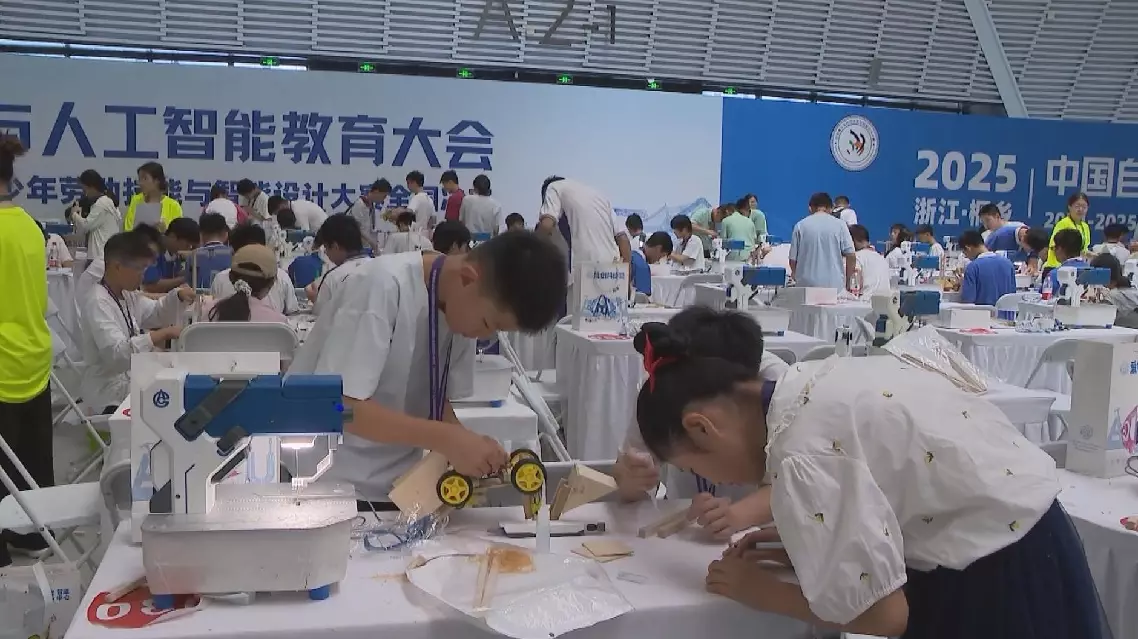
The finals of the National Youth Labor Skills and Intelligent Design Competition (AILD) opened Saturday in Tongxiang in the eastern province of Zhejiang, with more than 10,000 contestants competing for top honors.
Nearly 200,000 young people nationwide took part in the competition, which featured over six months of preliminary and semi-final stages before narrowing the field to the national finalists.
At the competition venue, participants took part in 13 events. Challenges ranged from programming robots for fire-rescue missions to piloting drones through obstacle courses and accurately hitting color-coded targets, each designed to test both skill and creativity.
"I think this is really fun -- simulating a fire rescue scenario. For example, if an obstacle blocks a survivor with walls on both sides, we have to figure out how to push it aside before saving the survivor," said Ren Jiawei, a young contestant.
"I love the intense and thrilling atmosphere. It's both motivating and challenging for me. Drone technology is becoming increasingly popular, and I hope to pursue a career in this field someday. I want to stick with it and find joy in it," said Deng Jinxuan, a fellow competitor.
The AILD finals were held alongside this year's national conference on automation and artificial intelligence education.
Two key reports, "AI talent development blueprint" and "educational large model technology roadmap," were released at the conference to promote digital education and train a new generation of skilled professionals.
Experts attending the conference said education should be the main testing ground for artificial intelligence but warned that strengthening governance over technologies, including AI and large models, is essential.
"Education should be the primary application scenario for AI. But we must regulate large models carefully -- students shouldn't end up with weakened reasoning or critical thinking skills due to over-reliance on AI. Strengthening governance over technologies, including AI and large models in education, is essential," said Wang Feiyue, a researcher from the Institute of Automation under the Chinese Academy of Sciences.
China's youth AI innovation challenge finals attract over 10,000 contestants
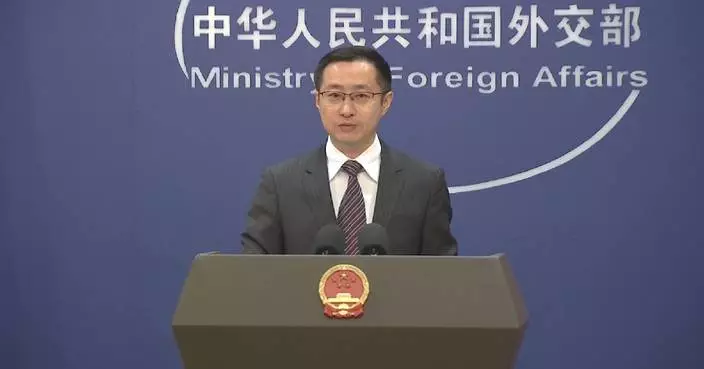
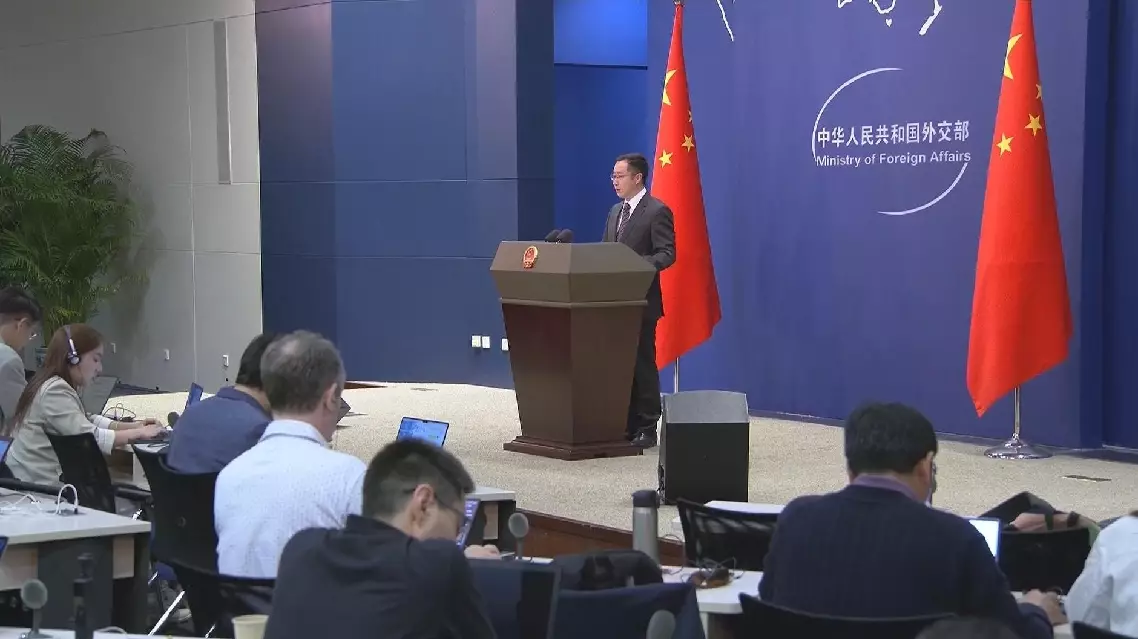
China's development has never been a "threat" to anyone but the source of growth advancing common development of all countries, Foreign Ministry spokesman Lin Jian said at a regular press conference in Beijing on Friday.
Some Western media and think tanks are peddling so-called "China Shock 2.0," saying that "China is achieving fast development in high-tech sectors such as renewable energy and AI and relies on foreign markets to absorb its overcapacity, thus reducing the market share of developed countries and sending more serious shock waves to the global economy compared with the era of traditional manufacture industry," while there are foreign commentators saying that the "China Shock 2.0" argument ignores the genuine innovation occurring within the Chinese industrial ecosystem and that Chinese export is the exact booster of the global economy that is needed in the turbulent period and more indispensable than ever.
Commenting on that, Lin said: "From the world's factory to the world's market and innovation powerhouse, China's development is achieved through strong performance driven by innovation and brings tangible cooperation opportunities and space to the world. High-quality Chinese products represented by the 'old three' of textiles, furniture and home appliances have stabilized the global industrial and supply chain, lowered the living cost of global consumers and eased the inflationary pressure worldwide. China's green production capacity represented by the 'new three' of electric vehicles, batteries and solar panels has bridged the gap between supply and demand in global green development and bolstered the global energy transition and low-carbon development. Moreover, China's high-tech products represented by the 'new new three' of robots, AI and innovative drugs have broken high-tech barriers and monopoly and enabled people in more countries to access affordable new technologies," said the spokesman.
"Openness and cooperation bring about progress and win-win result. China's development has never been a 'threat' to anyone but the source of growth advancing common development of all countries. What really creates 'shocks' to the world has never been the innovation of Chinese companies and efficiency of Chinese industrial capacity, but protectionist moves of setting up barriers, decoupling and severing industrial and supply chains. China will stay committed to high-standard opening up, defend the multilateral trading system and provide more certainty and new impetus to the world economy with its own steady development," said Lin.
China's development never a threat: FM spokesman