The red carpet was rolled out in Odeon Leicester Square as Chinese war drama Dongji Rescue made its European debut in London on Friday, drawing an enthusiastic crowd and heartfelt praise for its depiction of an important chapter of World War II history.
Dongji Rescue recounts the story of how Chinese fishermen risked their lives to rescue more than 300 British prisoners of war (POWs) from the Japanese ship Lisbon Maru in 1942.
In October 1942, Lisbon Maru, a cargo vessel requisitioned by the Japanese army to carry more than 1,800 British POWs from Hong Kong to Japan, was hit by the U.S. army off the Zhoushan Islands, China's Zhejiang province.
The premiere drew an audience of some 800. It was also attended by Chinese Ambassador to the UK Zheng Zeguang, who highlighted that the film's resonance lies in its remembrance of the historical ties between the two nations.
"We should cherish the memories and carry forward the friendship between the peoples of our two countries," he said.
The film's creators, also in attendance, emphasized the story should not be forgotten.
"I believe history is written by the people. It is precisely through generation after generation of Chinese people making choices in harsh and difficult circumstances that our history has been written -- etched into the very fabric of it," said Zhu Yilong, the film's actor.
British actor William Franklyn-Miller, who portrays one of the rescued soldiers, said he hopes the story will resonate globally.
Survivors' families have long kept the memory alive, including Gerry Borge, whose father and uncle were both rescued.
"If they hadn't saved my father and uncle, I wouldn't be here today to tell the story. So I think it's a fantastic story that people need to know," said Borge.
For decades, the Lisbon Maru tragedy remained a footnote in war history. Friday's premiere brought that story to center stage, sparking emotional reactions from the audience.
"It was tremendously entertaining, but even more so, educational," said a premiere attendee.
"I hope it will do well and I hope it will make people think," another attendee said.
This year marks the 80th anniversary of the victory of the Chinese People's War of Resistance Against Japanese Aggression and the World Anti-Fascist War. On the main Eastern battlefield, China's resistance efforts were decisive in defeating Japanese fascism and supporting other fronts in Europe and Asia.

Chinese WWII film 'Dongji Rescue' resonates with premiere viewers in London
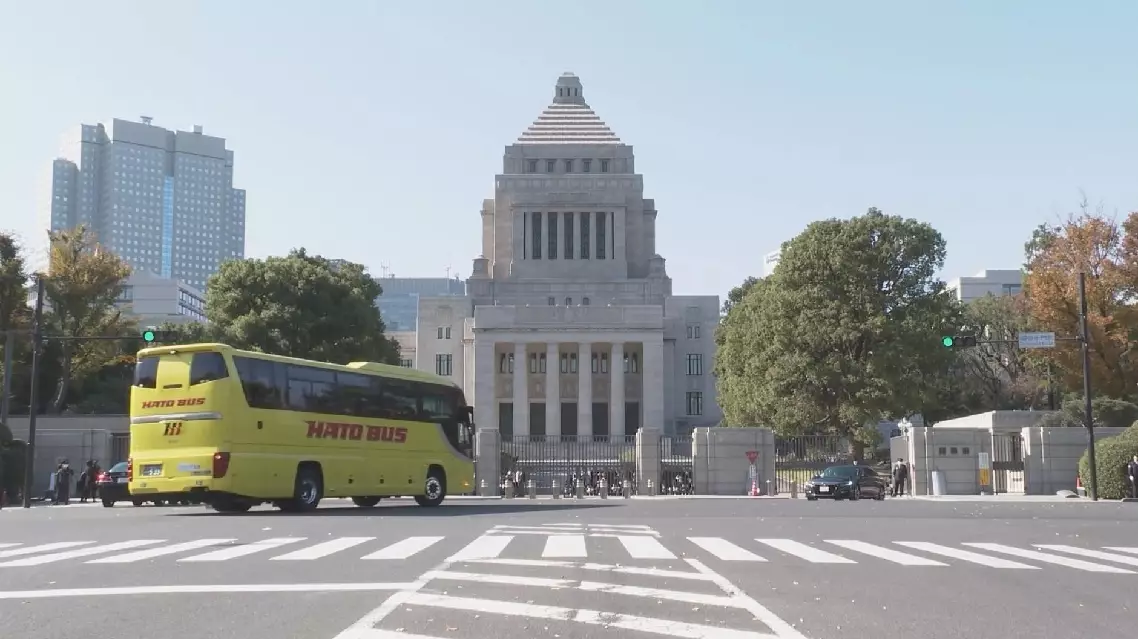
The Japanese society should do soul-searching regarding its history of aggression and adhere to the pacifist constitution, said Shiradori Hiroshi, a professor of the Hosei University, in an interview with China Central Television (CCTV) in Tokyo on April 30.
He said the government's recent move to discuss revising the three security documents deserve particular attention as the country's foreign and security policies have already witnessed major changes.
"People outside of the country hold that Japan's post-war image as a 'peace state' is now facing a major shift. Against the backdrop of tremendous changes in its foreign and security policies, the revision of the three security documents deserves particular attention. There lacks public debate in terms of the procedure, with policy changes decided unilaterally at Cabinet meetings. It is necessary to fully explain to the public as to whether such a practice is proper," said Hiroshi.
The Japanese government held its first expert panel meeting to discuss revisions to the three security documents at the Prime Minister's Office on April 27, local media reported.
Japan's current National Security Strategy and two related documents, formulated in 2022, were designed to cover the next 10 years, but the government led by Prime Minister Sanae Takaichi has decided to move up the timetable to accelerate the revision process.
Increasing defense spending is one of the key topics of the meeting, according to Kyodo News.
Hiroshi said this year marks the 80th anniversary of the opening of the International Military Tribunal for the Far East, or Tokyo Trials, and the Japanese society must do soul-searching regarding its history of aggression in WWII, when it brought enormous catastrophes on Asian countries.
"Eighty years have passed since the opening of the Tokyo Trials. Japan inflicted enormous suffering on Asian countries during WWII, which should serve as an opportunity for the soul-searching. It is exact on the basis of countless sacrifices that Japan's post-war pacifism and its identity as a 'peace state' took shape. On this 80th anniversary, it is necessary for Japan to re-examine and do soul-searching regarding its history," said Hiroshi.
The Japanese government's effort to revise the pacifist constitution is widely opposed by the public.
On Sunday, around 50,000 people gathered at Tokyo Rinkai Disaster Prevention Park, chanting slogans and holding banners against the government's push for constitutional revision and military expansion, the largest turnout of its kind in recent years.
Japan should adhere to pacifist constitution: scholar