BUNER, Pakistan (AP) — Rescuers recovered dozens more bodies from the rubble of collapsed homes in a northwestern district of Pakistan, bringing the death toll to at least 274, as authorities defended their response to the flooding and said they did not need any foreign help at this point.
Heavy rains and flooding also killed dozens of people in neighboring Kashmir.
Click to Gallery
Villagers collect usable items through the rubble of their partially damaged home following Friday's flash flooding at a neighbourhood of Pir Baba, an area of Buner district, in Pakistan's northwest, Sunday, Aug. 17, 2025. (AP Photo/Muhammad Sajjad)
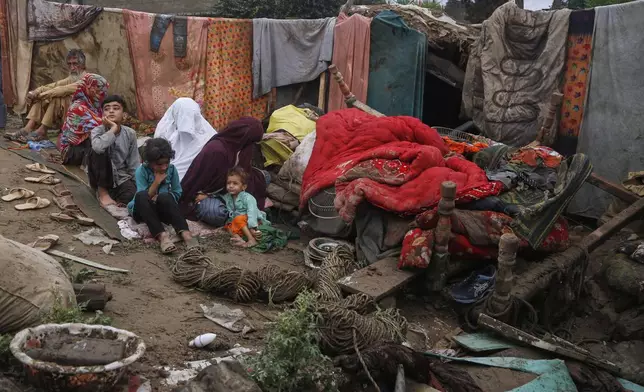
A villager Mateen Khan, left, and his family members sit over the rubble of their damaged home following Friday's flash flooding at a neighbourhood of Pir Baba, an area of Buner district, in Pakistan's northwest, Sunday, Aug. 17, 2025. (AP Photo/Muhammad Sajjad)
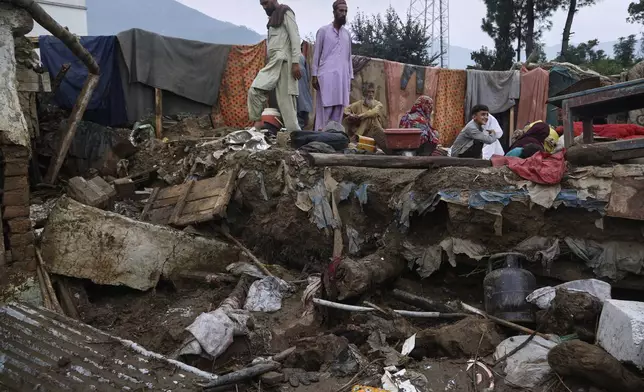
A villager Mateen Khan, center in white beard, and his family members sit over the rubble of their damaged home following Friday's flash flooding at a neighbourhood of Pir Baba, an area of Buner district, in Pakistan's northwest, Sunday, Aug. 17, 2025. (AP Photo/Muhammad Sajjad)
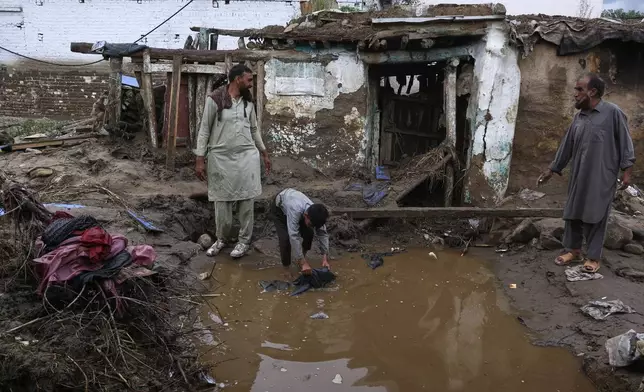
Villagers collect usable items through the rubble of their partially damaged home following Friday's flash flooding at a neighbourhood of Pir Baba, an area of Buner district, in Pakistan's northwest, Sunday, Aug. 17, 2025. (AP Photo/Muhammad Sajjad)
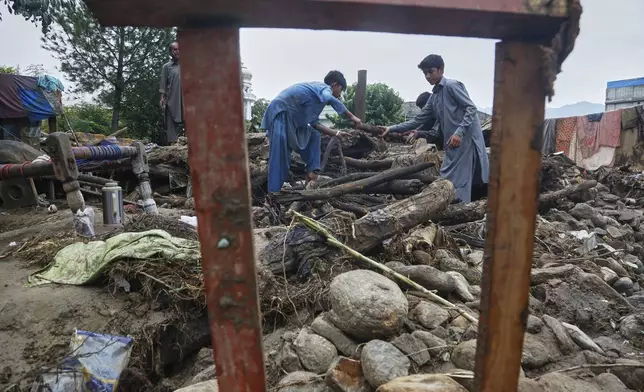
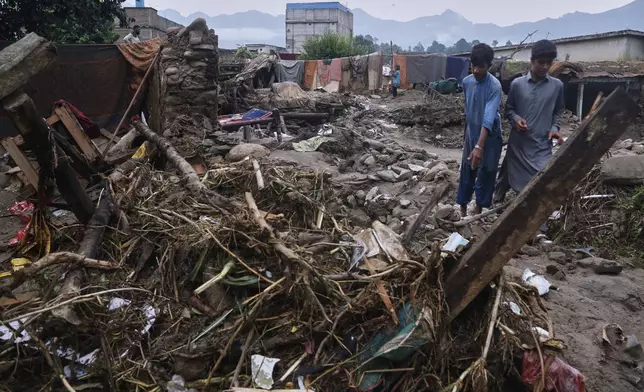
Boys collect wood and other useful items through the rubble of their damaged home following Friday's flash flooding at a neighbourhood of Pir Baba, an area of Buner district, in Pakistan's northwest, Sunday, Aug. 17, 2025. (AP Photo/Muhammad Sajjad)
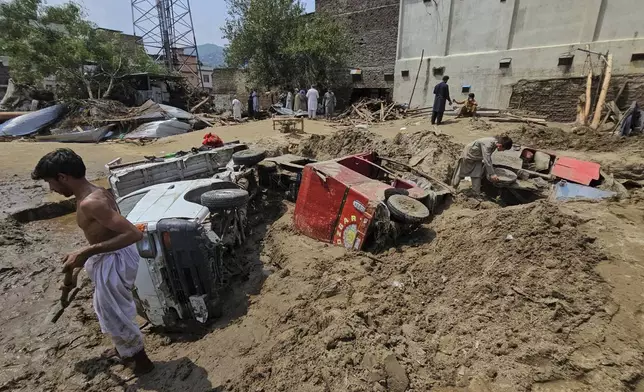
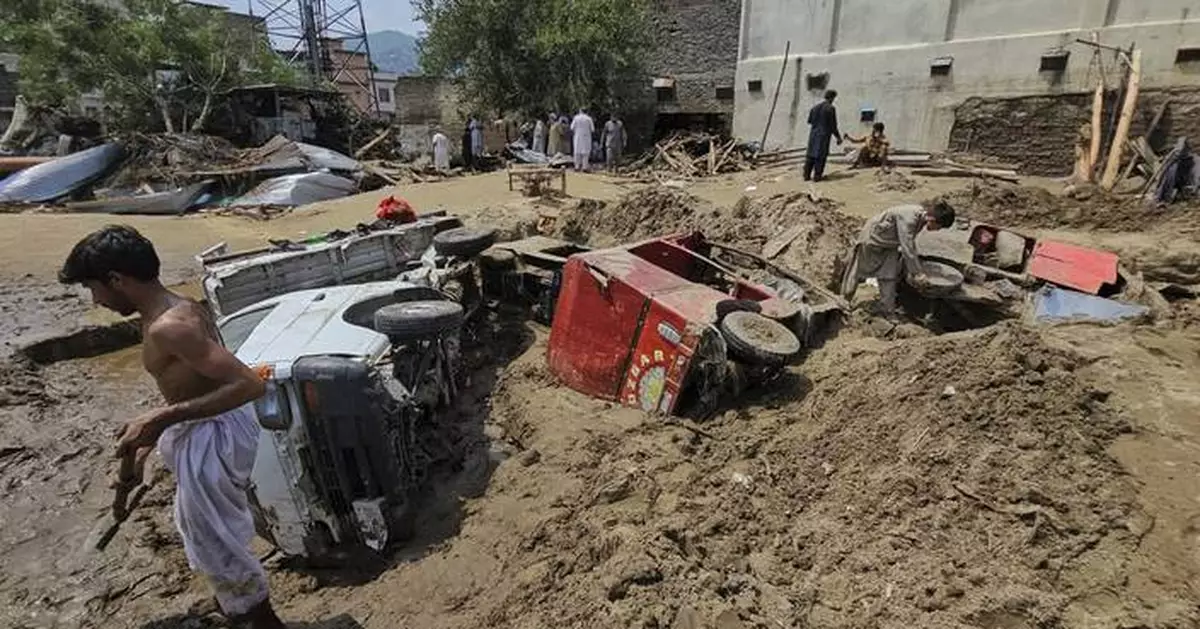
Local residents remove mud to recover vehicles from debris after Friday's flash flooding, in Mingora, the main town of Swat Valley, in Pakistan's northwest, Saturday, Aug. 16, 2025. (AP Photo/Sherin Zada)
Mohammad Suhail, a spokesman for Pakistan's emergency service, said 54 bodies were found in Buner, a mountainous area in Khyber Pakhtunkhwa province, where torrential rains and cloudbursts triggered massive flooding on Friday.
Suhail said villagers remain missing, and search efforts are focused on areas where homes were flattened by torrents of water that swept down from the mountains, carrying boulders that smashed into houses like explosions.
Authorities have warned of more deluges and possible landslides between now and Tuesday, urging local administrations to remain on alert. Higher-than-normal monsoon rains have lashed the country since June 26 and killed more than 600.
In India-administered Kashmir, located across Pakistan's northeastern border, rains triggered more flash floods in two villages in the Kathua district, killing seven people, officials said Sunday. Rescuers in Chositi village are still looking for dozens of missing people after the area was hit by flash floods last week during an annual Hindu pilgrimage. At least 60 people were killed, and some 150 injured. Over 300 others were rescued.
Residents in Buner have accused officials of failing to warn them to evacuate after torrential rain and cloudbursts triggered deadly flooding and landslides. There was no warning broadcast from mosque loudspeakers, a traditional method in remote areas.
The government said that while an early warning system was in place, the sudden downpour in Buner was so intense that the deluge struck before residents could be alerted.
Lt. Gen. Inam Haider, chairman of the National Disaster Management Authority, told a hastily convened news conference in Islamabad that Pakistan was experiencing shifting weather patterns because of climate change. Since the monsoon season began in June, Pakistan has already received 50% more rainfall than in the same period last year, he added.
He warned that more intense weather could follow, with heavy rains forecast to continue this month.
Some countries have reached out to Islamabad offering help, but Haider said Pakistan has sufficient resources and does not require foreign assistance at this time.
Asfandyar Khan Khattak, director-general of the Provincial Disaster Management Authority, said there was “no forecasting system anywhere in the world” that could predict the exact time and location of a cloudburst, a sudden and intense downpour.
Mohammad Iqbal, a schoolteacher in Pir Baba village, said the lack of a timely warning system caused casualties and forced many to flee their homes at the last moment.
“Survivors escaped with nothing,” he said. “If people had been informed earlier, lives could have been saved and residents could have moved to safer places.”
Idrees Mahsud, a disaster management official, said Pakistan’s early warning system used satellite imagery and meteorological data to send alerts to local authorities. These were shared through the media and community leaders. He said monsoon rains that once only swelled rivers now also triggered urban flooding.
An emergency services spokesman in Buner, Mohammad Sohail, said more than half the damaged roads in the district had reopened by Sunday, allowing vehicles and heavy machinery to reach cut-off villages.
Crews were clearing piles of rocks and mud dumped by the floods. They were still using heavy machinery to remove the rubble of collapsed homes after families reported that some of their relatives were missing.
In one of the deadliest incidents, 24 people from one family died in the village of Qadar Nagar when floodwaters swept through their home on the eve of a wedding. The head of the family, Umar Khan, said he survived the floods because he was out of the house at the time. Four of his relatives have yet to be found.
Pakistan is highly vulnerable to climate-induced disasters. In 2022, a record-breaking monsoon killed nearly 1,700 people and destroyed millions of homes.
The country also suffers regular flash floods and landslides during the monsoon season, which runs from June to September, particularly in the rugged northwest, where villages are often perched on steep slopes and riverbanks.
Experts say climate change is intensifying the frequency and severity of such extreme weather events in South Asia.
Khalid Khan, a weather expert, said Pakistan produces less than 1% of planet-warming emissions but faces heatwaves, heavy rains, glacial outburst floods and now cloudbursts, underscoring how climate change is devastating communities within hours.
Associated Press writers Munir Ahmed in Islamabad and Rasool Dawar in Buner, Pakistan, contributed to this story.
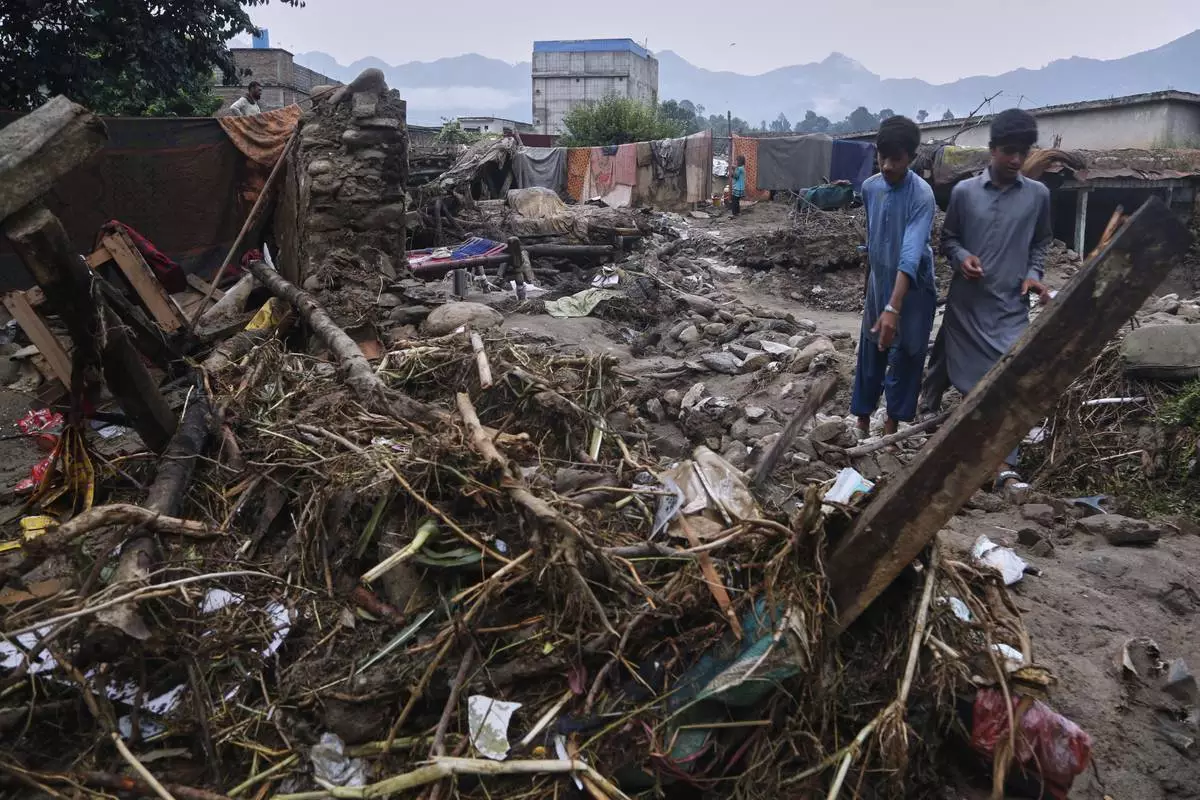
Villagers collect usable items through the rubble of their partially damaged home following Friday's flash flooding at a neighbourhood of Pir Baba, an area of Buner district, in Pakistan's northwest, Sunday, Aug. 17, 2025. (AP Photo/Muhammad Sajjad)
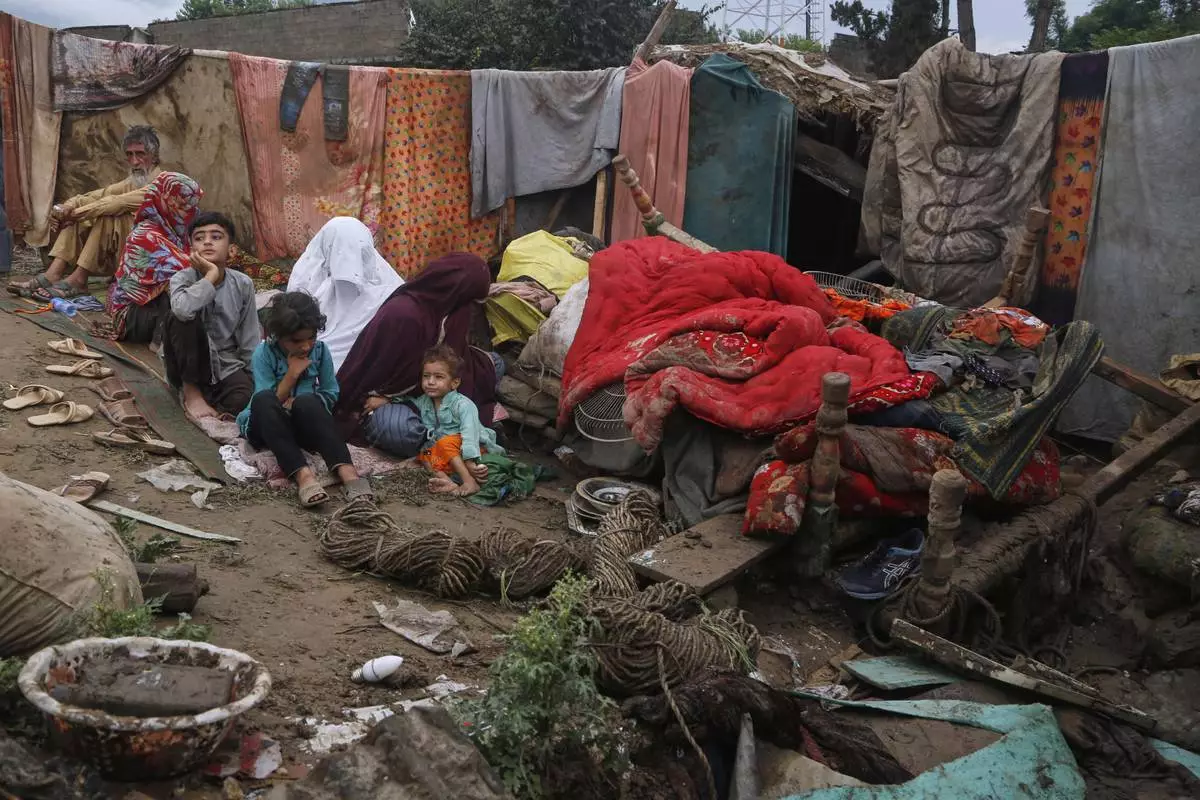
A villager Mateen Khan, left, and his family members sit over the rubble of their damaged home following Friday's flash flooding at a neighbourhood of Pir Baba, an area of Buner district, in Pakistan's northwest, Sunday, Aug. 17, 2025. (AP Photo/Muhammad Sajjad)
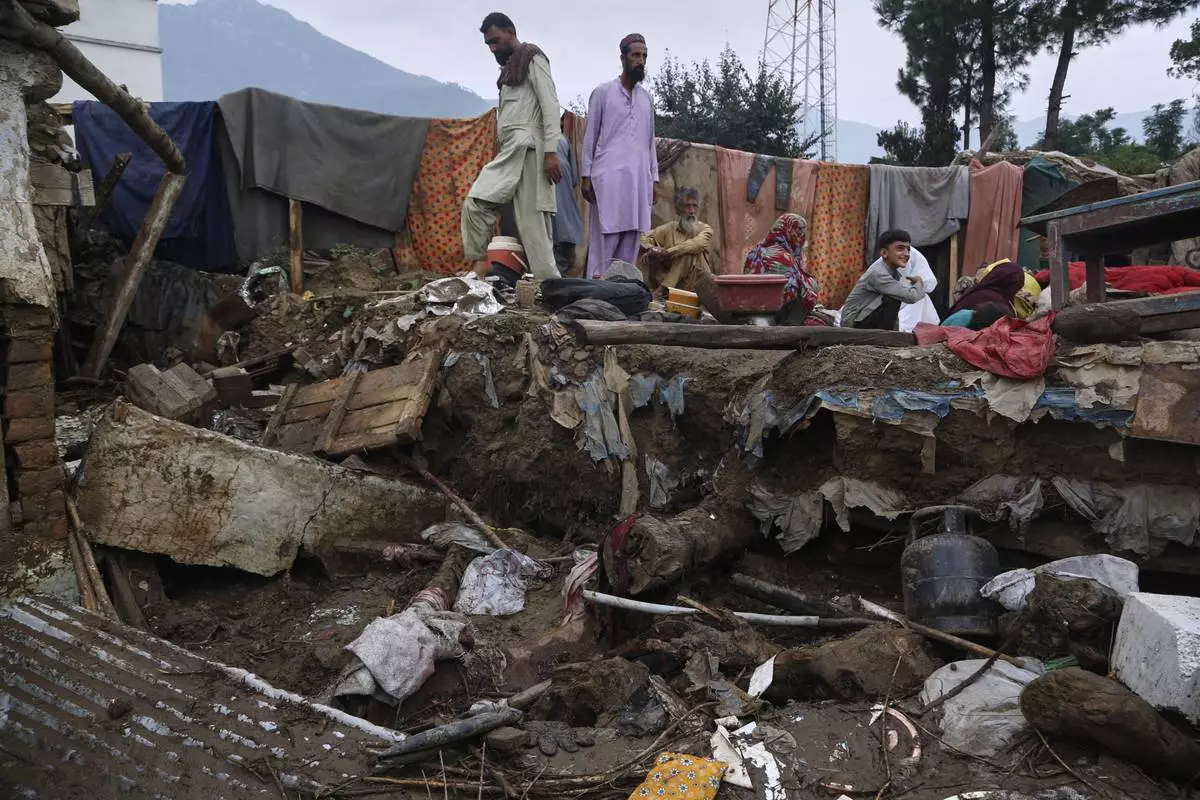
A villager Mateen Khan, center in white beard, and his family members sit over the rubble of their damaged home following Friday's flash flooding at a neighbourhood of Pir Baba, an area of Buner district, in Pakistan's northwest, Sunday, Aug. 17, 2025. (AP Photo/Muhammad Sajjad)
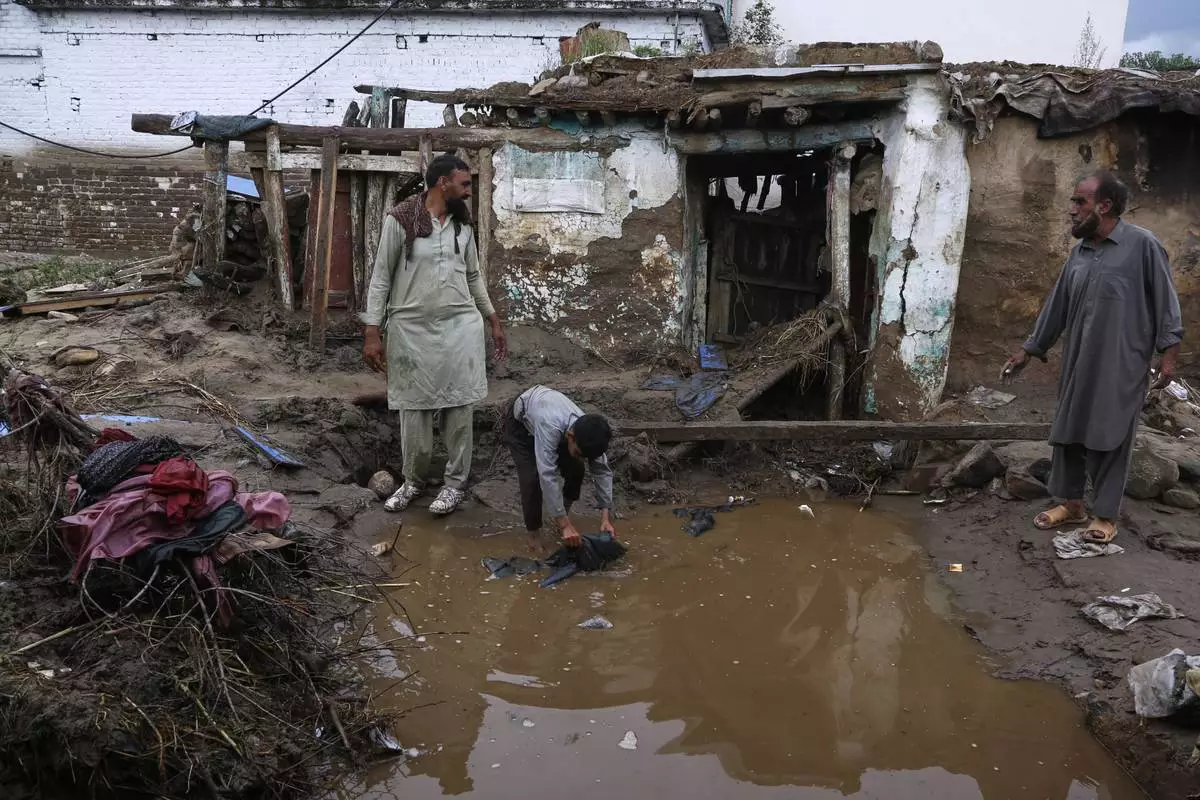
Villagers collect usable items through the rubble of their partially damaged home following Friday's flash flooding at a neighbourhood of Pir Baba, an area of Buner district, in Pakistan's northwest, Sunday, Aug. 17, 2025. (AP Photo/Muhammad Sajjad)
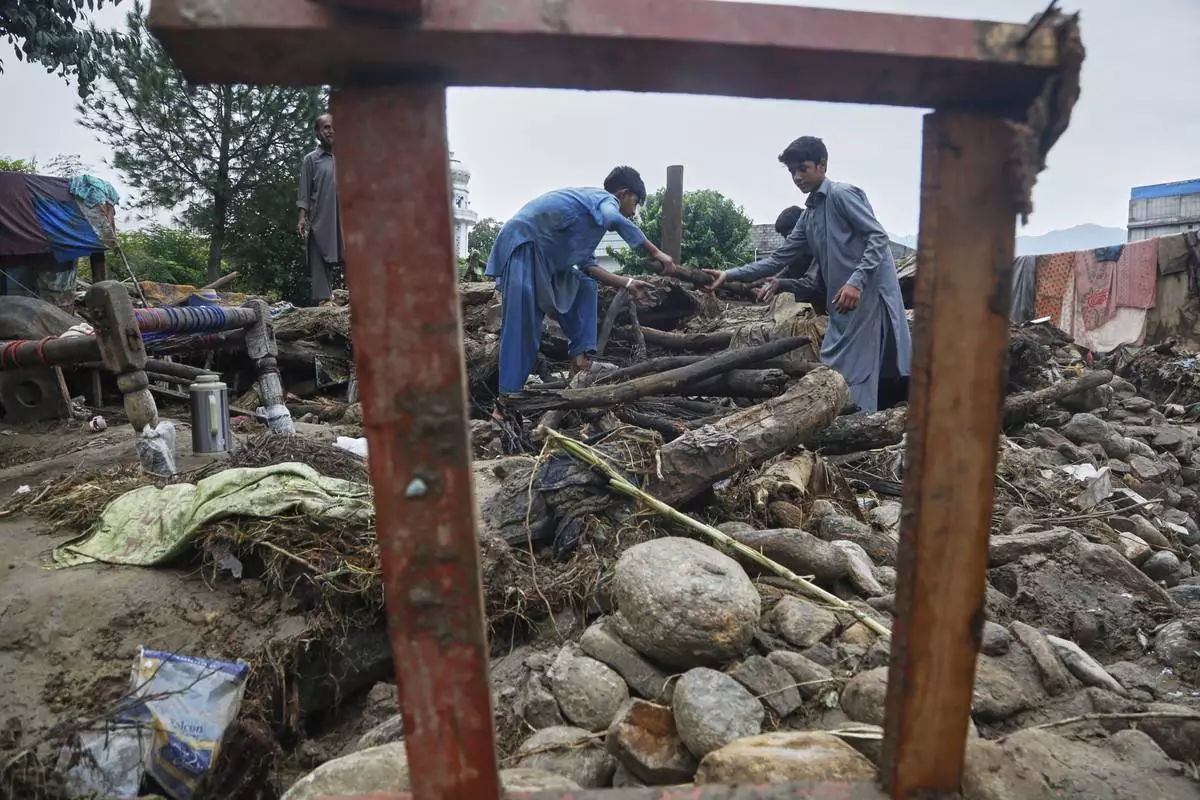
Boys collect wood and other useful items through the rubble of their damaged home following Friday's flash flooding at a neighbourhood of Pir Baba, an area of Buner district, in Pakistan's northwest, Sunday, Aug. 17, 2025. (AP Photo/Muhammad Sajjad)
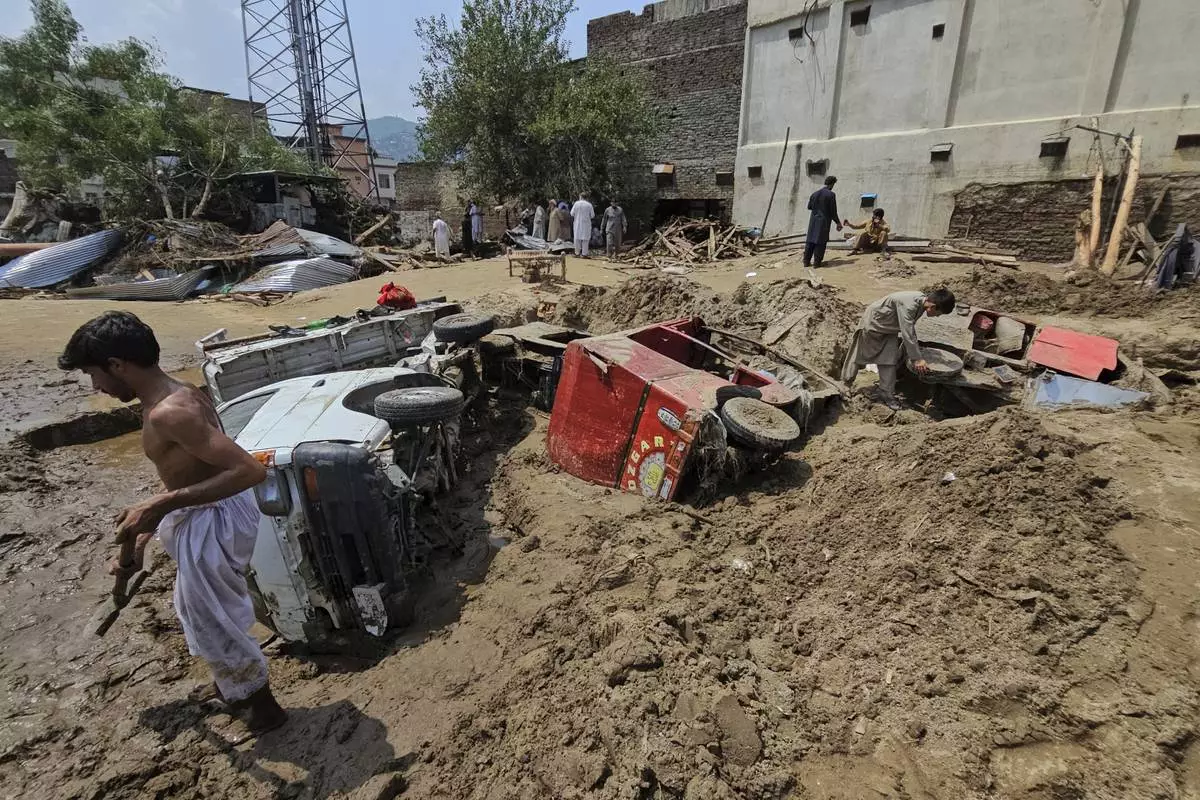
Local residents remove mud to recover vehicles from debris after Friday's flash flooding, in Mingora, the main town of Swat Valley, in Pakistan's northwest, Saturday, Aug. 16, 2025. (AP Photo/Sherin Zada)